Juicy Greek chicken earns its place in the weekly rotation because the outside picks up a little char while the inside stays tender, bright, and deeply seasoned all the way through. The lemon and oregano don’t just sit on the surface here. They work into the chicken during the marinade, so every bite tastes clean and savory instead of one-note.
The trick is balance. There’s enough olive oil to carry the herbs and keep the meat supple, but not so much acid that the chicken turns mealy. Lemon zest matters just as much as juice, because it gives you that fresh citrus aroma without thinning the marinade. A few hours of marinating is enough for good flavor, and overnight gives you the strongest Greek chicken payoff.
Below you’ll find the small details that matter most: how long to marinate, what to watch for on the grill, and a few smart swaps if you want to adjust the herbs or cooking method without losing the character of the dish.
The chicken came off the grill juicy with those browned lemony edges, and the marinade didn’t burn like some other recipes I’ve tried. I left it overnight and the flavor went all the way through.
Save this juicy Greek chicken for the nights when you want lemon, oregano, and a fast grill dinner that still feels special.
The Marinade That Keeps Greek Chicken Juicy Instead of Watery
The mistake most people make with lemon-based chicken is pushing the acid too far or too long without enough oil. Acid helps season the meat, but by itself it can tighten the texture and give you that chalky edge instead of a juicy bite. The olive oil here softens the hit of the lemon juice and helps the garlic and herbs cling to the chicken while it rests.
Marinating for 4 hours gives you good flavor. Going up to 24 hours gives you deeper seasoning, but I wouldn’t leave it much longer than that or the lemon starts taking over. Grill heat matters too: medium-high is hot enough to brown the outside without scorching the sugars and garlic in the marinade before the chicken cooks through.
What Each Ingredient Is Actually Doing in This Chicken
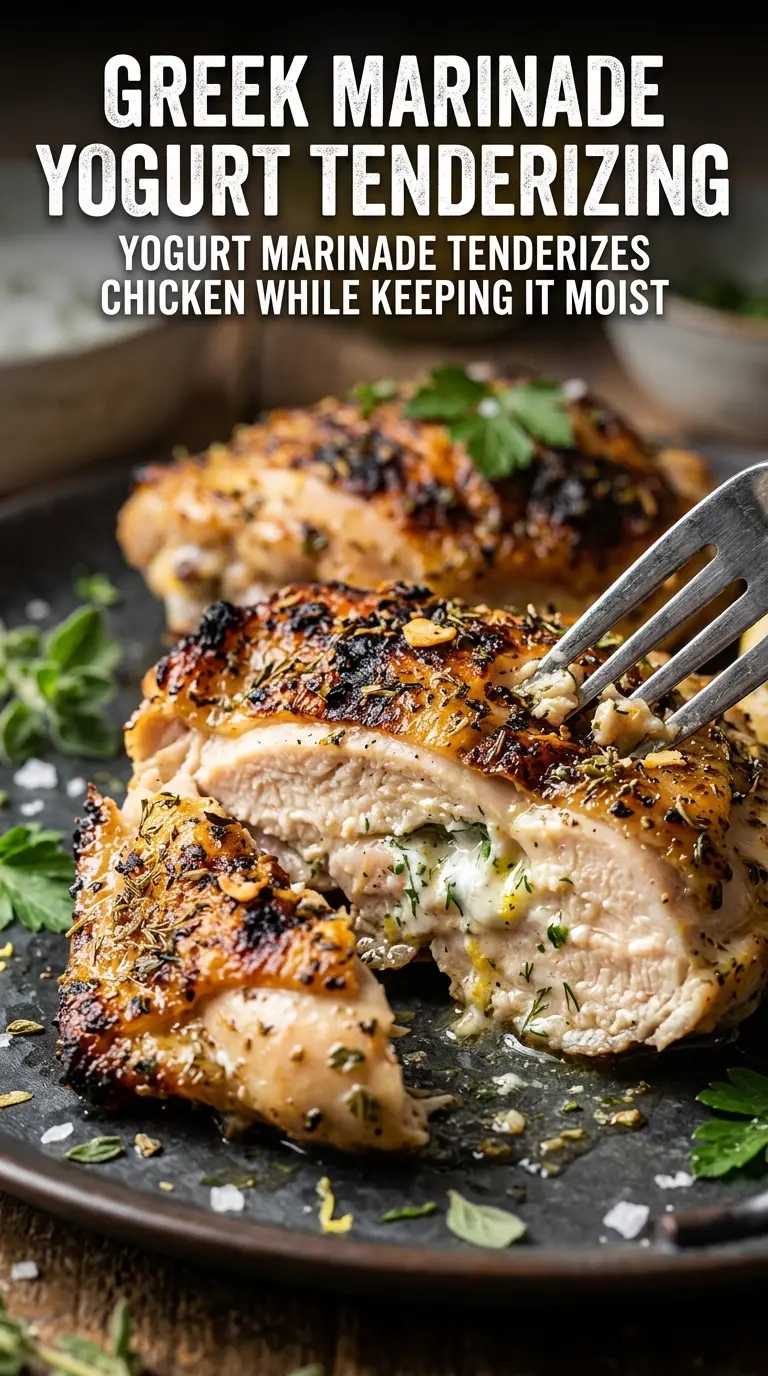
- Chicken pieces — Bone-in pieces stay juicier on the grill, but boneless thighs work well if you want faster cooking. If you use breasts, keep a closer eye on them because they dry out once they pass 165°F.
- Olive oil — This carries the herbs and protects the surface of the chicken from drying out over direct heat. Use a decent olive oil here since it’s a main flavor note, not just a neutral cooking fat.
- Lemon juice and zest — Juice gives the marinade its brightness, but zest gives you the citrus aroma that makes this taste like Greek chicken instead of plain lemon chicken. Don’t skip the zest if you want the flavor to pop.
- Fresh oregano — Fresh oregano has a sharper, greener taste, but dried oregano still works well and is the best substitute. If using dried, use less than fresh because the flavor concentrates quickly.
- Garlic — Minced garlic perfumes the marinade and browns lightly on the grill. Keep the pieces fine so they don’t burn in big chunks on the grates.
- Dried thyme — Thyme adds a quiet savory note that rounds out the oregano and lemon. It’s subtle, but it keeps the marinade from tasting flat.
Grilling the Chicken So the Outside Browns Before the Inside Overcooks
Building the Marinade
Whisk the olive oil, lemon juice, lemon zest, garlic, oregano, thyme, salt, and pepper until the mixture looks cloudy and evenly combined. That tells you the oil and lemon are emulsifying enough to coat the chicken instead of sliding off. If the garlic sits in clumps, break it up before the chicken goes in so every piece gets the same seasoning.
Marinating for Real Flavor
Coat the chicken well and refrigerate it for at least 4 hours. If you’re using bone-in pieces, turn them once halfway through so the marinade reaches every surface. Pull the chicken from the fridge about 20 minutes before grilling so it doesn’t hit the heat stone-cold, which can leave the outside overdone before the center catches up.
Grilling Over Medium-High Heat
Set the chicken on a clean, lightly oiled grill over medium-high heat. You want steady sizzling, not violent flare-ups. If the flame jumps from the oil in the marinade, move the chicken briefly to a cooler spot and let the heat settle; burnt garlic will taste bitter long before the meat is cooked.
Checking for Doneness and Resting
Cook until the internal temperature reaches 165°F, with clear juices and a browned surface that releases fairly cleanly from the grates. Don’t keep flipping every minute or the chicken won’t build color. Let it rest for 5 minutes before serving so the juices settle back into the meat instead of running out onto the cutting board.
How to Adapt This Greek Chicken for Different Nights at Home
Boneless Thighs for Faster Cooking
Boneless thighs cut the grill time down and stay forgiving if you’re nervous about dry chicken. They won’t have the same dramatic presentation as bone-in pieces, but they take on the marinade beautifully and stay tender even if the heat runs a little high.
Oven-Baked Greek Chicken
If grilling isn’t an option, bake the marinated chicken on a sheet pan at 425°F until it reaches temperature and starts to brown at the edges. You’ll lose a little of the smoky char, but the lemon and oregano still come through clearly.
Dairy-Free, Naturally
This recipe is already dairy-free, which makes it easy to serve with rice, potatoes, or a big Greek-style salad without changing a thing. The olive oil does the rich work that butter or yogurt might do in other marinades, so you don’t need a dairy substitute here.
Using Dried Herbs Instead of Fresh
Dried oregano works well if that’s what you have, and it actually gives a slightly deeper, more concentrated herb note. Use less than you would fresh because dried herbs need time in the marinade to soften and bloom.
Storage and Reheating
- Refrigerator: Store cooked chicken in an airtight container for up to 4 days. The lemon flavor stays bright, though the skin won’t stay crisp.
- Freezer: This freezes well for up to 2 months. Wrap portions tightly and thaw in the fridge so the texture stays tender instead of stringy.
- Reheating: Reheat gently in a covered skillet with a splash of water or broth over low heat, or in a 300°F oven until warmed through. High heat dries the chicken out fast, especially if it’s already been grilled.
Answers to the Questions Worth Asking
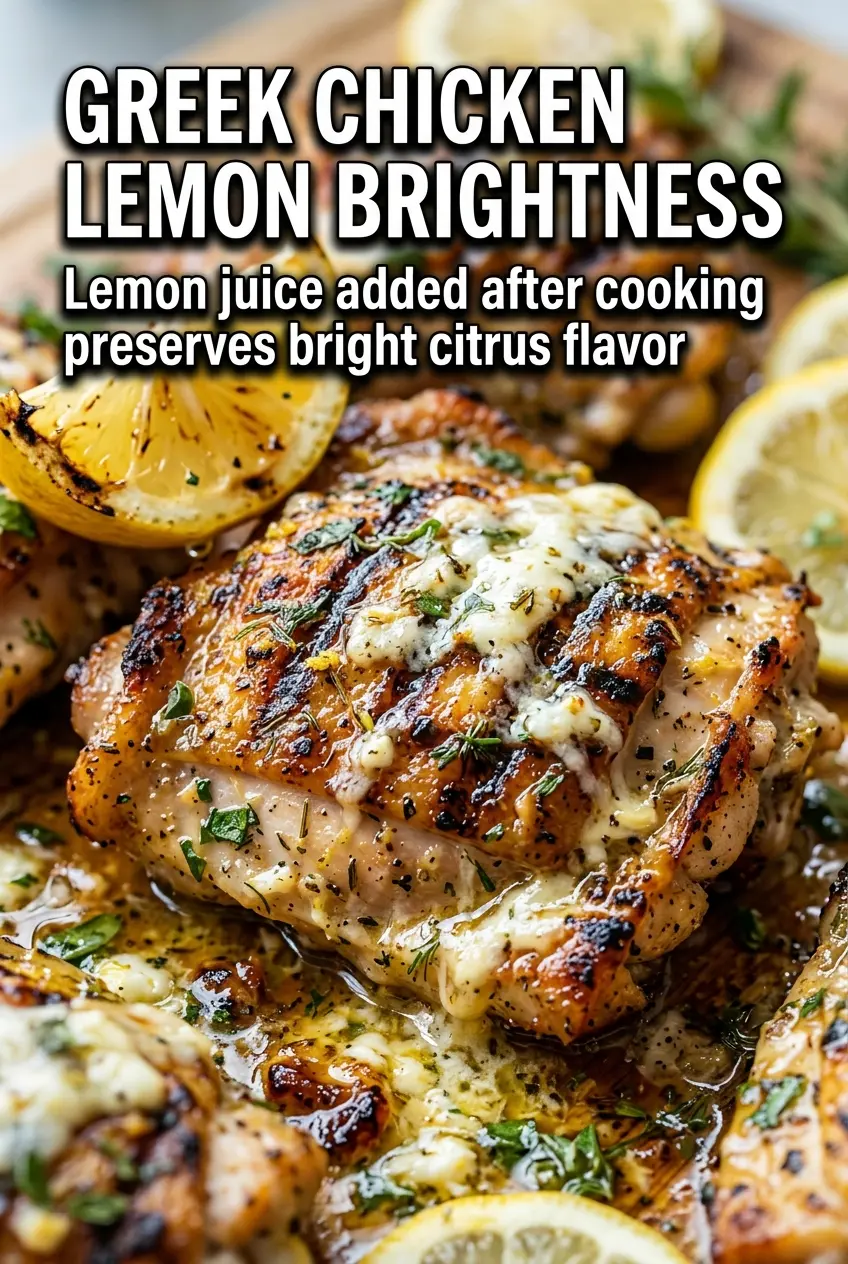
Juicy Greek Chicken
Ingredients
Equipment
Method
- Whisk together olive oil, lemon juice, lemon zest, minced garlic, fresh oregano, dried thyme, salt, and pepper until well combined and fragrant.
- If using dried oregano instead of fresh, whisk it in at the same point so the flavor disperses evenly.
- Add the chicken pieces to the marinade, coat evenly, and marinate for 4 to 24 hours in the refrigerator with cover or sealed container.
- Preheat the grill to medium-high heat, then grill the marinated chicken until the thickest part reaches 165°F internal temperature, turning as needed for even browning.
- Let the grilled chicken rest for 5 minutes before serving so the juices reabsorb and the pieces stay tender.