Juicy steak with creamy garlic sauce is the kind of dinner that lands on the table looking like you put in far more effort than you did. The crust stays deeply browned, the center stays tender and pink, and the sauce turns silky enough to cling to every slice instead of running off the plate. It’s the balance that makes it worth cooking again: bold sear, rich sauce, no fuss.
The trick is giving the steak real heat at the start and keeping the sauce gentle at the end. A smoking-hot cast iron skillet builds the crust fast, and the butter baste in the last minute adds flavor without washing away that sear. Then the same pan does double duty for the sauce, which picks up all the browned bits left behind from the steak.
Below, I’ll walk through the part that matters most: how to keep the sauce smooth, how to avoid overcooking the steak while it rests, and the small ingredient choices that make the finished dish taste restaurant-worthy at home.
The steak came out with a crisp crust and the garlic sauce thickened just enough to spoon over the slices without turning watery. My husband said it tasted like a steakhouse dinner.
Save this juicy steak with creamy garlic sauce for the night you want a hard sear, a silky pan sauce, and a dinner that feels special without extra cleanup.
The Seared Crust Has to Come First, or the Sauce Takes Over
The biggest mistake with steak and cream sauce is rushing the pan and drowning the meat before the crust has a chance to form. High heat is what gives ribeye or New York strip that dark, savory edge, and if the pan isn’t hot enough, the steak steams and sheds its juices. You want to hear an immediate, steady sizzle the second the meat hits the skillet.
Resting the steaks after searing matters just as much. If you cut too early, the juices run out and the slices turn dry, even if the center looked perfect in the pan. Five minutes under foil is enough for the muscle fibers to relax without losing the heat you just built.
- Ribeye or NY strip — Both have enough marbling to stay juicy in a hard sear. Ribeye gives you a richer, more buttery bite, while strip steak slices a little cleaner. A thin steak cooks too fast for this method, so keep the cut about 1 inch thick.
- Cast iron skillet — This holds heat better than a thin pan and keeps the crust moving in the right direction instead of dropping the temperature when the steak goes in.
- Butter — The first bit goes into the pan near the end of the sear for basting, and the rest starts the sauce. If you swap it for more oil, you lose the round, rich finish that makes the sauce taste complete.
- Heavy cream — This is what gives the sauce body without breaking under gentle simmering. Half-and-half will work in a pinch, but the sauce will be thinner and less stable.
- Parmesan — Use finely grated parmesan so it melts smoothly. Coarse shreds can stay grainy in a quick pan sauce.
What Each Ingredient Is Actually Doing in the Pan
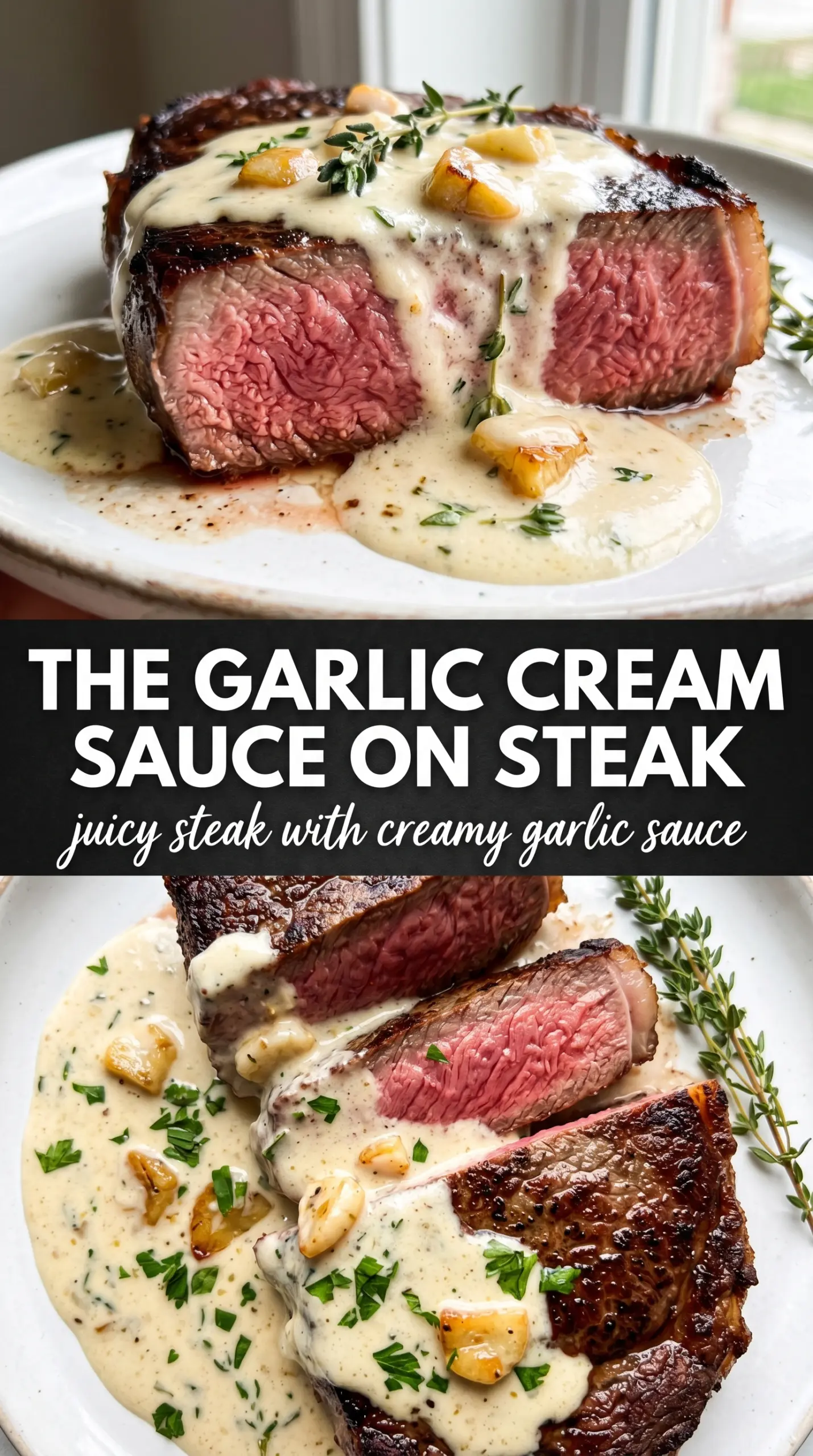
- Garlic — It perfumes the sauce fast, but it burns even faster. One minute in butter is enough; once it turns deep brown, the whole pan tastes bitter.
- Beef broth — This loosens the fond from the skillet and adds depth so the sauce tastes like part of the steak, not an extra topping. Use low-sodium broth if you want control over the final salt level.
- Fresh thyme — Thyme brings a woodsy note that cuts through the cream. Dried thyme can work, but use less because it reads sharper and more concentrated.
- Vegetable oil — A neutral oil with a higher smoke point helps you get the skillet hot enough for searing without the butter scorching before the steak has browned.
Building the Sauce in the Same Pan Without Breaking It
Season and Sear with Patience
Salt the steaks on all sides and let them sit at room temperature for about 30 minutes. That gives the surface time to dry a little, which helps the crust form instead of slipping into a gray, damp exterior. When the skillet is smoking, add the oil and lay the steaks down away from you so the splash doesn’t catch your hand. Don’t move them for the first few minutes; if they stick, they’re not ready to turn yet.
Baste at the End, Not at the Start
Add 2 tablespoons of butter in the last minute and tilt the pan so the melted butter pools on one side. Spoon it over the steaks again and again until the crust looks glossy and the edges are still deeply browned. If you add butter too early, it can burn before the steak is done and leave a bitter layer in the pan.
Reduce the Broth Before the Cream Goes In
After the steaks come out to rest, keep the same skillet on medium heat and add the remaining butter and garlic. Cook just until fragrant, then pour in the broth and let it reduce by half. That step concentrates the savory base and helps the sauce thicken without needing a long simmer. Once the cream goes in, keep the heat gentle; a hard boil can make it split or turn greasy.
Finish with Parmesan and Thyme
Stir in the cream, parmesan, and thyme, then simmer until the sauce lightly coats the back of a spoon. If it looks thin at first, give it another minute or two instead of cranking the heat. The sauce should look glossy and slightly velvety, not thick like paste. Slice the steak across the grain and spoon the sauce over the top while everything is still hot.
How to Adapt This for Different Cuts, Dairy Swaps, and a Bigger Dinner
Swap the Ribeye for Strip Steak
NY strip gives you a leaner slice and a firmer bite, which some people prefer with a rich sauce. It still sears beautifully, but it won’t baste up quite as lush as ribeye, so don’t overcook it trying to chase extra color.
Make It Dairy-Light Without the Sauce Splitting
You can use a smaller amount of butter and swap in half-and-half, but the sauce will be thinner and a little less stable. Keep the heat low and skip the boil if you go this route, because reduced-fat dairy breaks much faster than heavy cream.
Make It Gluten-Free Without Changing the Method
This recipe is naturally gluten-free as written, as long as your broth is certified gluten-free. The texture and technique stay exactly the same, so there’s no tradeoff here.
Double the Sauce for Mashed Potatoes or Pasta
If you want extra sauce for serving over potatoes or noodles, double the cream, broth, parmesan, and thyme, but keep the garlic amount moderate so it doesn’t take over. The sauce will reduce a little more slowly in a larger batch, so give it a minute longer on the stove.
Storage and Reheating
- Refrigerator: Store leftovers in an airtight container for up to 3 days. The steak will cook a little more as it chills, and the sauce may thicken.
- Freezer: I don’t recommend freezing this dish. Cream sauces tend to separate after thawing, and the steak loses the texture that makes it worth making.
- Reheating: Warm the steak gently in a covered skillet over low heat with a splash of broth or cream. Don’t blast it in the microwave or the meat will tighten up and the sauce can turn oily.
Answers to the Questions Worth Asking
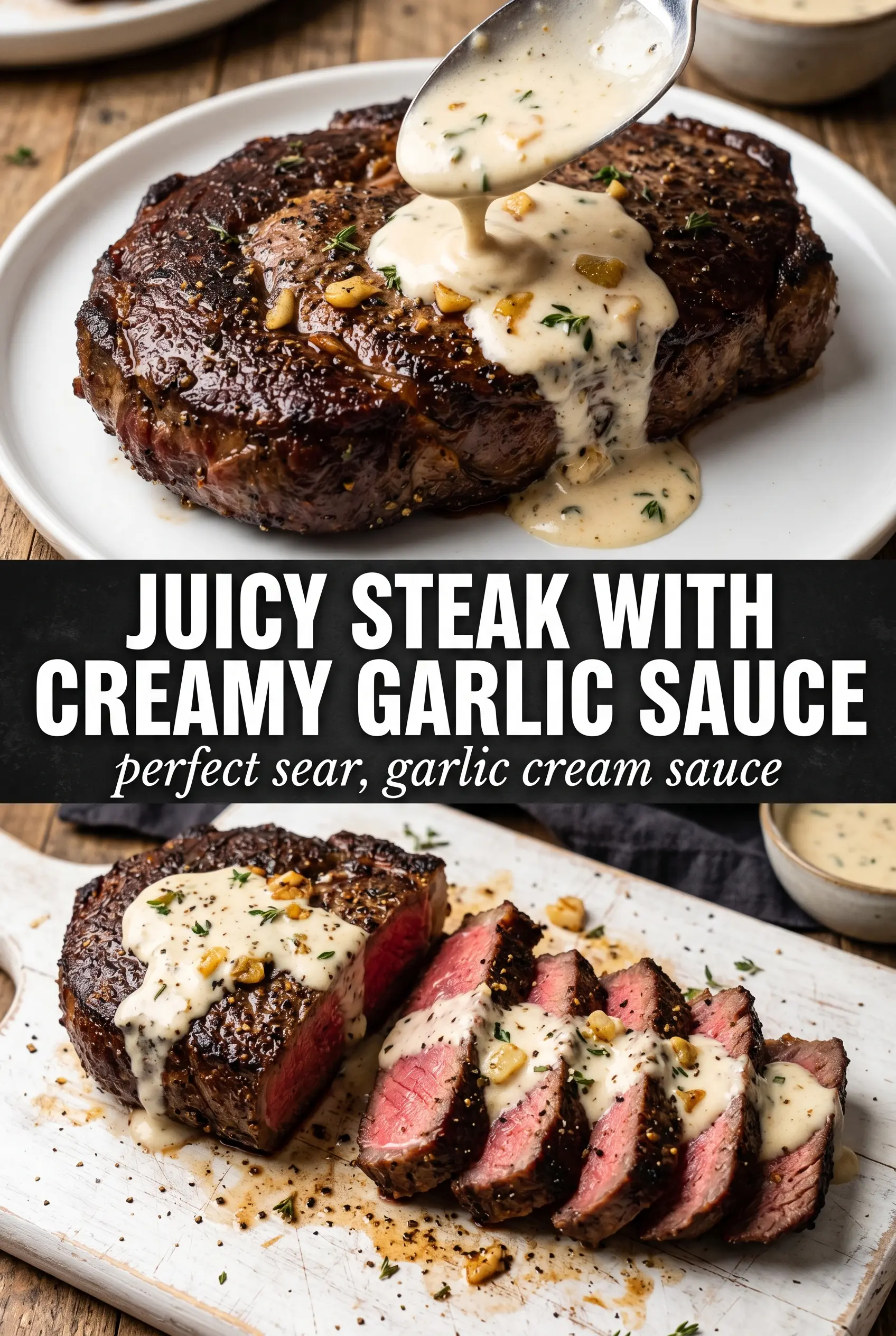
Juicy Steak with Creamy Garlic Sauce
Ingredients
Equipment
Method
- Generously season the steaks with salt and coarse black pepper on all sides, then let them rest at room temperature for 30 minutes.
- Heat a cast iron skillet over high heat until smoking, add the vegetable oil, and sear the steaks for 3–4 minutes per side for medium-rare.
- Add 2 tablespoons butter in the last minute and baste constantly, watching for a deep golden-brown crust.
- Remove the steaks, tent them with foil, and rest for 5 minutes to keep them juicy.
- In the same pan over medium heat, melt the remaining butter and cook the minced garlic for 1 minute.
- Add the beef broth and reduce by half, scraping up browned bits while bubbling vigorously.
- Add the heavy cream, parmesan, and fresh thyme, then simmer until the sauce coats the back of a spoon.
- Slice the steaks and serve with the creamy garlic herb sauce spooned generously over the top.