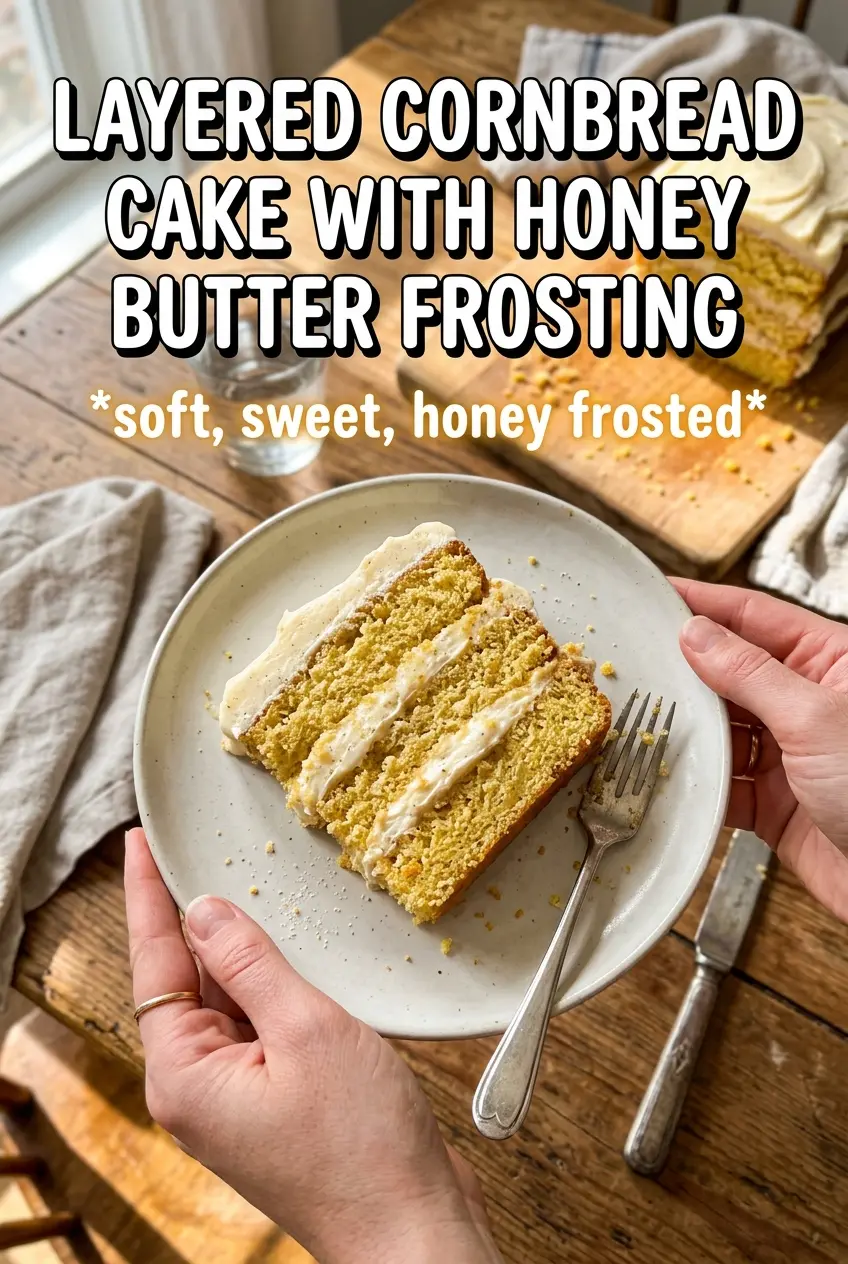
Layered cornbread cake lands somewhere between a celebration cake and a warm skillet of cornbread, and that’s exactly why it gets attention the second it hits the table. The crumb stays tender and lightly gritty from the cornmeal, the honey brings a soft floral note, and the frosting turns the whole thing into something that feels nostalgic and a little unexpected. It slices cleanly, stands tall, and tastes even better after the layers have had a few minutes to settle together.
This version works because the batter is built for balance. The flour keeps the layers from crumbling, the buttermilk adds enough tang to keep the sweetness from flattening out, and the melted butter makes the texture rich without weighing it down. The frosting is whipped until pale and airy so it spreads like silk instead of sinking into the cake, and that finish of honey and flaky salt keeps every bite from reading too sweet.
Below, I’m walking through the small details that matter here: how to keep the layers even, why the frosting needs a little patience, and how to adapt the cake if you want to move it in a slightly different direction.
The layers baked up even and the honey butter frosting stayed fluffy instead of sliding off. I topped it with the flaky salt and everyone kept saying it tasted like cornbread and birthday cake had the best kind of argument.
Save this layered cornbread cake for the honey butter frosting and salty finish that make it stand out from a regular layer cake.
The Trick to Keeping Cornbread Layers Tender Instead of Dry
The biggest risk in a layered cornbread cake is treating it like a rustic skillet bread and overbaking it. Cornmeal gives you structure, but it also dries out faster than a plain vanilla cake, so the layers need to come out as soon as the center is set and a toothpick comes out clean or with just a few moist crumbs. If you wait for them to look deeply browned and firm all the way through, the cake will slice neatly and eat like sawdust.
The other thing that matters is mixing. Once the dry ingredients and wet ingredients come together, the batter should look unified but not whipped. Overmixing develops the flour and makes the crumb tight, which is the opposite of what you want here. A gently mixed batter gives you that soft, even layer that holds up under frosting without becoming bready.
- Cornmeal — Use standard yellow cornmeal for the best balance of texture and color. Fine cornmeal makes a softer cake, while medium grind gives more cornbread character. Very coarse meal can feel gritty here.
- Buttermilk — This adds tang and keeps the crumb tender. If you don’t have it, stir 1/2 tablespoon lemon juice or vinegar into 1/2 cup milk and let it sit for 5 minutes, but the flavor won’t be quite as rounded.
- Honey — Honey softens the cornmeal flavor and ties the cake to the frosting. The cake works without it, but it tastes flatter and less layered in flavor.
- Baking powder and baking soda — Both matter here. The powder gives lift, and the soda reacts with the buttermilk for better browning and a lighter crumb. Don’t swap one for the other.
Whipping the Frosting Until It’s Light Enough to Spread Cleanly
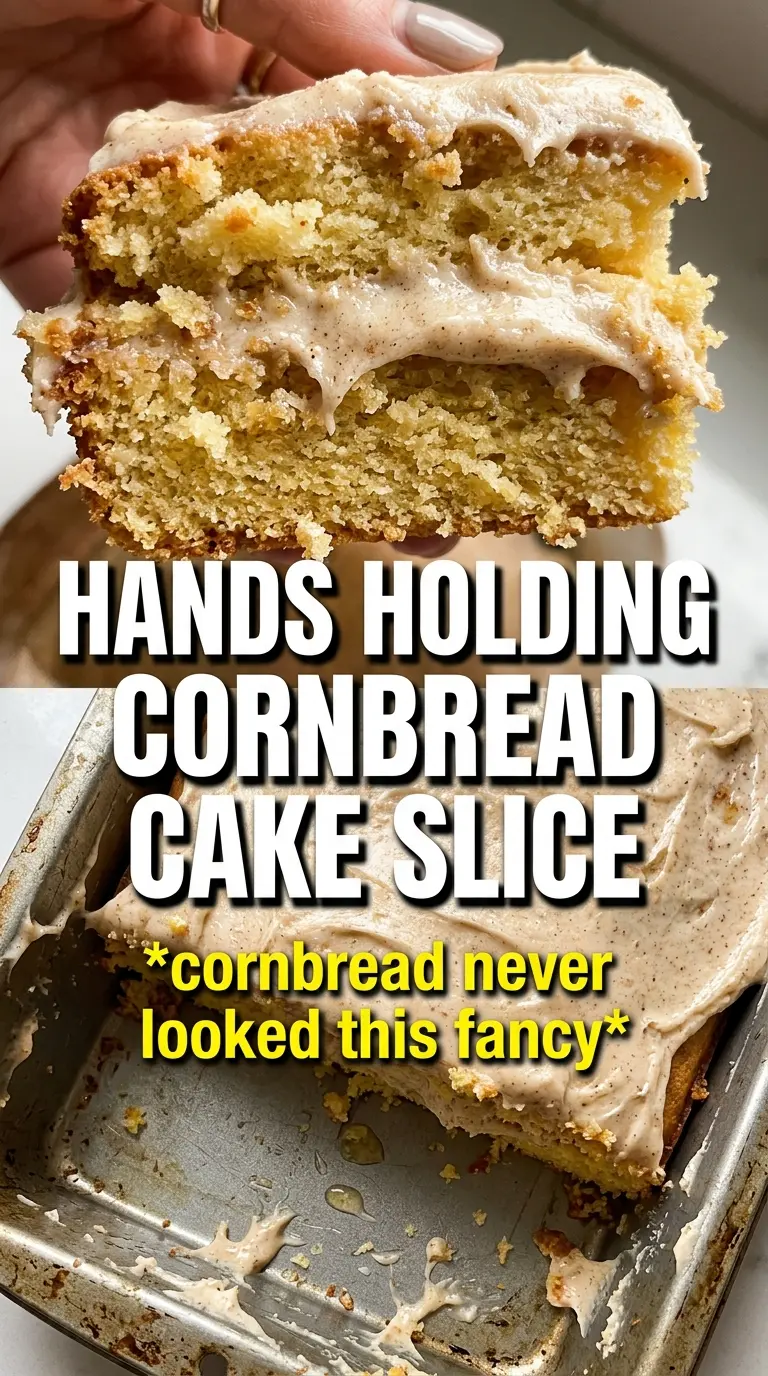
Use softened butter, not melted butter, for the frosting. You need it cool enough to trap air, because that’s what gives the honey butter frosting its pale color and spreadable texture. If the butter is too warm, the frosting turns slack and greasy; if it’s too cold, it looks curdled and never gets fluffy.
Beat the butter with the honey first, then add the powdered sugar gradually. That order helps the honey disperse and keeps the sugar from puffing everywhere at the start. Once the frosting comes together, let it whip for another minute or two until it looks lighter and the texture loosens just enough to swoop over the cake without tearing the layers.
- Butter — This is the backbone of the frosting, so use real unsalted butter and let it soften fully. Margarine won’t whip the same way and usually gives a thinner finish.
- Powdered sugar — This builds body and sweetness. Add it in stages so the frosting stays smooth and doesn’t clump.
- Heavy cream — Just a little cream loosens the frosting enough to spread between layers. If the frosting feels too thick, add another teaspoon at a time instead of pouring in more at once.
- Salt — Don’t skip it. The salt keeps the honey from tasting one-note and makes the corn flavor in the cake taste fuller.
Building the Layers Without Crushing the Cake
Mixing the Batter
Whisk the dry ingredients together first so the baking powder, baking soda, and salt are evenly distributed. In a separate bowl, whisk the eggs, milk, buttermilk, melted butter, honey, and vanilla until the mixture looks smooth and glossy. When you fold the wet into the dry, stop as soon as you no longer see dry streaks. A few small lumps are fine; a tough batter is not.
Baking Even Layers
Divide the batter evenly between the three greased 8-inch pans so each layer bakes at the same speed. The batter should sit level in the pans, not mounded in the center. Bake until the tops spring back when lightly touched and a toothpick comes out clean. If the edges brown too quickly, your oven may run hot, so start checking a couple of minutes early.
Cooling and Frosting
Let the layers cool completely before you stack them. Warm cornbread cake will melt the frosting and slide around, and once that starts it’s hard to recover a clean finish. Spread a generous layer of frosting between each cake layer, then cover the sides and top. The honey drizzle and flaky salt go on last, right before serving, so the top stays glossy and the salt keeps its crunch.
Ways to Adjust the Cake Without Losing the Point
Gluten-Free Version
Use a 1:1 gluten-free baking blend in place of the all-purpose flour. The cake will still rise and slice well, but the crumb may be a little more delicate, so let the layers cool fully before moving them. The cornmeal keeps the texture interesting, which helps this swap work better than in a plain layer cake.
Dairy-Free Adaptation
Swap in plant butter for both the cake and frosting, and use a plain unsweetened non-dairy milk with a splash of vinegar instead of buttermilk. The frosting won’t whip quite as airy as the butter version, but it will still spread nicely if you beat it long enough and keep the cake layers cool.
More Honey, Less Sugar
If you want the cornbread flavor to lean more savory-sweet, cut the granulated sugar in the cake to 1/2 cup and keep the honey in both the batter and frosting. The texture stays tender, but the honey becomes more noticeable, especially with the flaky salt on top.
Storage and Reheating
- Refrigerator: Store covered for up to 4 days. The cake stays moist, and the frosting firms up a little, which actually makes slicing easier.
- Freezer: Freeze unfrosted layers tightly wrapped for up to 2 months. Frosting the cake after thawing gives the cleanest texture and keeps the decoration from sweating.
- Reheating: Let chilled slices sit at room temperature for 20 to 30 minutes before serving. If you warm them, do it briefly and gently; too much heat will melt the frosting and blur the layers.
Questions I Get Asked About This Recipe
Layered Cornbread Cake With Honey Butter Frosting
Ingredients
Equipment
Method
- Preheat oven to 350F and grease three 8-inch round pans.
- Whisk together all-purpose flour, yellow cornmeal, granulated sugar, baking powder, baking soda, and salt in one bowl.
- Whisk eggs, whole milk, buttermilk, melted unsalted butter, honey, and vanilla in a separate bowl until smooth.
- Fold the wet ingredients into the dry ingredients just until combined, then divide the batter evenly between the three pans.
- Bake at 350F for 22-25 minutes, until a toothpick comes out clean.
- Cool the baked layers completely before frosting.
- Beat unsalted butter, softened, with honey until very light and fluffy, then mix in powdered sugar.
- Add heavy cream, vanilla, and salt and beat until smooth and spreadable.
- Frost generously between all layers and spread frosting over the outside of the cake.
- Drizzle honey over the top and sprinkle flaky sea salt on top as a final finish.


