Mango shrimp ceviche with avocado lands with the kind of bright, cold, juicy bite that disappears fast at the table. The shrimp stay tender, the mango brings sweetness without making the dish feel heavy, and the avocado gives every spoonful a soft, buttery finish. It’s the sort of appetizer that looks flashy in a bowl but comes together with almost no work.
The trick is keeping the texture clean. The shrimp are already cooked here, so the citrus is doing the job of seasoning and tightening the flavors instead of fully “cooking” raw seafood. That means you can control the timing, keep the shrimp from going rubbery, and add the avocado at the end so it stays intact instead of turning soft and muddy. Orange juice rounds out the sharp lime and keeps the fruit from tasting one-note.
Below, I’ve included the small details that matter: when to fold in the avocado, how to balance the acid with salt, and what to change if your mango isn’t perfectly ripe. Those little choices are what make this ceviche taste fresh and composed instead of watery.
The shrimp stayed tender and the lime-orange mix wasn’t too sharp. I added the avocado at the end like you said, and it held its shape all the way through dinner.
Love the bright mango, shrimp, and avocado combo? Save this ceviche for the next time you want a chilled appetizer that tastes fresh and looks beautiful in a bowl.
Why the Avocado Goes in at the Very End
Avocado is the ingredient that can make this ceviche feel luxurious, but it’s also the one most likely to turn the bowl soft and messy if it goes in too early. Citrus will eventually soften the edges, and a ripe avocado breaks down fast once it’s mixed with salt and acid. Folding it in right before serving keeps the cubes distinct and gives you that creamy contrast against the shrimp and mango.
The other thing that matters here is balance. Too much lime without enough fruit or fat can make the dish taste sharp and thin. The orange juice and olive oil round the edges just enough to keep the ceviche lively instead of bracing.
- Cooked shrimp — Using cooked shrimp keeps the texture predictable and saves you from guessing about acid “cooking” raw seafood. Halve them so every bite picks up the citrus and the fruit.
- Mango — Use ripe mango with a little give under the skin. If it’s firm, the ceviche tastes flat; if it’s too soft, it collapses into the juice.
- Avocado — Choose avocados that are ripe but not mushy. Slightly firmer avocados hold their shape better after folding and chilling.
- Lime and orange juice — Lime brings the clean sharpness; orange softens it and keeps the fruit in the dish from tasting too tart. Fresh juice matters here because bottled juice can taste dull or bitter.
Building the Brightest Bite Without Turning It Watery
Every part of this bowl is doing a different job. The shrimp carries the seasoning, the mango brings sweetness, the onion and jalapeño give crunch and heat, and the cilantro keeps the whole thing tasting green and fresh. If one part dominates, the ceviche loses its snap.
Salt matters more than people think in a cold dish like this. It wakes up the mango, sharpens the citrus, and keeps the avocado from tasting bland. Add it at the end, after you’ve tasted the juices, because the lime and orange will change slightly as they sit.
- Red onion — Finely dice it so it perfumes the bowl without taking over. If the onion tastes harsh, soak it in cold water for 10 minutes and drain well before adding it.
- Jalapeño — Mince it fine for even heat. Remove the seeds if you want a softer finish; leave some in if you want a sharper bite.
- Cilantro — Add it last so it stays bright and doesn’t wilt into the citrus. If you’re one of the people who dislikes cilantro, parsley can work, but the dish loses some of its classic edge.
- Olive oil — A small drizzle smooths the acidity and helps the flavors cling to the shrimp. Don’t overdo it or the ceviche starts to taste oily instead of fresh.
The Chill Time That Matters Most
Marinating the Shrimp in Citrus
Start with the cooked shrimp in a glass bowl and pour the lime and orange juice over them. Stir once or twice so everything is coated, then refrigerate for at least 30 minutes. The shrimp should taste seasoned and lightly brightened, not flooded; if the bowl looks soupy, you’ve used too much juice for the amount of shrimp.
Adding the Fruit and Heat
Fold in the mango, red onion, jalapeño, and cilantro just before serving. This keeps the mango juicy and the onion crisp, and it prevents the herbs from getting muddy. If you add these too early, the mango starts giving up juice and the ceviche loses its clean, spoonable texture.
Finishing and Serving Cold
Drizzle in the olive oil, season with salt and pepper, and taste again. The finished ceviche should be bright, lightly sweet, and cool on the tongue with a little heat at the back. Serve it chilled with tortilla chips, or spoon it into small glasses for a cleaner presentation that holds the toppings in place.
How to Adapt This Ceviche for Different Tables
Make It Dairy-Free and Gluten-Free Without Changing a Thing
This recipe is already naturally dairy-free and gluten-free, so the only real job is choosing the right chips. Stick with corn tortilla chips or serve it in lettuce cups if you want something lighter. The ceviche itself keeps the same bright texture either way.
Swap the Mango for Pineapple
Pineapple gives you a sharper, slightly more tropical bite and a little extra acidity. Dice it small and use it in the same amount as the mango. The result tastes less mellow and a little more punchy, which works well if your shrimp are especially sweet.
Turn Down the Heat for a Milder Appetizer
Use half a jalapeño, or remove the seeds and inner ribs before mincing. That keeps the fresh pepper flavor without the lingering burn. If you skip the jalapeño entirely, the ceviche still works, but it needs a little extra salt and lime to stay lively.
Storage and Reheating
- Refrigerator: Best eaten the day it’s made. It will hold for about 1 day, but the avocado softens and the mango releases more juice.
- Freezer: Don’t freeze it. The avocado turns grainy and watery, and the citrus-dressed shrimp lose their clean texture.
- Reheating: No reheating needed. Keep it chilled and stir gently before serving to redistribute the juices. If it sits too long, drain off a little excess liquid rather than adding more salt first.
Answers to the Questions Worth Asking
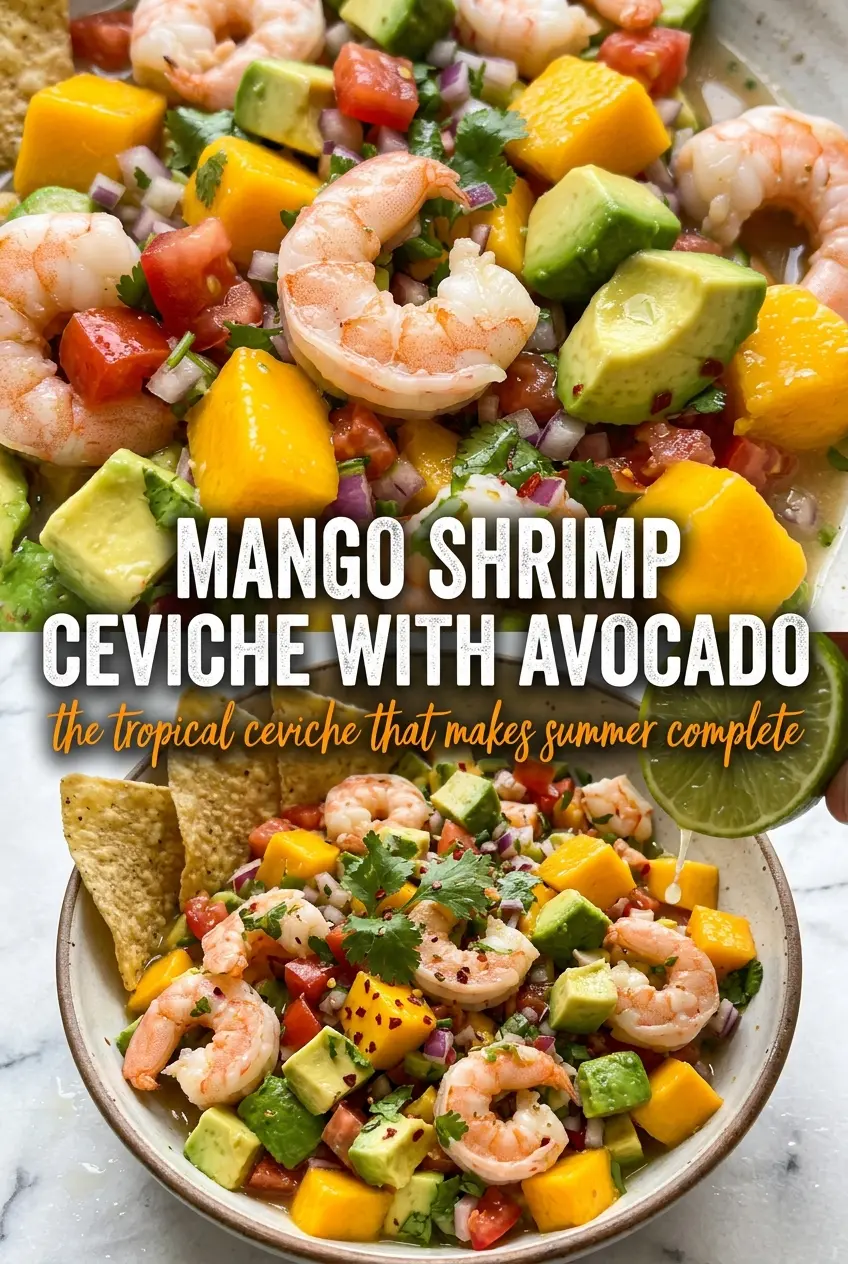
Mango Shrimp Ceviche with Avocado
Ingredients
Method
- Combine the cooked shrimp with the lime juice and orange juice in a glass bowl, ensuring the shrimp is evenly submerged for citrus flavor.
- Cover and refrigerate for at least 30 minutes, stirring occasionally, until the shrimp looks “cooked” and opaque from the citrus.
- Just before serving, gently fold in the diced mango, diced avocado, finely diced red onion, minced jalapeños, and chopped cilantro so the cubes stay intact.
- Drizzle with the olive oil and season with salt and pepper to taste.
- Serve chilled in a bowl or small glasses with tortilla chips on the side, keeping the vibrant colors visible.