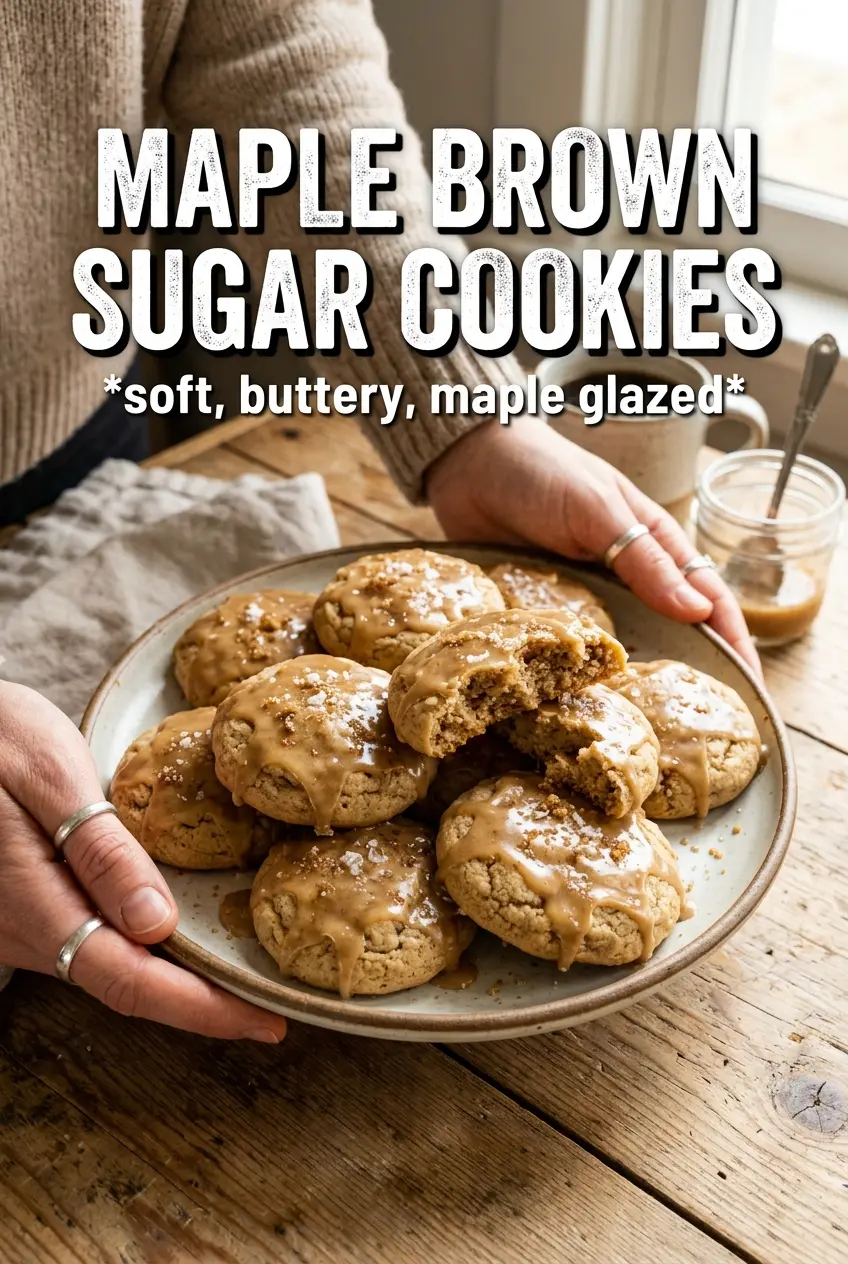
These maple brown sugar cookies bake up soft in the middle with crinkled tops, caramel-colored edges, and just enough maple flavor to taste warm and round without turning cloying. The brown sugar keeps them tender, the cinnamon stays in the background, and the flaky salt at the end pulls the whole cookie into focus. They’re the kind of cookie people reach for twice because the first one disappears before they’ve decided how much they like it.
What makes this version work is balance. Brown sugar does the heavy lifting for moisture and chew, while a little cream of tartar keeps the texture from going flat or overly cakey. The maple syrup goes into the dough for flavor, but the maple extract is what makes the maple actually read clearly after baking. Without it, the cookies taste pleasant; with it, they taste like maple on purpose.
Below you’ll find the small details that matter most: how to keep the centers soft without underbaking, why the glaze should be thick enough to ribbon instead of run, and the easiest way to finish them so the salt stays crisp on top.
The cookies stayed soft for days, and the maple glaze set up just enough that they weren’t messy to stack. I loved the little hit of flaky salt on top with the brown sugar center.
Save these maple brown sugar cookies for the nights when you want soft centers, maple glaze, and a salty finish in one batch.
The Part That Keeps These Cookies Soft Instead of Dry
The texture here comes from managing sugar and heat, not from baking them until they look fully done. Brown sugar brings moisture and chew, but if the cookies stay in the oven until the centers look set, they’ll finish dry after cooling. Pull them when the edges are set and the middle still looks a little puffy and underdone; that’s the window where they finish into a soft cookie instead of a crumbly one.
Cream of tartar helps the dough keep a little lift and tenderness, which matters because maple-heavy doughs can otherwise bake up dense. The other thing worth respecting is the butter temperature. Softened butter should press easily but still hold shape. Melted or greasy butter gives you cookies that spread too much and lose that crinkled top.
What the Maple Syrup Does Here That Brown Sugar Can’t
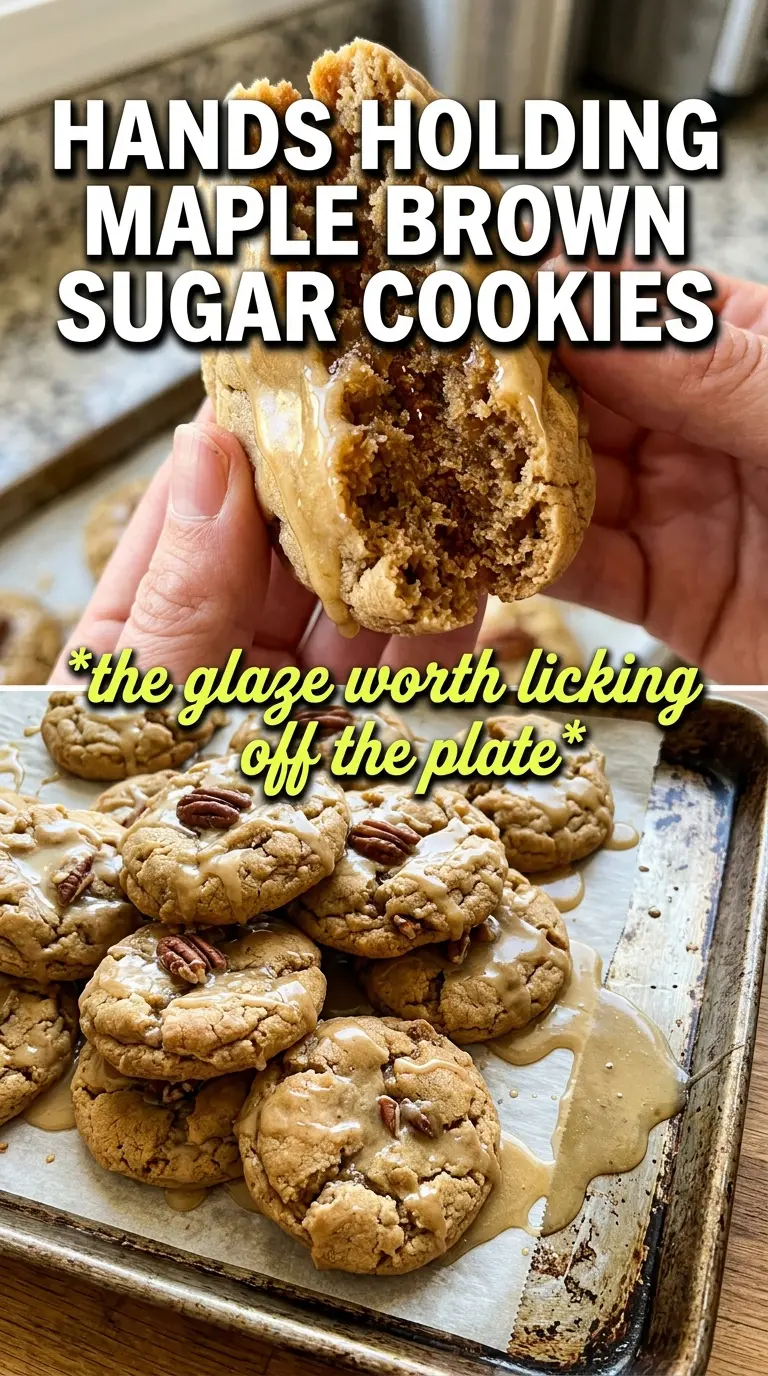
- Brown sugar — This gives the cookie its deep caramel base and most of the chew. Dark brown sugar will push the maple-caramel note a little further, while light brown sugar keeps the flavor softer and more balanced.
- Pure maple syrup — This adds real maple flavor and a little extra moisture, but it won’t carry the whole cookie on its own. Use the real stuff here; imitation syrup tastes flat after baking.
- Maple extract — This is what makes the maple stand out after the cookies are baked and glazed. If you leave it out, the cookies still work, but the flavor gets quieter.
- Cream of tartar — It gives the cookies gentle lift and helps keep the centers tender. There isn’t a perfect substitute if you want the same soft, lightly crinkled texture.
- Flaky sea salt — This finishes the cookies with a sharp little contrast against the sweet glaze. Don’t swap it for table salt; you want the burst, not uniform salinity.
Mixing the Dough Without Losing the Texture
Whisk the Dry Ingredients First
Combine the flour, baking soda, cream of tartar, cinnamon, and salt before the wet ingredients go in. That keeps the leavener and spice evenly distributed, which matters in a dough this soft. If you skip a proper whisk, you’ll get random salty bites and uneven spread from cookie to cookie.
Cream the Butter and Brown Sugar Until It Looks Light
Beat the softened butter with the brown sugar until the mixture turns paler and looks fluffy around the edges of the bowl. This traps air, which helps the cookies rise a little before they set. If the mixture stays greasy and dense, the butter was too warm or the sugar wasn’t worked in long enough.
Stop Mixing as Soon as the Flour Disappears
Add the dry ingredients and fold just until no streaks of flour remain. Overmixing after the flour goes in builds too much structure and makes the cookies tougher. The dough should look thick, soft, and scoopable, not smooth like cake batter.
Bake for Set Edges and Tender Centers
Scoop 2-tablespoon rounds onto parchment-lined sheets and bake until the edges are set and the centers still look slightly soft, about 10 to 12 minutes. They’ll keep cooking on the pan after they come out, so don’t wait for full color across the top. If the bottoms brown too quickly, your oven runs hot; drop the rack one notch or shorten the bake by a minute.
Glaze Only After the Cookies Cool
Let the cookies cool completely before drizzling on the maple glaze. Warm cookies melt the glaze instead of letting it sit in those pretty thin ribbons over the crinkles. The glaze should be thick enough to cling but loose enough to flow from a spoon in a steady line.
How to Adapt Them Without Losing the Cookie Character
Make Them Dairy-Free
Use a plant-based butter stick with a similar fat content instead of tub-style spread. The cookies will still spread and soften properly, but the flavor will be a little less rich, so the maple glaze and flaky salt matter even more.
Use Light Brown Sugar for a Gentler Maple Note
Light brown sugar gives you a softer caramel flavor and a paler cookie. The texture stays the same, but the final result tastes a little cleaner and less molasses-heavy.
Skip the Glaze for a Less Sweet Cookie
These cookies still taste complete without the glaze if you want a softer, less sugary finish. Add the flaky salt right after baking so it sticks to the warm tops and gives you that sweet-salty contrast without the extra drizzle.
Freeze the Dough for Fresh-Baked Cookies Later
Scoop the dough, freeze the portions on a tray, then move them to a freezer bag. Bake from frozen with an extra minute or two; that slower spread gives you thicker cookies with slightly softer centers.
Storage and Reheating
- Refrigerator: Store in an airtight container for up to 5 days. The glaze will stay set, though the cookies soften a bit more by day two.
- Freezer: Freeze the unglazed cookies for up to 2 months, layered with parchment. Add glaze after thawing for the cleanest finish.
- Reheating: Warm plain cookies for 8 to 10 seconds in the microwave if you want them soft again. If they’re glazed, let them come to room temperature instead, or the drizzle can melt and turn sticky.
Questions I Get Asked About This Recipe
Maple Brown Sugar Cookies
Ingredients
Equipment
Method
- Preheat the oven to 375F and line baking sheets with parchment so the cookies bake evenly and release cleanly.
- Whisk all-purpose flour, baking soda, cream of tartar, cinnamon, and salt in a bowl until the spices and leaveners are evenly distributed.
- Beat unsalted butter and brown sugar until light and fluffy, then beat in the eggs, pure maple syrup, vanilla extract, and maple extract until smooth.
- Fold the flour mixture into the butter mixture just until no dry streaks remain, keeping the dough thick.
- Scoop the dough into 2-tablespoon rounds and bake for 10-12 minutes, until the edges are set but the centers still look slightly soft.
- Cool completely, then drizzle maple glaze over the cookies and sprinkle flaky sea salt on top for a sweet-salty finish.
- Stir powdered sugar with maple syrup and milk until smooth, then drizzle while the cookies are fully cooled.