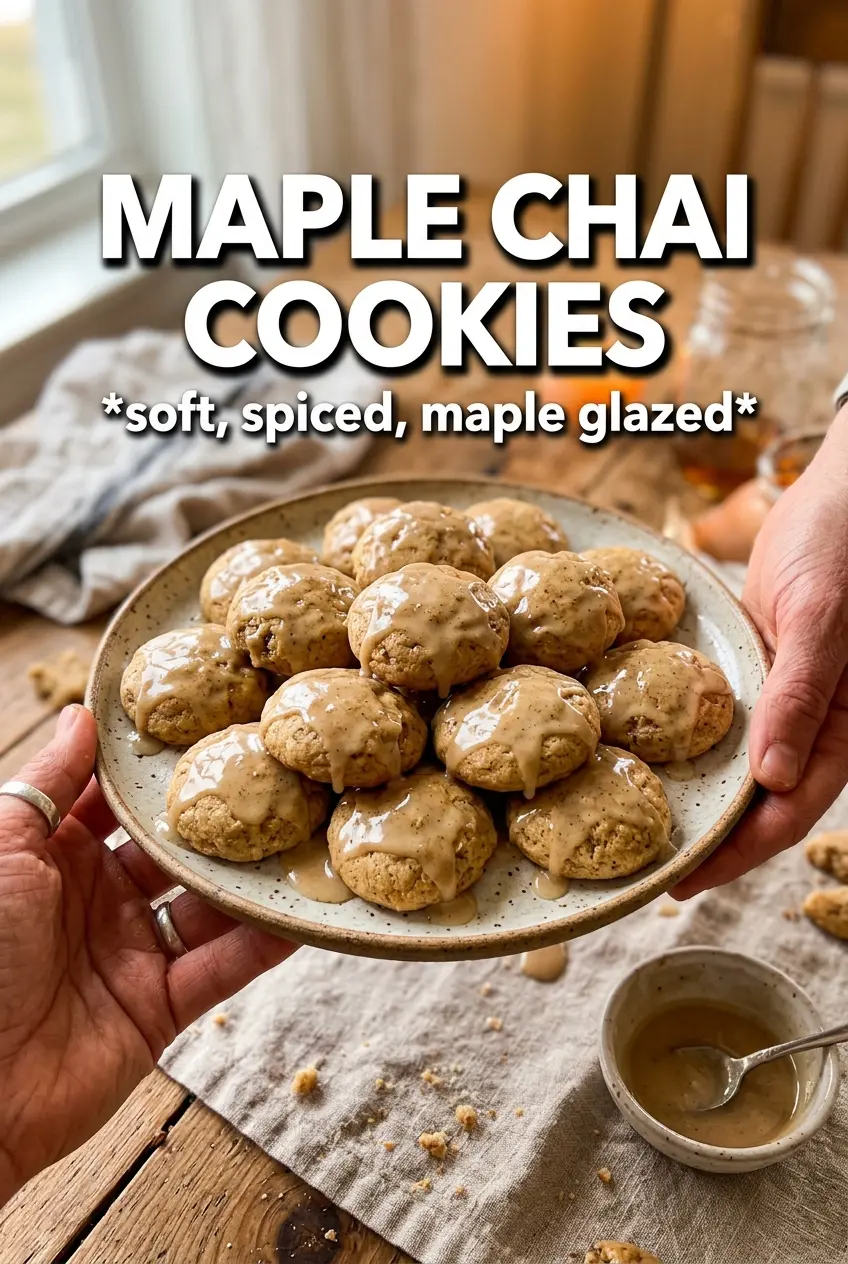
Maple chai cookies bake up with crisp edges, soft centers, and a warm spice blend that tastes like it belongs with a mug of tea. The maple glaze draped over the top gives them a sweet finish without hiding the cardamom, cinnamon, and ginger underneath. They have that crinkled, bakery-style look, but the texture stays tender instead of dry or cakey.
What makes these work is the balance: enough maple syrup to bring real maple flavor, but not so much that the dough spreads into thin puddles. The brown sugar keeps the centers chewy, while the chai spice sugar adds a lightly crunchy shell that helps the cookies bake with those pretty cracked tops. A small amount of black pepper is worth keeping in the mix; it doesn’t make the cookies taste peppery, but it sharpens the spices in a way that feels fuller and more rounded.
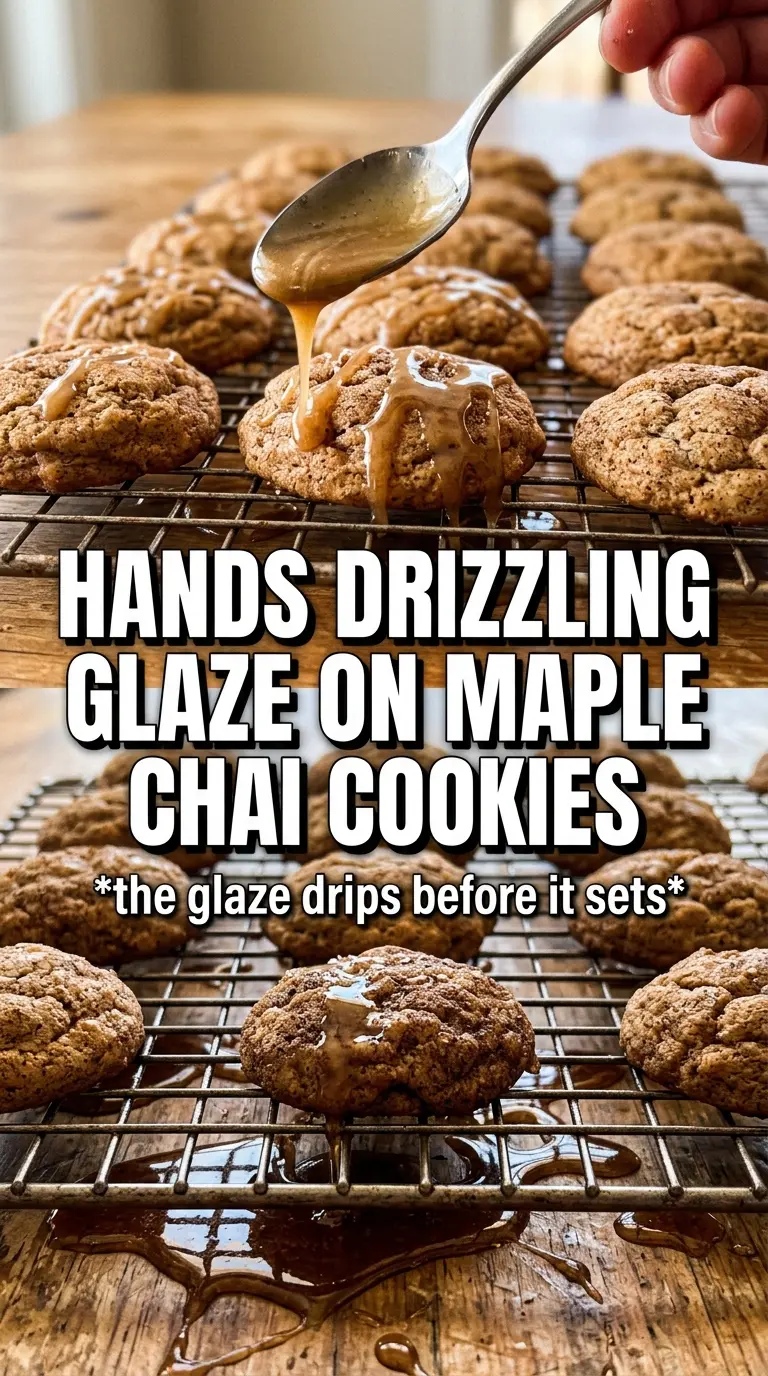
Below you’ll find the little details that matter most, including how to keep the dough from spreading too fast and why the glaze should wait until the cookies are fully cool. That timing makes the difference between a glossy finish and a melted mess.
The chai sugar gave the cookies a little crunch on the outside, and the maple glaze set up beautifully after cooling. Mine baked in 11 minutes and stayed soft for days.
Like these maple chai cookies? Save them to Pinterest for the days when you want soft, spiced cookies with a glossy maple finish.
The Cracks Come From the Sugar Coat, Not from Overbaking
These cookies get their crinkled tops from the chai spice sugar around the outside and the maple syrup in the dough, not from baking them past their best point. If you wait until they look dry all the way through, they’ll end up firmer than they should be. Pull them when the edges are set and the centers still look a little soft; they finish setting on the sheet pan.
That outer coating matters more than people expect. The granulated sugar in the roll helps the tops dry and crack, while the spice mix clings to the dough and gives each bite a little sparkle. If your cookies spread too much, the butter was probably too warm or the dough was overmixed after the flour went in.
- Butter temperature — softened butter should press easily but still hold its shape. If it looks greasy, the dough will spread before the cookies set.
- Maple syrup — use pure maple syrup, not pancake syrup. The flavor is cleaner and the glaze tastes like actual maple instead of just sweetness.
- Spices — the black pepper is small but important. It gives the chai blend a little edge and keeps the flavor from tasting flat.
- Rolling sugar — this is what gives the baked cookies their texture on top. Skip it and the cookies will still taste good, but they’ll lose that bakery-style finish.
What the Maple Syrup Is Doing Here, and Why It Needs the Right Balance
- All-purpose flour — this gives the cookies enough structure to hold the spice and syrup without turning cakey. Measure it lightly or the dough will get dense.
- Brown sugar — this is the chewy backbone. It adds moisture and helps the centers stay soft after baking.
- Granulated sugar — used in both the dough and the rolling sugar, it sharpens the edges and helps with spread and crackly tops.
- Eggs — they bind the dough and help the cookies puff slightly before settling into that soft, chewy middle.
- Powdered sugar for the glaze — it dissolves cleanly and makes a smooth drizzle. Anything coarser leaves the glaze grainy.
- Milk in the glaze — just a spoonful loosens the texture enough to drizzle. Add it slowly so the glaze doesn’t run off the cookies.
Building the Dough So the Cookies Stay Soft in the Middle
Mix the dry ingredients until the spices are evenly distributed
Whisk the flour, baking soda, salt, and spices together until the color looks uniform. That step matters because cardamom and cinnamon tend to clump, and you don’t want one cookie loaded with spice while another tastes underseasoned. The black pepper disappears into the background when it’s mixed well, which is exactly what you want.
Cream the butter and sugars until the mixture looks light and fluffy
Beat the softened butter with both sugars until the mixture lightens in color and looks a little airy. This builds the structure that helps the cookies rise instead of baking into dense rounds. If the butter is too warm, the mixture will look shiny instead of fluffy and the cookies will spread too quickly.
Fold in the flour just until the dough comes together
Add the dry ingredients and mix only until you stop seeing streaks of flour. Overmixing after the flour goes in develops too much gluten, which makes the cookies tougher and less tender. The dough should be soft and scoopable, not sticky enough to smear around the bowl.
Roll, bake, and glaze at the right moment
Scoop the dough into even portions, roll each one in the chai spice sugar, and bake until the edges are set and the centers still look slightly puffed. Let them cool completely before glazing, or the maple glaze will melt into the surface instead of sitting in a clean drizzle. A light dusting of extra cardamom at the end brings the whole cookie back into focus.
How to Adapt These Cookies Without Losing the Maple-Chai Balance
Dairy-Free Version
Use a good dairy-free butter stick in place of the unsalted butter and swap the milk in the glaze for oat milk or almond milk. The cookies will still bake up soft and chewy, though the flavor will be a little less rich than the butter version.
Gluten-Free Swap
A 1:1 gluten-free baking flour can work here if it includes xanthan gum. The cookies may spread a touch less and the centers can be slightly more delicate, so give them a full cool on the pan before moving them.
Extra-Spiced Cookies
If you want a bolder chai finish, add another 1/4 teaspoon cardamom and a small pinch more ginger. Don’t increase the cloves or allspice too much; those spices take over fast and can make the cookies taste sharp instead of warm.
Storage and Reheating
- Refrigerator: Store in an airtight container for up to 5 days. The glaze stays soft, and the cookies get a little chewier by day two.
- Freezer: Freeze the baked cookies without the glaze for the best texture. Layer them with parchment and thaw at room temperature before glazing.
- Reheating: Warm unglazed cookies for 5 to 8 seconds in the microwave if you want that fresh-baked softness back. Too much heat will make the glaze melt and the centers turn rubbery.