These meatballs and gravy land on the plate with the kind of comfort that makes everyone quiet for a minute. The meatballs stay tender instead of dense, the onion gravy turns silky and deep brown, and together they soak right into mashed potatoes in the best possible way. It’s the kind of dinner that feels old-school for a reason: it eats like a full meal and tastes like you spent much longer at the stove than you did.
What makes this version work is restraint in two places. The meat mixture is only mixed until the ingredients hold together, which keeps the meatballs light instead of springy. Then the gravy starts with onions cooked long enough to pick up color and sweetness before the flour goes in, so you get a sauce that tastes built, not rushed. Worcestershire and Dijon do a lot of heavy lifting here too; they add depth and a little sharpness without turning the gravy into something complicated.
Below, I’ve included the little timing details that keep the gravy smooth and the meatballs tender, plus a few smart swaps if you need to work with what’s already in the pantry.
The meatballs stayed tender and the onion gravy thickened up beautifully without any lumps. I served it over mashed potatoes and my husband went back for seconds before I even sat down.
Save these tender meatballs and rich onion gravy for the night you want a cozy dinner over mashed potatoes with almost no fuss.
The Trick to Keeping the Meatballs Tender Before They Hit the Gravy
Most meatballs turn tough because the mixture gets worked like bread dough. Here, the egg, breadcrumbs, and Parmesan are there to bind and season, not to turn the beef into a paste. Stop mixing the moment the ingredients look evenly distributed, then roll the balls gently and brown them in batches so the pan stays hot enough to color the outside instead of steaming it. That first brown crust gives the gravy a better base later.
The gravy matters just as much as the meatballs. The onions need enough time to soften and pick up some color before the flour goes in, or the sauce tastes flat and floury. Once the broth hits the pan, whisk as you pour and keep the heat at a steady simmer; that’s what gives you a smooth, glossy gravy instead of a lumpy one.
What the Parmesan, Dijon, and Worcestershire Are Doing Here

- Ground beef — An 80/20 blend gives you enough fat for juicy meatballs and good browning. Leaner beef will work, but the meatballs will be less tender and the gravy won’t get the same savory drippings from the pan.
- Breadcrumbs and egg — These hold the meatballs together without making them heavy. If you need a gluten-free version, use certified gluten-free breadcrumbs or crushed gluten-free crackers in the same amount.
- Parmesan — This adds salt, depth, and a little firmness to the meatballs. Pre-grated Parmesan works here, though freshly grated melts in a little smoother and tastes cleaner.
- Worcestershire sauce — There’s a little in the meatballs and more in the gravy because it brings that deep, savory backbone you can’t fake with plain salt. If you’re out, soy sauce can stand in, but use a little less because it reads saltier and sharper.
- Dijon mustard — It won’t make the gravy taste like mustard. It just wakes up the broth and keeps the sauce from tasting heavy.
- Onions — Thin slices cook down into the body of the gravy. If you rush them, the sauce loses sweetness and tastes one-note.
Building the Gravy in the Same Pan Without Losing the Brown Bits
Mixing and Shaping the Meatballs
Combine the beef, breadcrumbs, Parmesan, egg, garlic, onion powder, Worcestershire, salt, and pepper until the mixture just comes together. It should look evenly mixed, but it shouldn’t feel sticky and overworked. Roll into 1.5-inch balls with light pressure; if you pack them too tightly, they’ll cook up dense instead of tender. A quick chill for 10 minutes helps them hold their shape if the kitchen is warm, but it isn’t required.
Brown First, Then Build the Gravy
Heat the skillet over medium-high and brown the meatballs on all sides, working in batches if needed. You’re not cooking them through at this stage; you’re looking for a deep golden crust and a pan with browned bits stuck to the bottom. Those bits are the foundation of the gravy, so don’t wipe them out. Pull the meatballs out once they’re browned and set them aside while you start the onions.
Cooking the Onions Until They Taste Sweet
Melt the butter in the same skillet and add the sliced onion. Let it cook for about 10 minutes, stirring often enough to keep it from scorching, until it softens and starts turning golden at the edges. If the pan looks dry before the onions are ready, add a small splash of broth to loosen the browned bits. You want the onions tender and lightly caramelized, not dark and bitter.
Thickening the Gravy the Right Way
Whisk the flour into the onions and butter and cook it for a minute so the raw flour taste cooks off. Then add the broth gradually while whisking so the sauce stays smooth from the start. Stir in the Worcestershire and Dijon, then let the gravy simmer until it coats a spoon. If it looks too thick, add a splash more broth; if it’s thin, give it a few more minutes instead of cranking up the heat.
Finishing the Meatballs in the Sauce
Slide the browned meatballs back into the skillet and spoon gravy over the top. Lower the heat and let everything simmer gently for about 15 minutes, just until the meatballs are cooked through. A hard boil can make the meatballs tough and can also tighten the gravy too much, so keep it at a lazy simmer. Serve the whole pan over mashed potatoes and finish with parsley if you want a fresh, clean note on top.
How to Adapt These Meatballs and Gravy for What’s in Your Kitchen
Make it gluten-free without losing the texture
Swap the breadcrumbs for certified gluten-free breadcrumbs or crushed gluten-free crackers, and use a gluten-free flour blend for the gravy. The meatballs stay tender, but the gravy may thicken a touch faster, so add the broth gradually and stop as soon as it coats a spoon.
Use ground turkey for a lighter version
Ground turkey works, but it needs the breadcrumbs and Parmesan to carry the texture because it’s leaner than beef. Brown the meatballs gently and don’t overcook them in the gravy, or they’ll dry out before the center is done.
Add mushrooms for a deeper gravy
Slice and cook mushrooms with the onions until their moisture cooks off and they start to brown. They add a woodsy, meaty note that makes the gravy taste even richer, especially if you’re serving the dish over mashed potatoes or egg noodles.
Dairy-free version
Use a dairy-free butter substitute for the gravy and skip the Parmesan in the meatballs, then add an extra pinch of salt and a little more Worcestershire for depth. The sauce will still thicken the same way, but the flavor will be a little less round, so the onion browning matters even more.
Storage and Reheating
- Refrigerator: Store leftovers in an airtight container for up to 4 days. The gravy will thicken as it sits, which is normal.
- Freezer: This freezes well. Cool completely, then freeze in portions for up to 3 months. Thaw overnight in the refrigerator before reheating.
- Reheating: Warm gently on the stove over low heat with a splash of broth or water to loosen the gravy. The common mistake is blasting it on high heat, which tightens the meatballs and makes the sauce greasy or separated.
Questions I Get Asked About This Recipe
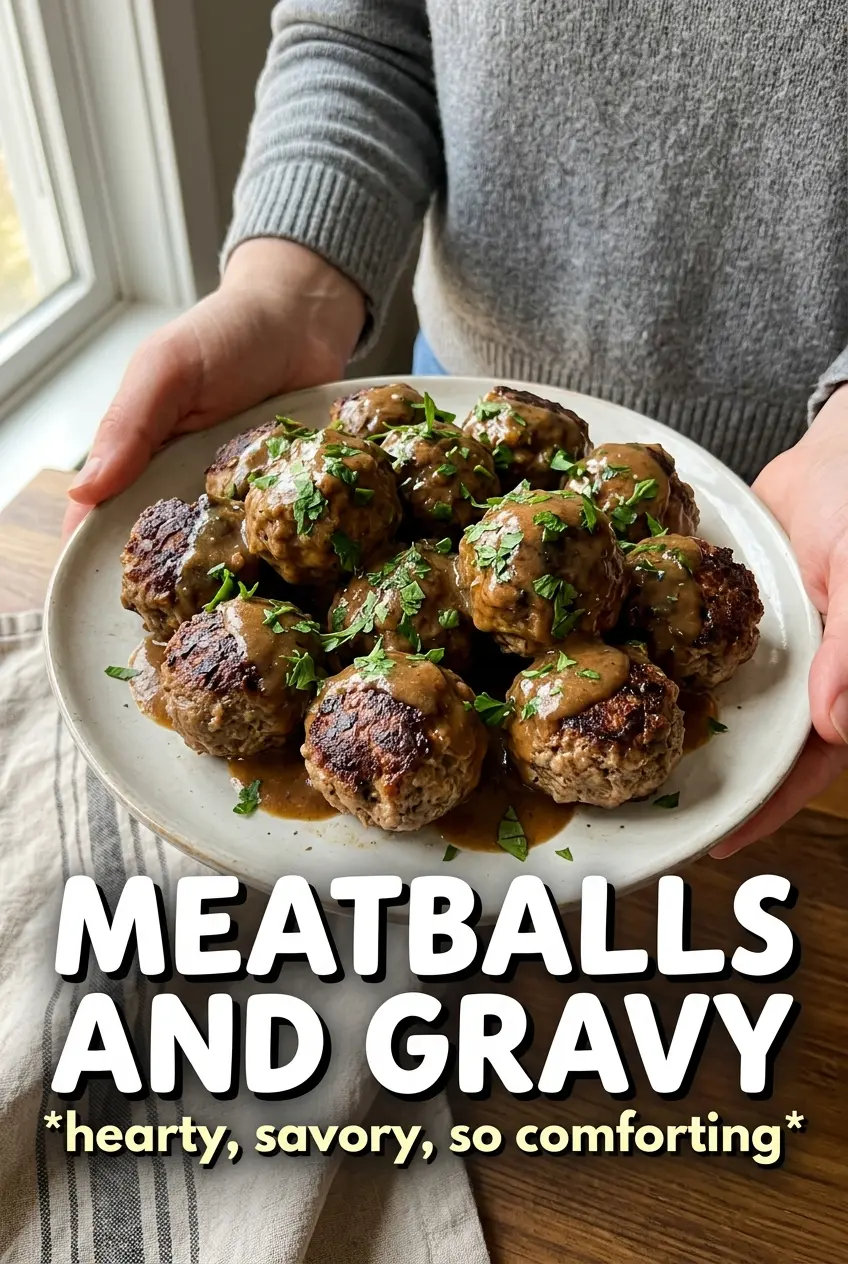
Meatballs And Gravy
Ingredients
Equipment
Method
- In a bowl, mix ground beef, breadcrumbs, parmesan, egg, garlic, onion powder, Worcestershire sauce, salt, and pepper until just combined. Stop as soon as the mixture comes together so the meatballs stay tender.
- Roll the mixture into 1.5-inch balls and arrange them on a plate. Keep them uniform in size so they cook evenly.
- Brown the meatballs in a large skillet over medium-high heat. Cook until deep golden-brown on the outside, then remove to a plate.
- Melt butter in the same skillet and caramelize the onion for 10 minutes. Stir often so the onion turns soft and dark.
- Whisk in flour and cook for 1 minute. Cook it out until it smells nutty and thick paste forms.
- Gradually add beef broth, Worcestershire, and Dijon mustard while whisking. Keep whisking until the gravy is smooth.
- Simmer the gravy until thickened. Reduce to a steady bubble so it coats the back of a spoon.
- Return the browned meatballs to the gravy. Make sure they are mostly submerged for even cooking.
- Simmer for 15 minutes until the meatballs are cooked through. Continue simmering until no pink remains and the gravy looks glossy and thick.
- Serve the meatballs and gravy over mashed potatoes. Top with fresh parsley for a bright, fresh finish.