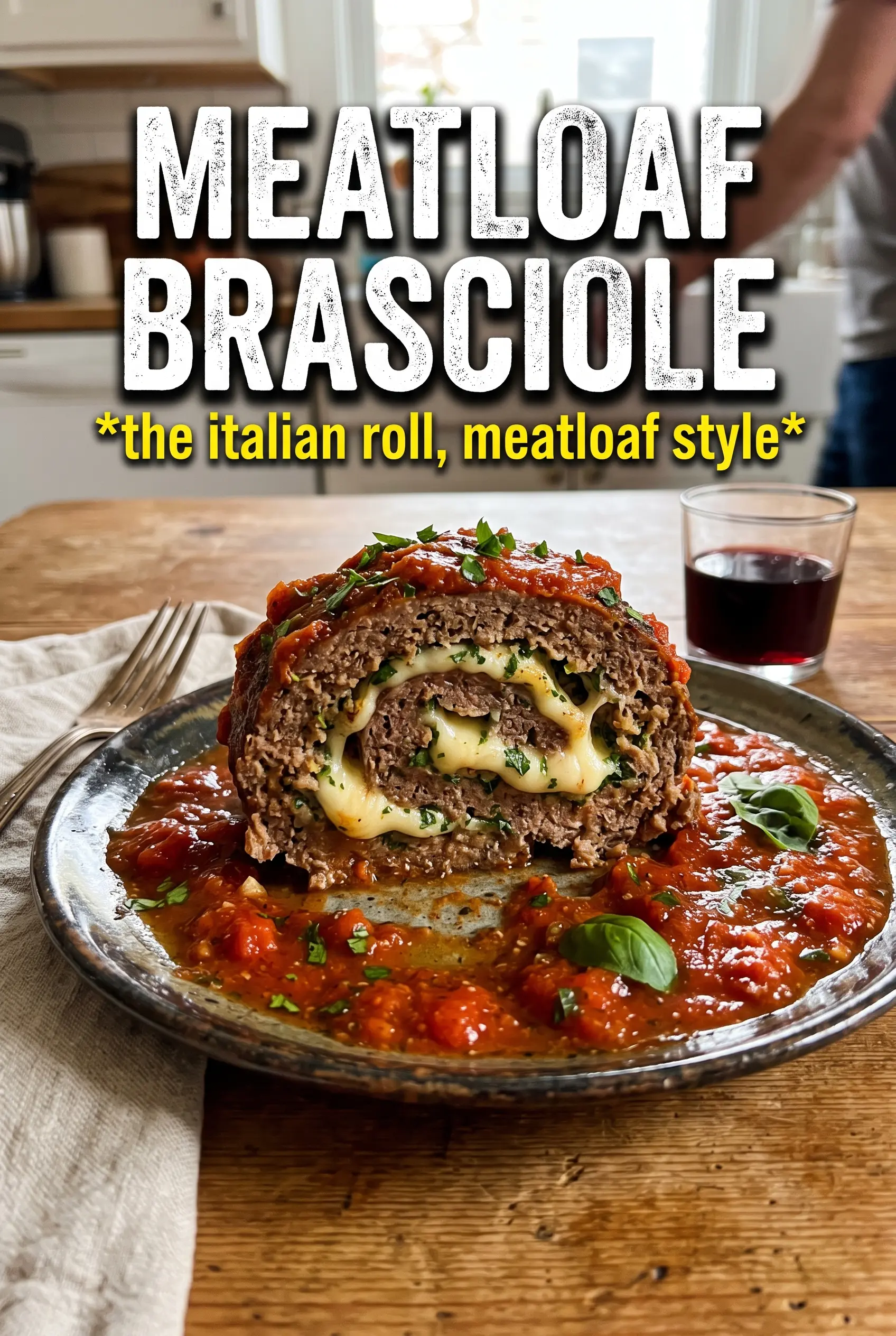
Meatloaf brasciole gives you the comfort of a classic meatloaf with the drama of a rolled Italian-American roast. Each slice comes out with a neat spiral of beef, prosciutto, parmesan, parsley, and hard-boiled egg, all tucked into a slow-braised loaf that stays tender all the way through. The marinara turns rich and savory in the oven, and the whole thing slices cleanly after a short rest, which is what makes it feel special on the plate instead of heavy or fussy.
The trick is treating the meat mixture like a roll, not a loaf pan dinner. You want it pressed evenly so it rolls without cracking, and you want the filling laid in a tight, even layer so every slice looks deliberate. Searing before braising builds flavor and helps the log hold its shape, while the red wine in the sauce adds just enough depth to keep the marinara from tasting flat.
Below, I’ve included the one step that keeps the roll from splitting, plus a few smart swaps if you want to adjust the filling or make it ahead for Sunday dinner.
The roll held together beautifully and the slices came out with that perfect spiral of prosciutto and egg. I was nervous about braising it for that long, but it stayed tender and the sauce picked up all those drippings.
Save this meatloaf brasciole for the kind of Sunday dinner where you want a braised roll, a clean spiral slice, and plenty of marinara.
The Part That Stops the Roll From Blowing Out in the Oven
Meatloaf brasciole fails when the beef layer is too thick in the middle or too thin at the edges. A thick center gives you a lopsided roll that takes forever to cook through, while thin edges tear as soon as you lift the parchment. The rectangle should be even enough that the seam can seal without a fight, and the roll should feel tight but not compressed like a brick.
The second thing people miss is resting before slicing. If you cut it the second it comes out of the oven, the filling slides and the juices flood the board. Fifteen minutes is enough for the meat to settle and for each slice to hold its shape, which is especially important with the hard-boiled eggs in the center.
- A uniform rectangle gives you the cleanest spiral and keeps the log from cooking unevenly.
- A tight roll matters more than a perfect tie; the twine is there to support shape, not force the meat into place.
- Searing adds flavor and helps the exterior set before the braise, which keeps the roll from collapsing in the sauce.
- The rest after braising is what keeps the slices neat instead of crumbly.
What Each Layer Is Doing in the Center Spiral

- Ground beef or beef-pork mix — Beef gives the roll its sturdy slice, but a beef-pork blend brings a little more richness and softness. If you use all beef, pick something with some fat so the loaf doesn’t eat dry after the long braise.
- Breadcrumbs and eggs — These hold the meat together and keep the texture from turning dense. Fresh breadcrumbs aren’t necessary here; plain store-bought crumbs work fine because the braise is doing the heavy lifting.
- Parmesan — The grated parmesan in the meat adds salt and depth, while the shaved parmesan in the filling gives you little pockets that melt into the prosciutto. Use the best parmesan you can grate yourself for the meat mixture, since pre-grated cheese can taste dull.
- Prosciutto — This is the savory layer that makes the filling taste like brasciole instead of just stuffed meatloaf. Thin slices are important; thick slices don’t melt into the roll the same way and can make it harder to slice cleanly.
- Hard-boiled eggs — They’re the classic surprise in the center and they hold up beautifully during braising. Peel them fully and line them up in a row so each slice gets that neat, traditional look.
- Marinara and red wine — The jarred sauce saves time, but the wine gives it the deeper, slower-cooked taste you want from Sunday gravy. Use a wine you’d drink; cheap wine turns sharp after braising.
Building the Roll, Then Letting the Oven Do the Rest
Mixing the Meat Without Overworking It
Combine the beef, breadcrumbs, eggs, parmesan, garlic, parsley, salt, and pepper just until the mixture comes together. If you mix it like bread dough, the finished roll turns dense and springy instead of tender. The texture should feel cohesive but still soft enough to press onto parchment without fighting it.
Layering the Filling for a Clean Slice
Pat the meat into a 10×14-inch rectangle with even thickness from edge to edge. Lay the prosciutto across the surface, then scatter the shaved parmesan and parsley before setting the hard-boiled eggs in a straight line. Keep the filling away from the very edges so it doesn’t squeeze out the sides when you roll.
Searing Before the Braise
Roll the meat tightly, tie it with kitchen twine, and sear it on all sides in a Dutch oven over medium-high heat. You want a browned exterior, not a cooked-through crust; the goal is flavor and structure. If the pan is too cool, the roll steams instead of browning, and you lose that deep savory base.
Braising Until the Middle Turns Tender
Stir the marinara, red wine, and garlic together, then pour it around the roll and cover the pot. The sauce should bubble gently in the oven, not boil hard. Braise at 325°F until the meat feels tender and the sauce has thickened around the edges of the pot, then let it rest before removing the twine and slicing.
How I’d Adapt This for Different Tables and Leftover Plans
Make it beef-pork for a softer slice
Swap half the beef for ground pork if you want a richer, more tender roll. Pork adds a little fat and sweetness, which helps balance the prosciutto and keeps the braise from tasting lean.
Breadcrumb-free version for gluten-free cooking
Use gluten-free breadcrumbs or crushed gluten-free crackers in the same amount. The eggs are still doing most of the binding, so you’re only replacing the filler that keeps the texture light instead of compact.
Skip the wine and keep it family-friendly
Replace the red wine with extra marinara or a splash of beef broth. You’ll lose a little of the deep braised edge, but the sauce will still cling nicely and the garlic will carry the flavor.
Storage and Reheating
- Refrigerator: Store sliced meatloaf brasciole in the sauce for up to 4 days. The flavor deepens overnight, and the slices stay moister in the sauce than they do on their own.
- Freezer: It freezes well. Cool completely, slice if you want easier portions, and freeze with plenty of sauce in an airtight container for up to 2 months.
- Reheating: Rewarm gently on the stove or covered in a 300°F oven with a spoonful of sauce. High heat dries out the meat and can make the filling separate from the slice.
Answers to the Questions Worth Asking
Meatloaf Brasciole
Ingredients
Equipment
Method
- Mix ground beef with breadcrumbs, eggs, grated parmesan, garlic, parsley, salt, and pepper until evenly combined.
- Press the mixture into a 10x14 inch rectangle on parchment, spreading it into an even layer with straight edges.
- Layer prosciutto, shaved parmesan, and parsley over the surface, then place the hard-boiled eggs in a row down the center.
- Roll tightly into a log, keeping the seam down as you shape the roll.
- Tie the log with kitchen twine to hold the shape during cooking.
- Sear the roll on all sides in a Dutch oven over medium-high heat until browned, creating a caramelized crust.
- Stir marinara sauce, red wine, and garlic, then pour it over the roll and cover.
- Braise at 325°F for 75–80 minutes until very tender, with the sauce bubbling and the roll giving easily when pressed.
- Rest the meatloaf brasciole for 15 minutes, uncovered, so the juices settle and the slices hold together.
- Remove the twine, slice, and serve with the braising sauce spooned over the top.