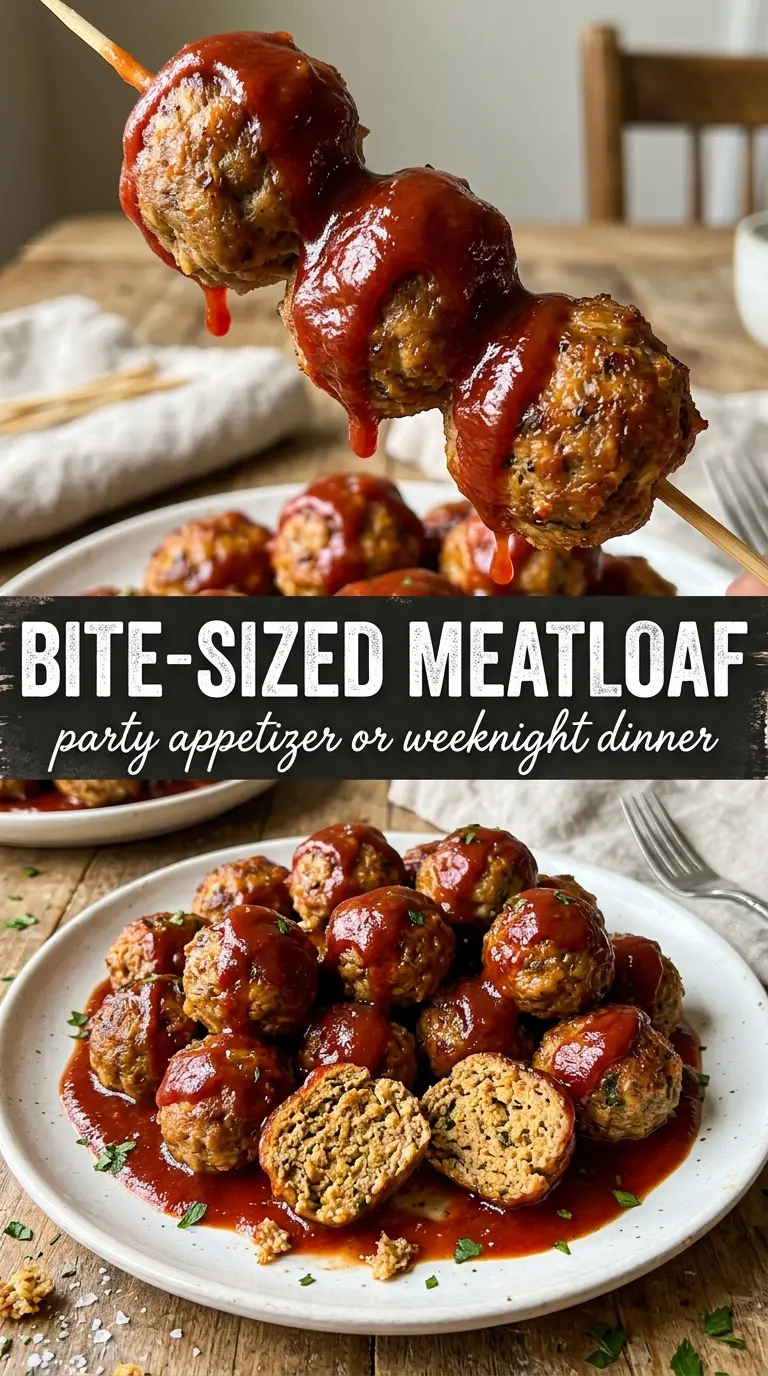
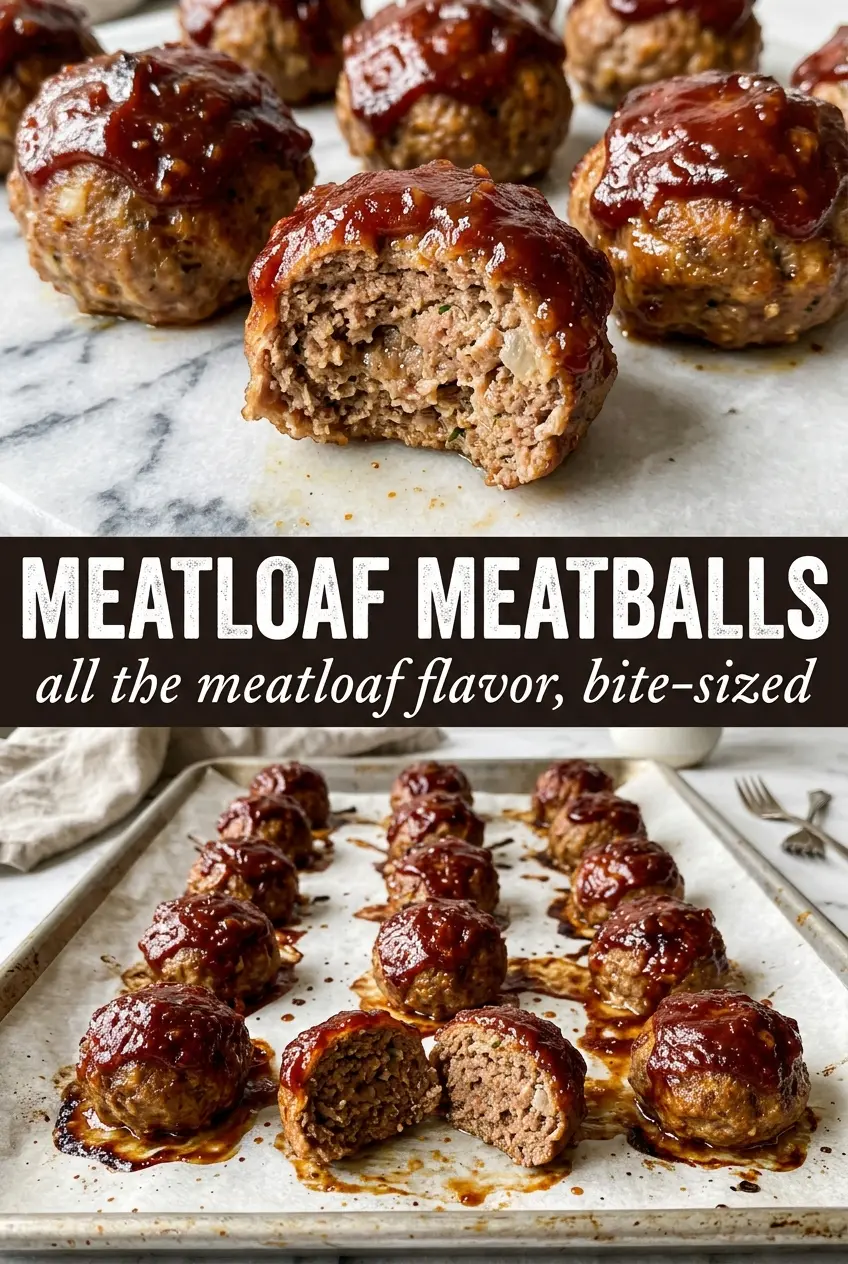
Meatloaf meatballs bring all the comfort of classic meatloaf without the long bake time or the slicing. Each one bakes up tender in the center with a browned edge, then gets brushed with a sticky ketchup glaze that caramelizes on top and clings to every bite. The flavor is familiar in the best way: savory beef, onion, garlic, and that sweet-tangy finish people expect from a good meatloaf.
What makes these work is the balance. Finely grated onion melts right into the meat so you get moisture and flavor without chunky bits, and the breadcrumbs and milk keep the texture soft instead of dense. The glaze goes on before baking, which helps it set and brown instead of sliding off at the end. That little step gives you the deep, sticky top that makes these taste finished.
Below, I’ve included the small details that matter most: how to mix the meat without packing it tight, why the glaze should be brushed on generously, and a few easy swaps if you want to adjust the dish for your table.
The glaze caramelized beautifully and the meatballs stayed tender all the way through. I served them over mashed potatoes and everyone went back for seconds.
Meatloaf Meatballs bake up sticky, caramelized, and tender—perfect for your next comfort-food dinner.
The One Thing That Keeps These Meatballs Tender Instead of Dense
The biggest mistake with meatloaf-style meatballs is overmixing. Once the breadcrumbs, eggs, and milk have been added, the meat only needs to be combined until you stop seeing streaks of seasoning. If you keep working it, the proteins tighten and the meatballs turn springy instead of soft.
The other detail that matters is the onion. Grating it gives you moisture and a sweeter, more even flavor than diced onion, which can stay crunchy in a short bake. That small prep choice makes these taste like they came from a classic meatloaf, just in a faster, more useful shape.
- Ground beef — An 80/20 blend gives you enough fat for flavor and juiciness. Leaner beef can work, but the meatballs will eat a little drier unless you keep a close eye on the bake time.
- Breadcrumbs and milk — This is the tenderizing backbone. The crumbs soak up the milk and hold onto moisture, which keeps the meatballs soft instead of tight.
- Grated onion — This disappears into the mixture and seasons the meat from the inside. If you only have a yellow onion, use that; just grate it on the fine side of the box grater so it melts in.
- Worcestershire sauce — This is where the deep savory flavor comes from. There isn’t a true substitute that tastes the same, but in a pinch you can use soy sauce plus a tiny splash of vinegar.
What Each Ingredient Is Actually Doing in This Meatloaf or Meatballs
- Ground meat (the protein foundation) — Use 80/20 so it stays moist. Handle gently to keep texture tender instead of dense.
- Breadcrumbs or fillers (the binder) — These hold the meat together without making it dense. Soak in milk first so they add moisture.
- Egg (the structural binding agent) — This holds everything together during cooking. One egg per pound of meat is the right ratio.
- Onion and aromatics (the base flavor) — Mince finely so they distribute evenly. Raw onion softens as it cooks and becomes part of the texture.
- Seasonings (salt, pepper, Worcestershire, spices) — Build flavor boldly. The meat mixture carries the entire flavor profile.
- Milk or liquid (the moisture keeper) — This keeps the meatloaf tender instead of dense and dry. Don’t skip this step.
- Glaze or sauce (ketchup-based or other) — This adds sweetness, moisture, and flavor to the exterior. Apply strategically so it caramelizes.
- Resting time (the final step) — Let the meatloaf rest 10 minutes so it sets and slices cleanly. Cutting too soon makes it fall apart.
Building the Glaze So It Bakes Sticky, Not Burnt
Mix the meat gently
Combine the beef, breadcrumbs, eggs, milk, onion, garlic, Worcestershire, and seasonings in a large bowl and stop as soon as everything looks evenly distributed. The mixture should feel soft and slightly tacky, not paste-like. If it starts to look compacted, you’ve gone too far and the meatballs will bake up firm.
Shape for even baking
Roll the mixture into golf ball-sized portions, about 1.5 inches across, so they all finish at the same time. Pressing them too tightly packs out the air and gives you a heavy texture, so use a light hand. Line them up with a little space between each one so the glaze can caramelize at the edges instead of steaming.
Brush, then bake
Mix the ketchup, brown sugar, and mustard until smooth, then brush it generously over the top of each meatball before they go in the oven. That first coat bakes into the surface and starts the caramelization early. Bake at 400°F until the tops are glossy and browned and the centers are cooked through; if the glaze looks dark before the meatballs are done, the oven is running hot, so check them a few minutes early.
Make Them Gluten-Free Without Losing the Soft Texture
Use certified gluten-free breadcrumbs in the same amount. The texture stays nearly identical because the crumbs are there for moisture retention and structure, not for a big bread flavor. If you swap in almond flour, the meatballs will be softer and a little richer, but they won’t hold together quite as cleanly.
Use Ground Turkey for a Leaner Version
Ground turkey works well here, but it needs the moisture from the onion and milk even more than beef does. Choose dark meat turkey if you can, and pull the meatballs as soon as they reach doneness so they don’t dry out. The glaze helps keep the leaner meat tasting like comfort food.
Turn Them Into a Party Appetizer
Make the meatballs slightly smaller, about 1 inch across, and start checking them a few minutes sooner. Smaller meatballs get more glaze per bite and brown faster, which makes them easier to serve with toothpicks. Keep extra glaze warm on the side for dipping.
Storage and Reheating
- Refrigerator: Store in an airtight container for up to 4 days. The glaze will thicken and set as it chills.
- Freezer: These freeze well. Cool completely, freeze on a tray until firm, then move to a freezer bag or container for up to 2 months.
- Reheating: Reheat covered in a 325°F oven until hot, or warm gently in a skillet with a splash of water. The mistake to avoid is blasting them in the microwave too long, which tightens the meat and dries out the glaze.
Questions I Get Asked About This Recipe
Meatloaf Meatballs
Ingredients
Equipment
Method
- Preheat the oven to 400°F and line a baking sheet with parchment for easy cleanup.
- Combine ground beef, breadcrumbs, eggs, milk, onion, garlic, Worcestershire sauce, garlic powder, onion powder, salt, and pepper until just mixed—do not overwork the meat.
- Roll the mixture into golf ball-sized balls (about 1.5 inches) and place them on the baking sheet with some space between each.
- Mix the ketchup, brown sugar, and mustard, then brush generously over each meatball so the glaze clings to the surface.
- Bake at 400°F for 18–22 minutes until cooked through and the glaze is caramelized, visibly bubbling and browned on top.
- Serve immediately with extra glaze, or spoon over mashed potatoes while the glaze is still glossy.