Meatloaf earns its place on the table when it slices cleanly, stays juicy, and carries a glossy top that turns sticky and caramelized in the oven. This version does all three. The beef stays tender instead of dense, the center holds together without crumbling, and the brown sugar ketchup glaze bakes into that burnished amber layer that tastes a little sweet, a little tangy, and exactly like the kind of dinner people remember.
The difference is in the mixing and the glaze timing. Soaked breadcrumbs lighten the texture, grated onion melts right into the meat, and a gentle hand keeps the loaf from turning tough. The glaze goes on in two stages, which gives it time to set, darken, and crackle without burning before the meat finishes cooking.
Below, I’ll walk through the small details that keep meatloaf from drying out, plus a few swaps that still give you a solid slice and that classic ketchup-glazed finish.
The glaze got that perfect sticky crackle on top, and the loaf stayed moist all the way through. I used a thermometer like you said and pulled it right at 160, and it sliced beautifully after the rest.
Save this meatloaf with brown sugar ketchup glaze for the nights when you want a sticky caramelized top and a tender slice that holds together.
The Secret to Meatloaf That Slices Instead of Crumbling
The biggest mistake with meatloaf is treating it like a burger patty. Once the ground beef gets worked too hard, the proteins tighten up and the loaf bakes up dense and dry. Gentle mixing keeps the texture soft, and the soaked breadcrumbs help trap moisture without turning the inside mushy.
The other place people lose the dish is in the pan. A loaf pan gives you taller slices and helps the meat cook evenly, but pressing it in too firmly can pack it tight. Shape it with enough pressure to hold together, then stop. The goal is a loaf that feels settled, not compressed.
- Ground beef 80/20 — That fat ratio keeps the loaf juicy enough to slice cleanly after resting. Leaner beef can work, but it gives you a drier, firmer result unless you add extra moisture elsewhere.
- Breadcrumbs soaked in milk — This is what keeps the crumb tender. Dry breadcrumbs will pull moisture from the meat instead of protecting it.
- Grated onion — Grating lets the onion melt into the loaf and season it from the inside. Chopped onion can leave sharp bits and create uneven texture.
- Worcestershire sauce — It adds the savory backbone that makes meatloaf taste finished, not flat. There isn’t a clean substitute for the same depth, but soy sauce works in a pinch if that’s what you have.
Building the Glaze So It Caramelizes, Not Burns
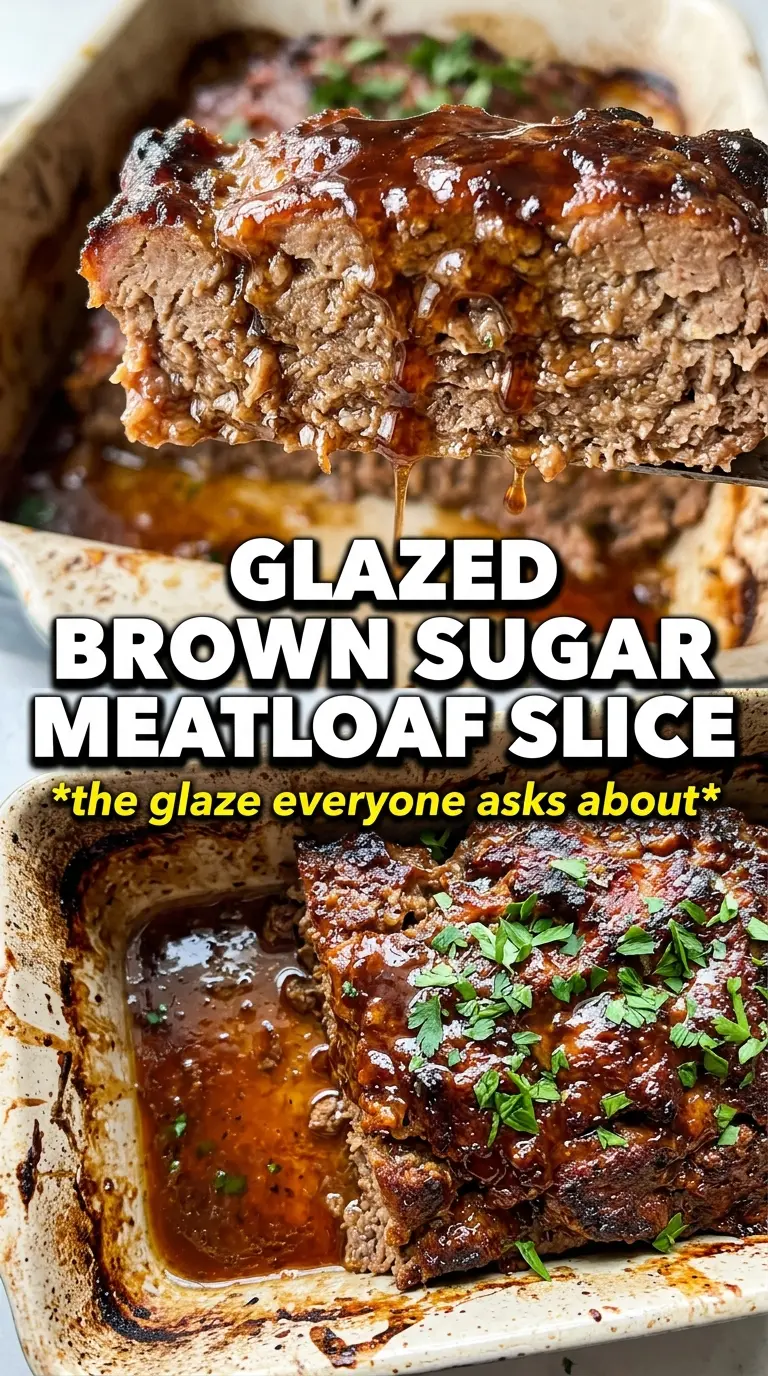
The glaze is doing more than adding sweetness. Ketchup gives it body, brown sugar encourages browning, and apple cider vinegar keeps the finish sharp enough to cut through the richness of the beef. If the glaze tastes one-note before baking, it’ll taste one-note after baking too, so whisk it until the sugar dissolves and the mixture looks glossy.
Half of the glaze goes on before the loaf goes into the oven. That first layer sets the surface and starts the color early. The second layer goes on after the meat has had time to firm up, which is what gives you that dark, crackled top instead of a thin, scorched film.
Mixing the meat without tightening it
Combine the beef, soaked breadcrumbs, eggs, onion, garlic, seasonings, and Worcestershire just until the mixture looks even. Stop as soon as the ingredients disappear into each other. If you keep going, the loaf bakes up springy and dense instead of tender.
Shaping the loaf pan way
Press the mixture into a greased 9×5 loaf pan and smooth the top so the glaze can spread evenly. Don’t mound the center high unless you want a domed top that may bake unevenly. A flat, even surface gives you better glaze coverage and more consistent slices.
Glazing in two stages
Spread on half the glaze before baking, then add the rest after 50 minutes. By then, the surface has started to set, so the second layer stays put and caramelizes instead of sliding off. If the top already looks very dark when you add the second coat, tent it loosely with foil for the final minutes.
Resting before the first slice
Pull the meatloaf when the center reaches 160°F and let it sit for 10 minutes. That rest lets the juices settle back into the loaf instead of running onto the cutting board. Slice too soon and the whole thing sheds moisture, which is how you end up with a dry-looking pan even when the meat was cooked perfectly.
Three Ways to Tweak This Meatloaf Without Losing the Classic Finish
Gluten-free meatloaf
Swap the breadcrumbs for certified gluten-free breadcrumbs in the same amount. You’ll keep the same texture and moisture balance, which matters more here than the exact type of crumb.
Dairy-free version
Use unsweetened plain oat milk or almond milk instead of whole milk. The loaf will still stay tender, though oat milk gives a slightly fuller finish than almond milk.
Meatloaf muffins for faster dinner
Press the mixture into a muffin tin and reduce the bake time to about 20 to 25 minutes. You’ll get more glaze in every bite and a little more browned edge, but the texture will be slightly firmer than a full loaf.
Storage and Reheating
- Refrigerator: Store sliced or whole, covered, for up to 4 days. The glaze stays tasty, though the top softens a bit as it sits.
- Freezer: Freezes well. Wrap cooled slices tightly and freeze for up to 3 months, or freeze the whole loaf if you want easier reheating later.
- Reheating: Reheat covered in a 325°F oven with a splash of water or extra ketchup brushed over the top. The common mistake is blasting it in the microwave until the edges turn rubbery and the center dries out.
Answers to the Questions Worth Asking
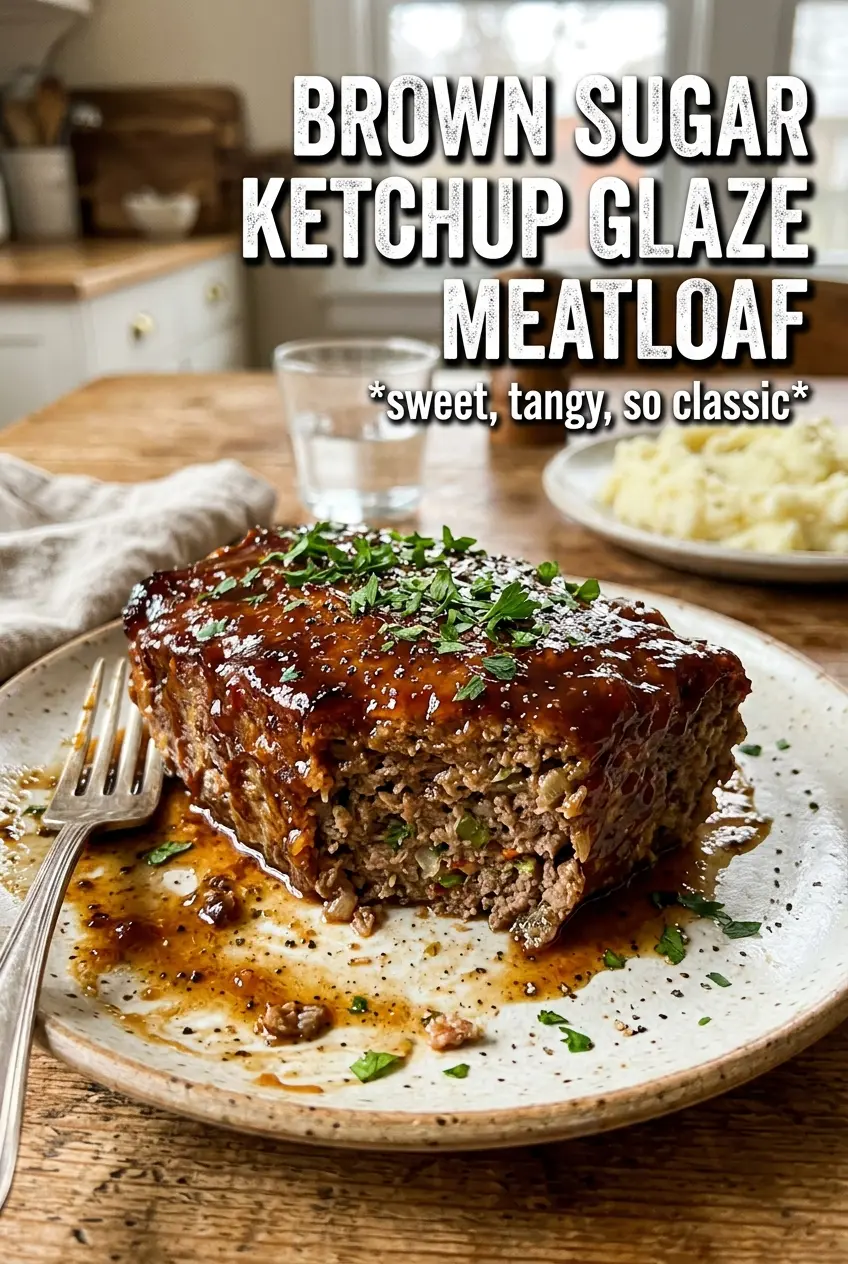
Meatloaf with Brown Sugar Ketchup Glaze
Ingredients
Equipment
Method
- Preheat the oven to 350°F and grease a 9x5 loaf pan. Set up your workspace so the loaf can be formed right after mixing.
- Soak the plain breadcrumbs in the whole milk for 3 minutes. Wait until the crumbs look softened and thick, not dry.
- Add the ground beef, beaten eggs, grated onion, minced garlic, Worcestershire sauce, dried thyme, garlic powder, onion powder, salt, and black pepper to the soaked breadcrumb mixture. Keep the mixture ready for gentle folding.
- Mix gently until just combined—do not overwork. Stop as soon as you no longer see dry breadcrumb pockets.
- Press the meat mixture into the loaf pan and smooth the top. Compress lightly so the loaf holds together during baking.
- Whisk all glaze ingredients together until smooth. The glaze should look glossy and evenly tinted.
- Spread half of the glaze over the top of the meatloaf. Leave the edges lightly glazed so caramelization forms across the surface.
- Bake at 350°F for 50 minutes. Look for the glaze beginning to set and darken at the edges.
- Spread the remaining glaze over the meatloaf. Use a thin, even layer so it cracks and caramelizes uniformly.
- Bake for 15 to 20 more minutes at 350°F until the internal temperature reaches 160°F and the glaze is deeply caramelized. The top should show a crackled, sticky amber sheen.
- Rest the meatloaf for 10 minutes before slicing. Let it firm up so the first slices come out clean.