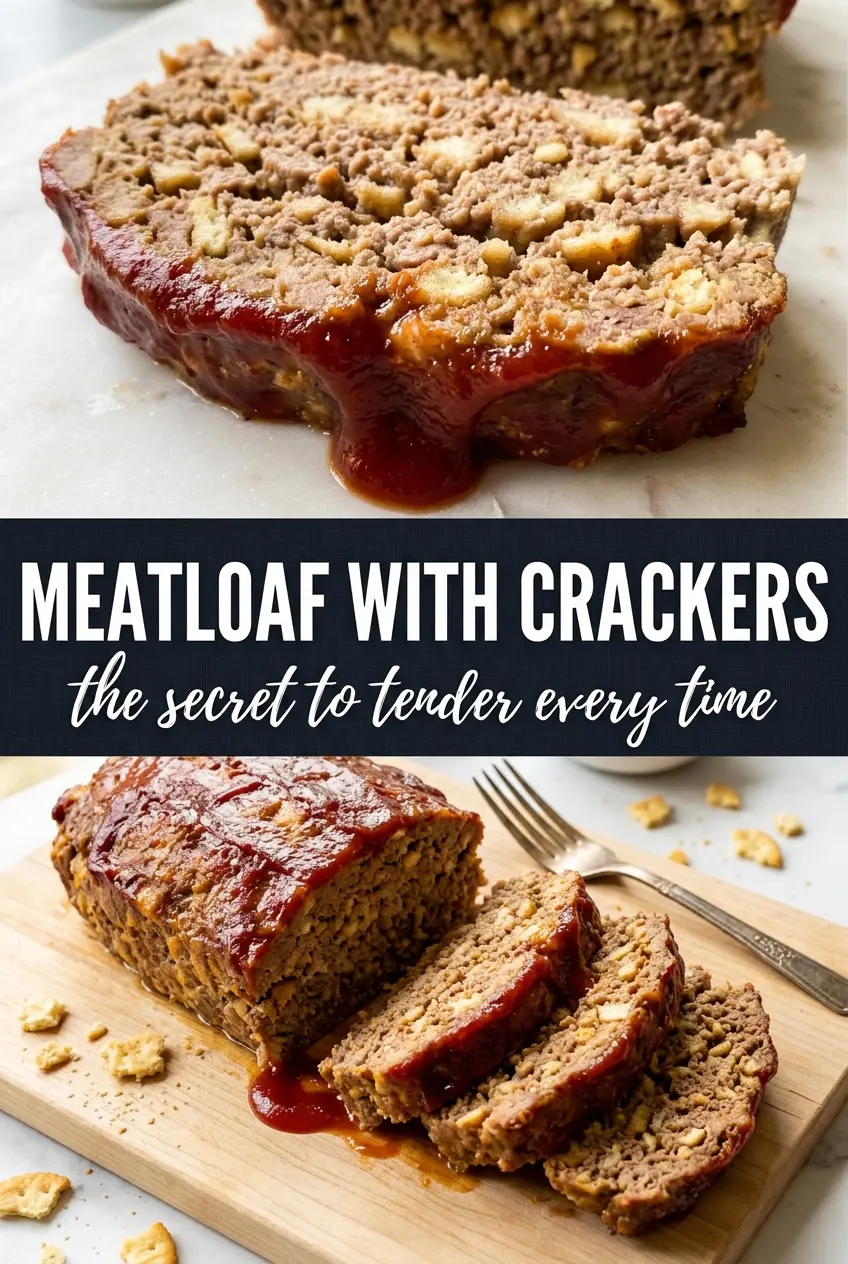
Meatloaf with crackers bakes up with a tender, moist crumb and a slice that holds together without turning dense. The crackers do more than bulk up the loaf; they soak in milk and act like a soft binder, which keeps the beef from tightening into a heavy brick in the oven. The ketchup glaze caramelizes on top and gives you that sticky, savory-sweet finish that makes this version taste like the kind people ask for again.
The key is letting the cracker crumbs sit in the milk before they ever meet the meat. That little pause softens them so they blend into the mixture instead of staying dry and gritty. Grated onion matters here too, because it melts into the loaf and seasons it from the inside without leaving raw chunks behind. A loaf pan gives you clean edges and helps the meatloaf cook evenly, but the real payoff is the rest time at the end. Skip it and the juices run straight onto the cutting board.
Below, I’ve added the small details that keep this meatloaf from drying out, plus the swaps that still give you a good slice when you’re using what’s already in the pantry.
The cracker mixture made the texture spot on, and the glaze got sticky and caramelized without burning. I baked it in a loaf pan exactly like you said and it sliced clean after resting.
Save this cracker meatloaf for the nights when you want a tender slice and a caramelized ketchup glaze without extra fuss.
The Trick That Keeps Cracker Meatloaf Tender Instead of Dense
The biggest mistake with meatloaf is treating it like a burger and overworking it. Once the cracker mixture has softened in milk, the beef only needs to be mixed until the ingredients are evenly distributed. If you keep going, the proteins tighten and the loaf bakes up compact and dry instead of soft and sliceable.
The other detail that matters is the pan. A loaf pan gives this version a neat shape and helps the glaze stay on top, but it can also trap grease if you pack the meat in too tightly. Press the mixture in firmly enough that it holds together, then stop. You want the loaf settled, not smashed.
What the Crackers, Milk, and Glaze Are Doing Here
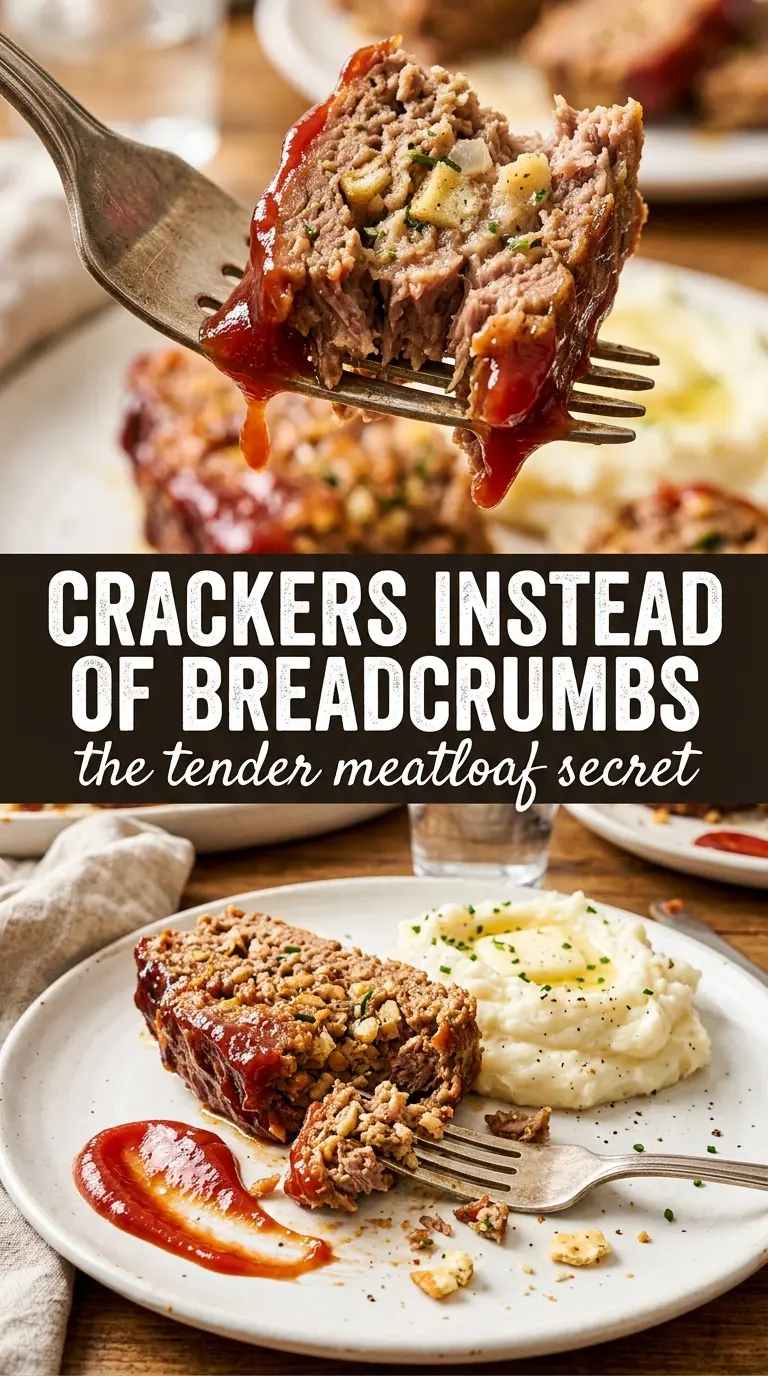
- Ritz or saltine crackers — These replace plain breadcrumbs with a softer, richer crumb. Ritz bring a little buttery flavor, while saltines lean more neutral and savory. Either one works, but the crackers need time in the milk so they break down cleanly.
- Whole milk — This hydrates the crackers and gives the loaf a softer texture. Lower-fat milk works in a pinch, but whole milk keeps the crumb more plush and less dry.
- Grated onion — Grating is the move here. Minced onion can stay sharp and give you crunchy bits, while grated onion melts into the mixture and seasons the meat evenly.
- Worcestershire sauce — This is the quiet savory layer that makes the loaf taste seasoned all the way through. There isn’t a true stand-in for it, but soy sauce can cover some of the same ground if that’s what you have.
- Ketchup, brown sugar, and mustard — This glaze gives you the sticky top people remember. The brown sugar helps it caramelize, and the mustard keeps it from tasting flat or candy-sweet.
Building the Loaf So the Center Stays Juicy
Soften the Crackers First
Crush the crackers, stir them with the milk, and let them sit for about 3 minutes. That short rest is what keeps the crumbs from staying dry inside the loaf. If you dump everything together all at once, the crackers can pull moisture from the beef as the meatloaf bakes, which works against the tender texture you want.
Mix Just Until the Ingredients Come Together
Add the beef, soaked crackers, eggs, onion, garlic, Worcestershire, garlic powder, salt, and pepper, then mix with your hands until no streaks of cracker remain. Stop there. The mixture should look cohesive and a little tacky, not whipped or paste-like. Overmixing is the fastest way to get a tough meatloaf.
Glaze in Two Rounds
Spread half the glaze over the loaf before it goes into the oven, then add the rest after about 40 minutes. The first layer sets the base, and the second layer stays brighter and stickier instead of baking off too early. If you put all of it on at the start, the sugar can darken too fast before the center reaches temperature.
Rest Before You Slice
Let the meatloaf rest for 10 minutes after it comes out of the oven. That brief pause lets the juices settle back into the loaf instead of spilling out when you cut it. If your slices fall apart, it usually means the meatloaf was cut too soon.
How to Adapt This Meatloaf When You Need a Different Pantry Fix
Use saltines instead of Ritz for a more savory loaf
Saltines make the texture a touch lighter and less rich. They’re the better choice if you want the glaze and beef to stand out more than the cracker flavor.
Make it gluten-free with gluten-free crackers
Use a sturdy gluten-free cracker that crushes into fine crumbs. The texture will still work, but softer gluten-free options can turn mushy, so choose one with some structure.
Swap in leaner beef for a lighter result
An 85/15 blend gives you the juiciest loaf, but 90/10 still works if that’s what you buy. Just don’t chase extra baking time to make up for lean meat; overbaking is what dries this recipe out.
Use ground turkey, but expect a softer flavor
Ground turkey works, but it needs the seasoning and glaze more than beef does. Choose turkey with a little fat if you can, or the loaf will taste lean and bake up a bit firmer.
Storage and Reheating
- Refrigerator: Store sliced or whole for up to 4 days. The flavor gets even better by day two, and the glaze stays tacky.
- Freezer: Freeze wrapped slices or a whole cooled loaf for up to 3 months. Wrap tightly, then add a freezer bag so the meat doesn’t pick up stale freezer flavors.
- Reheating: Reheat slices covered in a 325°F oven with a splash of water or extra glaze until hot. The common mistake is blasting it in the microwave, which dries the edges before the center warms through.
Questions I Get Asked About This Recipe
Meatloaf with Crackers
Ingredients
Equipment
Method
- Preheat the oven to 350°F and grease a 9x5 loaf pan, then set it on a sheet pan. Visual cue: the pan is ready and lightly coated so the loaf releases cleanly.
- Mix the crushed crackers with the whole milk and let sit for 3 minutes to absorb. Visual cue: the mixture looks evenly moistened and thickened.
- Combine the ground beef, soaked crackers, eggs, finely grated onion, minced garlic, Worcestershire sauce, garlic powder, salt, and black pepper in one bowl. Visual cue: everything is evenly distributed with no dry cracker pockets.
- Press the mixture into the loaf pan and smooth the top for even cooking. Visual cue: the surface is compact and level.
- Mix the ketchup, brown sugar, and yellow mustard, then spread half over the meatloaf. Visual cue: a glossy layer covers the top.
- Bake at 350°F for 55–65 minutes until the internal temperature reaches 160°F. Visual cue: the glaze darkens and caramelizes, especially at the edges.
- After 40 minutes, spread the remaining glaze over the meatloaf to finish caramelizing. Visual cue: the surface looks thicker and more browned after the final bake.
- Rest the meatloaf for 10 minutes before slicing. Visual cue: juices settle and the loaf firms up for cleaner slices.