Flaky white fish, blistered tomatoes, briny olives, and a garlicky olive oil sauce make this Mediterranean baked fish taste like it took a lot more effort than it did. The fish stays tender because it bakes right on top of the vegetables instead of drying out in a separate pan, and the juices from the tomatoes, wine, and capers turn into the kind of light sauce you’ll want to mop up with bread.
The trick is to give the vegetables a head start. That first 10 minutes in the oven softens the tomatoes, takes the raw edge off the garlic, and starts the sauce before the fish goes in. By the time the fillets hit the pan, the base is hot enough to cook them gently and keep everything tasting bright instead of flat.
Below, I’ve included the timing cue that keeps the fish from overcooking, plus the few ingredient swaps that still preserve the salty, lemony balance of the dish.
The tomatoes collapsed into the most perfect sauce and the fish stayed flaky all the way through. I used cod and it was done right on time at 14 minutes.
Pin this Mediterranean baked fish for an easy dinner with flaky cod, blistered tomatoes, and a briny olive-caper sauce.
The Reason the Vegetables Go in First
The vegetables are doing more than acting as a bed for the fish. They’re the sauce. If you skip the first roast, the tomatoes stay too firm, the garlic stays sharp, and the dish tastes like fish with toppings instead of a finished pan dinner.
That first blast of heat breaks the tomatoes down just enough to release their juices, and it wakes up the oregano and red pepper flakes in the olive oil. The capers and olives keep the whole pan salty and bright, but they need the tomato juices around them to soften that edge. By the time the fish goes in, the baking dish should look glossy, bubbling at the edges, and deeply aromatic.
What Each Ingredient Is Actually Doing in This Dish
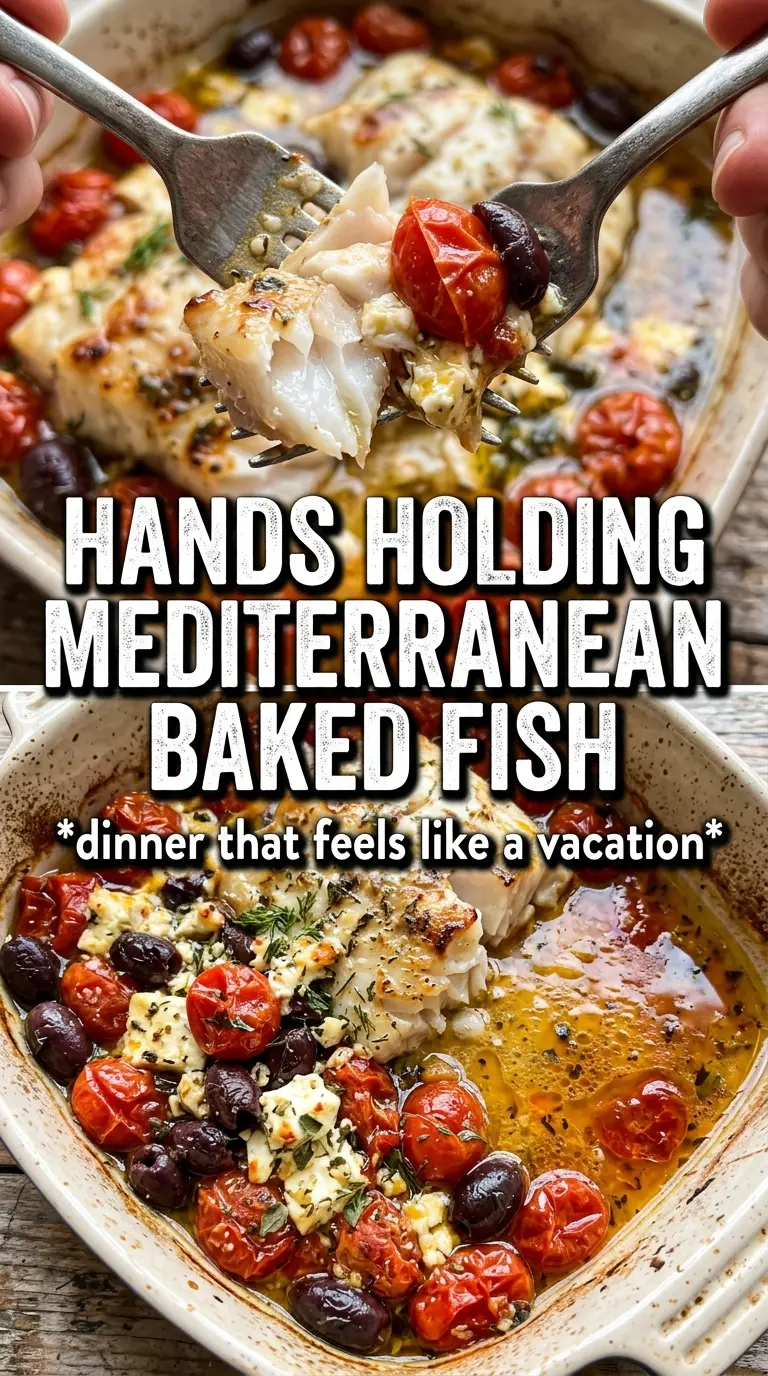
- White fish fillets — Cod, halibut, and sea bass all work because they stay tender and flake cleanly instead of falling apart into mush. Thicker fillets need the full bake time; thinner ones should come out as soon as they flake at the center.
- Cherry tomatoes — These collapse into the sauce and give you sweetness plus acidity in one ingredient. Larger tomatoes can work, but they release more water and don’t blister as evenly.
- Kalamata olives and capers — This is where the briny backbone comes from. Don’t swap in mild green olives unless that’s what you have; you’ll lose some of the deep, salty contrast that makes the dish taste Mediterranean.
- Roasted red peppers — Jarred peppers add sweetness and a soft, silky texture without extra cooking. Drain them well so they don’t water down the pan.
- Dry white wine or broth — Wine adds a little sharpness that lifts the tomatoes and fish. Broth works fine if that’s what you have, but choose one with decent flavor since it becomes part of the sauce.
- Olive oil — Use good olive oil here. It coats the vegetables, carries the oregano, and gives the finished dish its silky mouthfeel.
- Garlic, oregano, and red pepper flakes — Slice the garlic thin so it softens in the oven instead of burning. The oregano and pepper flakes are better when they’re mixed into the oil before baking, because the heat pulls their flavor into the whole pan.
Getting the Fish Out of the Oven at the Right Moment
Building the Sauce Base
Mix the tomatoes, olives, capers, peppers, garlic, wine, olive oil, oregano, and red pepper flakes right in the baking dish so the juices start pooling immediately. After the first roast, the tomatoes should be soft and some of them should have split open. If the pan looks dry, your tomatoes were probably small or not very juicy, and a splash more broth before the fish goes in will keep the sauce from tasting thin.
Nesting the Fillets
Season the fish with salt and pepper, then lay the fillets into the hot vegetable mixture without burying them. They need contact with the sauce, but they also need exposure to the heat so the tops cook evenly. Crowding them too tightly can trap steam and leave the fish a little watery on top, so tuck them in with a bit of space around each piece.
Watching for Flakes, Not Guessing by Time Alone
Bake until the fish flakes easily with a fork and the thickest part turns opaque. For average 6-ounce fillets, 12 to 15 minutes is the right window, but the exact timing depends on thickness. If you wait until the fish looks completely firm in the oven, it will be past done by the time it reaches the table; pull it when the center still looks just barely translucent and let the residual heat finish the job.
The Lemon and Herb Finish
Finish with parsley and lemon wedges right before serving. The lemon sharpens the olive-caper sauce and keeps the dish from tasting heavy, while the parsley adds a fresh note that cuts through the salt. Add both at the end, not earlier, or the brightness gets lost in the oven.
How to Adapt This for Different Kitchens and Different Eaters
Make It Dairy-Free Without Changing Anything
This recipe is naturally dairy-free, so there’s nothing to adjust. The olive oil and tomato juices already create enough richness, which is part of why the dish feels satisfying without cream or butter.
Swap in Halibut or Sea Bass for a Firmer Bite
Cod gives you the softest, flakiest result, while halibut and sea bass hold their shape a little better and feel more substantial on the plate. If you use a thicker fillet, expect the fish to need the full bake time, and check the center rather than relying on the surface.
Use Broth Instead of Wine for a Milder Pan Sauce
Broth keeps the dish family-friendly and still gives you enough liquid for the vegetables to roast into a sauce. You lose the little sharp edge that wine adds, so finish with a little extra lemon at the table if the sauce tastes softer than you want.
Skip the Olives for a Less Salty Version
If olives aren’t your thing, leave them out and add a few extra capers plus an extra pinch of salt after baking. The dish will be lighter and less briny, but the tomatoes and roasted peppers still give you plenty of flavor.
Storage and Reheating
- Refrigerator: Store leftovers in an airtight container for up to 2 days. The fish will be a little firmer after chilling, but the sauce stays flavorful.
- Freezer: I don’t recommend freezing this dish. The fish texture turns dry and the tomatoes lose their fresh, saucy quality after thawing.
- Reheating: Warm gently in a covered skillet over low heat with a splash of broth or water, or use a low oven. High heat is the mistake that dries the fish out and makes the sauce separate.
Questions I Get Asked About This Recipe

Mediterranean Baked Fish
Ingredients
Equipment
Method
- Preheat oven to 400F and grease a 9x13 baking dish.
- Combine cherry tomatoes, Kalamata olives, capers, roasted red peppers, garlic, white wine or broth, olive oil, oregano, and red pepper flakes in the baking dish.
- Roast the vegetable mixture for 10 minutes, until it looks hot and slightly softened around the edges.
- Season fish fillets with salt and pepper to taste.
- Nestle the seasoned fish into the vegetable mixture in the baking dish.
- Bake 12-15 more minutes at 400F, until the fish flakes easily with a fork and looks opaque.
- Garnish with fresh parsley and serve with lemon wedges.


