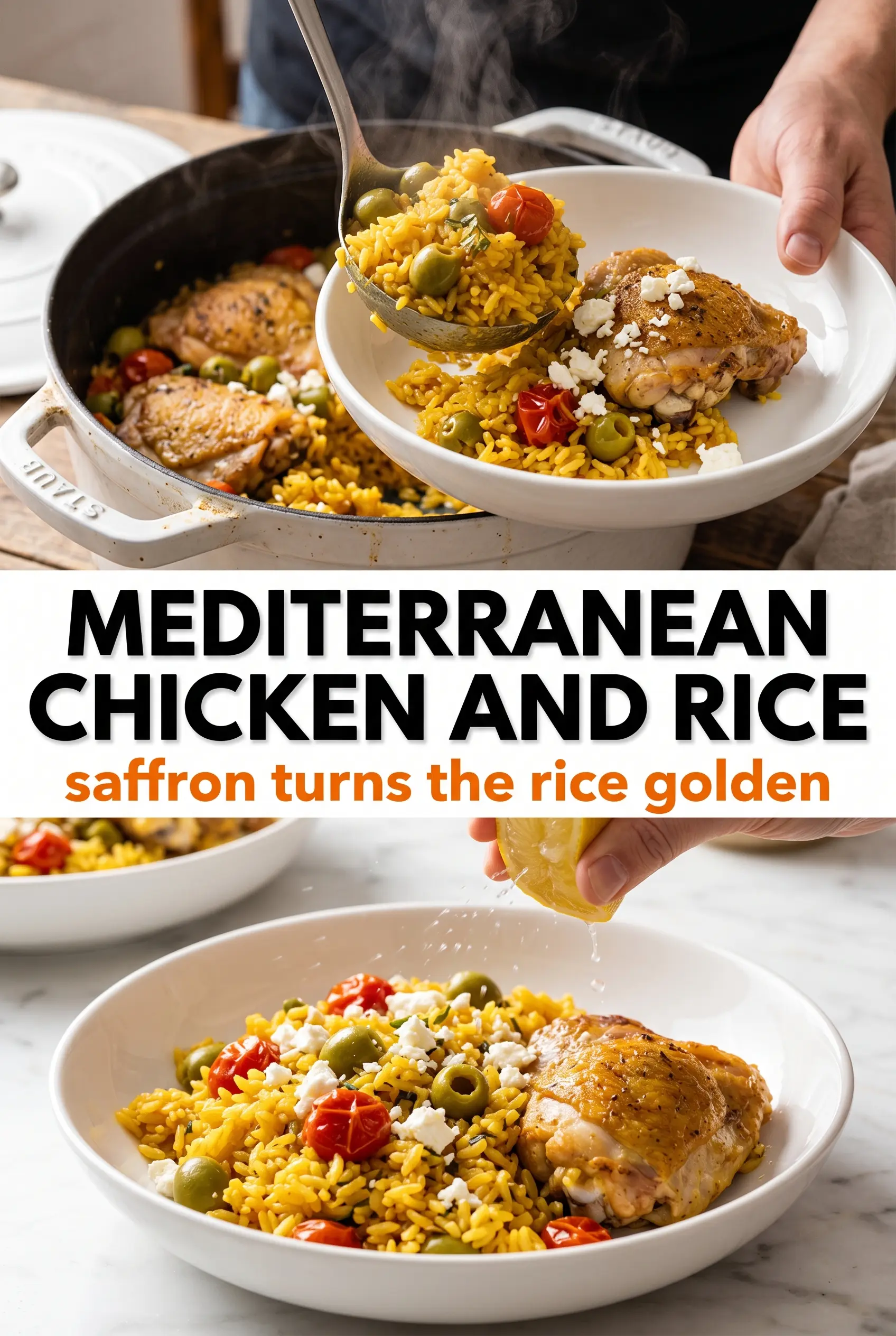
Golden chicken thighs, lemony rice, and bursts of tomato and olive flavor make this the kind of pan dinner that earns a permanent place in the weeknight rotation. The chicken roasts right on top of the rice, which means the juices drip down as everything cooks, seasoning the grains without extra work. By the time it comes out of the oven, the rice is tender and fluffy at the edges, the skin is crisped and bronze, and the feta has softened just enough to melt into the hot grains.
The trick is starting with uncooked rice and enough broth to let it steam under the foil before the chicken finishes uncovered. That covered stretch keeps the rice from drying out, while the final bake gives the skin time to brown properly. Lemon zest matters here more than extra juice; it carries the bright flavor through the whole dish without making the rice sharp or watery.
Below, I’ve included the small details that keep the rice from turning gummy, plus a few smart swaps if you need to work with what’s in the fridge.
The rice came out fluffy, not mushy, and the chicken skin actually stayed crisp after the second bake. The lemon and feta together made the whole pan taste bright and savory.
Save this Mediterranean Chicken and Rice for the nights when you want crispy chicken, lemon herb rice, and one pan with almost no cleanup.
The Part That Keeps the Rice Fluffy Instead of Dense
The biggest mistake with chicken-and-rice bakes is treating the rice like it needs to be pre-cooked or constantly stirred. It doesn’t. Long-grain white rice works here because the grains stay separate while they absorb the broth and chicken juices. Short-grain rice turns softer and tighter, which can make the whole dish feel heavy.
Covering the pan for the first stretch is what gives the rice enough steam to cook evenly. If the foil isn’t sealed well, the top layer of rice can dry out before the liquid is absorbed. Once the foil comes off, the goal changes: the rice should be tender, the liquid should be gone, and the chicken skin should start taking on color instead of steaming.
What Each Ingredient Is Actually Doing in This Dish
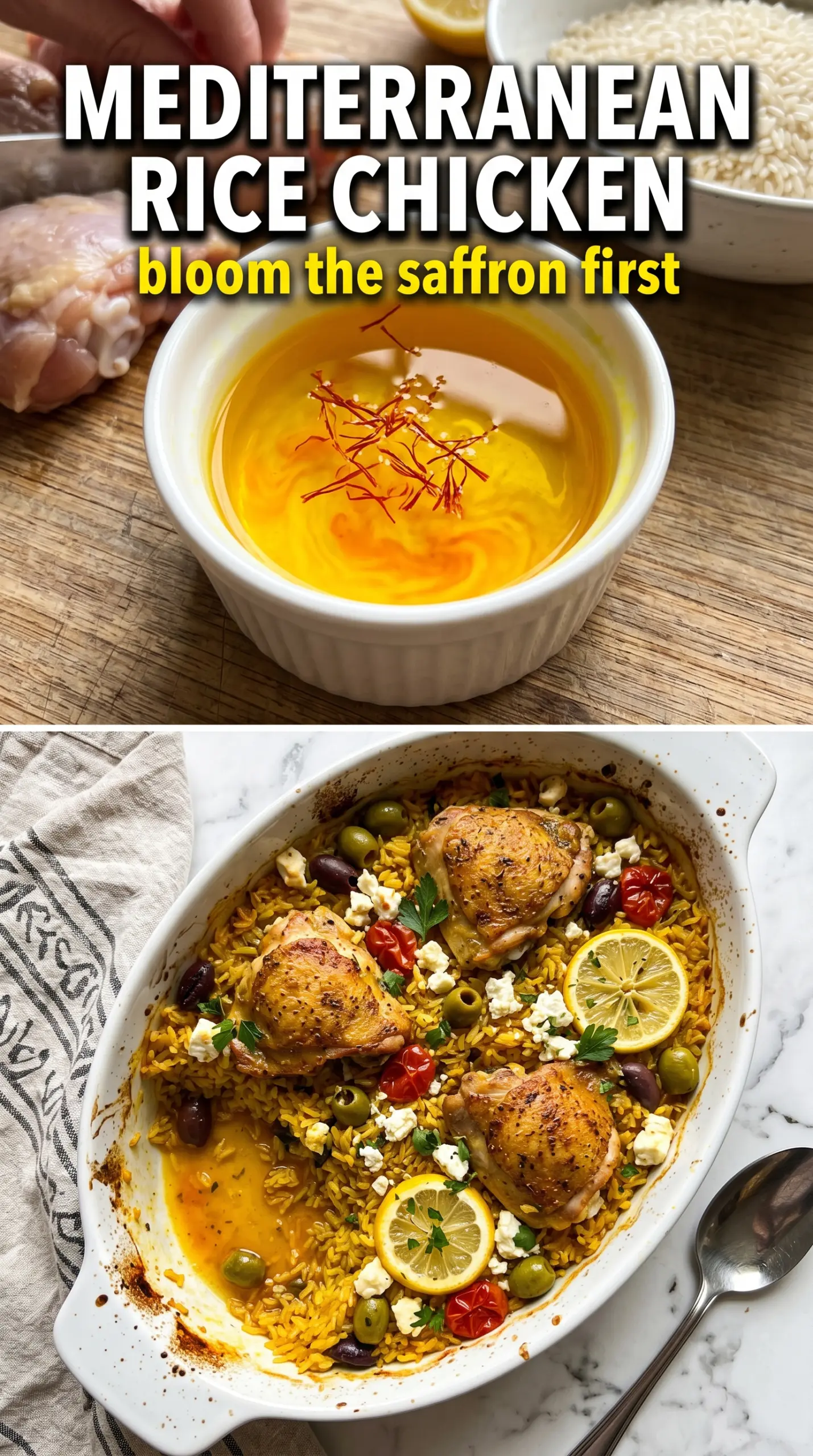
- Chicken thighs — Bone-in, skin-on thighs stay juicy through the full bake and give the rice more flavor than boneless pieces would. Chicken breasts dry out before the rice is fully tender, so they’re not the best swap unless you shorten the baking time and accept a less rich result.
- Long-grain white rice — This is the backbone of the dish. It absorbs broth without collapsing into mush, which is what you want in a one-pan bake.
- Lemon juice and zest — The juice brightens the rice and chicken, but the zest is what keeps the lemon flavor from fading during the bake. If you only use juice, the dish tastes flatter and can turn a little sharp.
- Chicken broth — This seasons the rice from the inside out. Water will work in a pinch, but the finished dish will taste noticeably less savory.
- Feta, olives, and tomatoes — These give you salt, tang, and little pockets of sweetness. Add the feta after baking so it softens instead of disappearing into the dish.
Building the Pan So the Chicken Roasts and the Rice Steams at the Same Time
Marinating for Surface Flavor
Whisk the olive oil, lemon juice, lemon zest, garlic, oregano, salt, and pepper until the mixture looks cloudy and loose, then coat the chicken thighs and let them sit for 20 minutes. That short rest gives the seasoning a head start without making the lemon start to cure the meat. If you marinate much longer, the acid can begin to change the texture on the surface and the chicken won’t brown as cleanly.
Layering the Rice Under the Chicken
Spread the rice in a 9×13 baking dish and pour the broth over it before the chicken goes in. Stir in a pinch of salt and the remaining marinade so the seasoning is distributed through the liquid, not stuck only on the chicken skin. Nestle the thighs skin-side up and don’t bury them; the skin needs exposure to the oven heat to crisp instead of sitting in the broth and steaming.
The Covered Bake
Cover the dish tightly with foil and bake until the rice is nearly done. That first covered phase is what cooks the grains through and keeps the pan from drying out. If the foil is loose, the rice on top can stay firm while the bottom gets too soft, so press the edges shut and keep the seal tight.
Finishing Uncovered for Crisp Skin
Remove the foil and bake until the chicken skin turns deep golden and the rice is fully tender. The pan should smell nutty and lemony, and you should see little bubbles of broth around the edges rather than a soupy bottom. If there’s still excess liquid when the chicken is browned, leave it in for a few more minutes; pulling it early is how you end up with wet rice.
Three Ways to Make This Work With What’s in Your Kitchen
Make it dairy-free
Skip the feta and finish the dish with extra herbs and a little more lemon zest. You’ll lose the creamy-salty finish, but the rice will taste brighter and cleaner, and the chicken still carries the whole pan.
Use boneless chicken thighs
Boneless thighs work if that’s what you have, but they cook faster and don’t baste the rice as richly. Check them earlier and pull the pan once the rice is tender and the chicken hits temperature, or the meat can tighten up.
Make it gluten-free
The recipe is naturally gluten-free as written, as long as your broth is certified gluten-free. That’s the only place hidden wheat sometimes sneaks in.
Storage and Reheating
- Refrigerator: Store leftovers in an airtight container for up to 4 days. The rice will firm up as it chills, which is normal.
- Freezer: Freeze portions without the fresh parsley for up to 2 months. The rice softens a little after thawing, but it still reheats well.
- Reheating: Reheat covered in the oven at 325°F with a splash of broth or water to loosen the rice. The common mistake is blasting it uncovered in the microwave, which dries out the chicken and makes the rice tough around the edges.