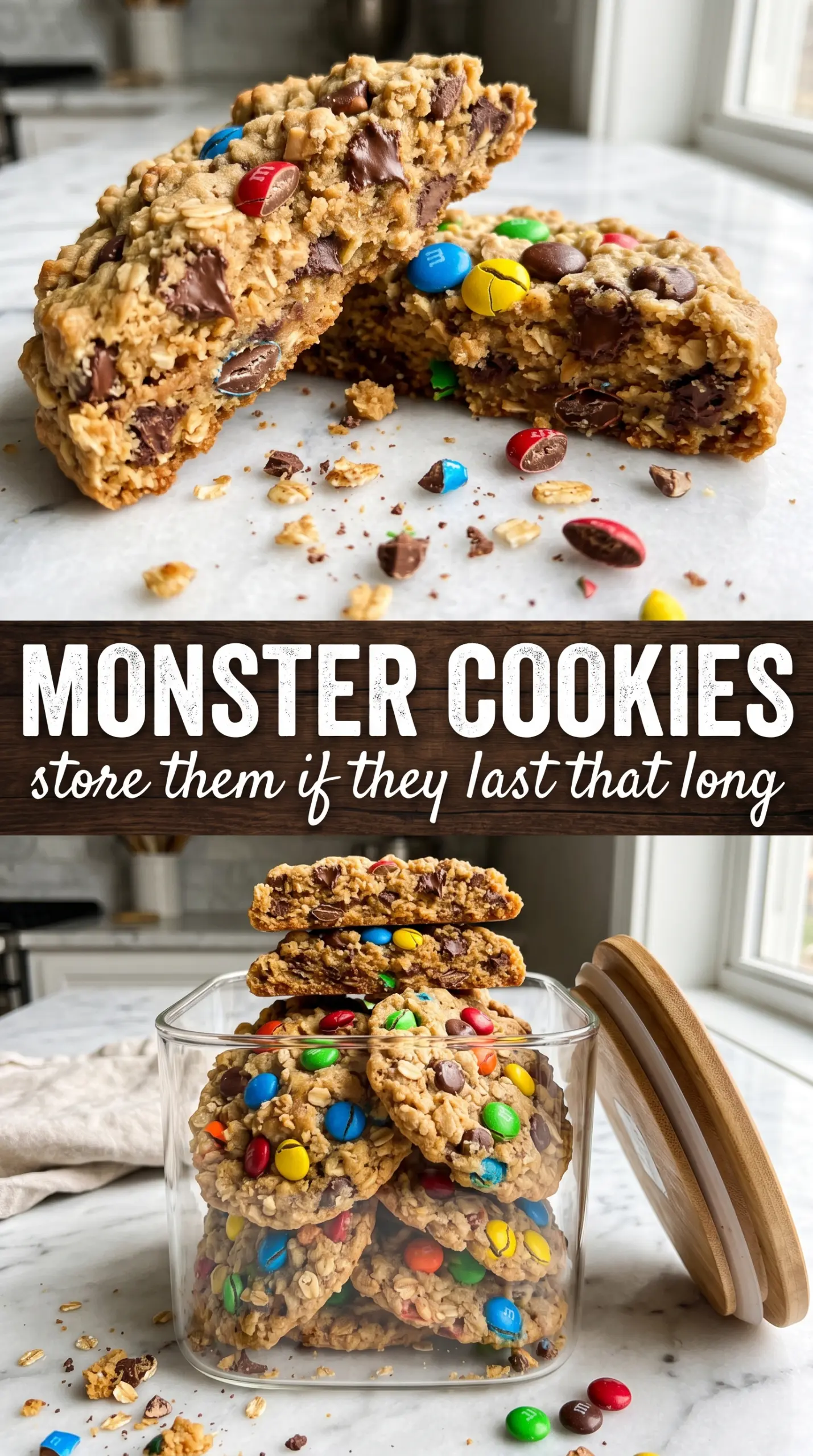
Monster cookies earn their spot fast: thick, chewy centers, crisped edges, and a jumble of peanut butter, oats, chocolate chips, and M&Ms in every bite. They bake up like a cross between an oatmeal cookie and a peanut butter cookie, but with much more texture and a lot more fun. The best part is that they stay soft for days, which makes them one of those cookies people keep circling back to.
This version works because the dough is built for structure without flour. Peanut butter carries the cookie, oats give it body, and the eggs hold everything together so the cookies bake up sturdy instead of crumbly. A short bake keeps the centers plush, and the cookies finish setting on the pan as they cool. That little rest is what keeps them from turning dry.
Below, I’ll show you the texture cues I use for pulling them from the oven at the right moment, plus the easiest way to swap the mix-ins without throwing off the balance of the dough.
The cookies came out thick and soft with just the right chew, and the M&Ms stayed colorful instead of melting into the dough. I pulled them at 11 minutes and they finished perfectly on the pan.
Like these thick peanut butter monster cookies with M&Ms and oats? Save them to Pinterest for the days when you want a chewy, flourless cookie with big bakery-style texture.
The Reason These Cookies Stay Thick Instead of Spreading Out
Monster cookies can go flat fast if the dough is too warm or too loose. What keeps this batch thick is the ratio of peanut butter, oats, and eggs. There’s no flour to soak up excess moisture, so the dough needs to be mixed just until everything comes together and then portioned right away. If you wait too long, the oats keep hydrating and the dough gets softer than you want.
The other trap is overbaking. These cookies should come out when the edges are set and the centers still look a little underdone. They finish on the hot pan, and that carryover heat is what gives you a chewy middle instead of a dry crumb.
- Peanut butter — Use a conventional creamy peanut butter, not the natural kind that separates in the jar. Natural peanut butter can make the dough oily or crumbly because the fat and solids don’t stay evenly suspended.
- Quick-cooking oats — These soften just enough in the dough to hold the cookies together without making them heavy. Old-fashioned oats work in a pinch, but the texture turns chunkier and a little less cohesive.
- Eggs — Three eggs are doing a lot of structural work here. They replace the binding you’d normally get from flour and help the cookies bake into thick rounds instead of sandy mounds.
- M&Ms and chocolate chips — The mix of larger candies and smaller chips gives you color, pockets of melt, and a little crunch. If you only use one mix-in, the cookies still work, but they lose some of the “monster” effect that makes them fun.
What Each Ingredient Is Actually Doing in This Recipe
- Primary ingredient (the star) — Quality matters most. Choose the best you can find.
- Cooking medium (oil, butter, or broth) — This carries flavors and prevents dryness.
- Seasonings (salt, pepper, spices, herbs) — Layer flavors so nothing overpowers. Build depth gradually.
- Aromatics (garlic, onion, herbs) — Cook with fat to bloom flavors. Become the foundation.
- Supporting ingredients — Complement the main ingredient without overpowering it.
- Sauce or liquid (if applicable) — Brings flavors together. Balance richness with acid.
- Acid (lemon, vinegar, wine, or other) — Brightens and prevents flat-tasting results.
- Final finish (garnish, glaze, or sauce) — Prevents one-dimensional taste and adds visual appeal.
Mixing the Dough So It Bakes Up Chewy, Not Dense
Starting with the Peanut Butter Base
Beat the peanut butter, brown sugar, and granulated sugar until the mixture looks smooth and slightly fluffy. You’re not trying to whip in a ton of air, but the sugars do need time to dissolve into the peanut butter so the baked cookies don’t taste gritty. If the mixture looks oily, keep mixing for another 30 seconds before adding the eggs.
Adding the Eggs and Baking Soda
Mix in the eggs, vanilla, and baking soda until the dough turns glossy and uniform. The batter will loosen up first, then thicken again as it comes together. If you see streaks of egg white, keep going; uneven mixing here leads to patches that bake up custardy instead of chewy.
Bringing in the Oats and Candy
Stir in the oats until every bit is coated, then fold in the M&Ms and chocolate chips at the end. The dough should be heavy and scoopable, not pourable. If it looks too soft to portion cleanly, let it sit for 5 minutes so the oats can absorb a little more moisture before scooping.
Baking to the Right Finish
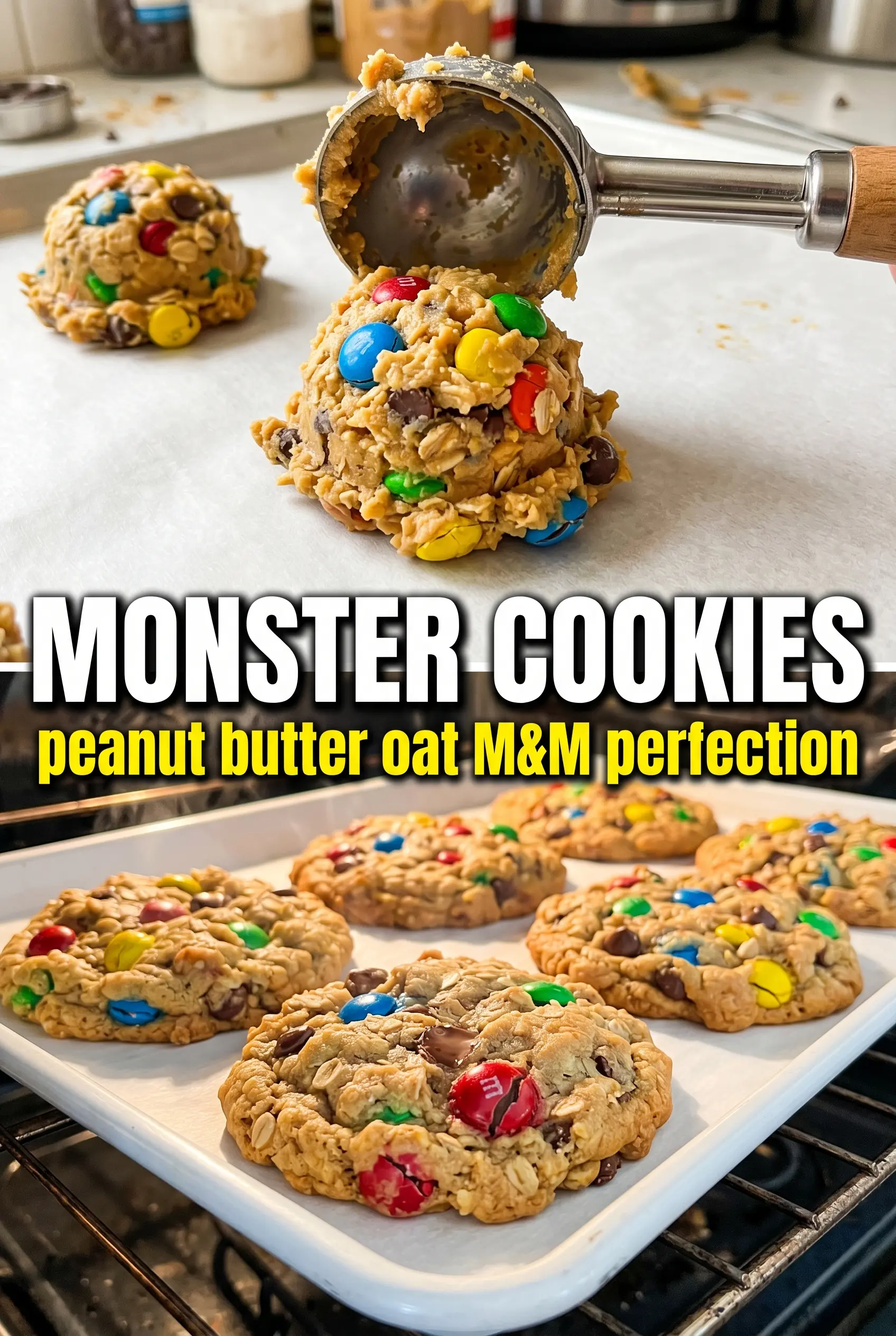
Scoop the dough into mounds and flatten them slightly with your palm so they bake evenly. Pull the cookies when the edges are set and the centers still look a touch pale. They’ll look underdone on the pan, but that’s exactly right; if you wait for full color across the top, they’ll cool into a firmer, drier cookie than this recipe is meant to be.
How to Adapt These Monster Cookies for Different Mix-Ins and Diets
Gluten-Free as Written
These are naturally gluten-free as long as your oats are certified gluten-free. The dough depends on oats for structure, so that certification matters more here than in recipes where flour is doing the heavy lifting.
Use Different Candies Without Throwing Off the Dough
Swap the M&Ms for chopped peanut butter cups, toffee bits, or extra chocolate chips in the same total amount. Keep the total mix-ins about the same so the dough doesn’t get overloaded and fall apart when you scoop it.
Chunkier Oats for a Heavier Bite
Old-fashioned oats give these cookies a more rustic, substantial texture. The cookies won’t spread quite as neatly and the centers will feel a little heartier, which works well if you want a more rugged oatmeal-cookie style.
Storage and Reheating
- Refrigerator: Store in an airtight container for up to 5 days. They stay soft, though the oats tighten a little as they sit.
- Freezer: Freeze baked cookies for up to 2 months, or freeze scooped dough balls and bake from frozen, adding 1 to 2 minutes. This dough freezes well because it doesn’t rely on flour for structure.
- Reheating: Warm a cookie in the microwave for 8 to 10 seconds if you want the chocolate soft again. Don’t overheat it or the peanut butter base turns greasy instead of plush.
Answers to the Questions Worth Asking
Monster Cookies
Ingredients
Equipment
Method
- Preheat the oven to 350°F and line two baking sheets with parchment paper, keeping the sheets ready to load.
- Beat the peanut butter, brown sugar, and granulated sugar together in a large bowl until combined and glossy.
- Add the eggs, vanilla extract, and baking soda, then mix until smooth and no streaks remain.
- Stir in the quick-cooking oats until fully incorporated, so the dough looks thick with visible oat bits.
- Fold in the M&Ms and chocolate chips until evenly distributed throughout the dough.
- Scoop the dough into 2-tablespoon balls and place them 2 inches apart on the prepared baking sheets, flattening slightly with your palm so they bake evenly.
- Bake for 10–12 minutes at 350°F until the edges are set but the centers still look slightly underdone, which will firm up after cooling.
- Let the cookies cool on the baking sheet for 5 minutes, then transfer to a wire rack where they finish setting as they cool.