Soft oatmeal cookies with a thick marshmallow cream center hit that exact sweet spot between nostalgic and homemade. The cookies stay chewy in the middle with lightly crisp edges, and the filling brings that bakery-style sweetness without turning the whole sandwich cloying. When the cookies cool and the cream settles into the oats, each bite tastes like the version you wish the packaged ones had been.
This recipe works because the cookie dough leans on brown sugar, molasses, and old-fashioned oats for depth and chew, not just sweetness. The spices are warm but not heavy, and the bake time is short enough to keep the centers tender. For the filling, the cream cheese keeps the marshmallow creme from being one-note, and beating it long enough gives you a spread that holds its shape instead of smearing out the sides.
Below, I’ve included the small details that matter most: how to keep the cookies soft instead of dry, what the filling should look like before you sandwich them, and a few swaps that still keep the texture right.
The cookies baked up soft in the center and the filling was thick enough to stay put when I pressed the sandwiches together. My kids kept sneaking them from the rack before they were fully cool.
Save these Oatmeal Cream Pies for the days when you want a soft chewy cookie sandwich with a thick marshmallow filling.
The Secret to Keeping Oatmeal Cream Pies Soft After They Cool
The biggest mistake with oatmeal cream pies is baking them like crisp cookies. These need to come out when the centers still look a little underdone and the edges are just set, because the cookies finish on the pan as they cool. If you wait for a deep brown color, you’ve already gone too far and the sandwiches will turn dry once the filling goes in.
Old-fashioned rolled oats matter here because they hold their shape and give the cookies that classic chewy texture. Quick oats will work in a pinch, but they make the crumb tighter and less hearty. The molasses is small in amount, but it adds the darker, more baked-in sweetness that makes the cookies taste like real oatmeal cream pies instead of plain oatmeal sandwiches.
- Brown sugar — This brings moisture and chew. Pack it in firmly so the dough has enough structure to stay soft after baking.
- Molasses — Don’t skip it unless you have to. It deepens the flavor and helps the cookies taste richer without making them darker than they should be.
- Old-fashioned rolled oats — These give the cookies their best texture. If you use quick oats, the cookies spread a little less and bake up denser.
- Cream cheese in the filling — This keeps the center from tasting flat or overly sweet. Full-fat cream cheese works best because it gives the filling body.
What Each Part of the Filling Is Doing
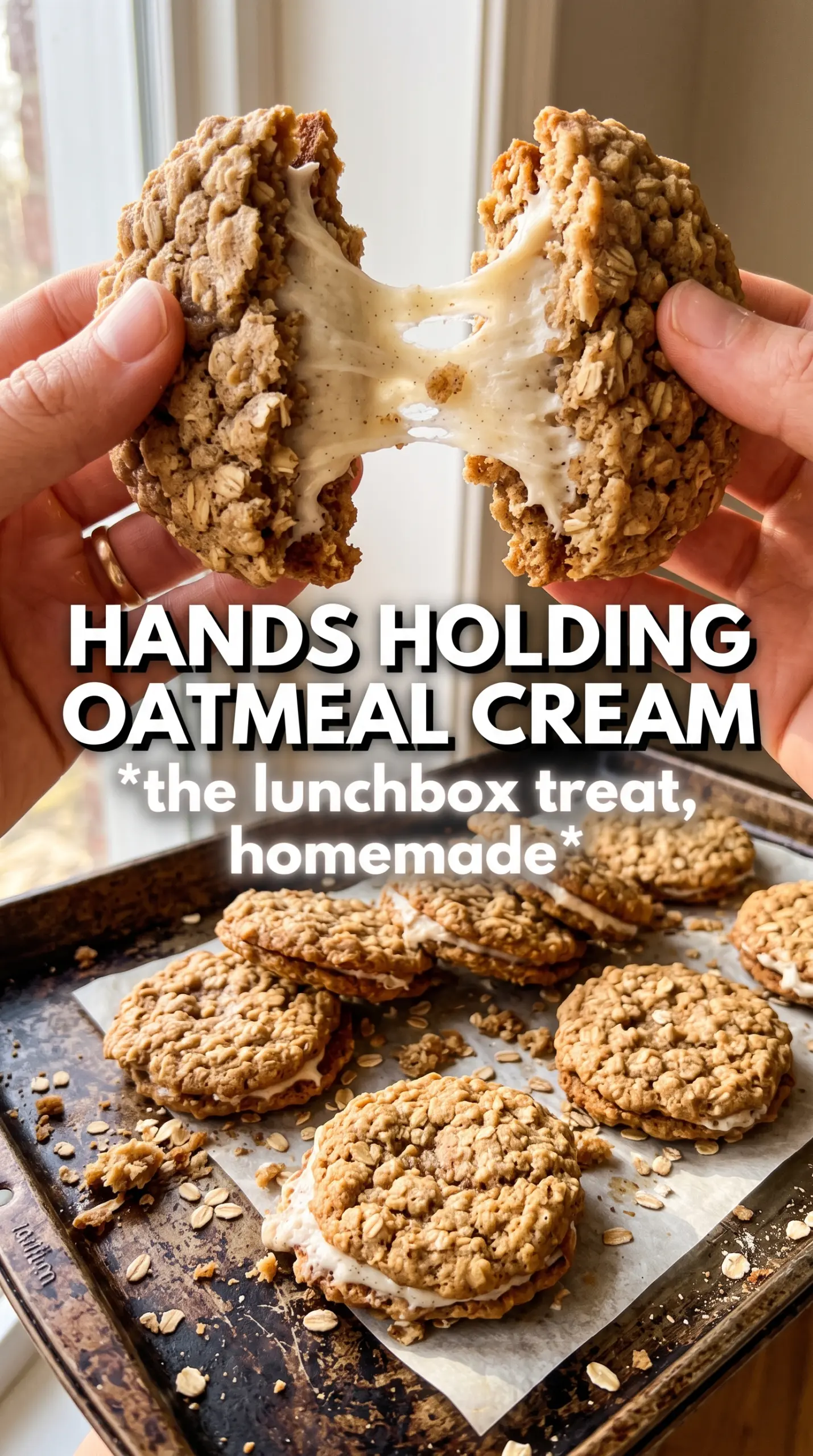
The filling should be fluffy, thick, and smooth enough to spread without tearing the cookies. Butter gives it richness, cream cheese keeps it from being one-dimensional, and marshmallow creme provides the classic sticky-sweet texture that makes these taste familiar. Beat everything until it looks pale and whipped; if the mixture still looks grainy, the powdered sugar hasn’t fully incorporated yet.
Vanilla and a little cinnamon round out the sweetness, but the powdered sugar does the real structural work. If you cut that too much, the filling turns loose and squishes out the sides. If your butter or cream cheese is still cold, you’ll get little lumps that never fully disappear, so let both soften until they press easily under your finger.
- Marshmallow creme — This is the flavor and texture anchor. Marshmallow fluff gives the right sticky, airy sweetness that powdered sugar alone can’t copy.
- Cream cheese — The tang matters. It keeps the filling from turning overly sugary and helps it set into a pipeable consistency.
- Powdered sugar — This thickens the filling and gives it body. Add it gradually so it doesn’t puff out of the bowl.
- Vanilla — It softens the sweetness and makes the filling taste more homemade.
How to Bake the Cookies So They Sandwich Cleanly
Building the Dough
Beat the butter with both sugars until the mixture looks pale and a little fluffy, then add the eggs, molasses, and vanilla. That first creaming step matters because it traps air and keeps the cookies from baking up heavy. Once the dry ingredients go in, stop mixing as soon as the oats disappear into the dough. Overmixing tightens the texture and makes the cookies tougher than they should be.
Portioning for Even Sandwiches
Scoop the dough into 2-tablespoon ovals and keep the portions as even as you can. Uniform size is what gives you matching tops and bottoms later, which matters more here than in a drop cookie recipe. If the dough is sticky, chill it briefly; otherwise the ovals can spread too quickly before the centers set. Space them apart because these do spread, even if they look small going in.
Knowing When They’re Done
Bake at 350°F for 10 to 12 minutes, just until the edges look set and the centers still look soft and slightly puffy. They should not look fully firm in the middle when they come out. Let them sit on the baking sheet for a few minutes before moving them to a rack, because that resting time is what finishes the texture without drying them out. Cool them completely before adding filling or it will melt and slide out of the sandwich.
Make Them a Little More Spiced
Add another 1/2 teaspoon cinnamon or a pinch of cloves if you want a warmer cookie. The molasses and oats can handle it, but keep the cloves light so they don’t take over the marshmallow filling.
Gluten-Free Oatmeal Cream Pies
Swap in a good 1:1 gluten-free flour blend and use certified gluten-free oats. The texture stays pleasantly chewy, though the cookies may spread a touch less and finish a little more delicate.
Dairy-Free Filling
Use plant-based butter and a dairy-free cream cheese substitute, then chill the filling briefly before assembling. It won’t taste exactly the same, but you still get that soft, sweet center with enough structure to hold the cookie layers together.
Storage and Reheating
- Refrigerator: Store in an airtight container for up to 5 days. The cookies soften a bit more as they sit, which is part of the charm.
- Freezer: Freeze assembled cookies for up to 2 months, separated with parchment. Thaw in the refrigerator so the filling doesn’t get watery.
- Reheating: No reheating needed. If you want them softer, let them sit at room temperature for 15 to 20 minutes before serving instead of microwaving, which can make the filling split.
Answers to the Questions Worth Asking
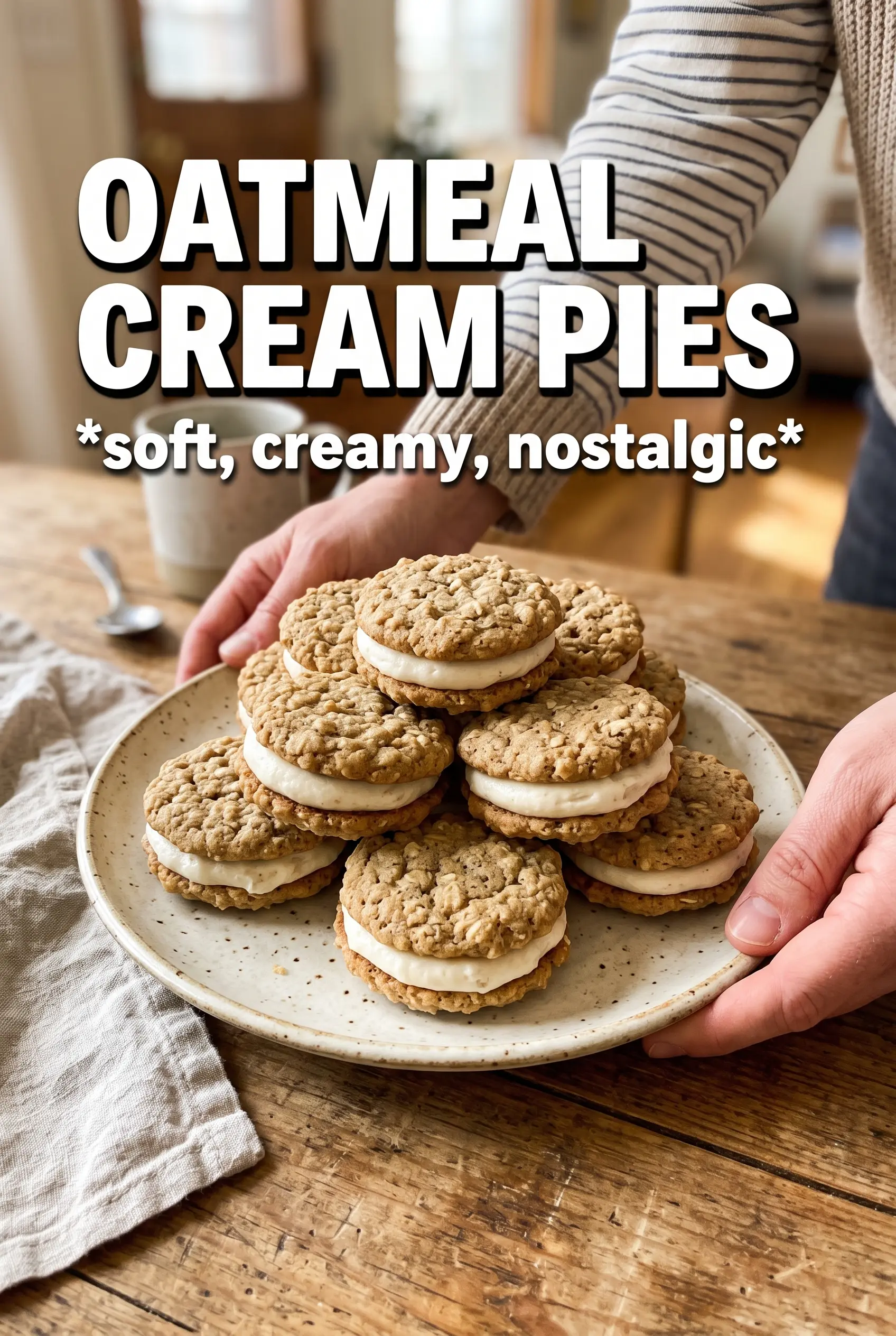
Oatmeal Cream Pies
Ingredients
Equipment
Method
- Beat softened butter with both sugars until fluffy and lighter in color, scraping the bowl as needed for even mixing.
- Add the eggs, molasses, and vanilla, then beat until smooth and fully incorporated.
- Fold in the flour, baking soda, cinnamon, nutmeg, salt, and rolled oats until no dry streaks remain.
- Scoop 2-tablespoon ovals onto a baking sheet, spacing them apart so they can spread.
- Bake at 350F for 10-12 minutes until the edges look set and the centers no longer look wet.
- Cool the cookies completely before filling, until they hold their shape when pressed lightly.
- Beat the softened butter and cream cheese until smooth, then add the marshmallow creme and mix until evenly combined.
- Add powdered sugar, vanilla, and cinnamon, then beat until very smooth and fluffy with a thick, pipeable texture.
- Match cookies in pairs by size and spread a generous layer of filling on the flat side of one cookie.
- Press the second cookie on top to form sandwich cookies, using gentle pressure so the filling fills to the edges.


