Warm potato salad has a way of disappearing fast when the dressing turns glossy and tangy and clings to every slice. This old-fashioned German version leans into that contrast: tender potatoes, crisp bacon, soft onions, and a vinegar-based dressing that soaks in just enough without turning the whole bowl muddy. It’s the kind of side dish that lands on the table steaming and gets passed around twice.
The trick is in the balance. Russet potatoes break down a little at the edges, which helps the dressing coat them instead of sliding off, while the flour in the bacon drippings gives the vinegar and broth a light body without making it heavy. The bacon goes back in at the end for texture, not just flavor, so you still get those salty little bites against the warm potatoes.
Below, I’ve included the details that matter most: how to keep the potatoes tender instead of waterlogged, why the dressing thickens the way it does, and the one storage note that matters if you’re making this ahead for a crowd.
The dressing thickened just enough to coat the potatoes, and the bacon stayed crisp enough to give every bite a little crunch. I served it warm with pork chops and there wasn’t a spoonful left.
Save this warm German potato salad for the nights when you want tangy dressing, bacon, and tender potatoes in one bowl.
The Part That Keeps the Dressing from Turning Thin and Watery
Potato salad goes wrong when the dressing is added too loosely and the potatoes have nowhere to hold it. Here, the flour gets stirred into the bacon drippings and onions before the liquid goes in, which gives the vinegar and broth a little backbone. That matters because German potato salad should coat the potatoes, not pool at the bottom of the bowl.
Russets are the right potato for this version because they absorb flavor well and soften at the edges. If you use a waxier potato, the salad stays firmer, but the dressing won’t cling as deeply. That’s fine if you want a neater texture, but this old-fashioned version tastes best when the slices are warm and just starting to relax into the dressing.
What the Bacon Drippings and Vinegar Are Really Doing Here
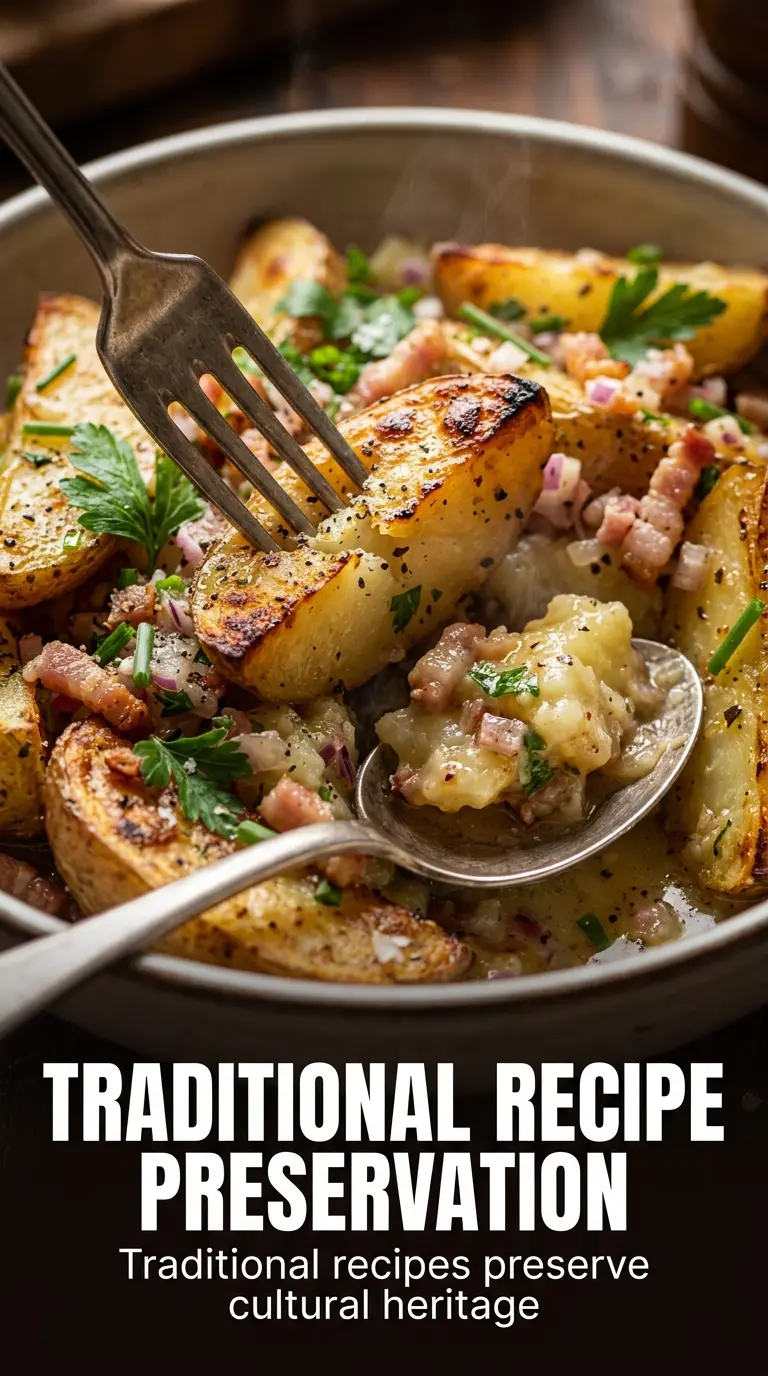
- Russet potatoes — These break down just enough to catch the warm dressing. Peel them if you want a classic texture; leaving the skins on changes the dish into something sturdier and less traditional.
- Bacon — This is where the smoky, salty depth comes from. Thick-cut bacon works, but regular bacon renders a little faster and gives you more drippings to build the sauce.
- Beef broth — It gives the dressing a savory base that water can’t match. Use a good low-sodium broth if you can, because the bacon already brings plenty of salt.
- White vinegar — This is the sharp edge that makes the salad taste like German potato salad instead of a creamy potato side. Apple cider vinegar can stand in, but it will read fruitier and a little softer.
- Flour — Just enough to thicken the dressing so it clings. If you need gluten-free, use a 1:1 gluten-free flour blend and whisk it in the same way.
- Parsley — Add it at the end for freshness and color. It keeps the salad from tasting heavy.
Building the Salad While Everything Is Still Hot
Boiling the Potatoes Without Breaking Them Up
Slice the peeled potatoes into even pieces so they cook at the same pace. Boil them until they’re tender when pierced with a knife but still hold their shape, then drain them well. If they sit in water too long after cooking, they’ll turn loose and absorb less of the dressing.
Rendering the Bacon and Softening the Onion
Cook the bacon until crisp, then pull it out and keep the drippings in the pan. Add the onion to those drippings and cook until it turns soft and translucent, not browned and bitter. If the onion catches, the dressing picks up that harsh edge, so keep the heat moderate.
Thickening the Vinegar Dressing
Sprinkle the flour over the onions and stir for a minute so it loses that raw taste. Then add the broth, vinegar, sugar, salt, and pepper, stirring until the liquid turns glossy and lightly thickened. Let it simmer gently; a hard boil can make the sauce thin out again and splash away the balance you just built.
Finishing the Bowl While the Potatoes Are Warm
Crumble the bacon and add it to the drained potatoes, then pour the hot dressing over the top. Toss gently so the potatoes stay in slices instead of turning to mash. Finish with parsley and serve warm, because this salad loses a lot of its character once it cools completely.
How to Adapt This Warm German Potato Salad Without Losing the Point
Make it gluten-free
Swap the flour for a 1:1 gluten-free blend and whisk it into the onions the same way. You’ll still get a lightly thickened dressing, though the texture may be a touch less silky than the original.
Use apple cider vinegar for a softer tang
Apple cider vinegar brings a rounder, slightly fruity acidity. It works well if you want the salad less sharp, but the flavor will drift a little from the more traditional diner-style bite of white vinegar.
Skip the beef broth for a lighter side
Vegetable broth works if you want a pork-free version, but the dressing will taste a little less deep and savory. Add a small pinch more salt and taste before pouring it over the potatoes.
Storage and Reheating
- Refrigerator: Store leftovers for up to 3 days. The potatoes will absorb more dressing as they sit, so the salad gets a little tighter and less glossy.
- Freezer: I don’t recommend freezing this salad. The potatoes turn grainy and the vinegar dressing separates after thawing.
- Reheating: Warm it gently in a skillet over low heat with a splash of broth if it looks dry. Don’t blast it in the microwave for too long, or the potatoes can go mealy and the bacon loses its texture.
Answers to the Questions Worth Asking
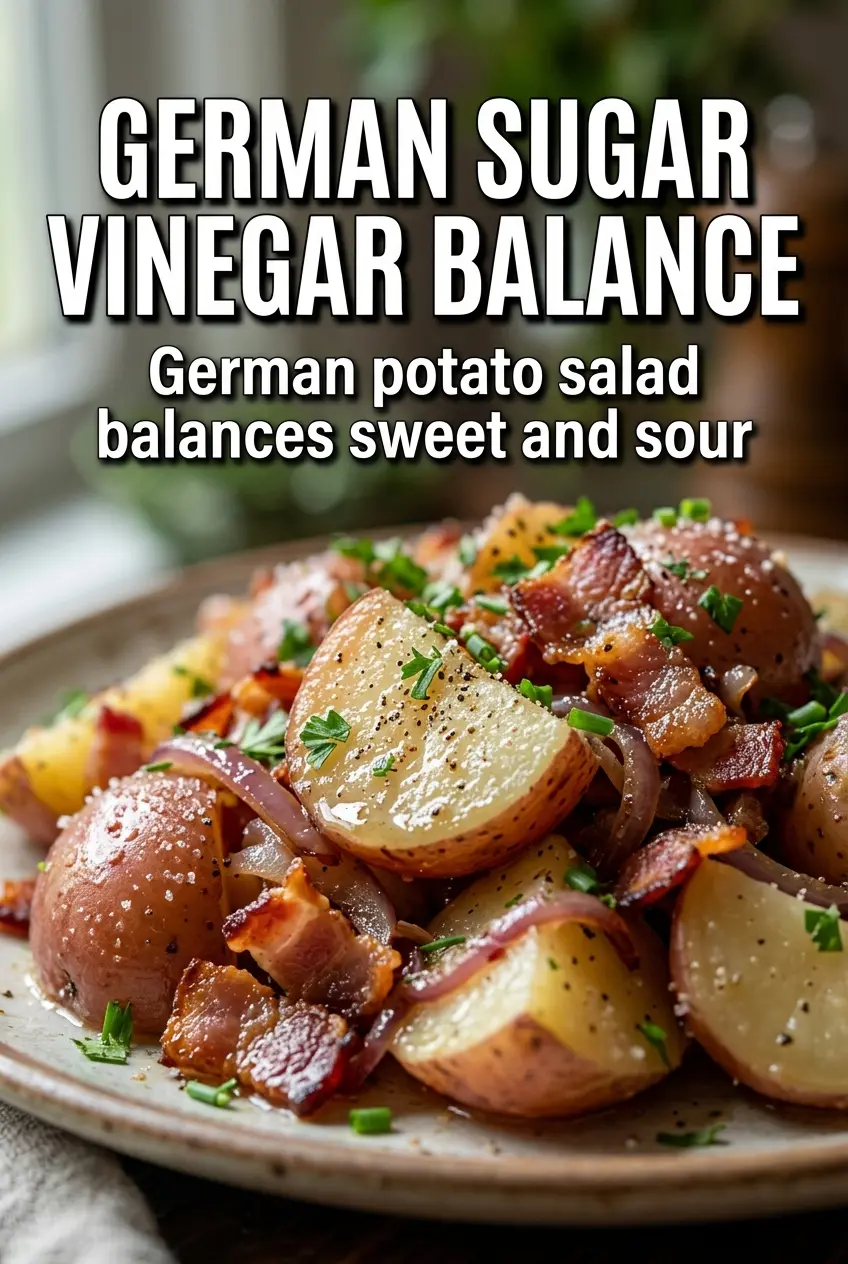
Old-Fashioned German Potato Salad
Ingredients
Equipment
Method
- Bring a Dutch oven of water to a boil, then boil the peeled and sliced russet potatoes until tender, 10 to 15 minutes. Drain the potatoes well and keep them hot.
- Cook the bacon in the Dutch oven over medium heat until crispy, 8 to 10 minutes, and reserve the drippings. Drain excess fat if needed, leaving about 2 tablespoons drippings for the onions.
- Sauté the diced onion in the bacon drippings until softened, 4 to 6 minutes. Sprinkle the flour over the onions and stir to coat.
- Add the beef broth, white vinegar, sugar, salt, and pepper to the onion mixture, stirring until smooth. Simmer over medium-low heat until thickened, 4 to 6 minutes, with a glossy, gravy-like texture.
- Crumble the crispy bacon and add it to the hot potatoes. Pour the hot dressing over the potatoes and bacon and toss gently to coat.
- Garnish with the chopped fresh parsley and serve warm, steaming if possible.