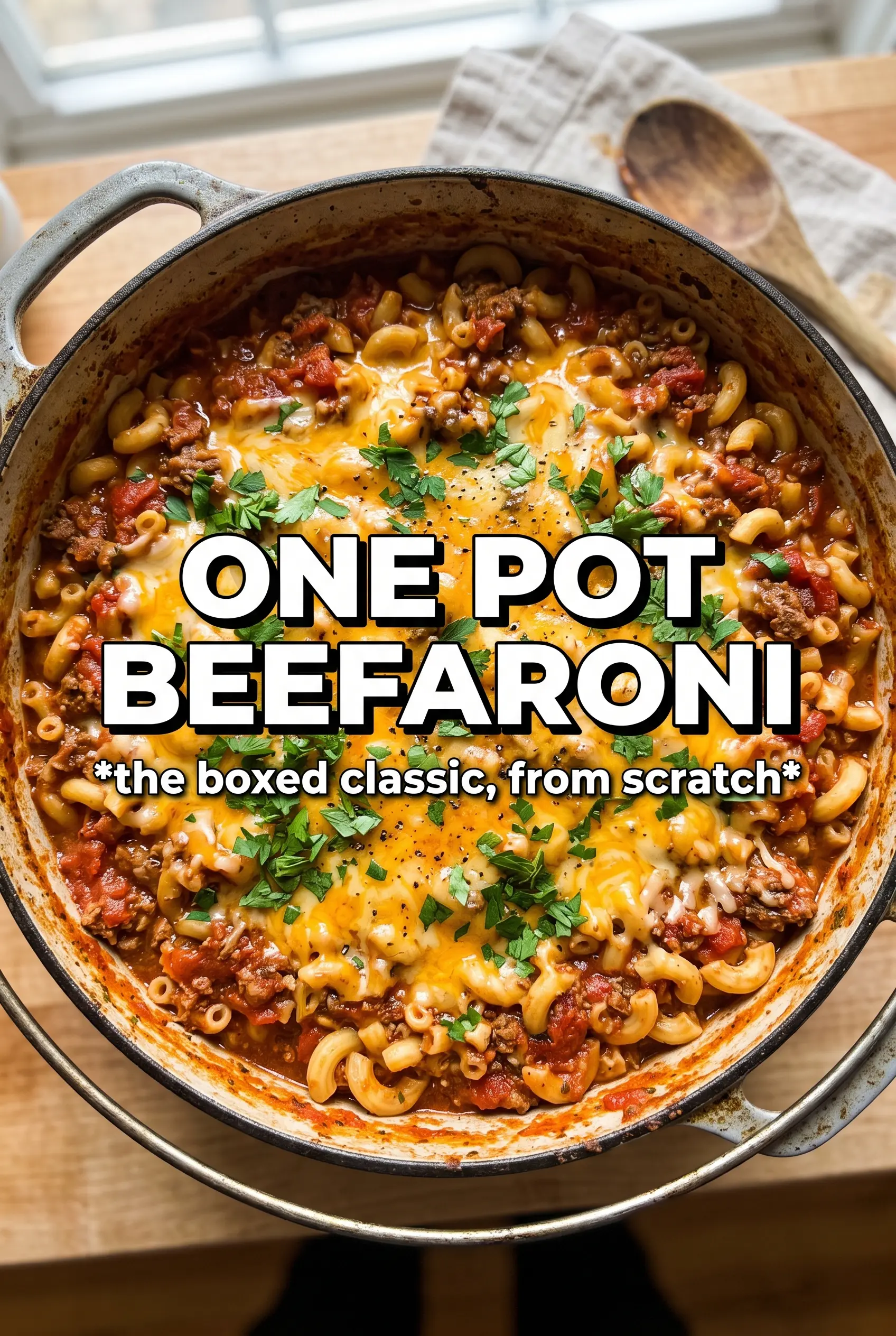
One pot beefaroni lands in the bowl with all the things people actually want from comfort food: tender macaroni, a thick tomato-beef sauce, and melted cheddar in every bite. The pasta cooks right in the sauce, so it picks up the beefy flavor instead of tasting like it came from a separate pot, and the whole dish finishes creamy without needing a separate cheese sauce.
The trick is using enough liquid for the macaroni to cook, but not so much that the final dish turns soupy. Tomato paste deepens the sauce fast, crushed tomatoes give body, and cheddar goes in off the heat so it melts smooth instead of turning grainy. That last part matters more than people think — cheese loves gentle heat, not a hard boil.
Below, I’ll walk through the small timing details that keep the pasta tender and the sauce thick, plus a few smart swaps for making this fit what you’ve got in the pantry.
The sauce thickened up right as the macaroni finished, and the cheddar melted smooth instead of clumping. My kids asked if I could put this in the weekly rotation.
Save this one pot beefaroni for a fast, cheesy dinner with a rich tomato sauce and barely any cleanup.
The Pasta Cooks in the Sauce, So the Timing Has to Be Exact
Beefaroni can go wrong when the pasta gets tossed into a sauce that’s too thin or cooked too hard. If the liquid hasn’t come up to a full boil before the macaroni goes in, the pasta softens unevenly and the sauce never tightens up around it. If the heat stays too high after the pasta is added, the bottom can catch before the elbows finish.
The goal is a steady simmer after the macaroni goes in, not a rolling boil. Stir once or twice while it cooks, then keep the lid on enough to trap heat without steaming the sauce into soup. When the pasta is al dente, there should still be a little saucy looseness in the pot; it thickens as it sits for a few minutes.
- For the best texture, cook the macaroni right in the sauce instead of boiling it separately. That’s what gives the dish its beefaroni feel instead of a loose meat sauce over pasta.
- If the sauce looks too thick before the pasta is tender, splash in a little more broth. Pasta needs enough liquid to finish cooking.
- If it looks too loose at the end, give it 2 to 3 minutes off the heat. The starch from the macaroni keeps thickening the sauce as it rests.
What Each Ingredient Is Actually Doing in This Pot

- Ground beef — This gives the dish its backbone and the savory depth that makes beefaroni feel hearty. An 80/20 blend works well because it brings flavor, and you can drain excess fat if needed so the sauce doesn’t turn greasy.
- Onion and garlic — These build the base flavor before anything else goes in. Don’t rush them; cooking the onion until it softens and the garlic for just a minute keeps the sauce from tasting sharp.
- Crushed tomatoes and tomato paste — Crushed tomatoes provide the body, while tomato paste gives the sauce that concentrated, cooked-down taste. Paste matters here; a substitute won’t give the same depth in such a short cook time.
- Beef broth — This is the cooking liquid for the pasta and it seasons the sauce from the inside out. Water will work in a pinch, but the finished dish tastes flatter.
- Sharp cheddar — Sharp cheddar brings the cheesy finish and enough flavor to stand up to the tomato sauce. Shred it yourself if you can; pre-shredded cheese often melts less smoothly because of the anti-caking coating.
- Italian seasoning, garlic powder, and smoked paprika — These season the whole pot without making it taste like a separate spice blend. The paprika adds a little warmth, not smoke-heavy barbecue flavor, so use the measured amount.
Building the Sauce So It Stays Thick and Cheesy
Brown the Beef First
Cook the ground beef with the diced onion over medium-high heat until the meat loses its raw color and the onion turns soft and translucent. If there’s a lot of fat in the pan, drain it now; too much grease keeps the sauce from clinging to the macaroni later. Add the garlic at the end of this stage and cook just until fragrant, about a minute, so it doesn’t turn bitter.
Simmer the Tomato Base Before the Pasta Goes In
Stir in the crushed tomatoes, broth, tomato paste, and seasonings, then bring the pot to a boil. This is where the sauce takes on body and the tomato paste dissolves fully, so don’t add the macaroni before the pot is properly hot. If the mixture still looks a little loose at this point, that’s fine; the pasta will absorb a lot of liquid as it cooks.
Cook the Macaroni Until It’s Tender but Not Soft
Add the uncooked elbows, stir well, then lower the heat and cover the pot. Check around the 12-minute mark, then keep cooking until the pasta is al dente and the sauce has thickened enough to coat a spoon. If the pasta is done but the sauce still seems thin, let it sit uncovered for a few minutes instead of cranking the heat, which can scorch the bottom.
Finish Off the Heat
Pull the pot off the burner before you stir in the cheddar. Residual heat is enough to melt it smoothly, and that’s what keeps the sauce creamy instead of grainy. Taste at the end, then add salt and pepper as needed, because the broth, cheese, and tomatoes all bring their own saltiness.
How to Adapt This Pot When the Pantry Looks Bare
Make It Gluten-Free
Use a sturdy gluten-free elbow pasta and watch it closely, because it can go from tender to mushy faster than regular macaroni. Start checking a few minutes early and keep enough liquid in the pot so the pasta can cook through without drying out.
Swap in Ground Turkey
Ground turkey works if you want a lighter version, but it needs help from the seasonings because it’s leaner and less rich than beef. Add a small drizzle of oil when browning and don’t skip the tomato paste, which gives the sauce the depth the turkey doesn’t have on its own.
Use a Different Cheese
Cheddar is the classic move, but Monterey Jack or Colby will melt even creamier if that’s what you have. Milder cheeses soften the tomato edge a little, so if you change the cheese, taste at the end and add an extra pinch of salt to wake the sauce back up.
Stretch It for a Bigger Crowd
You can add another 1/2 cup of broth and a little extra pasta if you need more servings, but keep the ratio balanced or the sauce gets thin. The easiest way to scale this is to increase the meat and tomatoes first, then add pasta only after you know the pot still has enough liquid to cook it properly.
Storage and Reheating
- Refrigerator: Store leftovers in an airtight container for up to 4 days. The pasta will keep soaking up sauce, so it gets thicker by the next day.
- Freezer: It freezes well for up to 2 months, though the pasta softens a bit after thawing. Cool it completely first and freeze in portions for the easiest reheating.
- Reheating: Warm it on the stove over low heat with a splash of broth or water, stirring often until hot. The common mistake is blasting it in a dry pan or too-hot microwave, which tightens the sauce and makes the pasta chewy.
Questions I Get Asked About This Recipe
One Pot Beefaroni
Ingredients
Equipment
Method
- Heat a large pot over medium-high heat and cook the ground beef and diced onion until browned, then drain excess fat.
- Add the minced garlic and cook for 1 minute, stirring, until fragrant and lightly golden.
- Add crushed tomatoes, beef broth, tomato paste, Italian seasoning, garlic powder, smoked paprika, salt, and black pepper to the pot, then stir and bring to a boil.
- Add the uncooked elbow macaroni, stir to coat, reduce heat to medium-low, cover, and cook for 12–15 minutes until pasta is al dente and the sauce thickens.
- Remove from the heat and stir in the shredded sharp cheddar until fully melted and evenly stirred throughout.
- Taste and adjust seasoning, then serve immediately topped with fresh parsley.