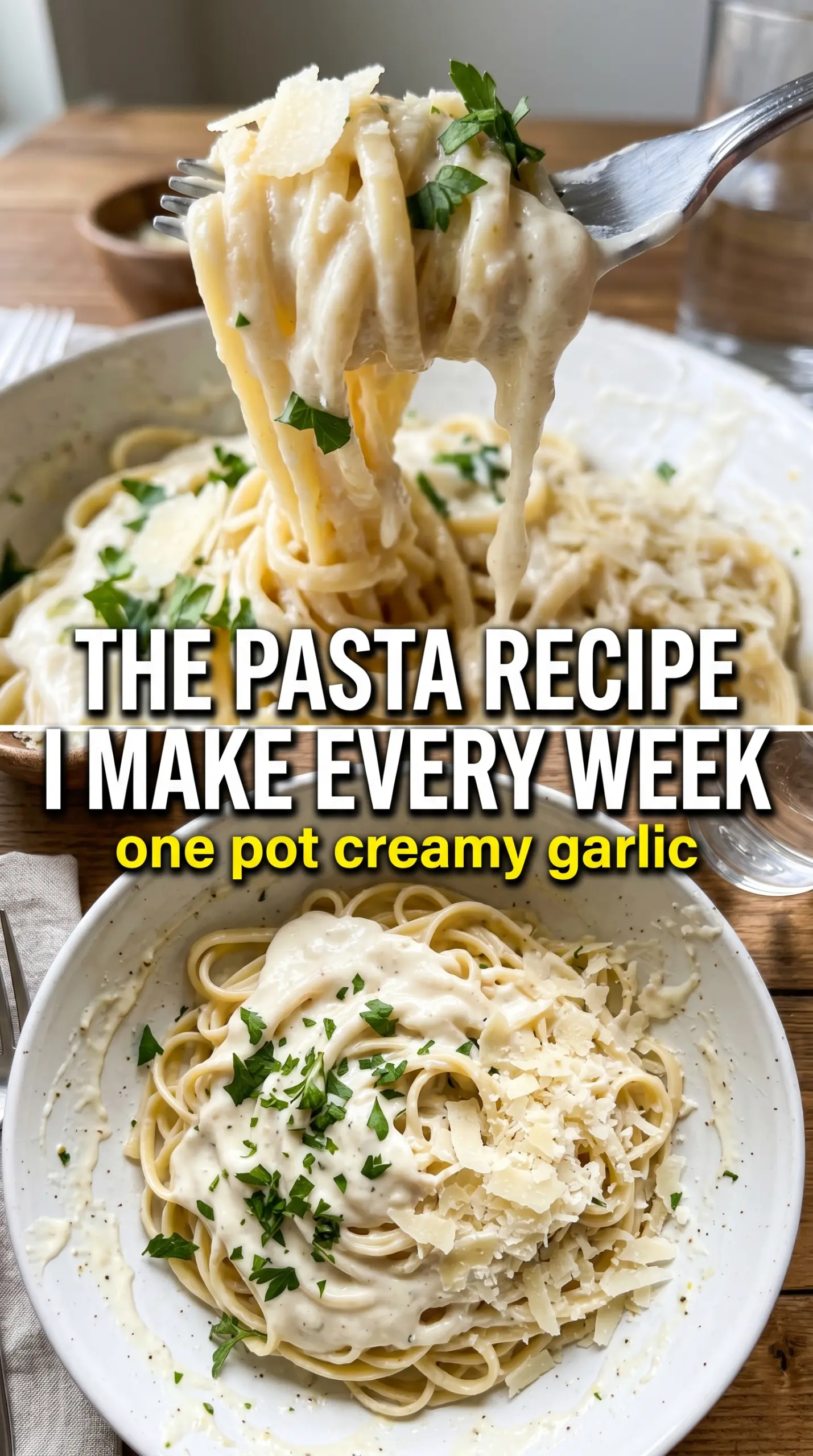
Silky strands of pasta coated in a garlic cream sauce are the kind of dinner that disappears fast and somehow still feels like less work than it has any right to be. This one pot version keeps the sauce glossy and full-bodied by letting the pasta cook right in the liquid, where the starch naturally helps thicken everything without turning it gluey. You end up with noodles that taste seasoned from the inside out, not just covered at the end.
The key is keeping the heat gentle once the cream and broth go in. Garlic only needs a minute or two to bloom before it starts turning bitter, and parmesan needs low heat and steady stirring so it melts into the sauce instead of clumping. That’s what gives you a smooth finish instead of a split or grainy panful.
Below, I’ll walk you through the part that matters most: how to judge the sauce when it still looks a little loose, why the cheese goes in after the pasta is tender, and how to adjust the texture if you want it extra rich or a little lighter.
The sauce thickened up perfectly and the pasta came out glossy, not sticky. I used the full 12 minutes and added a splash more broth at the end, and my husband went back for seconds before I even sat down.
Creamy garlic pasta that turns silky, glossy, and restaurant-worthy with one pot and pantry ingredients.
The Reason One Pot Creamy Garlic Pasta Stays Smooth Instead of Turning Thick and Gummy
The trick with one pot pasta is timing. The noodles need enough liquid to cook through, but not so much that the sauce ends up thin and watery at the end. As the pasta simmers, it releases starch into the pot, and that starch is what gives the cream sauce body without needing flour.
The other thing that matters is restraint at the beginning. If the garlic browns too much, the whole pot tastes sharp and bitter. If the broth and cream boil hard, the dairy can separate and the parmesan won’t melt cleanly. Gentle heat is what keeps the sauce smooth while the pasta finishes in the same pot.
- Linguine or spaghetti — Long pasta works best here because it stirs through the sauce evenly and cooks in the liquid without clumping as easily as shorter shapes.
- Heavy cream — This is what gives the sauce its body. Half-and-half will work in a pinch, but the sauce will be thinner and needs a little more reduction time.
- Parmesan — Grate it fresh if you can. Pre-shredded cheese often contains anti-caking agents that can leave the sauce grainy instead of silky.
- Broth — Chicken broth gives a deeper savory base, while vegetable broth keeps the dish meatless without changing the cooking method.
- Garlic — Fresh minced garlic is worth using here because it flavors the cream fast. Jarred garlic can work, but it tastes flatter and sometimes harsher after simmering.
What Each Ingredient Is Actually Doing in This Recipe
- Primary ingredient (the star) — Quality matters most. Choose the best you can find.
- Cooking medium (oil, butter, or broth) — This carries flavors and prevents dryness.
- Seasonings (salt, pepper, spices, herbs) — Layer flavors so nothing overpowers. Build depth gradually.
- Aromatics (garlic, onion, herbs) — Cook with fat to bloom flavors. Become the foundation.
- Supporting ingredients — Complement the main ingredient without overpowering it.
- Sauce or liquid (if applicable) — Brings flavors together. Balance richness with acid.
- Acid (lemon, vinegar, wine, or other) — Brightens and prevents flat-tasting results.
- Final finish (garnish, glaze, or sauce) — Prevents one-dimensional taste and adds visual appeal.
How to Keep the Garlic Cream Sauce From Breaking While the Pasta Cooks
Blooming the Garlic
Melt the butter over medium heat and stir in the garlic just until it smells fragrant and turns lightly golden at the edges. That usually takes 1 to 2 minutes. If the garlic darkens too fast, pull the pan off the heat for a few seconds; burnt garlic will carry through the whole sauce and there’s no hiding it later.
Simmering the Pasta in the Cream Base
Add the broth and cream, bring the liquid to a gentle boil, then add the uncooked pasta. Stir often so the noodles don’t stick to the bottom or curl into one heavy clump. The liquid should stay at a lively simmer, not a rolling boil, or the cream can reduce too fast before the pasta is tender.
Finishing With Parmesan
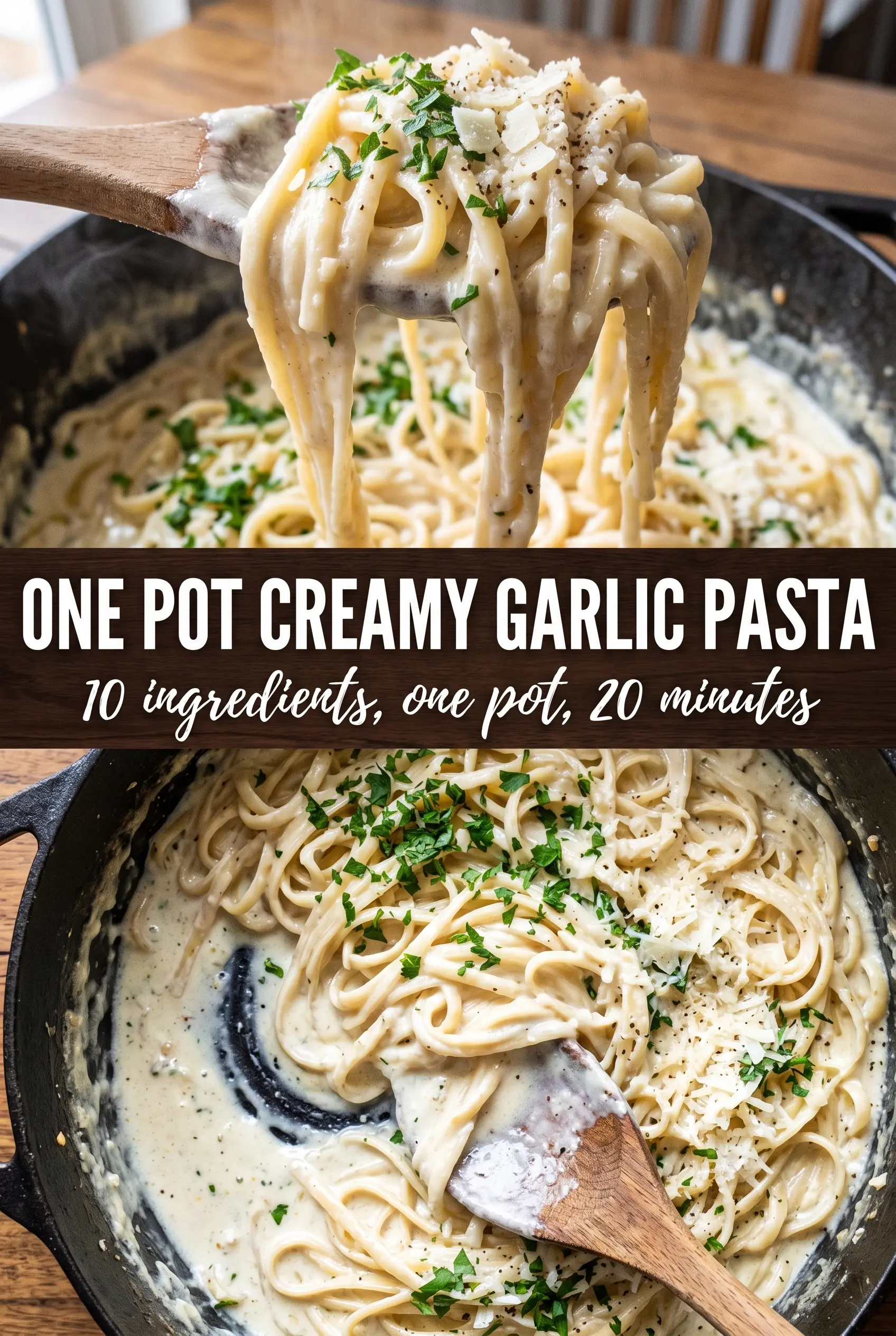
When the pasta is al dente and the liquid has turned glossy and slightly thick, stir in the parmesan and Italian seasoning. The sauce should coat the back of a spoon but still move a little in the pot. If it looks too tight, add a splash of broth; if it looks loose, let it sit for a minute off the heat because parmesan thickens as it rests.
Seasoning and Serving
Taste before you plate it and add salt and cracked black pepper with a light hand at first. Parmesan adds salt, but not enough to finish the dish on its own. Serve it right away with basil and extra cheese while the sauce is still fluid and glossy, because this pasta tightens up as it sits.
How to Adapt This Pasta When You Want It Lighter, Richer, or Meatless
Make It Meatless With Vegetable Broth
Swap the chicken broth for vegetable broth and the method stays exactly the same. You’ll lose a little savory depth, so use a well-seasoned broth if you can. The parmesan and garlic still do most of the heavy lifting.
Use Half-and-Half for a Lighter Sauce
Half-and-half will give you a lighter result, but the sauce won’t be as plush and may need a few extra minutes to reduce. Keep the heat gentle or it can look a little broken before the pasta is done. This is the best swap when you want creaminess without the full richness of heavy cream.
Add Chicken or Shrimp
Cook sliced chicken or peeled shrimp separately and fold it in at the end so the pasta doesn’t overcook while the protein finishes. This keeps the sauce smooth and avoids overfilling the pot. It turns the dish into a fuller main without changing the creamy garlic base.
Make It Gluten-Free
Use a sturdy gluten-free spaghetti that holds up in simmering liquid, since delicate rice-based noodles can break down before the sauce finishes reducing. Watch the pot closely and check for doneness early. Some gluten-free pasta thickens the sauce more aggressively, so you may need a splash of extra broth at the end.
Storage and Reheating
- Refrigerator: Store leftovers in an airtight container for up to 3 days. The sauce will thicken as it chills.
- Freezer: I don’t recommend freezing this pasta. Cream sauces and parmesan can turn grainy after thawing, and the noodles soften too much.
- Reheating: Warm it slowly on the stove or in the microwave with a splash of broth or cream, stirring as it heats. High heat is what makes the sauce seize and go oily, so low and slow works best.
Answers to the Questions Worth Asking
One Pot Creamy Garlic Pasta
Ingredients
Equipment
Method
- Melt the butter in a large pot over medium heat, then add the minced garlic and sauté for 1–2 minutes until fragrant and just golden. Stir constantly so the garlic doesn’t brown too quickly.
- Add the chicken or vegetable broth and heavy cream, then bring to a gentle boil over medium heat. The surface should gently bubble, not aggressively roll.
- Add the uncooked linguine or spaghetti and cook for 10–12 minutes, stirring frequently, until the pasta is al dente and the liquid has reduced into a creamy sauce. Keep the heat steady so it cooks through while thickening.
- Stir in the grated parmesan cheese and Italian seasoning until the cheese is fully melted and the sauce turns silky. If needed, stir for 30–60 seconds longer until glossy.
- Season generously with salt and cracked black pepper, tasting as you go. The sauce should be balanced and flavorful throughout.
- Serve immediately, topped with fresh basil and extra parmesan for serving. The best texture comes right after the cheese melts.