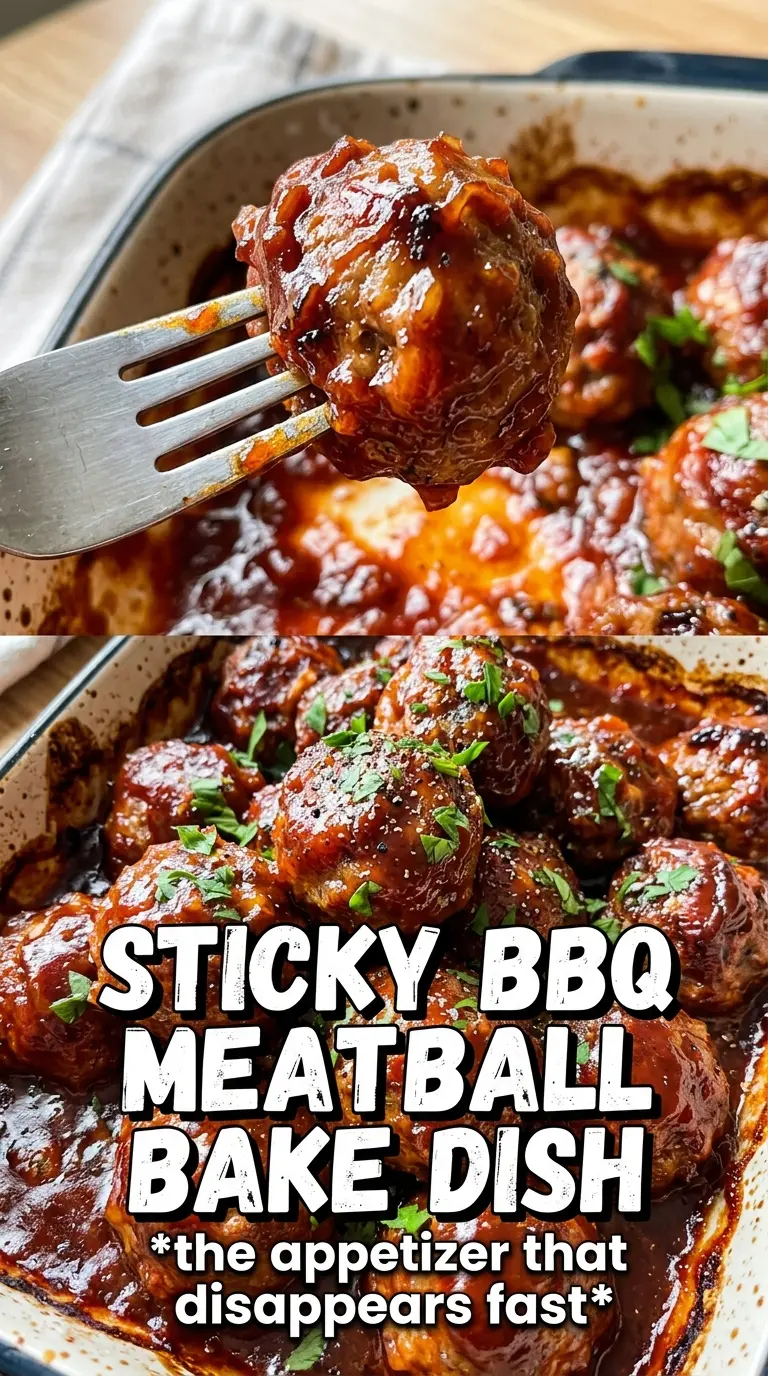
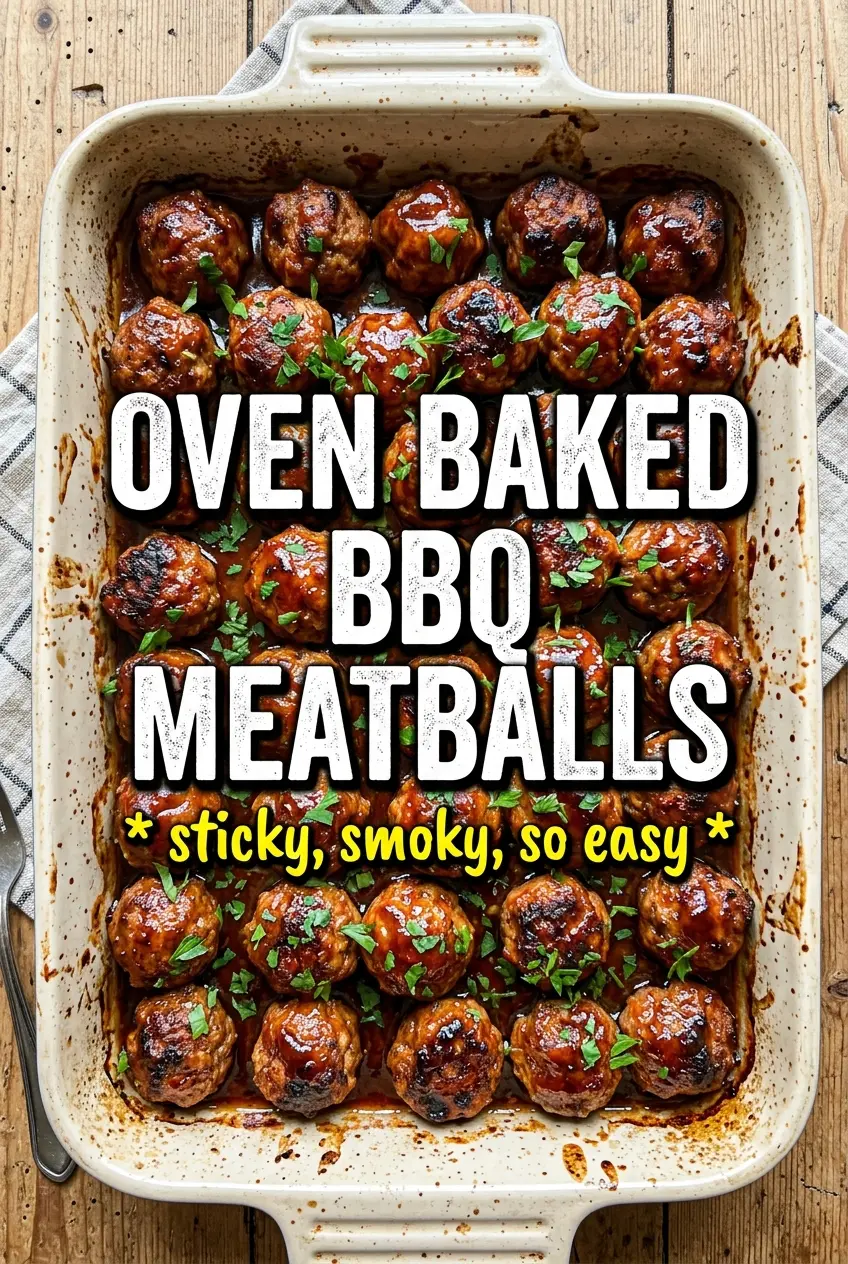
Sticky, smoky oven baked BBQ meatballs come out with a caramelized glaze that clings to every edge, not a thin sauce that slides right off the pan. The beef stays tender inside, the outside gets just enough browning in the oven, and the sweet-savory coating turns glossy in the last few minutes without burning. They work as a main dish, a party platter, or a make-ahead dinner that people keep circling back to for one more piece.
The trick is keeping the meat mixture loose enough to stay juicy while still holding its shape. Breadcrumbs and milk give the meatballs a soft texture, and the first bake sets the outside before the glaze goes on. That second bake matters because it lets the BBQ sauce tighten up and caramelize instead of just warming through.
Below, I’m walking through the small details that keep the meatballs tender and the glaze sticky, plus a few swaps if you need to work with what’s already in your kitchen.
The glaze got sticky and caramelized exactly like I wanted, and the meatballs stayed juicy instead of turning dense. I brushed on a little extra sauce at the end and they disappeared in minutes.
Save these oven baked BBQ meatballs for the nights when you want a sticky, caramelized glaze without babysitting a skillet.
The Part That Keeps the Meatballs Tender Instead of Dense
Most baked meatballs go wrong because the mixture gets packed too tightly. Once that happens, the oven has no chance to soften the texture back out, and you end up with firm little rounds that eat more like meatloaf bites. Here, the breadcrumbs, milk, and eggs work together to hold moisture in the beef, but only if you mix until combined and stop there.
The other thing that matters is the first bake. If you brush the glaze on too early, the sauce can scorch before the meatballs finish cooking. By baking them first, you set the surface, build a little browning, and give the glaze something to cling to.
- Ground beef — Use 80/20 if you can. Leaner beef works, but the meatballs won’t be as juicy and the glaze won’t have the same rich backdrop.
- Breadcrumbs and milk — This is your tenderness insurance. The crumbs soak up the milk and keep the meat from tightening up in the oven.
- Worcestershire sauce — It adds the savory depth that makes the BBQ glaze taste deeper, not just sweeter.
- BBQ sauce — Use one you already like on its own. A smoky, thicker sauce gives the best coating, while a thin, runnier sauce needs the honey and second bake even more to thicken properly.
- Honey — This helps the glaze caramelize and cling. Maple syrup can work, but it changes the flavor and browns a little less predictably.
What Each Ingredient Is Actually Doing in This Recipe
- Primary ingredient (the star) — Quality matters most. Choose the best you can find.
- Cooking medium (oil, butter, or broth) — This carries flavors and prevents dryness.
- Seasonings (salt, pepper, spices, herbs) — Layer flavors so nothing overpowers. Build depth gradually.
- Aromatics (garlic, onion, herbs) — Cook with fat to bloom flavors. Become the foundation.
- Supporting ingredients — Complement the main ingredient without overpowering it.
- Sauce or liquid (if applicable) — Brings flavors together. Balance richness with acid.
- Acid (lemon, vinegar, wine, or other) — Brightens and prevents flat-tasting results.
- Final finish (garnish, glaze, or sauce) — Prevents one-dimensional taste and adds visual appeal.
Building the Glaze So It Turns Sticky, Not Burnt
Mix the meatball ingredients just until the breadcrumbs disappear into the beef. If you keep working the mixture, the proteins tighten and the meatballs turn springy instead of tender. Roll them into even balls so they bake at the same rate, then space them out on the pan so the hot air can do its job.
The glaze goes on after the meatballs are already cooked through. Brush it generously, then send them back into the oven long enough for the sauce to tighten and darken at the edges. If your glaze is still loose, it usually means the BBQ sauce was too thin or the pan needed a couple more minutes of heat to caramelize properly.
Mixing the Meatball Base
Combine the ground beef, breadcrumbs, eggs, milk, garlic, Worcestershire sauce, smoked paprika, onion powder, salt, and pepper in a large bowl. Use your hands or a fork and stop as soon as everything looks evenly distributed. The mixture should feel soft and a little sticky, not dry or stiff. If it seems overly wet, let it sit for a minute so the breadcrumbs can absorb the liquid before you roll.
Shaping for Even Baking
Roll the mixture into 1.5-inch balls and place them on a parchment-lined baking sheet. Keep them close enough to stay on the pan, but not touching, or they’ll steam instead of brown. Uneven sizes are the easiest way to end up with some meatballs overcooked and others still pale in the middle, so keep them as uniform as you can.
The First Bake
Bake at 400°F for about 15 minutes, until the meatballs are browned on the outside and cooked through. You’re looking for firmness on the outside with a little give when pressed, not a hard crust. If they’re still pale and soft, give them a few more minutes before glazing; the sauce won’t rescue underbaked meatballs.
Glazing and Finishing
Whisk the BBQ sauce, honey, apple cider vinegar, and smoked paprika together, then brush it over each meatball. Return the pan to the oven for 5 more minutes, just until the glaze turns shiny and sticky. If you leave them in too long, the sugars can go from caramelized to bitter fast, especially near the edge of the pan.
How to Adapt These BBQ Meatballs Without Losing the Sticky Finish
Swap in ground turkey
Ground turkey works, but it needs the full amount of milk and breadcrumbs because it dries out faster than beef. The flavor will be lighter and less rich, so the BBQ glaze matters even more here.
Make them gluten-free
Use gluten-free breadcrumbs and check that your Worcestershire sauce is certified gluten-free. The texture stays close to the original as long as you don’t cut back on the milk that keeps the meatballs tender.
Turn up the smoke
Use a smoky BBQ sauce and add a pinch of chipotle powder to the glaze if you want more depth. This pushes the flavor darker and a little spicier, but keep the honey in place or the glaze won’t caramelize the same way.
Make them ahead for a party
Bake the meatballs earlier in the day, then glaze and finish them right before serving. That keeps the coating glossy and stops the sauce from drying onto the pan.
Storage and Reheating
- Refrigerator: Store in an airtight container for up to 4 days. The glaze thickens as it chills, but the meatballs stay tender.
- Freezer: Freeze the baked meatballs without the final glaze if you want the best texture. Thaw overnight in the fridge, then reheat and brush with fresh glaze.
- Reheating: Warm in a 325°F oven covered loosely with foil until heated through. The common mistake is blasting them in the microwave, which can make the meat tough and turn the glaze gummy.
Questions I Get Asked About This Recipe
Oven Baked BBQ Meatballs
Ingredients
Equipment
Method
- Preheat the oven to 400°F and line a sheet pan with parchment for easy release and cleanup.
- Combine ground beef, breadcrumbs, eggs, whole milk, minced garlic, Worcestershire sauce, smoked paprika, onion powder, salt, and pepper until just mixed; avoid overworking.
- Roll the mixture into 1.5-inch meatballs and place them on the prepared sheet pan with space between each one.
- Bake at 400°F for 15 minutes, until browned and cooked through.
- Mix BBQ sauce, honey, apple cider vinegar, and smoked paprika to make the glaze.
- Brush the glaze generously over each meatball, coating the browned surface.
- Return to the oven and bake for 5 more minutes at 400°F, until the glaze caramelizes and turns shiny.
- Serve the meatballs hot with extra BBQ sauce and garnish with sesame seeds and green onions.