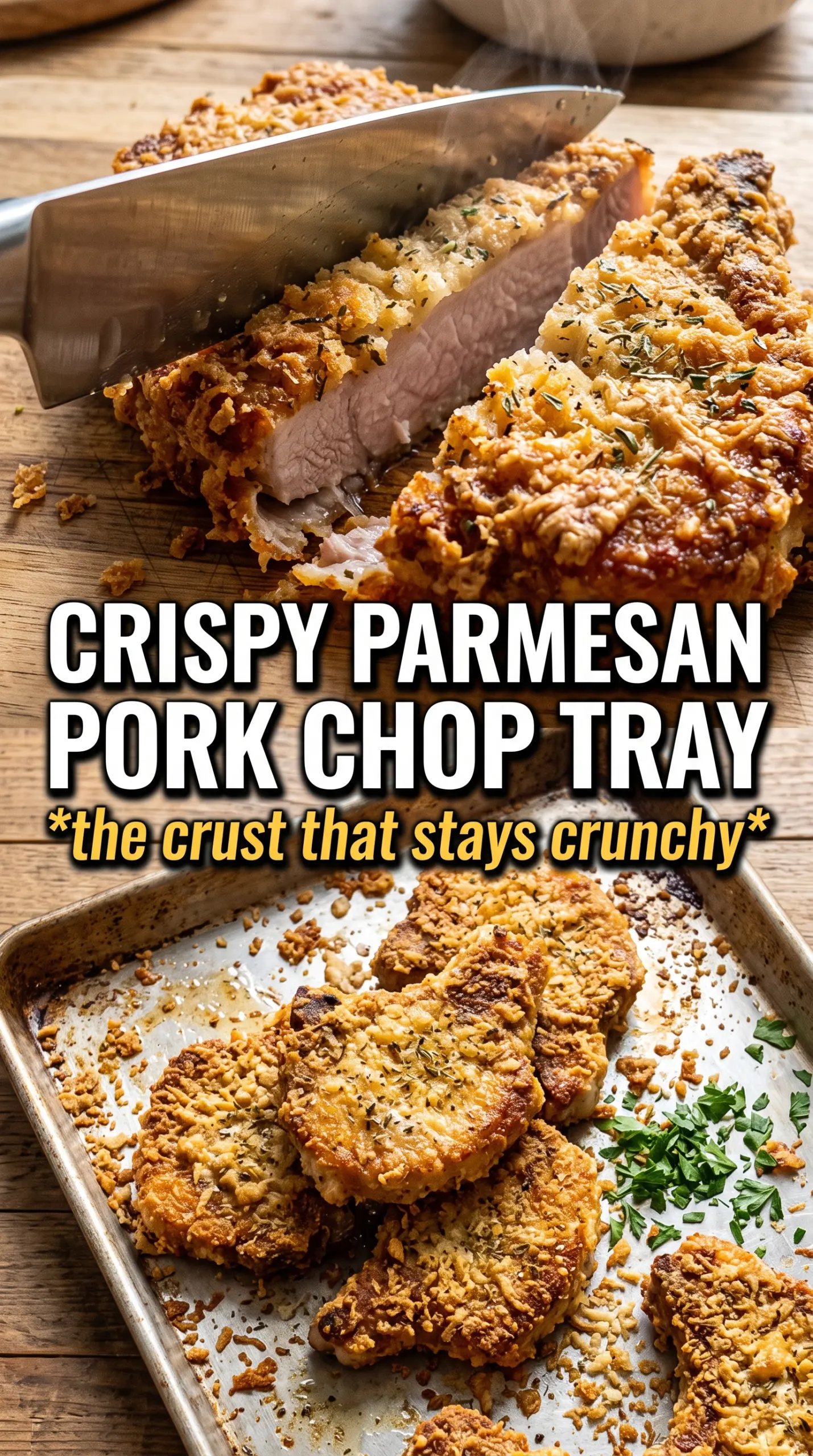
Parmesan baked pork chops come out with a crust that stays loud and crunchy while the pork underneath stays juicy enough to cut with a fork. The coating gets deeply golden in the oven, with the parmesan melting into the panko instead of sliding off the meat, which is the whole trick here. Add a squeeze of lemon at the end and the richness turns sharp and clean instead of heavy.
The coating works because the Dijon and mayonnaise act like glue, but they also add a little fat and tang so the crust browns instead of drying out. A wire rack helps the hot air circulate around the chops, which keeps the bottom from steaming into a soggy layer. Bone-in chops give you a little extra forgiveness in the oven, too, since they stay juicier than thin boneless cuts.
Below, I’ll walk through the one part that matters most: getting the crust to stick thickly enough to survive baking. I’ve also included a few smart swaps and the storage notes you’ll want if you’re planning leftovers.
The crust came out crisp all the way across, and the Dijon-mayo layer kept the pork incredibly juicy. I baked them on a rack like you suggested and the bottoms didn’t go soggy at all.
Like this parmesan baked pork chops recipe? Save it for the night you want a crunchy crust, juicy center, and almost no cleanup.
The Crust Sticks Because the Pork Stays Dry at the Surface
The biggest mistake with baked pork chops is rushing the coating onto damp meat. If the surface is wet, the parmesan mixture slides instead of clinging, and you end up with patchy crust and burnt crumbs on the pan. Pat the chops dry first, then season them, then add the Dijon-mayo layer in a thin, even coat so the crust has something sticky to grab onto.
That wire rack matters more than it looks like it should. It keeps the underside of the chops from sitting in rendered juices, which is what turns a crisp coating soft before it even reaches the table. The oven temperature is high enough to brown the crust fast, but not so high that the pork dries out before the center hits 145°F.
What the Parmesan, Panko, and Dijon Are Each Doing Here
- Parmesan cheese — Use finely grated parmesan, not big shreds. Fine cheese melts into the panko and browns evenly, while coarser shreds can fall off before they set. Freshly grated gives you the best flavor, but a good refrigerated tub-style parmesan still works if it’s dry and not oily.
- Panko breadcrumbs — Panko is what gives this crust its light, shattery crunch. Regular breadcrumbs will work in a pinch, but the finish will be denser and a little less crisp. If you need gluten-free, use gluten-free panko and keep the rest of the method the same.
- Dijon mustard — Dijon brings tang and helps the crust brown instead of tasting flat. You don’t taste it as mustard once it bakes, but you’d notice if it were missing. Yellow mustard can work in an emergency, though the flavor is sharper and less balanced.
- Mayonnaise — Mayo is the hidden insurance policy here. It keeps the topping moist enough to cling and helps the crust brown in the oven. If you’re out of mayo, plain Greek yogurt can sub in, but the crust will be a touch tangier and not quite as rich.
- Bone-in pork chops — Bone-in chops stay juicier through the bake and are harder to overcook. If all you have are boneless chops, reduce the cook time a bit and start checking early, because they dry out fast once they pass 145°F.
Pressing the Coating So It Survives the Oven
Build the sticky layer first
Mix the parmesan, panko, garlic powder, Italian seasoning, and smoked paprika before anything touches the pork. That keeps the coating even, and it prevents you from overworking the chops while you try to patch dry spots later. Spread the Dijon-mayo mixture over the top and sides in a thin layer; if it looks thick and gloppy, the crust will slide off in the oven instead of setting into one solid shell.
Pack the crust on firmly
Press the topping onto each chop with your fingertips, not your palm, so it grips the surface without flattening the meat. You want a thick, even layer, especially along the top edge where the crust usually tries to break away. If loose crumbs are falling off, press again; don’t pile on more seasoning, because the issue is adhesion, not flavor.
Bake until the crust is deeply colored
Slide the chops onto the wire rack and bake until the coating is deep golden and the thickest part of the pork reaches 145°F. The crust should look dry and crisp, not pale and sandy. If it’s browning too fast before the pork is done, move the pan one rack lower, but don’t lower the oven temperature or the crust will lose its crunch.
Rest before slicing
Give the chops three minutes off the heat before serving. That short rest keeps the juices inside the meat instead of spilling out when you cut in, and it lets the crust settle so it stays attached. Finish with parsley and lemon wedges; the lemon wakes up the parmesan and cuts through the richness.
Three Ways to Bend This Recipe Without Breaking It
Gluten-Free Crunchy Pork Chops
Swap in gluten-free panko and keep everything else the same. The crust still comes out crisp because the parmesan does the browning while the crumbs provide the structure. Avoid almond flour here; it browns fast and turns greasy instead of crisp.
No-Mayo Version with Greek Yogurt
Use plain Greek yogurt in place of the mayonnaise for a tangier finish and a slightly leaner coating. It still helps the crust cling, but it browns a little less evenly, so watch the color instead of the clock. If the yogurt is very thick, loosen it with a teaspoon of Dijon so it spreads cleanly.
Boneless Chops for a Faster Dinner
Boneless chops work, but they need close attention because they dry out sooner than bone-in chops. Start checking them a few minutes early and pull them as soon as the center reaches 145°F. You’ll still get a crisp crust, just with a slightly shorter window before they overcook.
Storage and Reheating
- Refrigerator: Store leftovers in an airtight container for up to 3 days. The crust softens a bit, but the pork stays flavorful.
- Freezer: These freeze best after baking and cooling completely. Wrap each chop tightly and freeze for up to 2 months; the coating won’t be as crisp after thawing, but it holds up better than you might expect.
- Reheating: Reheat on a wire rack in a 375°F oven until warmed through. The main mistake is using the microwave, which turns the crust leathery and steams the coating soft.
Answers to the Questions Worth Asking
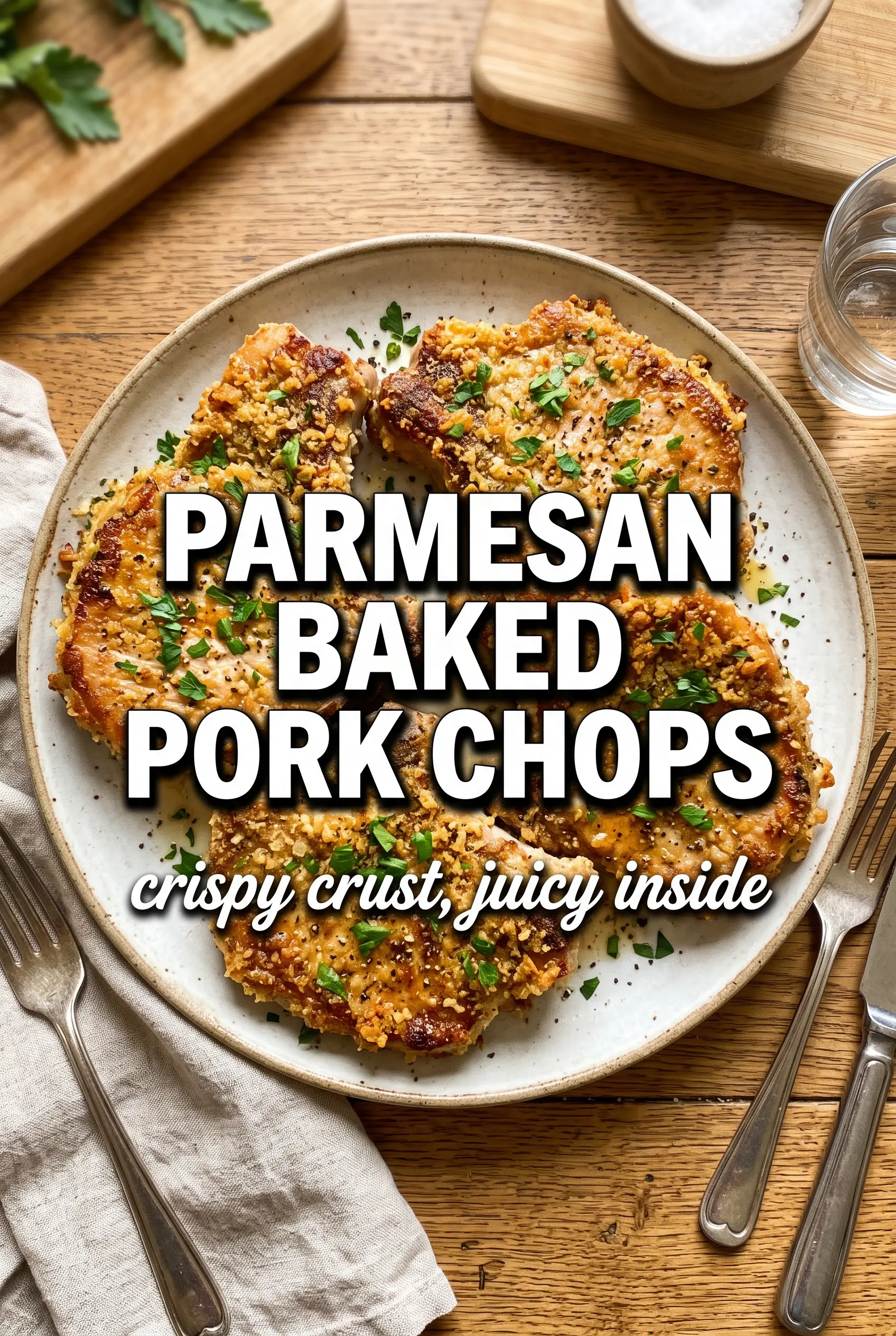
Parmesan Baked Pork Chops
Ingredients
Equipment
Method
- Preheat the oven to 425°F and line a sheet pan with foil, then place a wire rack on top so air circulates under the chops.
- In a bowl, mix parmesan cheese, panko breadcrumbs, garlic powder, Italian seasoning, and smoked paprika until evenly combined.
- Season the pork chops with salt and black pepper, then spread a thin layer of the Dijon-mayo mixture over the top of each chop.
- Press the parmesan mixture firmly onto the top and sides of each chop to form a thick, adherent crust.
- Place the coated pork chops on the wire rack and bake for 22–25 minutes at 425°F until the crust is deeply golden and the internal temperature reaches 145°F.
- Rest the chops for 3 minutes, then garnish with fresh parsley and serve with lemon wedges.