Golden, crackly parmesan crust and juicy chicken make this sheet pan dinner the kind of meal that disappears fast and still feels like you put in real effort. The chicken comes out with a deeply browned top that stays on the meat instead of sliding off, and the asparagus and tomatoes roast right alongside it so the whole pan tastes complete, not assembled at the last minute.
The trick is in the coating. Dijon and mayonnaise give the parmesan mixture something sticky to cling to, and the panko keeps the crust from turning dense or greasy. A hot oven does the rest: it browns the topping while the vegetables soften at the edges and pick up those little caramelized spots that make sheet pan dinners worth making.
Below you’ll find the timing that keeps the chicken juicy, the crust crisp, and the vegetables from going mushy. I also included a few smart swaps for the nights when you need to work with what’s in the fridge.
The parmesan crust turned out crisp instead of soggy, and the asparagus roasted in the chicken drippings without getting limp. I cut the chicken into thick pieces and it was done right on time.
Keep this parmesan crusted chicken sheet pan dinner handy for nights when you want crisp chicken, roasted vegetables, and one pan to clean.
The Crust Fails When the Chicken Is Wet, Not When the Oven Is Too Cool
The biggest mistake with parmesan-crusted chicken is rushing the coating onto damp chicken. If the surface is wet, the parmesan mixture slides, steams, and turns patchy instead of forming that crisp, browned shell. The Dijon-mayo layer fixes that by acting like edible glue, but it still needs a fairly dry surface underneath to hold on properly.
Another thing that matters here is oven heat. A 425°F oven gives the coating enough intensity to brown before the chicken dries out, and the sheet pan needs room so the vegetables roast instead of crowding into steam. If the pan is packed too tightly, the asparagus loses its snap and the tomatoes burst without caramelizing.
What Each Ingredient Is Actually Doing in This Sheet Pan Dinner
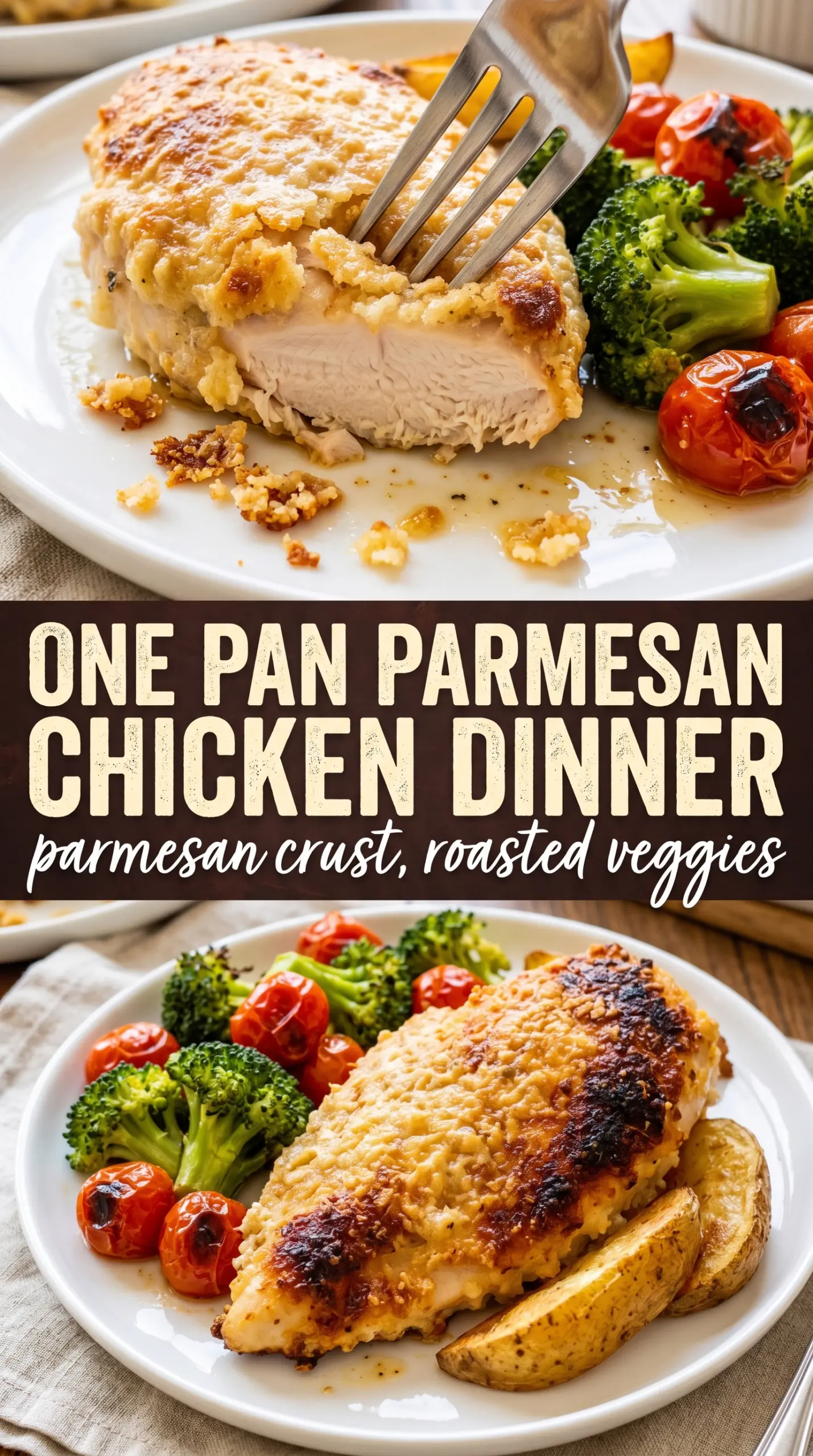
- Parmesan cheese — This is the backbone of the crust. Freshly grated parmesan melts and browns better than the shelf-stable stuff in a canister, which tends to stay dusty instead of forming a real shell.
- Panko breadcrumbs — Panko keeps the crust light and crunchy. Regular breadcrumbs work in a pinch, but the coating will be denser and a little less crisp.
- Dijon mustard and mayonnaise — These create the sticky layer that helps the crust adhere and adds a little tang. Mayo sounds unusual, but it keeps the chicken moist and helps the top brown evenly.
- Asparagus and cherry tomatoes — These are the vegetables that make sense with the timing. Asparagus holds up at high heat, and cherry tomatoes collapse into sweet, juicy bursts without needing a separate pan.
- Olive oil — Use enough to lightly coat the vegetables, not drown them. Too much oil softens the asparagus instead of helping it roast.
Building the Crust Before the Vegetables Steal the Show
Mix the Coating First
Stir the parmesan, panko, garlic powder, and Italian seasoning together before you touch the chicken. That keeps the coating even, and it means you can press the chicken in once instead of trying to season it in layers while the mayo starts to slip. You want a mixture that looks sandy and a little clumpy from the cheese.
Press the Chicken, Don’t Dust It
Brush the tops of the chicken breasts with the Dijon-mayo mixture, then press each one firmly into the parmesan mixture. Pressing matters more than shaking excess off, because the crust needs contact to stick through the bake. If the coating looks thin in spots, pack more on with your fingers before it goes in the oven.
Roast Everything on One Pan
Place the coated chicken on the prepared sheet pan and scatter the asparagus and tomatoes around it. The vegetables should sit in a single layer with space between them so they roast instead of steam. Bake until the crust is deep golden and the thickest part of the chicken reaches 165°F; if the topping browns too fast, the chicken is usually too close to the top heat source, so lower the rack one level next time.
Finish With Lemon
Let the chicken rest for a couple of minutes before serving so the juices settle. A squeeze of lemon over the top wakes up the parmesan and cuts through the richness of the crust. If the tomatoes look soft and jammy, that’s the point — they should be collapsing at the edges and spooning their juices onto the pan.
How to Adapt This for Different Nights and Different Pan Sizes
Dairy-Free Parmesan Crusted Chicken
Use a dairy-free parmesan-style topping if you need to avoid dairy, but expect a thinner, less savory crust than real parmesan gives. The Dijon and mayo still help the coating stick, and the panko will keep the texture crisp, but the flavor will be a little milder.
Gluten-Free Version
Swap the panko for gluten-free breadcrumbs or crushed gluten-free crackers. The crust will still brown well, though crackers usually give a slightly firmer, more pronounced crunch than standard GF breadcrumbs.
Swap the Vegetables Based on What’s in the Fridge
Broccoli florets, zucchini chunks, or sliced bell peppers all work in place of the asparagus and tomatoes. Just keep the pieces similar in size so everything finishes at the same time; softer vegetables like zucchini need the pan to stay uncrowded or they’ll release too much moisture.
Extra-Crispy Chicken Cutlets
Slice the chicken breasts in half horizontally to make thinner cutlets, then reduce the bake time a few minutes. You’ll get a higher crust-to-chicken ratio and faster cooking, but the chicken will be less juicy if you overbake it, so start checking early.
Storage and Reheating
- Refrigerator: Store leftovers in an airtight container for up to 3 days. The crust softens a little, but the chicken stays usable for lunches or a second dinner.
- Freezer: You can freeze the cooked chicken, but the crust won’t stay as crisp. Freeze in a single layer first, then wrap well so the coating doesn’t get crushed.
- Reheating: Reheat in a 375°F oven or air fryer until hot and the crust is re-crisped. The common mistake is microwaving it, which turns the topping soggy and pulls moisture out of the chicken.
Answers to the Questions Worth Asking
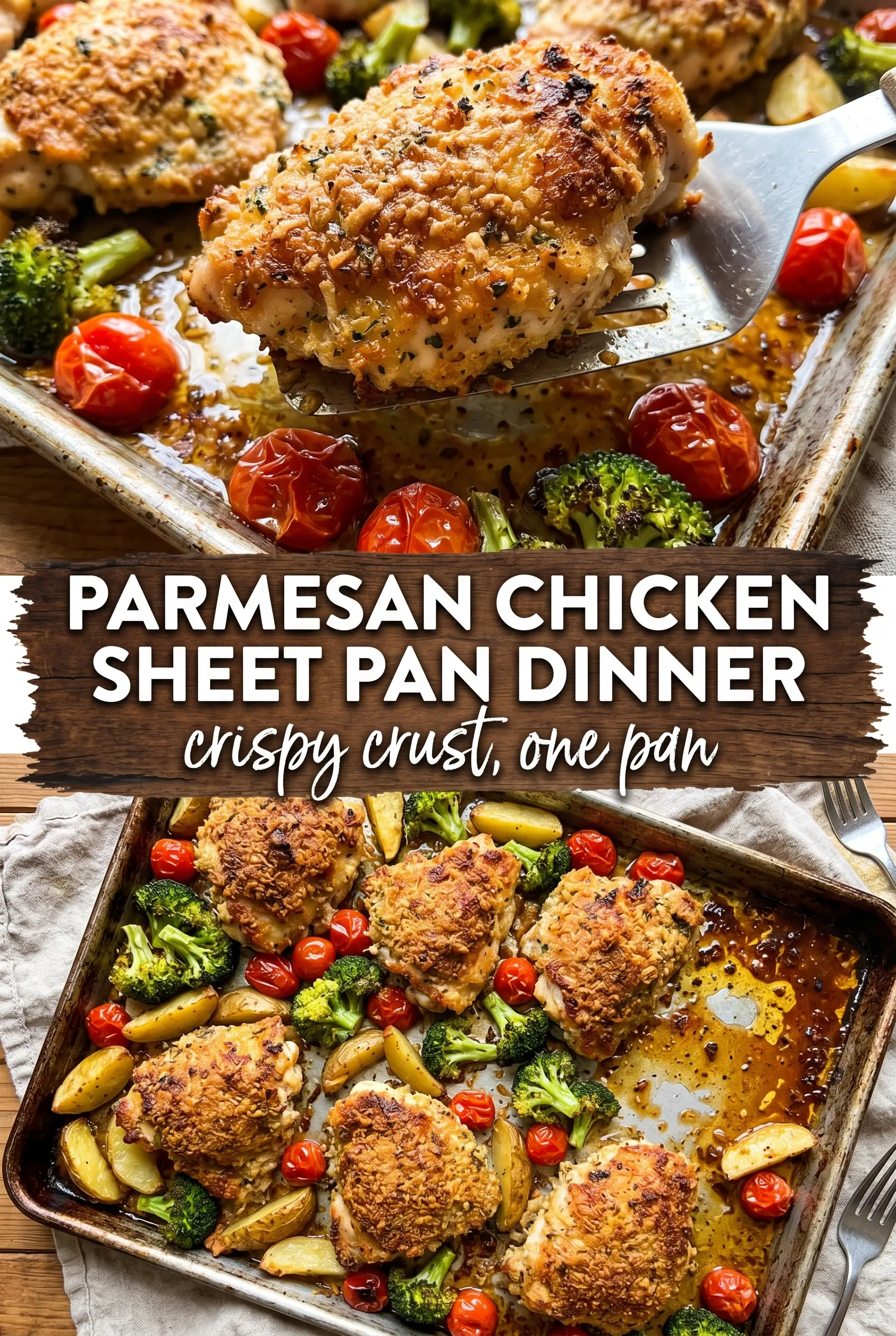
Parmesan Crusted Chicken Sheet Pan Dinner
Ingredients
Equipment
Method
- Preheat oven to 425°F and line a large sheet pan with foil, creating a slick surface for easy cleanup. Set it aside while you assemble the coating.
- Mix parmesan cheese, panko breadcrumbs, garlic powder, and Italian seasoning together until evenly combined. The crumb mixture should look uniformly tan with flecks of cheese.
- Brush chicken breasts with Dijon mustard and mayonnaise, coating the tops thoroughly so the crust sticks. Use a thin, even layer.
- Press the mustard-mayo coated tops firmly into the parmesan mixture to coat, leaving a thick, crunchy layer. Lift one chicken to check that the coating adheres with no bare spots.
- Place the coated chicken on the sheet pan in a central layout, leaving space for the vegetables around it. The crusted side should face up.
- Toss asparagus, cherry tomatoes, olive oil, salt, and black pepper until all pieces are lightly coated. The asparagus should look glossy, and the tomatoes should look slick with oil.
- Arrange the asparagus and cherry tomatoes around the chicken on the sheet pan. Keep the vegetables in a ring so they roast alongside the breasts.
- Bake at 425°F for 22–25 minutes until the crust is deeply golden and chicken is cooked through. Look for a crackling, golden top with a browned edge and juices running clear.
- Serve with lemon wedges tucked at the edges for bright finishing flavor. Add wedges right before eating so the chicken stays crisp.