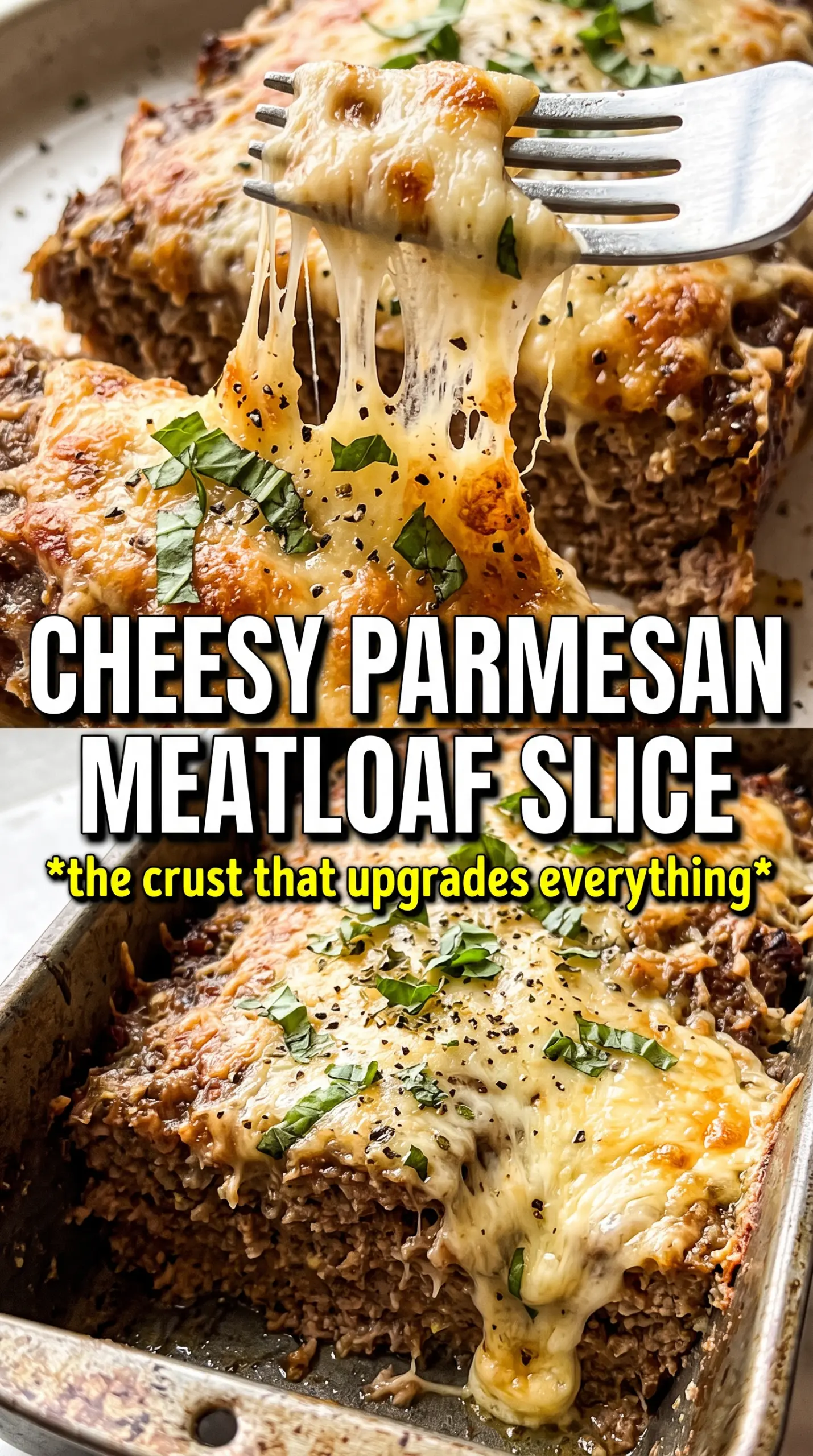
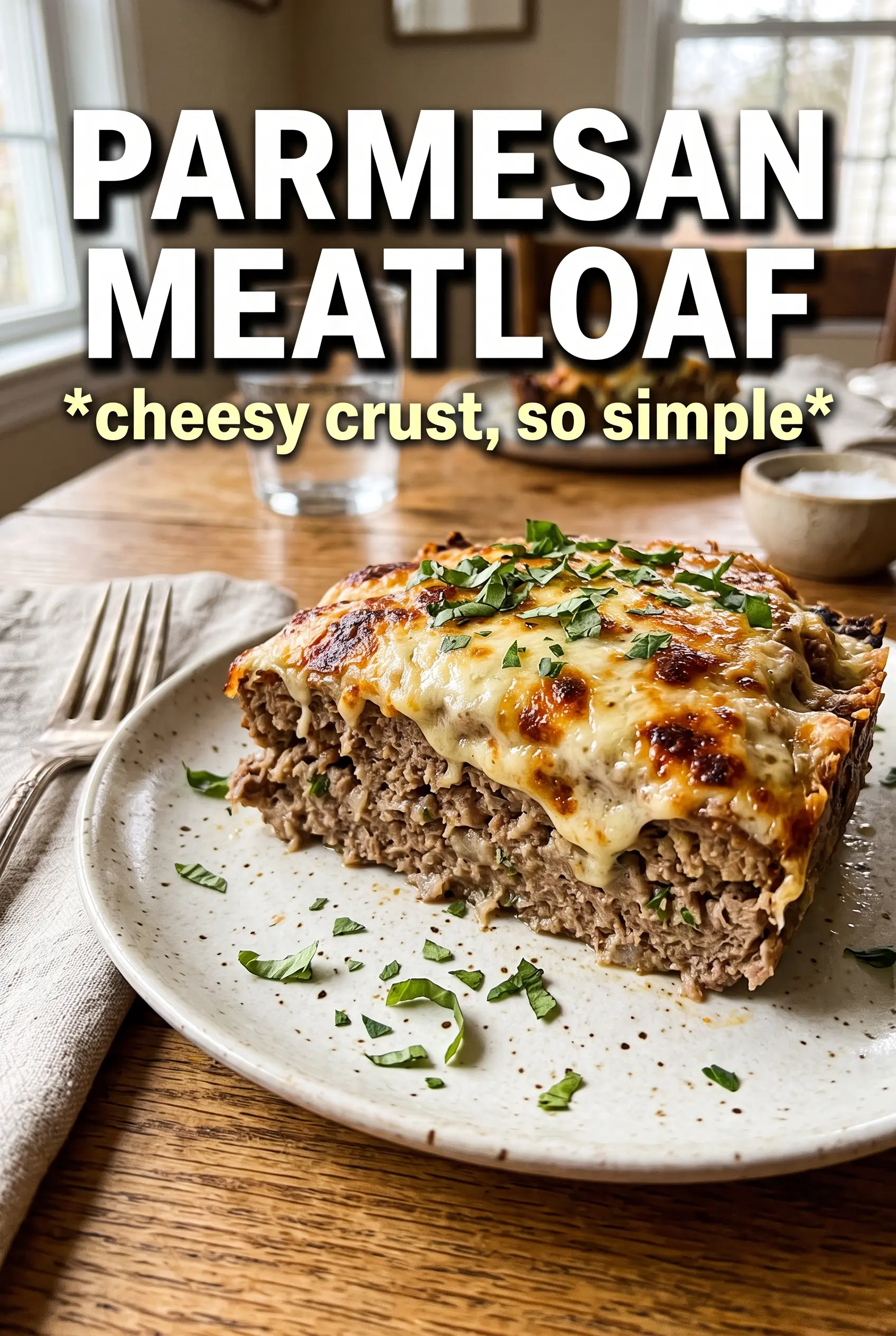
Parmesan meatloaf comes out with a firmer, juicier slice than the usual loaf-pan version, and the top bakes into a salty, golden crust that makes every piece feel a little more special. The parmesan works its way through the beef instead of sitting only on top, so each bite gets that savory, nutty finish along with the garlic herb butter brushed over the outside.
The trick is keeping the mix light. Ground beef, breadcrumbs, eggs, and milk need to come together just enough to hold shape; if you work it like bread dough, the loaf turns dense fast. The free-form shape matters too, because it gives the sides more space to brown and lets the parmesan on top caramelize instead of steaming in a pan.
Below, I’ve included the ingredient details that actually affect the texture, plus the small timing cue that keeps the loaf from drying out before the center reaches temperature.
The parmesan melted into the meat instead of clumping, and the garlic butter kept the top from drying out. I sliced it after 10 minutes and it held together beautifully.
Save this Parmesan Meatloaf for a cheesy, garlic-butter finish and a golden crust that slices cleanly every time.
The Reason This Loaf Stays Tender Instead of Dense
The biggest mistake with meatloaf is overmixing. Once the beef, breadcrumbs, eggs, milk, and parmesan are combined, stop. The mixture should look evenly distributed, not pasty. That light hand keeps the loaf tender after baking instead of turning it into a tight, rubbery brick.
The second thing that matters here is the free-form shape. A loaf pan traps moisture, which sounds helpful but actually softens the crust and leaves the edges pale. Shaping it on a parchment-lined baking sheet gives you more browned surface, more parmesan caramelization, and better texture all around.
- Ground beef — Use 80/20 if you can. Leaner beef works, but the loaf will be less plush and needs careful timing so it doesn’t dry out.
- Parmesan cheese — Freshly grated parmesan melts into the mixture and browns on top better than the shelf-stable canister version. The canister stuff is saltier and drier, so it won’t give the same texture.
- Italian breadcrumbs — These help the meatloaf hold together without making it heavy. Plain crumbs work too, but add a pinch more Italian seasoning and a little extra salt if you swap them.
- Whole milk — This softens the breadcrumbs before baking, which is what keeps the loaf moist. Low-fat milk can work, but the loaf won’t have quite the same richness.
- Garlic butter brush — This is not just garnish. It keeps the top from drying out and helps the parmesan on the surface turn deeply golden instead of chalky.
What Each Ingredient Is Actually Doing in This Recipe
- Primary ingredient (the star) — Quality matters most. Choose the best you can find.
- Cooking medium (oil, butter, or broth) — This carries flavors and prevents dryness.
- Seasonings (salt, pepper, spices, herbs) — Layer flavors so nothing overpowers. Build depth gradually.
- Aromatics (garlic, onion, herbs) — Cook with fat to bloom flavors. Become the foundation.
- Supporting ingredients — Complement the main ingredient without overpowering it.
- Sauce or liquid (if applicable) — Brings flavors together. Balance richness with acid.
- Acid (lemon, vinegar, wine, or other) — Brightens and prevents flat-tasting results.
- Final finish (garnish, glaze, or sauce) — Prevents one-dimensional taste and adds visual appeal.
Building the Loaf So the Parmesan Browns, Not Burns
Mixing Without Compressing
Combine the beef, parmesan, breadcrumbs, eggs, milk, garlic, parsley, Italian seasoning, Worcestershire sauce, salt, and pepper in a large bowl. Work it with your hands just until the mixture looks evenly blended. If you keep squeezing after that point, the fat starts to feel greasy and the loaf will bake up compact instead of tender.
Shaping for a Better Crust
Form the mixture into a free-form loaf on a parchment-lined baking sheet. A uniform oval or rectangle is best because it bakes evenly and keeps the ends from drying out before the center is done. Press extra parmesan over the top so it can melt and form those crisp browned bits you want to see when you slice in.
Brushing at the Right Time
Brush the loaf with half the garlic butter before it goes into the oven. That first layer helps the parmesan color early and gives the top a little protection. At the 40-minute mark, brush on the remaining butter. If you wait until the end, the garlic won’t have time to perfume the crust and the top can look dry.
Knowing When It’s Done
Bake until the internal temperature reaches 160°F, usually 55 to 65 minutes. The top should be deeply golden, and the juices around the loaf will look clear rather than pink. Rest it for 10 minutes before slicing. Cut too soon and the slices collapse because the juices haven’t settled back into the meat yet.
How to Adapt This Parmesan Meatloaf for Different Kitchens
Make It Gluten-Free
Swap the Italian breadcrumbs for a gluten-free breadcrumb blend in the same amount. If your blend is extra fine and dry, add 1 to 2 tablespoons more milk so the mixture doesn’t feel stiff. The texture stays close to the original, though the crumb may be a touch more delicate.
Use a Beef and Pork Blend
Replace half the beef with ground pork for a softer, richer loaf. Pork brings more moisture and a little sweetness, which plays well with the parmesan and garlic butter. The loaf may brown a little faster, so start checking the temperature near the 50-minute mark.
Dairy-Free Version
Use a dairy-free parmesan-style substitute and swap the butter for olive oil brushed over the top. You’ll lose some of the nutty sharpness that real parmesan gives, but the loaf still bakes up savory and well-browned. Choose a substitute that melts rather than one that just stays dry and powdery.
Storage and Reheating
- Refrigerator: Store sliced meatloaf in an airtight container for up to 4 days. The parmesan crust softens a bit, but the flavor stays great.
- Freezer: This freezes well. Wrap slices or the whole cooled loaf tightly, then freeze for up to 2 months. Thaw in the refrigerator overnight before reheating.
- Reheating: Warm slices covered at 300°F until heated through, or use a skillet with a splash of water and a lid. High heat dries it out fast, so keep the reheat gentle.
Answers to the Questions Worth Asking
Parmesan Meatloaf
Ingredients
Equipment
Method
- Preheat oven to 350°F and line a sheet pan with parchment. This keeps the free-form loaf from sticking and helps it brown evenly.
- Combine ground beef, parmesan cheese, Italian breadcrumbs, eggs, whole milk, minced garlic, chopped parsley, Italian seasoning, Worcestershire sauce, salt, and black pepper until just mixed. Shape into a free-form loaf on the prepared sheet pan.
- Press extra parmesan on top of the loaf and brush with half the garlic butter. The top will start turning golden immediately as it bakes.
- Bake 55–65 minutes, until internal temperature reaches 160°F, continuing without moving the loaf. At the 40-minute mark, brush with the remaining garlic butter for extra sheen.
- Rest the meatloaf 10 minutes before slicing. The free-form shape allows more parmesan surface to brown while the loaf firms up.
- Slice and garnish with extra fresh parsley. Serve warm for the best cheesy top and juicy interior.