Pecan pie cheesecake lands in that rare dessert spot where every bite gives you something different: crisp graham crust, dense and creamy filling, then a glossy pecan topping that tastes like the best part of pie filling turned loose over cheesecake. The contrast is what makes people go back for a second slice, and then a smaller third one later on.
The trick is treating the cheesecake and the pecan topping like two separate desserts that meet at the end. The cheesecake needs a gentle bake and a long chill so it slices cleanly, while the topping gets cooked just enough to thicken into a sticky, spoonable layer without turning grainy. If you rush either part, the whole dessert loses that neat bakery-style finish.
Below, I’ve laid out the part that matters most: how to keep the filling smooth, how to keep the topping glossy, and when to pour it on so the crust stays firm instead of softening under the weight.
The cheesecake set up beautifully, and the pecan topping stayed thick and glossy instead of running all over the plate. I chilled it overnight, and the slices came out clean with that perfect pie-meets-cheesecake texture.
Love the creamy filling and sticky pecan topping? Save this pecan pie cheesecake for the next dessert night when you want a clean slice and a big finish.
The Part That Keeps the Cheesecake Smooth Under a Sticky Topping
The cheesecake layer needs to bake gently enough that it sets without puffing, cracking, or turning dry at the edges. A water bath helps, but the bigger win is stopping the bake when the center still has a slight wobble. That wobble turns into a clean, dense slice after chilling; if you wait for the middle to look fully firm in the oven, it usually ends up overbaked by the time it cools.
The other mistake happens after the cheesecake is baked: putting the pecan topping on too soon. Warm cheesecake melts the topping and softens the crust, which takes away the contrast that makes this dessert work. Chill the cheesecake until it’s cold all the way through, then spoon on the cooled topping just before serving.
What Each Layer Is Doing in This Dessert
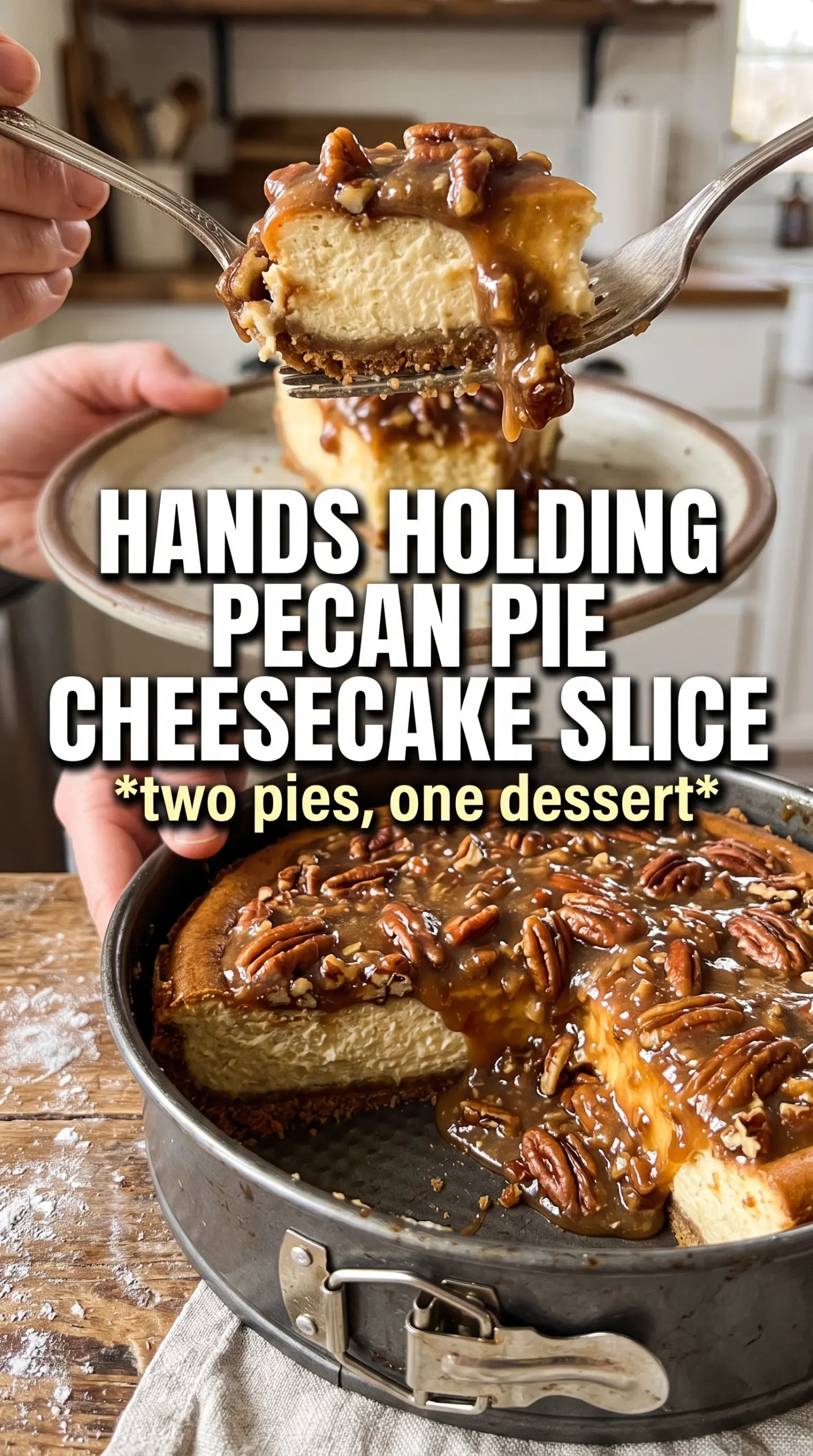
- Graham cracker crumbs — These give you a crust that stays sandy and crisp under the filling. Fresh crumbs from a box are fine here, but they need enough butter to hold together when pressed; if the crust seems dry, it will crumble instead of slicing cleanly.
- Brown sugar — Used in both the crust and the filling, it brings the caramel note that ties the cheesecake to the pecan topping. Light or dark brown sugar both work, but dark brown sugar gives a deeper molasses edge and a more pie-like finish.
- Cream cheese — This is the base of the filling, and full-fat blocks matter. Tub-style cream cheese contains too much water and can give you a loose, softer set.
- Sour cream — It keeps the filling from tasting heavy and helps the texture stay smooth. If you need a swap, plain full-fat Greek yogurt works, but the cheesecake will have a slightly sharper tang.
- Corn syrup — Just a tablespoon keeps the pecan topping glossy and helps it stay spoonable instead of crystallizing as it cools. There isn’t a perfect stand-in for that shine, but maple syrup can replace it in a pinch, with a more pronounced flavor and a looser finish.
- Whole pecans — Use whole halves or large pieces so the topping looks like a proper pecan pie layer, not chopped nut crumble. Smaller pecans will still taste good, but the topping loses that dramatic slice-worthy look.
Building the Filling and Topping So They Set the Right Way
Pressing and Prebaking the Crust
Mix the graham crumbs, brown sugar, and melted butter until every crumb looks evenly moistened, then press the mixture firmly into the bottom of a 9-inch springform pan. A flat-bottomed measuring cup makes this easy and keeps the crust compact. Bake it for 10 minutes so it sets before the batter goes in; if you skip that step, the bottom can turn soft once the filling starts releasing moisture.
Mixing the Cheesecake Without Adding Extra Air
Beat the cream cheese until it looks completely smooth before adding anything else. Scrape the bowl often, then mix in the brown sugar, eggs, sour cream, vanilla, and cinnamon just until combined. Too much beating whips in air, which gives you tall cheesecake batter that collapses and cracks as it cools.
Baking Until the Center Still Jiggles
Set the pan in a water bath and bake until the edges are set but the center still has a slight wobble when you nudge the pan. That water bath slows the bake and helps the top stay smooth instead of drying out. Pull it from the oven while it still looks a little underdone in the middle; the residual heat finishes the set as it cools.
Cooking the Pecan Topping to the Right Thickness
Melt the butter with the brown sugar, cream, and corn syrup over medium heat, then simmer for about 3 minutes. You want the mixture to look glossy and slightly thickened, not like thin caramel sauce. Stir in the pecans, vanilla, and salt, then let it cool for 15 minutes so it lands on the cheesecake as a thick spoonable layer instead of running everywhere.
How to Adapt It When You Need a Different Finish
Gluten-Free Crust Swap
Use gluten-free graham-style crumbs or crushed gluten-free vanilla cookies in place of the regular graham crackers. The texture stays crisp and buttery, though sweeter cookies will make the crust taste a little more dessert-like and less toasty.
Dairy-Free Version
Use dairy-free cream cheese, a plant-based sour cream, and a thick non-dairy cream for the topping. The cheesecake will be a little softer and the topping won’t taste quite as rich, but the pecan layer still gives you that sticky pie finish.
Maple Pecan Variation
Swap the corn syrup for pure maple syrup and add an extra pinch of salt. The topping turns less candy-like and a little more autumnal, with a looser set and a deeper toasted sweetness.
Make-Ahead Storage
Refrigerator: Store the cheesecake covered for up to 4 days. The crust softens a little under the topping, but the flavor stays great. Freezer: Freeze the plain cheesecake without topping for up to 2 months, wrapped well and thawed overnight in the refrigerator. Reheating: Don’t reheat the cheesecake; serve it chilled and add the topping after it has thawed or chilled fully.
Answers to the Questions Worth Asking
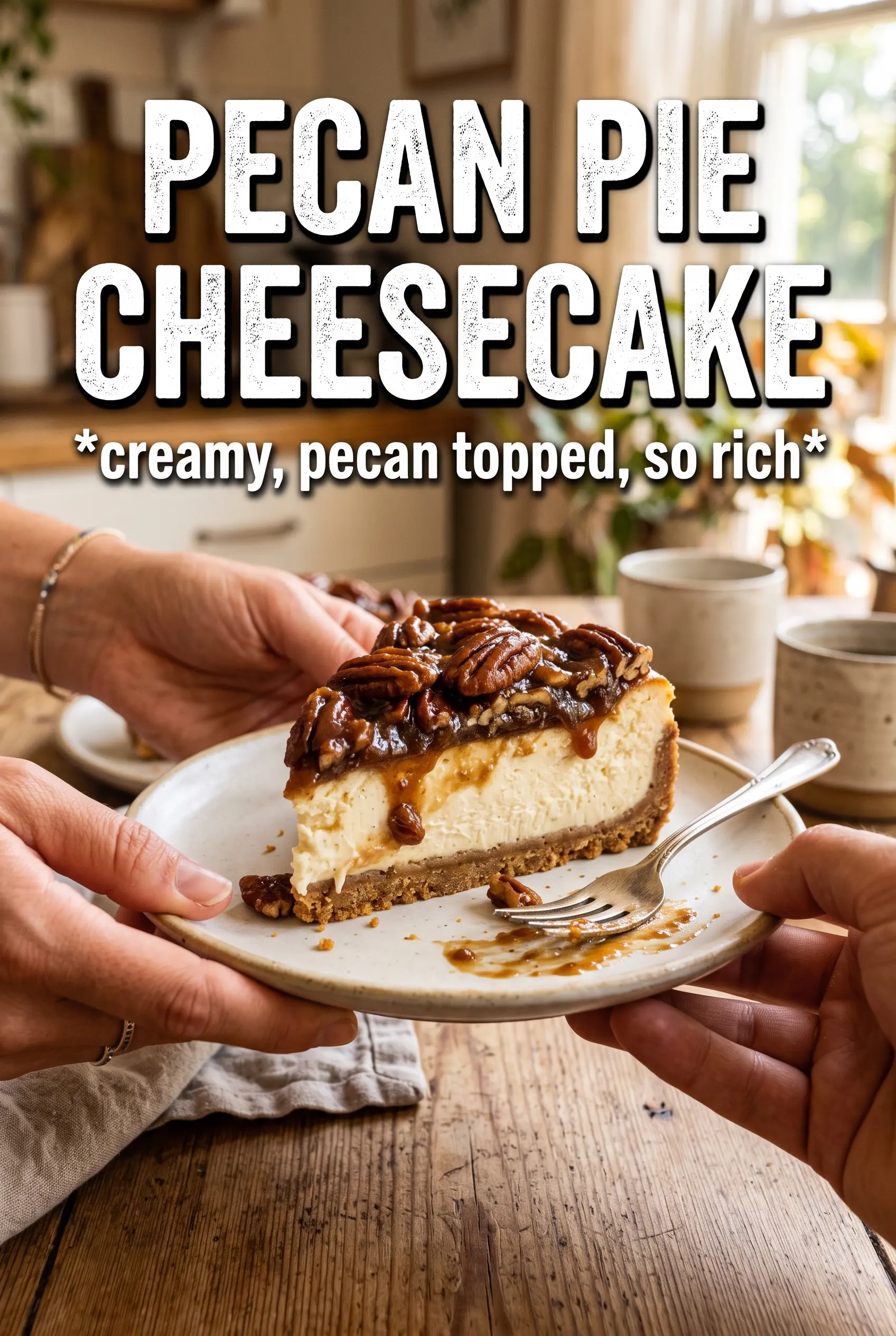
Pecan Pie Cheesecake
Ingredients
Equipment
Method
- Preheat the oven to 325F. Press the graham cracker crumbs, brown sugar, and melted butter into a 9-inch springform pan to form an even crust.
- Bake at 325F for 10 minutes, until set. Let the crust cool slightly while you prepare the filling.
- Beat the cream cheese and brown sugar until smooth, then add the eggs one at a time. Mix in sour cream, vanilla, and cinnamon until the batter is fully combined.
- Pour the cheesecake batter over the baked crust. Place the springform pan into a water bath setup and bake at 325F for 60-65 minutes, until the center is just set.
- Cool the cheesecake completely at room temperature. Refrigerate for 6 hours to chill and firm up.
- Melt unsalted butter with brown sugar, heavy cream, and corn syrup over medium heat. Simmer for 3 minutes until glossy and slightly thickened.
- Stir in whole pecans, vanilla, and salt. Cool the topping for 15 minutes so it thickens and is easier to spread.
- Remove the cheesecake from the refrigerator. Pour the pecan topping over the chilled cheesecake just before serving so it stays thick.