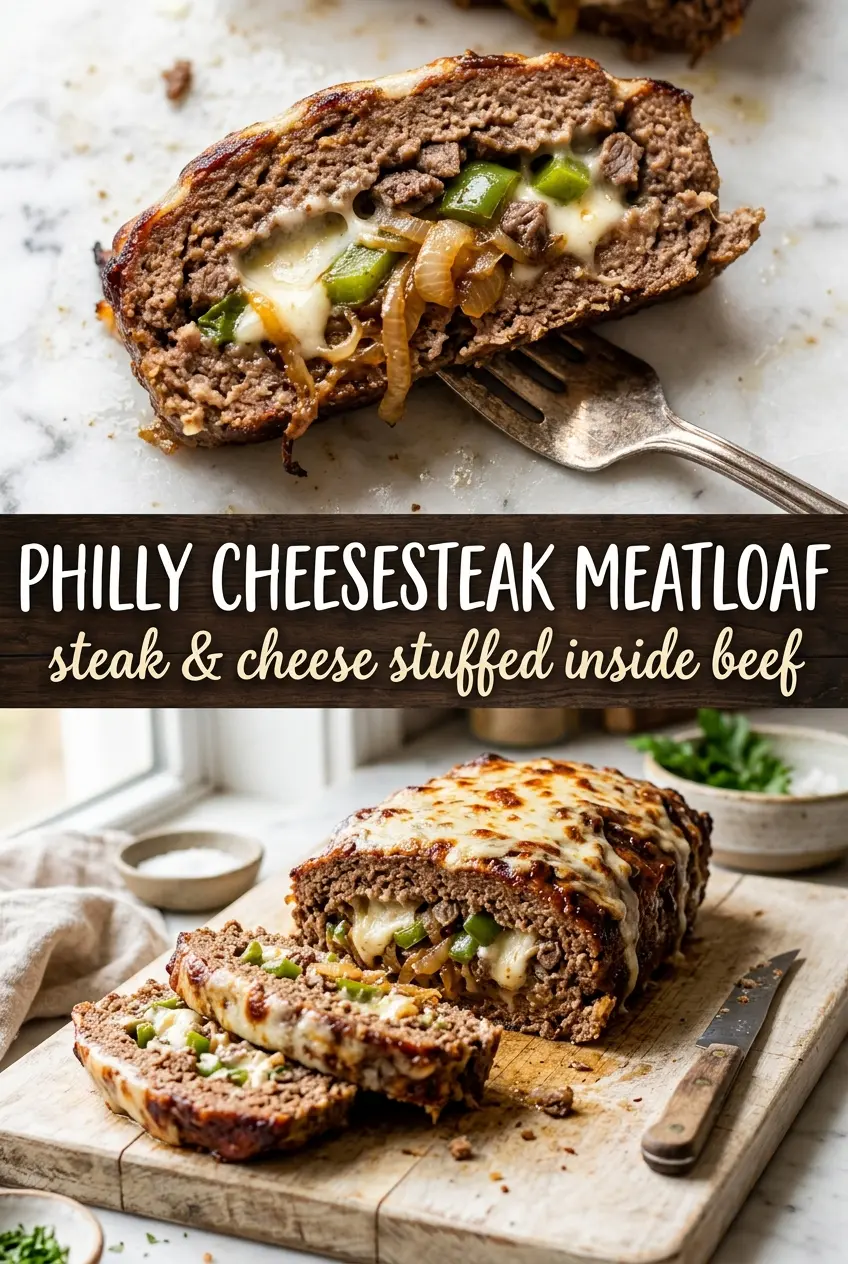
Philly cheesesteak meatloaf brings the steakhouse flavors you know into a sliceable, weeknight-friendly dinner with a juicy center, melted provolone, and sweet peppers and onions tucked right through the middle. The outside bakes up with a glossy ketchup glaze, while the inside stays savory and tender instead of dense.
What makes this version work is the way the vegetables are cooked first and cooled slightly before they go into the loaf. That keeps them from steaming the meat mixture and turning the whole thing loose or gummy. The cheese gets layered in the middle, not mixed through the beef, so you still get those clean, dramatic slices with a real cheesesteak pull when you cut in.
Below you’ll find the one detail that keeps the loaf from falling apart, plus a few smart swaps for the cheese, vegetables, and make-ahead storage. If you’ve had stuffed meatloaf collapse on the first slice before, this method fixes that.
The peppers and onions cooked down just enough, and the provolone stayed tucked in the middle instead of leaking all over the pan. I sliced it after the rest time and the layers held beautifully.
Love the melty provolone and Philly-style filling? Save this Philly Cheesesteak Meatloaf for the nights when you want comfort food that slices clean and eats like a sandwich in dinner form.
The Secret to Stuffed Meatloaf That Holds Its Shape
The biggest mistake with stuffed meatloaf is packing in too much filling and not sealing the seams well enough. Once the beef starts to shrink in the oven, any weak spot opens up and the cheese finds its way out. This version avoids that by pressing half the meat into the pan first, layering the filling in the center, then capping it with the rest of the mixture so the loaf has a solid top and bottom before it bakes.
Cooling the sautéed vegetables matters too. Hot filling softens the beef mixture before it even gets to the oven, which can make the loaf heavy and hard to slice. You want the vegetables softened and fragrant, not wet or steaming, so they stay tucked in place and don’t muddy the meatloaf texture.
- Ground beef — An 80/20 blend gives you enough fat for a juicy loaf without turning greasy. Leaner beef can work, but the texture gets drier unless you watch the bake time closely.
- Breadcrumbs and eggs — These hold the meat together and keep the loaf from crumbling when you slice it. If you need a swap, use crushed saltines or panko, but don’t skip the binder entirely.
- Worcestershire — This is the savory backbone in both the meat and glaze. It adds depth that salt alone can’t replace.
- Provolone — Mild, melty provolone gives you the classic cheesesteak finish. Mozzarella melts well too, but it’s blander; sharp provolone gives the better payoff here.
- Green pepper, onion, and mushrooms — This is the Philly-style filling. Slice them evenly so they soften at the same rate and don’t create a lumpy center.
What Each Ingredient Is Actually Doing in This Meatloaf or Meatballs

- Ground meat (the protein foundation) — Use 80/20 so it stays moist. Handle gently to keep texture tender instead of dense.
- Breadcrumbs or fillers (the binder) — These hold the meat together without making it dense. Soak in milk first so they add moisture.
- Egg (the structural binding agent) — This holds everything together during cooking. One egg per pound of meat is the right ratio.
- Onion and aromatics (the base flavor) — Mince finely so they distribute evenly. Raw onion softens as it cooks and becomes part of the texture.
- Seasonings (salt, pepper, Worcestershire, spices) — Build flavor boldly. The meat mixture carries the entire flavor profile.
- Milk or liquid (the moisture keeper) — This keeps the meatloaf tender instead of dense and dry. Don’t skip this step.
- Glaze or sauce (ketchup-based or other) — This adds sweetness, moisture, and flavor to the exterior. Apply strategically so it caramelizes.
- Resting time (the final step) — Let the meatloaf rest 10 minutes so it sets and slices cleanly. Cutting too soon makes it fall apart.
Building the Loaf So the Filling Stays Inside
Cook the vegetables until just softened
Melt the butter in a skillet and cook the pepper, onion, and mushrooms over medium-high heat until they lose their raw edge and most of the moisture cooks off. You’re looking for softened onions, glossy peppers, and mushrooms that have shrunk and released their liquid. If the pan still looks watery, keep cooking; wet vegetables are what make the center slide apart later.
Mix the beef gently
Combine the ground beef, breadcrumbs, eggs, Worcestershire, garlic powder, salt, and pepper only until everything is evenly distributed. Overmixing tightens the meat and gives you a dense, bouncy loaf instead of a tender slice. Stop as soon as the breadcrumbs disappear and the mixture holds together when pressed.
Layer, seal, and glaze
Press half the meat into the loaf pan first, then add the provolone and vegetable filling in the middle before topping with the remaining meat. Press the top layer all the way to the edges so the seam is fully sealed. Brush the glaze over the top just before baking; if you add it too early, the sugar can darken before the meatloaf is done.
Rest before slicing
Pull the loaf when the center reaches 160°F and let it rest for 10 minutes. That pause lets the juices settle and the cheese firm up enough for clean slices. If you cut it too soon, the filling spills out and the loaf looks looser than it really is.
Ways to Adjust the Meatloaf Without Losing the Philly Cheesesteak Feel
Dairy-Free Version
Swap the provolone for your best melting dairy-free cheese, but choose one that’s designed to melt, not just soften. The texture will be a little less stretchy, but the peppers, onions, and mushrooms still give you the same Philly-style center.
Gluten-Free Meatloaf
Use certified gluten-free breadcrumbs in the same amount. They work the same way as standard crumbs and keep the loaf tender without changing the flavor.
Swap the Cheese
Mozzarella gives a milder, stringier melt, while white American gives a smoother, more classic cheesesteak-style melt. Provolone has the best balance of sharpness and melt, so any swap changes the flavor more than the texture.
Make It Ahead for a Busy Night
Shape and fill the loaf earlier in the day, then cover and refrigerate it until you’re ready to bake. Let it sit on the counter while the oven preheats so the center doesn’t go into the oven ice-cold, which can stretch the bake time.
Storage and Reheating
- Refrigerator: Store slices in an airtight container for up to 4 days. The flavor deepens overnight, and the loaf slices even cleaner the next day.
- Freezer: Wrap cooled slices tightly and freeze for up to 3 months. Thaw in the refrigerator before reheating for the best texture.
- Reheating: Warm slices covered in a 300°F oven with a splash of broth or water in the pan, or microwave gently at medium power. High heat dries out the beef fast and makes the cheese separate.
Questions I Get Asked About This Recipe
Philly Cheesesteak Meatloaf
Ingredients
Equipment
Method
- Preheat oven to 350°F. Set up a baking surface so the meatloaf can bake right away.
- Sauté bell pepper, onion, and mushrooms in butter over medium-high heat for 5 minutes until softened. When they look glossy and tender, remove from heat.
- Cool the sautéed vegetables slightly before assembling the loaf. This helps prevent the cheese and meat from cooking unevenly.
- Mix all meatloaf ingredients until combined. Press half into a loaf pan to form an even base.
- Layer provolone slices over the beef, then top with the sautéed vegetables and remaining cheese. Spread the filling into an even layer for consistent slices.
- Press the remaining meat mixture over the top to seal completely. Seal edges firmly so the filling doesn’t leak out.
- Mix glaze and brush over the top. Bake at 350°F for 55–65 minutes until the internal temperature reaches 160°F and the top looks browned.
- Rest the meatloaf for 10 minutes before slicing. When you cut, the juices should stay inside for cleaner slices.