Cold, creamy picnic potato salad lands best when the potatoes hold their shape, the dressing stays tangy, and every bite has a little crunch from celery and onion. The version people remember isn’t watery or bland. It’s the one that chills into a sturdy, scoopable salad with enough mustard and pickle to keep the richness from feeling heavy.
The trick is in the potato choice and the cooling. Russets break down a little more than waxy potatoes, which gives you that classic soft, creamy body once the dressing goes in. The potatoes also need to cool completely before you fold everything together, or the mayonnaise loosens up and the salad turns greasy instead of velvety.
Below you’ll find the timing that keeps the texture right, the ingredient swaps that still taste like real potato salad, and the small fixes that help this dish hold up on a picnic table for hours.
The potatoes held their shape after chilling, and the dressing was tangy without being heavy. I made it the night before a cookout, and it was even better the next day.
Picnic Potato Salad keeps that old-school creamy texture with just enough tang to make each scoop taste fresh.
The Reason This Potato Salad Stays Creamy Instead of Watery
The biggest mistake with potato salad is dressing hot potatoes and then blaming the mayonnaise when things turn loose. Hot potatoes release steam, and that steam thins the dressing before it ever has a chance to cling. Let the potatoes cool completely after draining. They should feel room temperature all the way through, not just cool on the outside.
Russet potatoes are intentional here. They’re softer than waxy potatoes, so they absorb some of the dressing and give you that classic picnic-salad body. If you swap in waxy potatoes, the salad will stay firmer and a little chunkier, which is fine, but it won’t have the same old-fashioned creaminess. The gentle fold matters too. Stirring hard turns the potatoes pasty and makes the eggs disappear into the dressing.
What Each Ingredient Is Actually Doing In This Dish
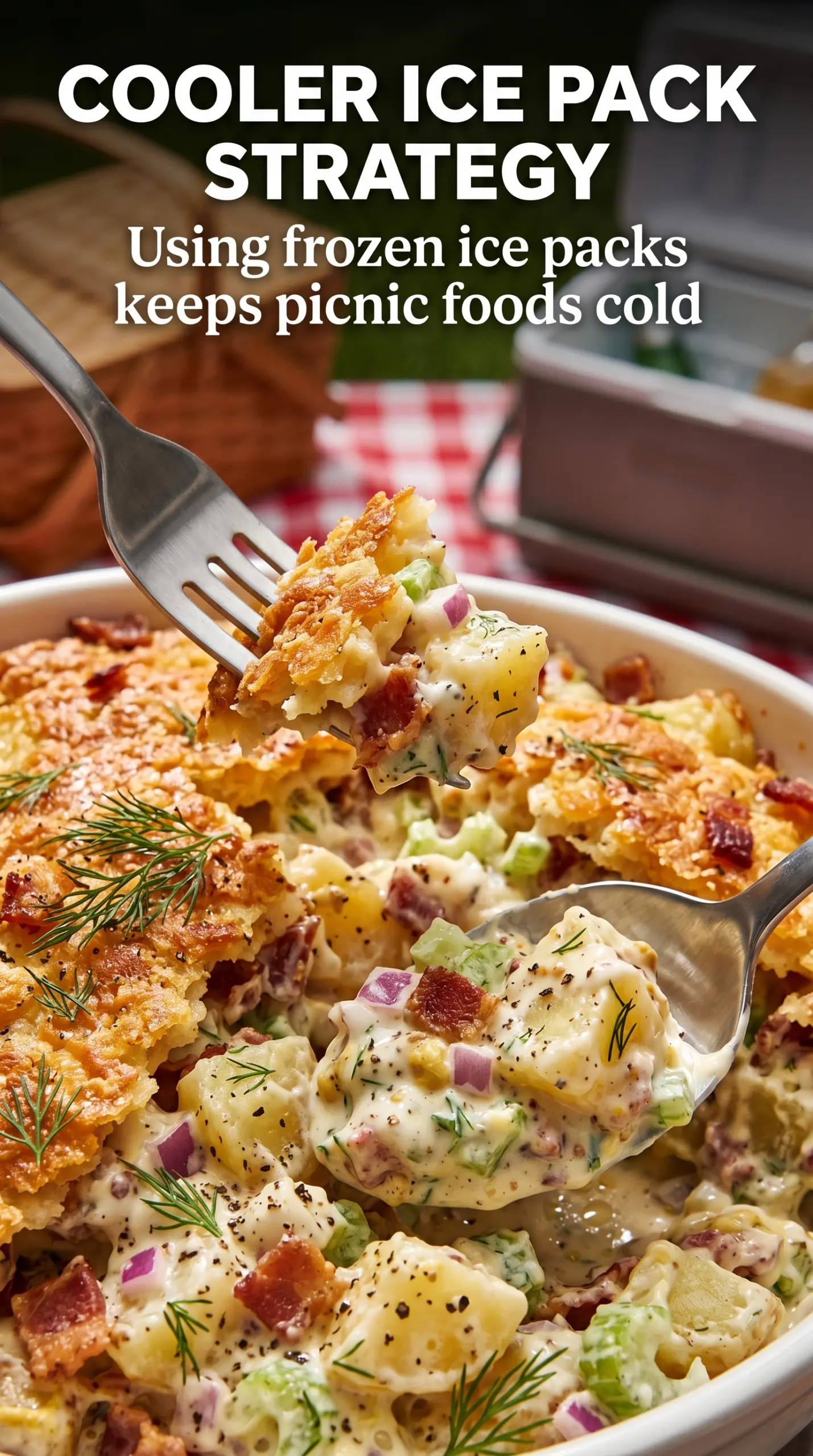
- Russet potatoes — These give the salad its soft, classic texture. They break down just enough to absorb the dressing without turning soupy, especially if you cool them all the way before mixing.
- Mayonnaise — This is the base of the dressing, so use one you like the taste of. Full-fat mayo gives the cleanest, richest result; low-fat versions can taste thin and loosen faster in the fridge.
- Yellow mustard and vinegar — These cut through the richness and keep the salad from tasting flat. The mustard brings color and that familiar deli-style flavor, while the vinegar brightens the potatoes instead of letting the mayo sit heavy on top.
- Sweet pickle relish — This adds sweetness, acid, and tiny bits of crunch all at once. If you only have chopped pickles, use them, but add a pinch of sugar because relish brings more sweetness to the bowl.
- Hard-boiled eggs — They make the salad feel fuller and more traditional. Chop them after they’re fully cool so the yolks stay tidy instead of smearing into the potatoes.
- Celery and onion — These keep the texture lively. Dice them small enough that you get crunch in the background, not sharp raw bites in the middle of every forkful.
Building The Salad So The Dressing Clings
Cooking The Potatoes Until They’re Tender, Not Falling Apart
Boil the cubed potatoes until a knife slides in with little resistance, then stop. If they go too far, the outer edges break down and the salad gets mashed the moment you stir in the dressing. Drain them well and spread them out briefly so extra steam can escape. That little bit of drying time is what keeps the dressing thick instead of diluted.
Mixing The Dressing Before It Hits The Bowl
Stir the mayonnaise, mustard, vinegar, sugar, salt, and pepper together in a separate bowl first. The dressing should taste a touch more seasoned than you want the finished salad to taste, because the potatoes will mellow it out. If the dressing tastes flat now, it’ll taste flat later. This is also when you catch the balance before it gets harder to fix.
Folding Without Crushing The Potatoes
Add the dressing over the potato mixture and fold with a spatula instead of stirring in circles. You want the potatoes coated, not whipped into paste. Stop when everything looks evenly dressed and the potatoes are still visibly intact. Chill the salad for at least 3 hours so the flavors settle and the dressing thickens around the potatoes.
Finishing With Paprika At The End
Sprinkle paprika right before serving so it stays bright on top instead of dissolving into the dressing. It doesn’t just decorate the bowl; it gives the first bite a faint peppery note that fits the mustard and egg. If the salad has thickened a little too much after chilling, let it sit at room temperature for 10 to 15 minutes before serving.
Three Ways To Adjust This Salad Without Losing The Picnic Feel
Dairy-Free By Default
This recipe already leans dairy-free as written, which makes it easy to serve at mixed gatherings. Just check that your mayonnaise is egg-based and not a specialty version with added dairy. The texture stays the same, and the flavor still lands exactly where a classic picnic salad should.
A Lighter, Tangier Version
Swap part of the mayonnaise for plain Greek yogurt if you want a sharper, lighter salad. Start with half mayo and half yogurt so the dressing still coats the potatoes well. Go all yogurt and the salad turns more tart and less classic, with a thinner finish after chilling.
Mustard-Lovers’ Version
Add another teaspoon or two of yellow mustard if you want a sharper deli-style bite. The extra mustard works best when the salad will chill for several hours, because the flavor settles into the potatoes instead of reading harsh on day one. Too much, and it starts to overpower the eggs and relish.
Make It Ahead For A Crowd
This salad is built for making ahead. The best texture comes after a long chill, so you can make it the day before and let the flavors settle overnight. If it looks a little stiff after refrigeration, loosen it with a spoonful of mayonnaise and fold it in gently before serving.
Storage and Reheating
- Refrigerator: Store covered for up to 4 days. The potatoes soften a bit as they sit, but the flavor stays good.
- Freezer: Don’t freeze this salad. Mayonnaise breaks after thawing, and the potatoes turn grainy and watery.
- Reheating: This salad is meant to be served cold. If it has been in the fridge, let it sit out briefly so the dressing loosens slightly, then stir once before serving. Don’t microwave it.
Answers To The Questions Worth Asking
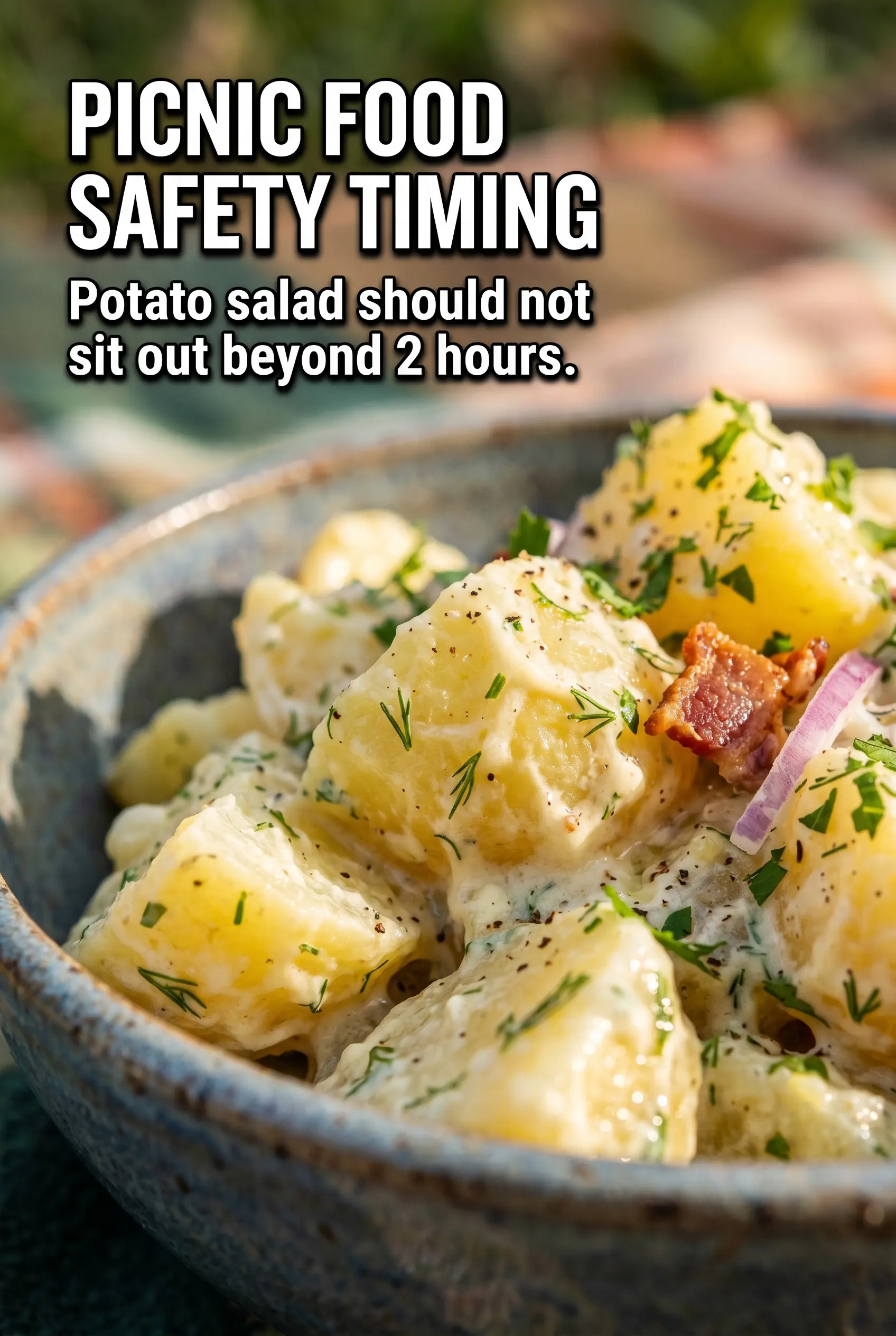
Picnic Potato Salad
Ingredients
Equipment
Method
- Bring a large pot of water to a boil, add the russet potatoes, and cook until tender, about 15–20 minutes, until a knife slides in easily. Drain the potatoes and spread them on a sheet pan to cool completely, about 10–15 minutes, with visible steaming stopped before mixing.
- Chop the hard-boiled eggs, dice the celery, and finely dice the onion. Combine the cooled potatoes, chopped hard-boiled eggs, diced celery, finely diced onion, and sweet pickle relish in a large bowl until evenly distributed.
- In a bowl, whisk mayonnaise, yellow mustard, white vinegar, sugar, salt, and pepper until smooth and creamy. Stop when the dressing looks uniform with no sugar specks visible.
- Pour the dressing over the potato mixture and fold gently until the potatoes look coated. Refrigerate for at least 3 hours (3–4 hours) until the salad is cold and holds together when spooned.
- Before serving, garnish with paprika in a light dusting over the top. Serve cold and keep the surface covered to prevent drying.