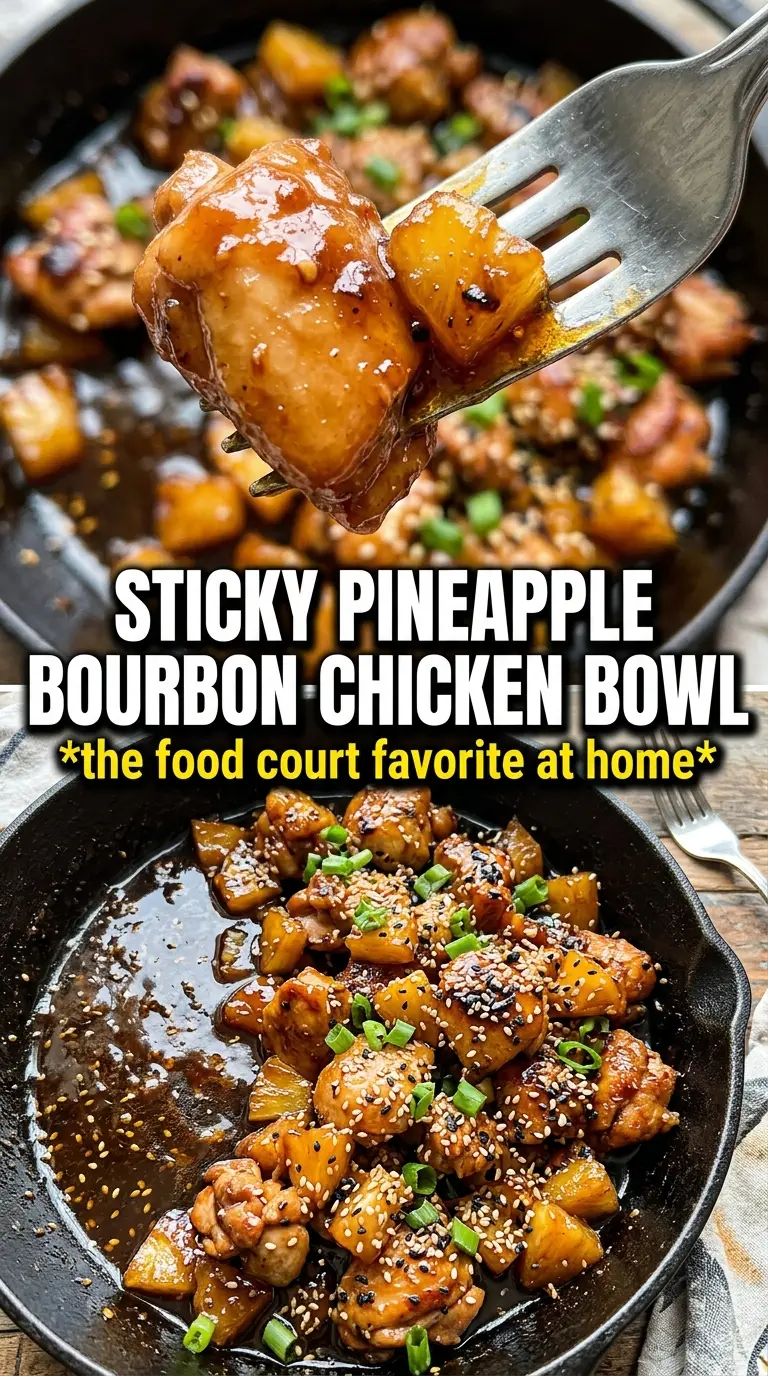
Sticky pineapple bourbon chicken hits that sweet-savory spot that keeps people going back for one more bite. The glaze clings to the chicken thighs instead of pooling at the bottom of the pan, and the pineapple brings just enough brightness to keep the sauce from tasting heavy. When it’s done right, you get caramelized edges, glossy sauce, and tender chicken in every forkful.
The trick is building the sauce in the same skillet after the chicken browns. Those browned bits left behind carry a lot of flavor, and they dissolve into the bourbon-pineapple glaze as it simmers. Cornstarch goes in only after the sauce has had a few minutes to reduce, which is what gives it that thick, sticky finish instead of a thin sweet broth.
Below, I’ve included the small things that matter here: when to add the pineapple so it stays bright, how to keep the bourbon from tasting sharp, and what to change if you want a version without alcohol.
The sauce thickened up beautifully and coated every piece of chicken. I used the pineapple chunks at the end like you said, and they stayed juicy instead of turning mushy.
Save this sticky pineapple bourbon chicken for the nights when you want a fast skillet dinner with a glossy glaze and caramelized edges.
The Secret to a Sticky Glaze Instead of a Thin Sauce
This dish lives or dies by reduction. If the sauce goes onto the chicken too early, it stays loose and sugary instead of turning glossy and clingy. Let the pineapple juice, bourbon, soy sauce, brown sugar, ketchup, garlic, and ginger simmer long enough to lose some of that raw edge before the slurry goes in. That short reduction concentrates the flavor and gives the cornstarch something to thicken, which is why the finished sauce coats the back of a spoon instead of running off the chicken.
The other mistake is crowding the skillet with the chicken. You want golden pieces, not steamed ones, because the browned bits from the pan add depth to the sauce. If the chicken releases a lot of liquid, keep cooking until it has evaporated and the edges start to color again.
What Each Ingredient Is Doing in the Pan
- Boneless chicken thighs — Thighs stay juicy while the sauce reduces, which matters here because you’re tossing them back into a hot glaze. Chicken breast can work, but it dries out faster and doesn’t hold up as well to the second cook in the sauce.
- Pineapple juice — This is the backbone of the glaze. Use the canned or bottled juice you already have, but avoid anything labeled cocktail or nectar, since the extra sugar and thickeners can make the sauce oddly syrupy before it’s balanced.
- Bourbon — It adds warmth and a little caramel depth after it simmers. You don’t need an expensive bottle, but don’t skip the reduction time or the alcohol can taste sharp.
- Soy sauce — This keeps the glaze from turning cloying and gives it that takeout-style savory finish. Low-sodium soy sauce works well if that’s what you keep in the pantry.
- Cornstarch slurry — Mixing the cornstarch with cold water first keeps it from clumping. Add it only after the sauce has simmered, because cornstarch thickens fast and can turn gummy if it goes in too early.
- Pineapple chunks — Add them near the end so they warm through without falling apart. Fresh or canned both work; just drain canned pineapple well so it doesn’t water down the glaze.
Building the Glaze in the Right Order
Browning the Chicken First
Season the chicken with salt and pepper, then cook it in hot oil until it’s golden on the outside and cooked through, about 5 to 6 minutes. The pan should sound lively when the chicken hits it. If it starts to steam instead of sizzle, the heat is too low or the skillet is overcrowded. Pull the chicken out once it’s done so it doesn’t overcook while the sauce comes together.
Reducing the Pineapple-Bourbon Base
Pour the pineapple juice, bourbon, soy sauce, brown sugar, ketchup, garlic, and ginger into the same skillet. Stir and bring it to a simmer, scraping up every browned bit from the bottom. Let it cook for about 5 minutes so the sharp edges of the bourbon soften and the sauce starts to tighten slightly. If it still smells boozy and thin, it needs another minute or two.
Finishing the Sticky Coating
Stir in the cornstarch slurry and keep the sauce moving as it thickens. It should go from glossy and loose to lacquered and clingy within a minute or two. Add the chicken back in, toss until every piece is coated, then fold in the pineapple chunks just long enough to warm them through. Overcooking this last part is what turns the pineapple soft and the sauce tacky instead of silky.
Ways to Tweak the Pan Without Losing the Character of the Dish
No-alcohol version
Swap the bourbon for an equal amount of chicken broth plus 1 teaspoon of vanilla extract or a splash of apple juice. You’ll lose a little of the caramel warmth, but the sauce still cooks down into a sticky, glossy glaze with plenty of depth.
Gluten-free version
Use tamari or a certified gluten-free soy sauce. The flavor stays close to the original, and the cornstarch already keeps the sauce naturally gluten-free as long as your soy sauce does too.
Chicken breast swap
Chicken breast works if that’s what you have, but cut it into even pieces and watch it closely. It cooks faster than thighs, so pull it the moment it turns opaque and just loses its pink center, or it’ll go dry once it gets tossed back into the hot glaze.
Make it a little spicier
Add a pinch of red pepper flakes or a teaspoon of chili garlic sauce when the sauce goes into the pan. That heat cuts through the sweetness and gives the glaze a little more edge without overpowering the pineapple.
Storage and Reheating
- Refrigerator: Store leftovers in an airtight container for up to 4 days. The sauce will thicken more as it chills.
- Freezer: It freezes well for up to 2 months, though the pineapple pieces soften a bit after thawing. Freeze in a sealed container and leave a little room for expansion.
- Reheating: Warm gently in a skillet over medium-low heat with a splash of water or pineapple juice. High heat can make the sauce sticky in a bad way and push the chicken past tender.
Questions I Get Asked About This Recipe
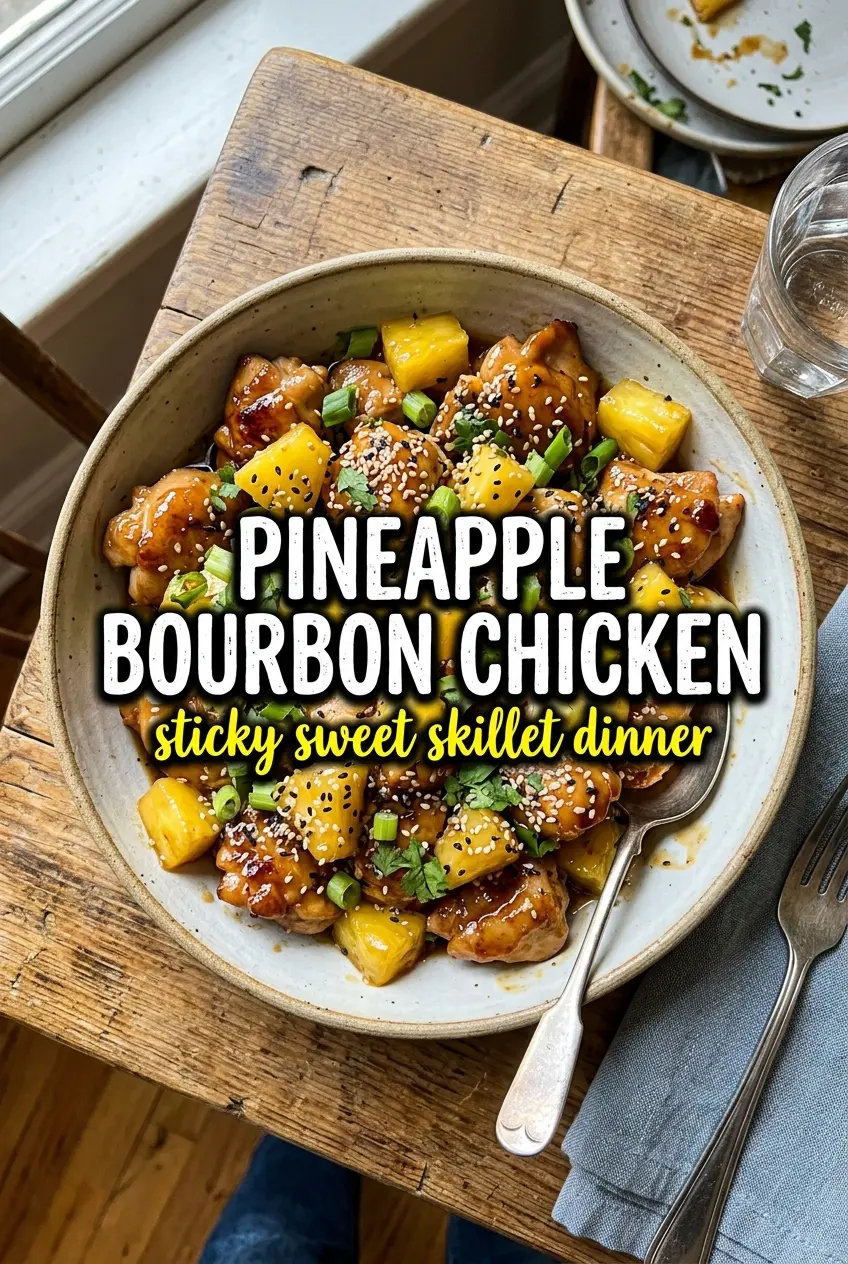
Pineapple Bourbon Chicken
Ingredients
Equipment
Method
- Season the chicken thighs with salt and black pepper, then heat the vegetable oil in a large skillet over medium-high heat until shimmering. Cook the chicken for 5–6 minutes, turning occasionally, until cooked through and golden, then remove and set aside.
- In the same pan, combine pineapple juice, bourbon, soy sauce, brown sugar, ketchup, garlic, and fresh ginger. Bring the mixture to a simmer over medium-high heat.
- Simmer the sauce for 5 minutes, keeping it at a steady simmer so the flavors meld. Stir in the cornstarch slurry and continue cooking until the sauce thickens and turns sticky, 1–2 minutes.
- Return the cooked chicken to the thickened sauce and toss to coat thoroughly. Add pineapple chunks and cook for 2 more minutes so the glaze clings and becomes glossy.
- Serve the sticky bourbon chicken over rice and garnish with green onions and sesame seeds.