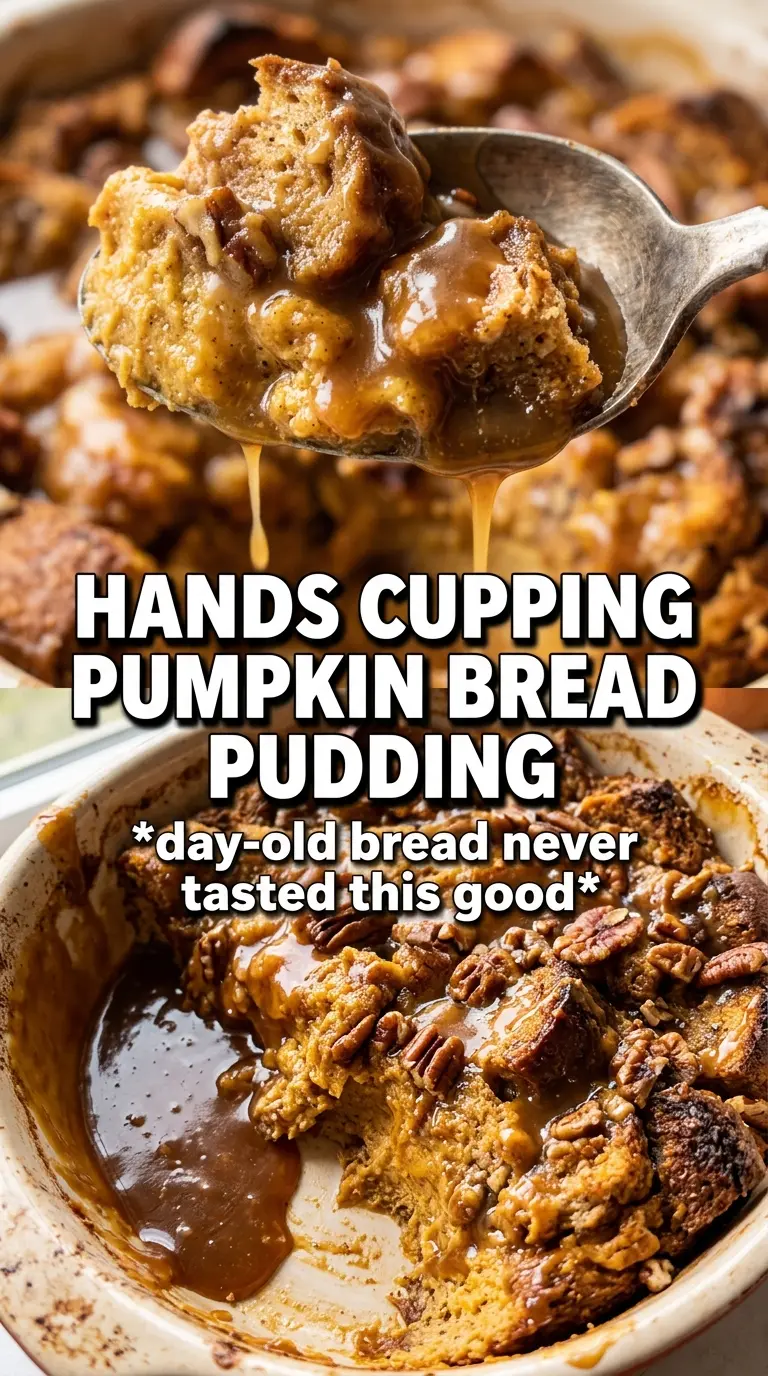
Warm pumpkin bread pudding lands somewhere between custard and cake, with crisp caramelized edges, a soft center, and just enough spice to keep every bite interesting. The best part is the contrast: the top browns into a lightly toasted crust while the inside stays rich and spoonable. Drizzled with caramel bourbon sauce, it turns into the kind of dessert people keep sneaking back to after they’ve claimed they’re full.
Brioche or challah matters here because both breads hold their shape after soaking instead of collapsing into a pasty mess. The custard is built with pumpkin puree, eggs, milk, and cream, so it sets softly without turning rubbery. Letting the bread sit in the custard before baking gives the cubes time to absorb flavor all the way through, which is what makes the center taste as good as the top.
Below, I’ve included the detail that makes the texture work, plus the best way to swap the bread or skip the bourbon if you need to. The sauce comes together fast, but there’s one order of operations that keeps it smooth instead of greasy.
I let it soak the full 30 minutes and the center came out custardy, not soggy. The caramel bourbon sauce was the part everybody kept talking about because it thickened just enough without turning hard.
Save this pumpkin bread pudding with caramel bourbon sauce for the nights when you want a baked dessert with crisp edges and a soft, spiced center.
The Part That Keeps the Custard Soft Instead of Watery
Breadcrumb-style bread pudding fails when the bread turns to mush before it bakes. Brioche and challah solve that because they’re rich, sturdy, and dry enough to absorb a lot of custard without disintegrating. The cubes should look heavily coated and a little swollen after soaking, but they still need to hold a visible edge when they go into the oven.
The other thing that matters is the balance between pumpkin and dairy. Pumpkin puree brings body and color, but it doesn’t set on its own, so the eggs and cream are doing the real structural work. If your pudding tastes heavy or bakes up dense, it usually means the custard was rushed or the bread was packed too tightly into the dish.
What Each Ingredient Is Actually Doing in This Dessert
- Brioche or challah — These breads are the backbone of the dish. They soak up custard without dissolving, and their slight sweetness works with the pumpkin instead of fighting it. Plain sandwich bread will work in a pinch, but the pudding will be softer and less rich.
- Pumpkin puree — Use pure pumpkin, not pumpkin pie filling. Pie filling already has sugar and spice added, which throws off the balance and can make the custard taste flat or overly sweet.
- Eggs — They set the custard and give the pudding its sliceable, spoonable structure. Four eggs are enough to hold the dairy and pumpkin together without making the texture bouncy.
- Whole milk and heavy cream — This combination keeps the pudding silky. You can swap in half-and-half for both if needed, but the finished texture will be a little lighter and less luxurious.
- Brown sugar and granulated sugar — Brown sugar brings molasses depth, while granulated sugar keeps the sweetness clean. The mix keeps the pumpkin from tasting muddy.
- Pumpkin pie spice, cinnamon, and vanilla — Pumpkin pie spice gives the familiar warm notes, cinnamon sharpens them, and vanilla rounds everything out. If your spice blend is old and dusty, the pudding will taste one-note, so use fresh spice if you can.
- Bourbon — It’s not just for show. Bourbon adds a toasted, caramel edge to the sauce. If you skip it, add an extra splash of cream and a pinch of salt so the sauce still tastes balanced.
How to Soak, Bake, and Finish It Without Breaking the Texture
Building the Bread Layer
Grease the baking dish well, then spread the bread cubes in an even layer. Don’t press them down hard or pack them tight; the custard needs room to move between the cubes so the center bakes evenly. If the dish is overcrowded, the top will brown before the middle has enough heat to set.
Whisking the Custard Until It’s Smooth
Whisk the pumpkin, eggs, milk, cream, both sugars, spices, vanilla, and salt until the mixture looks completely smooth and no streaks of egg remain. The pumpkin can hide unmixed pockets, so scrape the bowl well. A smooth custard bakes into a clean, even texture; a streaky one can give you bits that taste eggy or unevenly spiced.
Letting the Bread Drink In the Custard
Pour the custard over the bread, then press the cubes down gently so they start absorbing the liquid. Leave it alone for the full 30 minutes. This rest is what keeps the pudding from tasting like baked bread with sauce on top; it gives the custard time to reach the center of the cubes.
Baking to the Right Set
Bake at 350°F until the top is golden and the center looks set but still has the faintest wobble when you nudge the pan. If you bake until it’s completely firm in the middle, it will turn dry as it cools. The edges should look deeply browned and crisp, with a custardy middle that barely moves.
Cooking the Caramel Bourbon Sauce
Melt the butter and brown sugar first, then add the cream and bourbon and let it simmer for about 3 minutes. If the sauce looks separated at first, keep stirring over low heat and it will come together. High heat is the fastest way to make caramel sauce grainy or greasy, so keep the simmer gentle and finish with vanilla off the heat.
How to Adapt This for Different Kitchens and Different Crowds
Dairy-Free Version
Use full-fat coconut milk in place of the whole milk and cream. The pudding will still set well, but the flavor shifts a little richer and more coconut-forward, which works nicely with the pumpkin and spice. For the sauce, use a plant-based butter and full-fat coconut cream, then simmer gently so it doesn’t split.
No-Bourbon Caramel Sauce
Skip the bourbon and add an extra teaspoon of vanilla plus a tiny pinch of salt. You’ll lose the subtle toasted edge, but the sauce will still taste deep and buttery. This version is the one I’d use if I’m serving kids or want a cleaner caramel flavor.
Gluten-Free Bread Swap
Use a sturdy gluten-free brioche-style loaf if you can find one, and cut it a little larger so it doesn’t break apart while soaking. Softer gluten-free breads can collapse fast, so day-old bread works best here. The texture will be slightly more delicate, but the custard still bakes up beautifully.
Storage and Reheating
- Refrigerator: Store covered for up to 4 days. The texture firms up as it chills, but it stays moist.
- Freezer: Freeze the baked pudding without the sauce for up to 2 months. Wrap it well and thaw overnight in the fridge before reheating.
- Reheating: Warm individual portions in the oven at 325°F, covered loosely with foil, until heated through. The microwave works in a pinch, but it can make the custard rubbery if you overdo it.
Questions I Get Asked About This Recipe
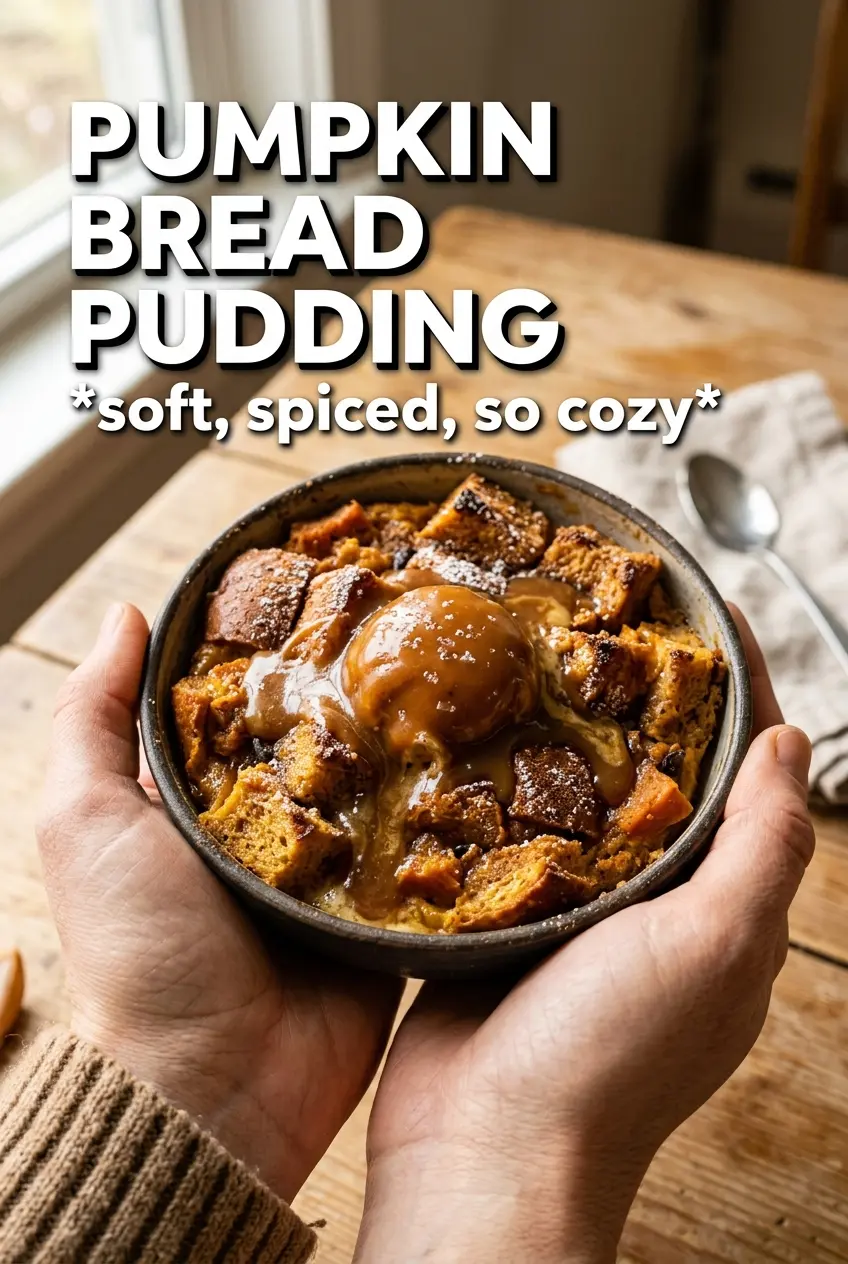
Pumpkin Bread Pudding
Ingredients
Equipment
Method
- Grease a 9x13 baking dish, then arrange the brioche or challah cubes in an even layer.
- Whisk the pumpkin puree, eggs, whole milk, heavy cream, brown sugar, granulated sugar, pumpkin pie spice, cinnamon, vanilla extract, and salt until smooth.
- Pour the custard over the bread and press down lightly so the cubes are submerged.
- Let the dish soak for 30 minutes at room temperature so the bread absorbs the custard.
- Preheat the oven to 350°F, then bake for 50-55 minutes until the top is golden-brown and the center is set.
- Melt the butter and brown sugar together, then add the cream and bourbon and bring to a simmer.
- Simmer the caramel for 3 minutes until slightly thickened.
- Drizzle the caramel sauce over the warm pumpkin bread pudding.