Soft pumpkin cake layers with caramel cream cheese frosting have a way of disappearing fast, and it makes sense the second you cut into them. The crumb stays tender without turning heavy, the spices come through without bullying the pumpkin, and the frosting brings a tangy caramel finish that keeps each bite from tasting flat. The drizzle on top isn’t just decoration here. It lands like the last little note that makes people go back for another slice.
What keeps this cake from feeling dense is the balance of butter, sour cream, and pumpkin puree. The sour cream adds moisture and a little lift, while the pumpkin gives the batter body without making it wet. I also like that the frosting uses caramel sauce instead of trying to force caramel flavor from scratch. That gives you a clean caramel taste without overcooking the cream cheese mixture and ending up with a grainy frosting.
Below you’ll find the small details that matter: how to keep the cake layers even, how to avoid a split frosting, and the one substitution I trust if you need to work around an ingredient you don’t have on hand.
The cake stayed incredibly moist for three days, and the caramel cream cheese frosting set up smooth instead of sliding off the layers. I loved that the pumpkin spice came through without tasting overpowering.
Save this pumpkin cake with caramel cream cheese frosting for the next time you want a tender layer cake with a smooth caramel finish and no fussy decorating.
The Trick to Keeping Pumpkin Layer Cake Light Instead of Heavy
Pumpkin batter can turn dense fast if you overwork it or lean too hard on the puree. The flour needs just enough mixing to disappear, not enough to build structure like a bread dough. Once the dry ingredients go in, stop as soon as you no longer see streaks of flour. That small restraint keeps the crumb soft instead of tight.
The other thing that matters is pan prep and bake time. These layers should pull back slightly from the pan and spring back when touched, but the center should not dry out while you’re waiting for a tester to come out absolutely clean. A few moist crumbs are the target. If the cake bakes until bone dry, the frosting won’t save the texture.
What the Pumpkin, Sour Cream, and Caramel Are Each Doing Here
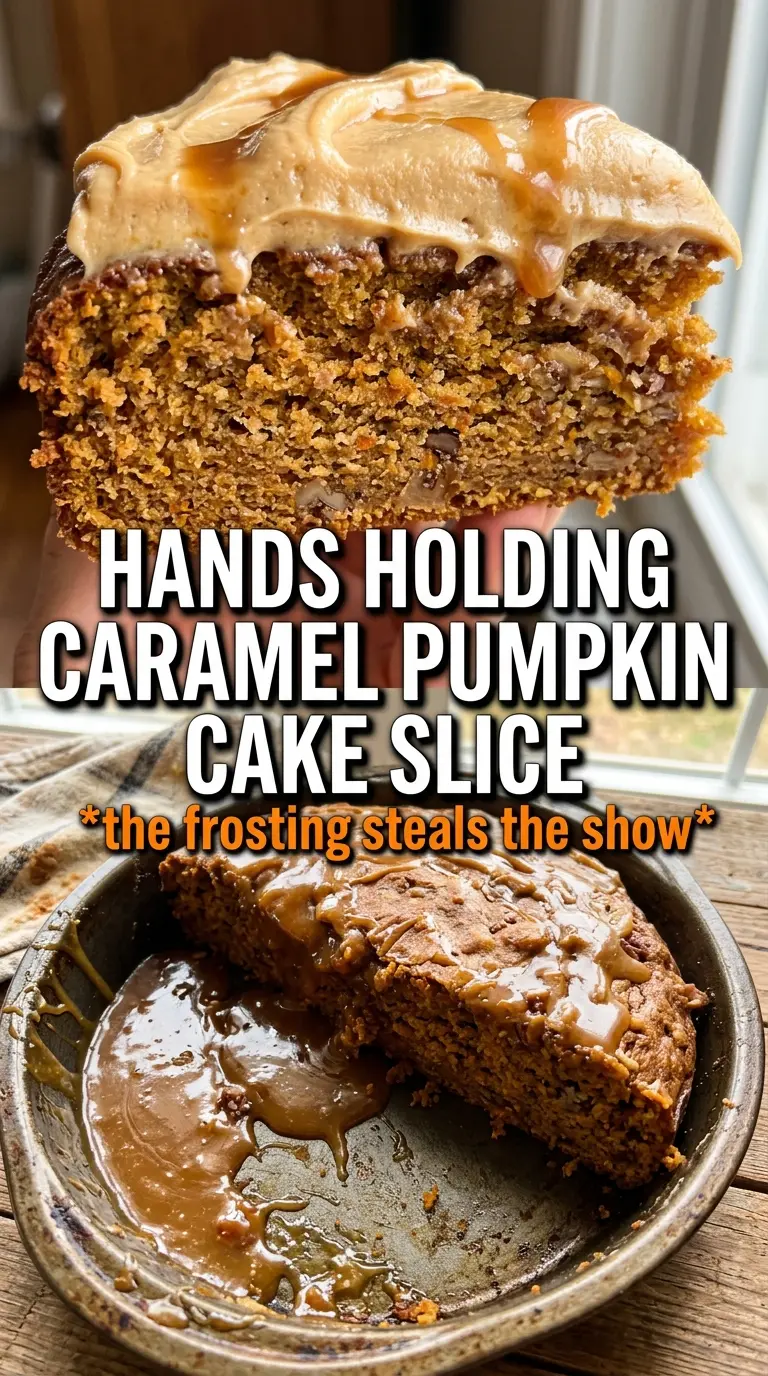
- Pumpkin puree — Use plain pumpkin puree, not pumpkin pie filling. Pie filling already has sugar and spices mixed in, which throws off both the texture and the seasoning. The puree gives the cake moisture and that deep orange color without making the batter overly sweet.
- Sour cream — This is the ingredient that keeps the cake plush. Greek yogurt can work in a pinch, but it brings a little more tang and a slightly tighter crumb. Sour cream gives a rounder texture and helps the cake stay tender for days.
- Brown sugar — Brown sugar does more than sweeten. It adds a faint molasses note that fits the pumpkin and caramel better than white sugar would. If you swap in white sugar, the cake tastes a little flatter and loses some depth.
- Caramel sauce — Use a sauce that pours smoothly. Thick, chewy caramel candies melted down won’t fold into the frosting the same way and can leave you with lumps. The sauce should blend in easily and keep the frosting silky.
- Cream cheese — Full-fat cream cheese matters here. Reduced-fat versions hold more water and can make the frosting loose, which is the last thing you want on a layer cake. Let it soften fully so it beats smooth before the caramel goes in.
Building the Batter and Frosting Without Ruining the Texture
Starting with the Butter and Sugar
Beat the softened butter and brown sugar until the mixture looks fluffy and a little paler than when you started. That step traps air, which helps the cake rise without feeling cakey. If the butter is cold, the mixture stays gritty and the batter never emulsifies properly. Once the eggs go in, the batter may look slightly curdled, and that’s fine as long as it comes back together when the pumpkin and sour cream are added.
Folding in the Dry Ingredients
Whisk the flour, baking powder, baking soda, spices, and salt first, then add them all at once. Mix only until the flour disappears and the batter looks thick and smooth. Overmixing at this point develops gluten and makes the cake chewy instead of tender. A few tiny streaks are better than beating the batter until it looks perfectly uniform.
Baking and Cooling the Layers
Divide the batter evenly so both pans bake at the same rate. The cakes are done when the tops spring back lightly and a tester comes out with a few moist crumbs, not wet batter. Let them cool in the pans for a short rest, then turn them out and cool completely before frosting. If the layers are even a little warm, the cream cheese frosting softens and slides.
Beating the Frosting Until It Stays Smooth
Start with cream cheese and butter only, and beat until there are no visible lumps. Add the caramel sauce next, then the powdered sugar and vanilla, and stop mixing as soon as the frosting looks fluffy and spreadable. If you beat cream cheese frosting for too long, it gets loose and glossy instead of stable. If it feels too soft, chill it for 10 to 15 minutes before assembling the cake.
How to Adapt This Cake When You Need to Change One Ingredient
Dairy-Free Version
Use a plant-based butter and a dairy-free cream cheese that tastes tangy rather than sweet. The cake itself adapts well, but the frosting will be a little softer and may need extra chilling before spreading. Choose a caramel sauce made without dairy or use a thick dairy-free caramel alternative so the flavor still reads as caramel instead of just sugar.
Cupcake Swap
This batter turns into great cupcakes if you divide it into lined muffin tins and start checking early. They bake faster than the cake layers, so watch for the tops to spring back instead of waiting for a dark golden edge. You should get a softer, more personal-sized dessert with the same spice and caramel balance.
Less Sweet Finish
If you want the cake to taste less sweet, cut back the drizzle and keep the frosting layer a little thinner between the cakes. Don’t reduce the powdered sugar too aggressively or the frosting loses body and starts to slump. The caramel still comes through, but the pumpkin spice becomes more noticeable.
Storage and Reheating
- Refrigerator: Store covered for up to 4 days. The frosting stays stable, and the cake often tastes even better on day two once the spices settle in.
- Freezer: Freeze unfrosted layers tightly wrapped for up to 2 months, or freeze sliced frosted cake on a tray until firm and then wrap well. The frosting can soften a little after thawing, but the cake itself freezes nicely.
- Reheating: Let slices come to room temperature before serving. If you warm them, do it very briefly and only if the frosting has been removed or you don’t mind it softening; too much heat melts the cream cheese frosting and turns the caramel runny.
Questions I Get Asked About This Cake
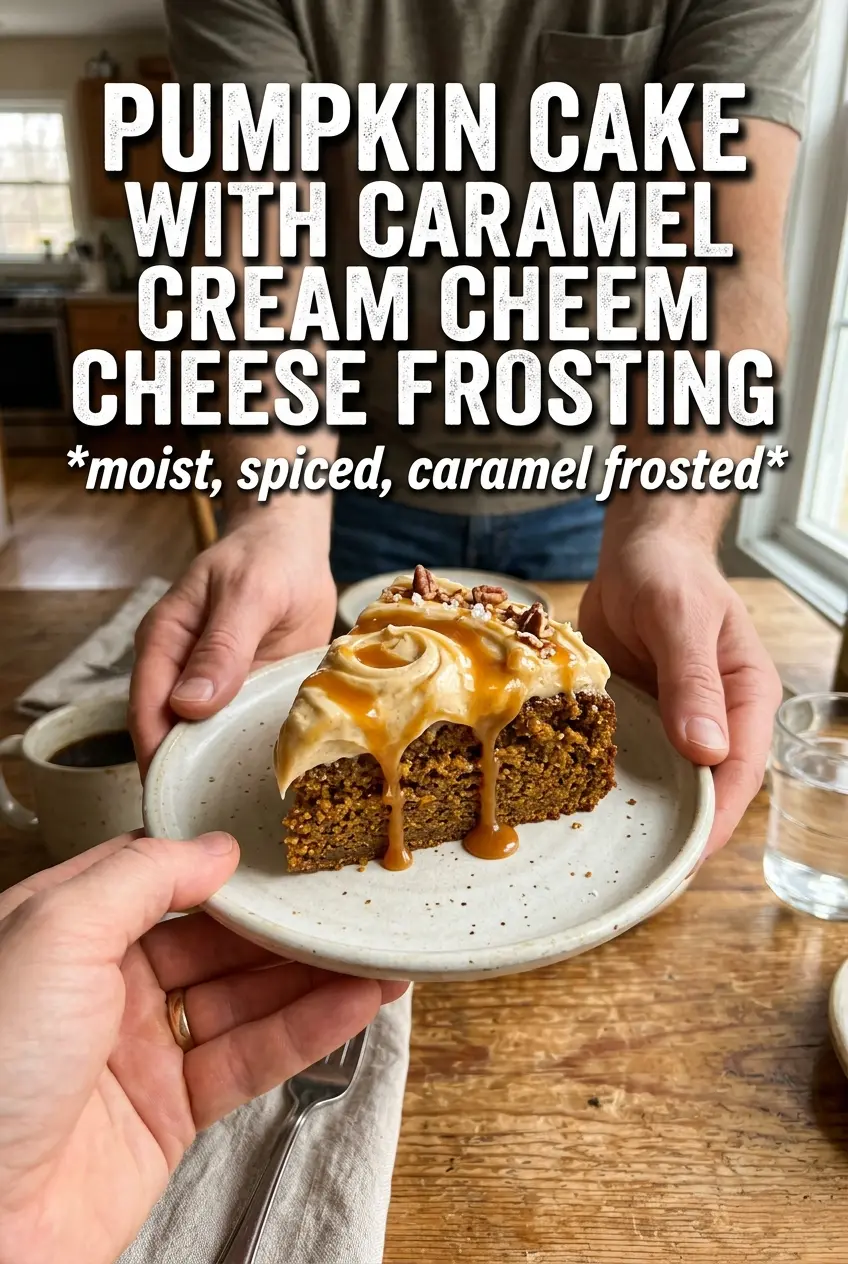
Pumpkin Cake With Caramel Cream Cheese Frosting
Ingredients
Equipment
Method
- Preheat the oven to 350F, then grease two 9-inch round pans. Set them aside so the batter can go in right after mixing.
- Beat butter and brown sugar until creamy, then add eggs, pumpkin puree, sour cream, and vanilla and mix until smooth. Stop and scrape the sides once for an even batter.
- Whisk together flour, baking powder, baking soda, pumpkin pie spice, cinnamon, and salt, then fold the dry mixture into the wet ingredients. Mix just until no dry streaks remain.
- Divide the batter evenly between the two pans. Tap the pans lightly on the counter to settle the batter.
- Bake for 35-40 minutes at 350F until the centers spring back and a toothpick comes out mostly clean. Let the cakes cool completely in the pans.
- Beat cream cheese and unsalted butter until smooth, with no lumps. Keep going until the mixture looks glossy and uniform.
- Beat in caramel sauce until fully incorporated. The frosting should turn a light caramel color.
- Beat in powdered sugar and vanilla until thick and spreadable. Pause to scrape the bowl so the frosting stays smooth.
- Frost between the cooled cake layers and cover the outside with a thin even layer of frosting. Use long swipes to keep the sides clean.
- Drizzle salted caramel over the top and down the sides. Finish with a few extra drips so the caramel cascades visibly.


