Soft pumpkin cookies with a cool, tangy cheesecake center are the kind of bake that disappears fast because each bite gives you two textures at once. The edges set with a light cinnamon-sugar crackle, the middle stays tender, and the cream cheese filling turns the whole cookie into something richer than a standard pumpkin cookie without crossing into heavy. They bake up looking bakery-style, but the method is straightforward once you know how to handle the filling.
The key here is keeping the pumpkin dough dry enough to hold its shape and freezing the cheesecake centers before they go into the oven. Pumpkin puree carries a lot of moisture, and if it goes in straight from the can, the cookies spread too much and bake up soft in the wrong way. Blotting the puree and chilling the filling are the two small steps that change everything.
Below, I walk through the parts that matter most: how to keep the dough from getting sticky, how to seal each cookie cleanly around the filling, and what to watch for in the oven so you get set edges, a soft center, and no cream cheese leaks.
The filling stayed right in the middle and the cookies baked up soft instead of cakey. I blotted the pumpkin like you said, and that made a huge difference in how well they held their shape.
Save these pumpkin cheesecake cookies for the day you want a soft pumpkin cookie with a frozen cream cheese center and cinnamon sugar edges.
The step that keeps the cheesecake center from leaking out
These cookies fail for one main reason: the filling is too soft when it goes into the oven. Cream cheese melts fast, and if you skip the freeze time, it spreads into the dough before the cookie structure has a chance to set. Frozen teaspoon-sized balls hold their shape long enough for the outside of the cookie to bake first, which locks the center in place.
The other quiet problem is excess moisture in the pumpkin. Pumpkin puree looks harmless, but it behaves more like wet batter than a flavoring once it hits the dough. Blotting it with paper towels keeps the dough thick enough to wrap cleanly around the filling instead of turning sticky and fragile.
- Frozen filling: This is what gives you the cheesecake pocket instead of a cream cheese puddle.
- Blotted pumpkin: This keeps the dough from spreading and helps the cookies bake up tall enough to contain the center.
- Cinnamon sugar coating: It adds texture on the outside and keeps the tops from looking flat and plain.
What each ingredient is actually doing in the dough
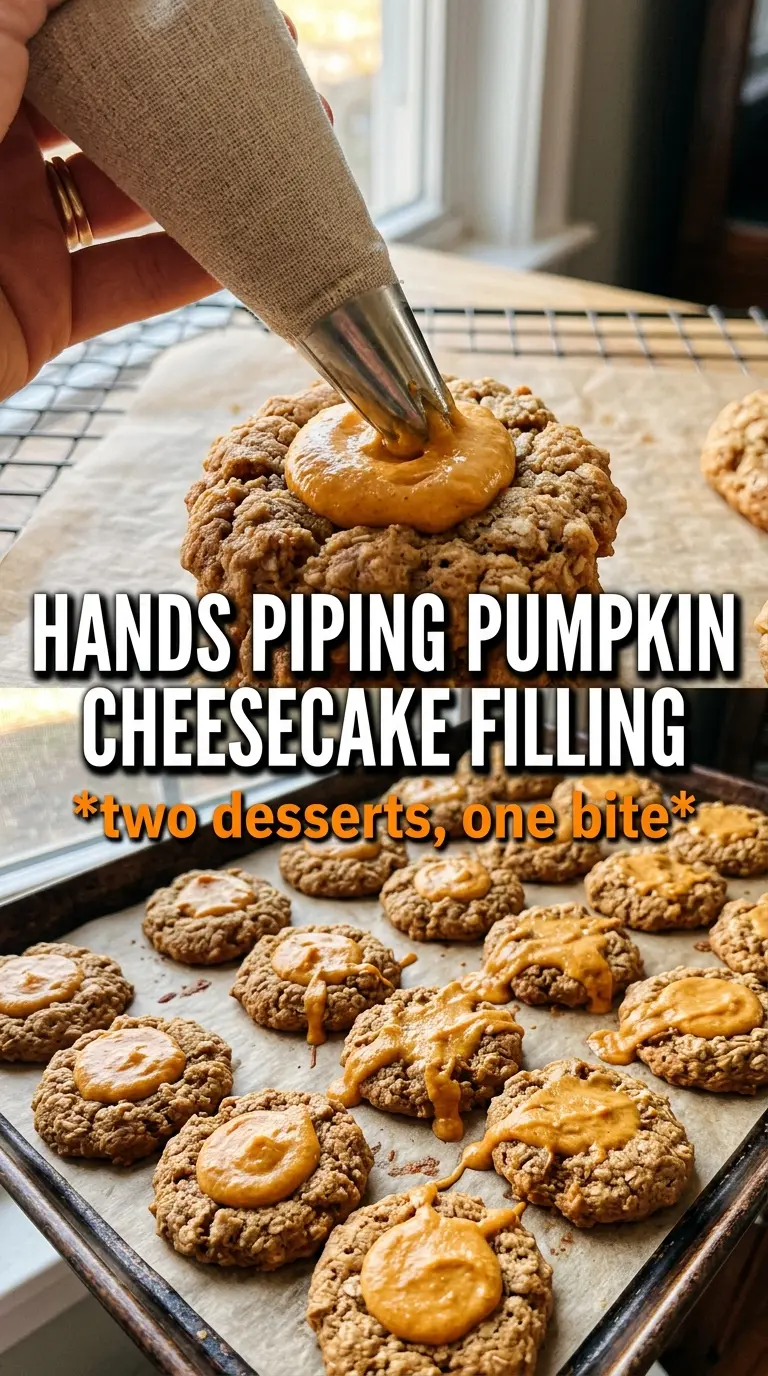
- Blotted pumpkin puree: Use canned pumpkin, not pumpkin pie filling. The puree gives flavor and color, but blotting it dry is what keeps the dough from turning loose and sticky.
- Cream cheese: Full-fat cream cheese gives the best tang and the smoothest filling. Lower-fat versions tend to weep more and can bake up grainy.
- Brown sugar: It brings moisture and a deeper caramel note that works with the spice. White sugar alone makes the cookies taste flatter and bake a little drier.
- Pumpkin pie spice and cinnamon: The spice blend gives the warm, round background flavor, while the extra cinnamon sharpens the coating on the outside. If you only have pumpkin pie spice, use it in the dough and roll the cookies in cinnamon sugar for contrast.
- All-purpose flour: This gives the structure needed to hold the filling. Bread flour makes the cookies tougher, and cake flour is too delicate for this stuffed format.
How to build the cookies so the centers stay sealed
Make the cheesecake filling first
Beat the cream cheese, powdered sugar, and vanilla until completely smooth, with no lumps left on the sides of the bowl. Scoop teaspoon-sized portions onto parchment and freeze them for at least 30 minutes, or longer if your kitchen is warm. If the filling is soft, it will smear into the dough as soon as you start wrapping, and that’s when leaks begin. The filling should feel firm enough to lift cleanly without flattening.
Mix the pumpkin dough without overworking it
Cream the butter and brown sugar until the mixture looks fluffy and lighter in color, then mix in the blotted pumpkin, egg, and vanilla. Add the dry ingredients only until the flour disappears. Overmixing makes the dough tighter and can push the cookies toward a cakier texture instead of the soft, slightly dense bite that works best here. The dough should be soft but scoopable, not pourable.
Wrap, seal, and roll each cookie
Scoop about 2 tablespoons of dough, flatten it in your palm, and place a frozen filling ball in the center. Bring the dough up and around the filling, then pinch the seam closed before rolling it into a smooth ball. If any cream cheese peeks through, patch it with a little extra dough now; once it starts baking, that gap becomes a leak. Roll the finished ball in cinnamon sugar and set it on the sheet with enough room for light spreading.
Bake just until the edges set
Bake at 375°F for 12 to 14 minutes, until the edges look set and lightly golden while the centers still look a little soft. They finish firming as they cool, so pulling them when the middle still looks slightly underdone is the right move. If you bake until the whole top looks dry, the cookies end up overbaked and the cheesecake filling can turn dense instead of creamy. Let them cool completely on the pan before moving them.
How to adapt these without losing the cream cheese center
Gluten-free version with a measure-for-measure flour blend
A good 1:1 gluten-free baking flour works here as long as it contains xanthan gum. The cookies will still be soft, but they may spread a touch more, so chill the shaped dough balls for 15 minutes before baking if the dough feels loose.
Dairy-free filling swap
Use a dairy-free cream cheese that’s meant for baking, not a whipped tub style. The texture will be a little softer and the tang slightly different, but freezing the filling balls still helps them stay centered.
Extra-spiced bakery-style finish
Add a pinch of cloves or nutmeg to the dough if you want a deeper spice note, then finish the baked cookies with a light dusting of powdered sugar after they cool. That gives you a more obvious bakery look without changing the structure of the cookie.
Storage and Reheating
- Refrigerator: Store in an airtight container for up to 5 days. The cookies stay soft, but the filling firms up a little in the fridge.
- Freezer: Freeze baked cookies for up to 2 months. Wrap them well and thaw in the refrigerator so the centers don’t get sticky as they come back to room temperature.
- Reheating: Warm one cookie for 8 to 10 seconds in the microwave if you want the center a little softer. Don’t heat them too long or the cheesecake filling can turn oily and the cookie will lose its tender texture.
Answers to the questions worth asking

Pumpkin Cheesecake Cookies
Ingredients
Equipment
Method
- Beat cream cheese filling ingredients until smooth, then scoop into 24 teaspoon-sized balls on parchment and freeze 30 minutes with a firm look before baking.
- Preheat the oven to 375F and line baking sheets with parchment, creating a nonstick surface for even browning.
- Beat softened butter and brown sugar, then add blotted pumpkin, egg, and vanilla until the mixture looks cohesive and creamy.
- Whisk all-purpose flour, baking soda, pumpkin pie spice, cinnamon, and salt, then fold in until no dry streaks remain.
- Scoop 2-tablespoon portions of cookie dough, flatten in your palm, place a frozen cream cheese ball in the center, wrap dough around it, and seal so the filling is enclosed.
- Roll each filled cookie in cinnamon sugar so the surface is evenly coated, then arrange on the baking sheets.
- Bake at 375F for 12-14 minutes until the cookies are golden and set at the edges.
- Cool completely before eating so the filling firms as it cools, creating a thicker center.