Red potato salad gets a lot better when the dressing stays light, tangy, and clean instead of turning heavy and gluey. The red potatoes hold their shape after cooking, the Greek yogurt brings body without weighing everything down, and the dill, celery, and green onions keep each bite crisp and fresh. What you end up with is a side dish that still feels classic, just brighter and easier to keep reaching for.
The trick is balancing moisture and texture. Red potatoes need to be cooked until just tender so they don’t fall apart when you toss them, and the dressing works best when the vinegar and mustard are mixed in before it hits the potatoes. That little bit of acid keeps the salad from tasting flat, especially once it has chilled and the potatoes have had time to absorb the dressing.
Below you’ll find the small details that matter here: how to keep the potatoes from getting waterlogged, why the yogurt-to-mayo ratio works, and what to change if you want this salad a little more tangy, more herby, or fully mayo-light.
The dressing coated every potato without getting heavy, and the dill with the celery gave it that fresh crunch I was hoping for. I chilled it for two hours like the recipe said and it held together perfectly at dinner.
Save this light red potato salad for cookouts, picnics, and any night you want a creamy side without the heavy mayo overload.
The Trick to Keeping Red Potatoes Firm Instead of Mushy
Potato salad goes wrong fast when the potatoes are cooked past tender. Red potatoes need to be checked early because they can turn from nicely soft to broken and starchy in a narrow window. The goal is a fork that slides in with a little resistance, not potatoes that collapse when you drain them.
Cooling matters just as much as cooking. If the potatoes go into the dressing while they are steaming hot, they soak up too much moisture and the yogurt can thin out. Let them cool until they are warm, not hot, and the salad will hold its shape better after chilling.
What the Greek Yogurt Is Doing That Mayo Alone Can’t
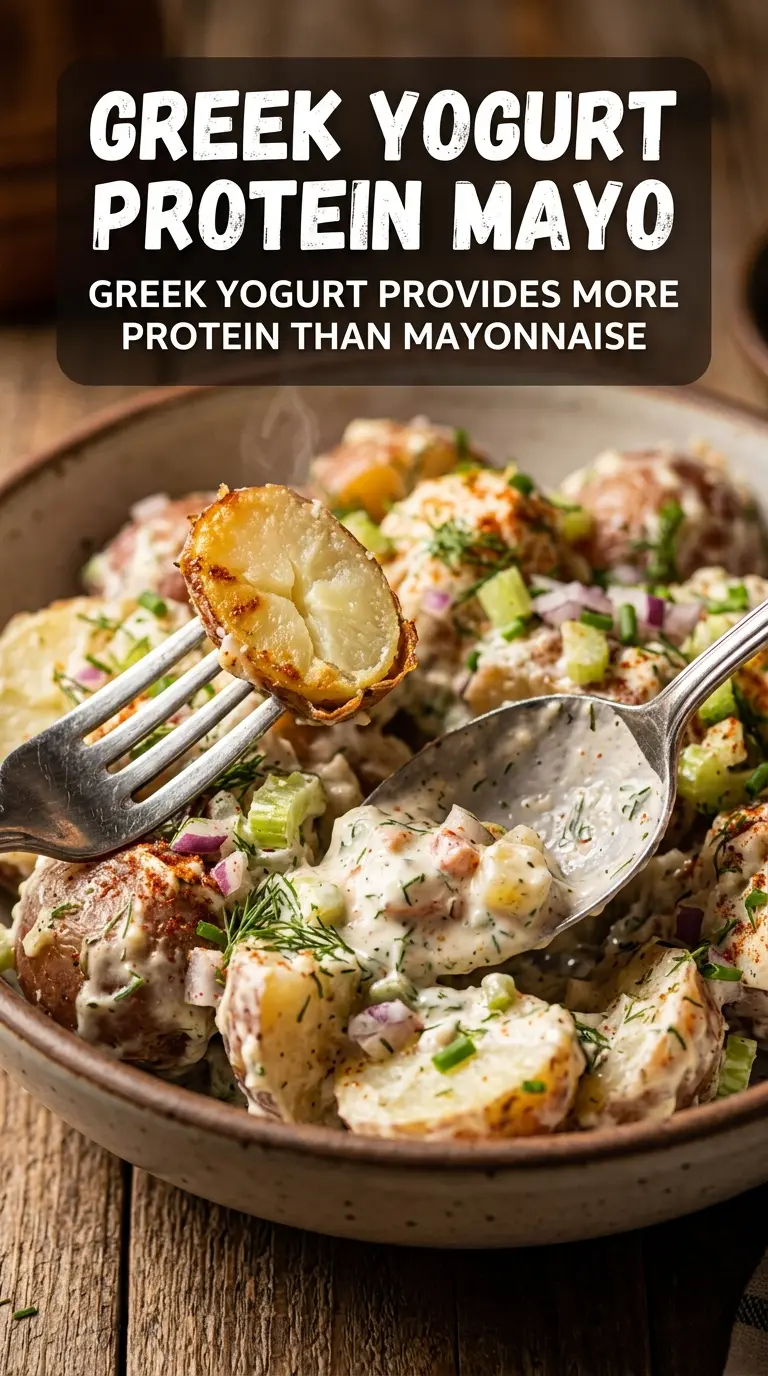
The Greek yogurt brings tang and thickness without making the salad feel heavy. Mayo adds richness and helps the dressing cling, but if you use it by itself the salad can taste flat and clingy. The combination gives you a dressing that coats the potatoes and still tastes fresh after chilling.
- Greek yogurt — Use plain full-fat or 2% if you can. Thin yogurt makes the dressing loose, and the extra fat helps it stay creamy after the salad chills.
- Mayonnaise — You only need a little here. It rounds out the yogurt and gives the dressing that familiar potato-salad finish without taking over.
- Dijon mustard — This adds sharpness and helps the dressing taste seasoned, not bland. Yellow mustard works in a pinch, but Dijon gives a cleaner, more grown-up bite.
- White wine vinegar — The vinegar wakes up the dressing and keeps the potatoes from tasting dull. Lemon juice can stand in if that’s what you have, though it will taste a little brighter and less mellow.
- Dill, green onions, and celery — These are doing the fresh work. Dill brings the herb note, celery adds crunch, and green onions give a soft onion bite without overpowering the salad.
Building the Dressing So It Stays Creamy After Chilling
Mix the Dressing First
Stir the Greek yogurt, mayonnaise, Dijon, vinegar, salt, and pepper together before adding anything else. That gives you a smooth base and keeps the mustard from clumping on one potato pile. The dressing should look loose but creamy, not thick enough to sit in a mound.
Fold in the Potatoes Gently
Add the cooled potatoes, dill, green onions, and celery, then toss with a soft hand. If you stir hard, the potatoes will break down and turn the salad pasty at the bottom of the bowl. A wide spoon or spatula gives you more control and keeps the cubes intact.
Chill Long Enough for the Flavor to Settle
Two hours in the fridge makes a big difference here. The potatoes absorb some of the dressing, the vinegar softens a little, and the salad tastes more balanced than it does right after mixing. If it sits overnight, just give it a quick stir before serving and add a pinch of salt if the flavors have faded.
Three Ways to Adjust This Salad Without Losing the Point
Dairy-Free Version
Swap the Greek yogurt for a dairy-free plain yogurt with a thick texture. You lose a little of the sharp tang, so keep the Dijon and vinegar in place. The texture works best if the yogurt is unsweetened and not too thin.
Fuller Mayo Flavor
If you want a more classic potato salad taste, shift the ratio to half Greek yogurt and half mayo. The salad will taste richer and a little less tangy, but it still stays lighter than the usual all-mayo version.
Make It Gluten-Free
This recipe is naturally gluten-free as written, but it still pays to check the mustard and mayonnaise labels if you’re serving someone with celiac disease. The rest of the ingredients are straightforward, and nothing else needs to change.
Extra Crunch and Freshness
Add a little more celery or a handful of chopped radish if you want the salad to feel sharper and crisper. That keeps the light dressing from tasting soft or one-note, especially after the potatoes have chilled.
Storage and Reheating
- Refrigerator: Store covered for up to 4 days. The dressing may loosen a little on day two, so stir before serving.
- Freezer: Don’t freeze this one. The potatoes turn grainy and the yogurt dressing separates after thawing.
- Reheating: This salad is meant to be served cold. If it has been in the fridge for a while, let it sit at room temperature for 10 to 15 minutes so the dressing softens and the flavor comes back.
Answers to the Questions Worth Asking
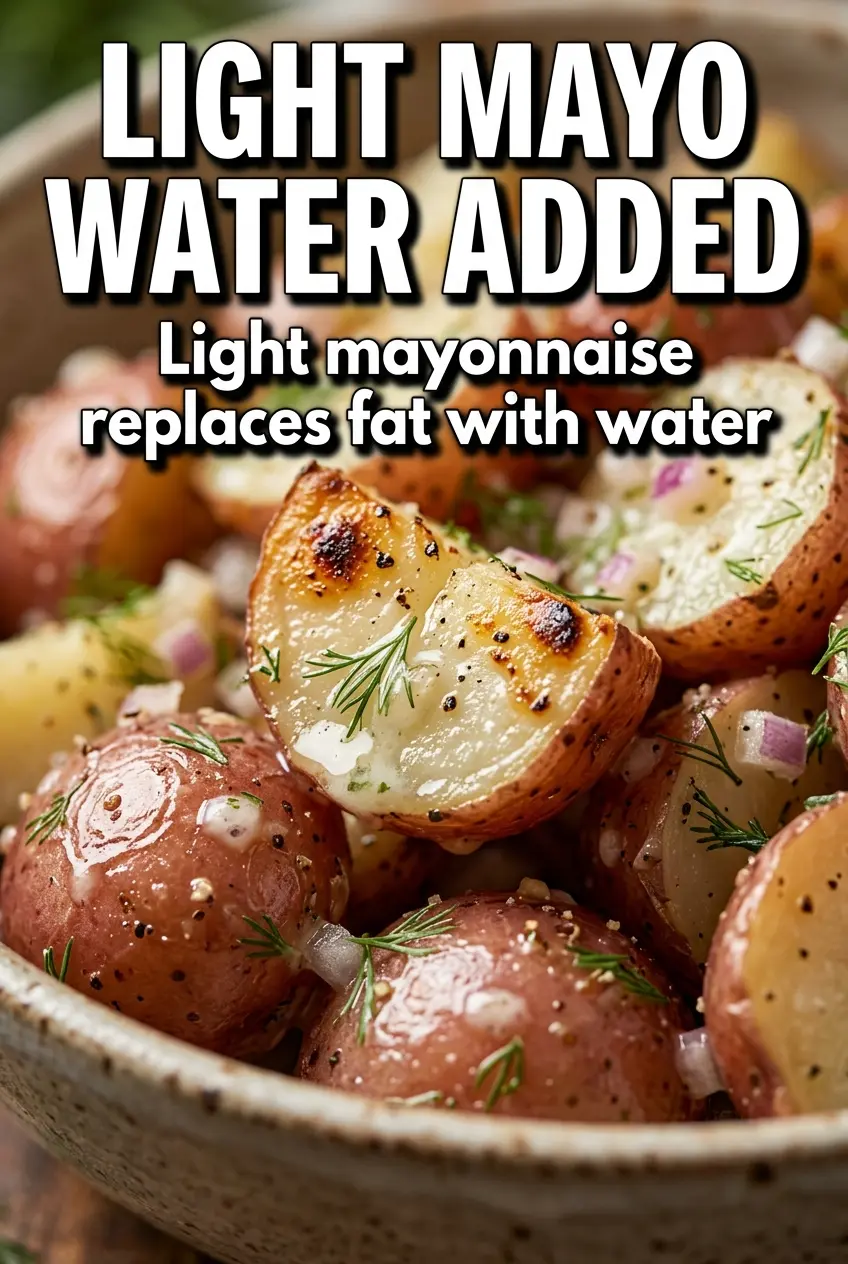
Red Potato Salad (Light on Mayo)
Ingredients
Equipment
Method
- Bring a Dutch oven of water to a boil, then add the cubed red potatoes and cook until tender, about 10 to 15 minutes. Visual cue: you should be able to pierce a cube easily with a fork.
- Drain the potatoes and spread them on a sheet pan to cool. Visual cue: the cubes should look matte and not steaming hot.
- In a bowl, whisk together the Greek yogurt, mayonnaise, Dijon mustard, white wine vinegar, salt, and pepper until smooth and creamy. Visual cue: the dressing should look evenly speckled and glossy.
- In the mixing bowl, combine the cooled potatoes with the chopped fresh dill, sliced green onions, and diced celery. Visual cue: herbs and vegetables should be distributed through the potato cubes.
- Pour the dressing over the potato mixture and toss well until every piece is coated. Visual cue: the salad should look lightly creamy, not oily.
- Cover and refrigerate for 2 hours before serving to let flavors meld. Visual cue: the salad will thicken slightly and taste brighter after chilling.