Red wine braised short ribs turn into the kind of dinner that makes people go quiet for a minute at the table. The meat goes from tough and stubborn to spoon-tender, and the braising liquid reduces into a glossy sauce that clings to every bite. Served over mashed potatoes, it’s the kind of meal that feels like it took all day, even though most of the time is hands-off in the oven.
What makes this version work is the layering. The ribs get a deep sear first, which builds the dark, savory base you need before the wine goes in. Then the onions, carrots, celery, tomato paste, and herbs do their part in the same pot, so nothing gets wasted. The red wine doesn’t just flavor the sauce; it carries the browned bits off the bottom and gives the braise its deep mahogany color and slow-cooked edge.
Below, I’ll show you where people usually go wrong with braised short ribs, how to get the sauce to reduce properly, and the one substitution I’d trust if you don’t have a full bottle of wine on hand.
The sauce reduced into this shiny, rich gravy and the ribs were falling apart after 3 1/2 hours. I served them over mashed potatoes and didn’t have a drop left in the pot.
Save these red wine braised short ribs for the night you want fall-off-the-bone beef, a deep wine sauce, and mashed potatoes that catch every last spoonful.
The Reason Short Ribs Go Tender Instead of Chewy
The biggest mistake with braised short ribs is rushing the oven time and expecting the meat to cooperate. Short ribs need long, gentle heat so the connective tissue has time to soften; if you pull them when they’re merely fork-tender, they’ll still feel tight and a little stringy. The goal is that point where the meat slides off the bone and the fat has melted into the braising liquid instead of sitting on top of it.
The other thing that matters is the liquid level. You want the braising liquid to come about halfway up the ribs, not cover them completely. That gives you braising, not boiling, and it keeps the top of the meat from getting washed out while the bottom stays flavor-packed. The lid traps enough steam to keep everything moist, and the oven temperature stays low enough that the sauce reduces slowly without scorching.
- Searing first builds the dark crust that gives the finished sauce its depth. Pale ribs make a flat-tasting braise.
- Low oven heat keeps the collagen from tightening up before it can break down.
- Half-submerged liquid gives you tender meat and a sauce with body, not a diluted stew.
What Each Ingredient Is Actually Doing in the Pot
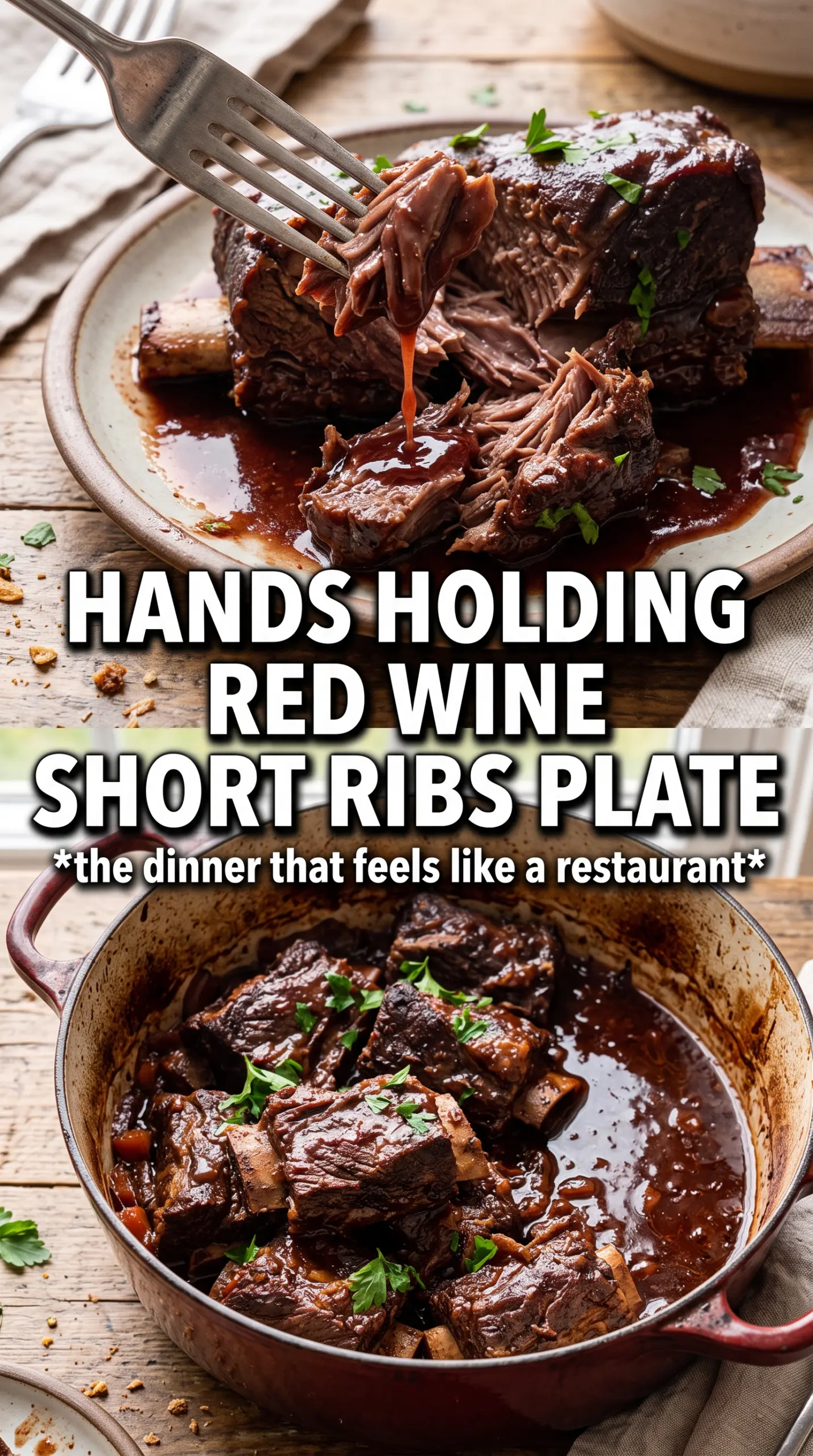
- Bone-in beef short ribs are the whole point here. The bones add flavor, and the marbling melts down during the long braise, giving you that silky, rich texture you can’t fake with lean beef.
- Dry red wine brings acidity, depth, and color. Cabernet gives a bolder sauce; Merlot is a little rounder. Use a wine you’d actually drink, because the flavor concentrates as it reduces.
- Beef broth stretches the braising liquid without flattening it. It supports the wine instead of competing with it.
- Diced tomatoes and tomato paste add body and a little sweetness, which keeps the sauce from tasting thin or sharply alcoholic after the long cook.
- Carrots, onion, celery, garlic, thyme, rosemary, and bay build the savory backbone. Fresh herbs matter here because they perfume the whole pot without turning muddy.
Building the Braise So the Sauce Stays Deep and Glossy
Getting a hard sear on the ribs
Season the ribs generously, then sear them in a hot Dutch oven until they’re deeply browned on all sides. You’re not looking for a little color; you want a dark crust that smells nutty and beefy. If the pan is crowded, the ribs steam instead of sear, and you lose the base flavor that makes the final sauce taste slow-cooked and full. Work in batches if you need to.
Cooking the vegetables and tomato paste
After the ribs come out, the onion, carrots, and celery go into the same pot. They should soften and pick up color from the fond on the bottom. Stir in the garlic and tomato paste for the last couple of minutes so the paste darkens slightly and loses its raw edge. If you add the garlic too early, it can burn before the wine goes in, and that bitterness carries all the way through the braise.
Deglazing with wine and braising low
Pour in the red wine and scrape the bottom of the pot until every browned bit is released. That’s where the sauce gets its backbone. Add the broth, tomatoes, and herbs, then return the ribs with the liquid coming halfway up the meat. Cover tightly and let the oven do the work. If the lid doesn’t fit snugly, the liquid can reduce too fast and leave you with dry meat before it’s tender.
Reducing the sauce at the end
When the ribs are done, lift them out gently and strain the braising liquid if you want a smoother sauce. Then reduce it until it looks glossy enough to coat the back of a spoon. This is where the sauce turns from thin cooking liquid into something worth serving. Stop before it gets syrupy; once it cools slightly, it will thicken a bit more on its own.
How to Adapt These Short Ribs Without Losing the Soul of the Dish
Make it dairy-free without changing the braise
This recipe is already dairy-free as written. Serve it with olive oil mashed potatoes or creamy polenta if you want the same comfort-food feel without adding butter or cream. The sauce still lands rich because the meat and wine do the heavy lifting.
Use broth plus grape juice when you don’t want to open a full bottle of wine
If you need to skip the wine, replace it with 2 cups additional beef broth plus 1 cup unsweetened grape juice and 1 tablespoon red wine vinegar. You’ll lose some of the wine’s tannic depth, but the vinegar keeps the sauce from tasting flat and the grape juice gives back a little fruitiness.
Make it ahead for a dinner party
Braised short ribs are better the next day. Cook them полностью, chill them in the sauce, then reheat gently before serving. The overnight rest lets the flavors settle and makes the sauce taste even deeper.
Turn it into a gluten-free meal without any changes
The braise itself is naturally gluten-free as long as your beef broth is certified gluten-free. Keep the potatoes on the side or serve with cauliflower mash if that’s how you eat at home. The texture and sauce stay exactly the same.
Storage and Reheating
- Refrigerator: Store in an airtight container for up to 4 days. The sauce will thicken and the fat may solidify on top, which is a good sign.
- Freezer: Freezes well for up to 3 months. Cool completely, portion the ribs with plenty of sauce, and thaw overnight in the fridge before reheating.
- Reheating: Warm gently in a covered pot over low heat or in a 300F oven until hot all the way through. High heat dries out the meat and can make the sauce separate, so go slow.
Questions I Get Asked About This Recipe
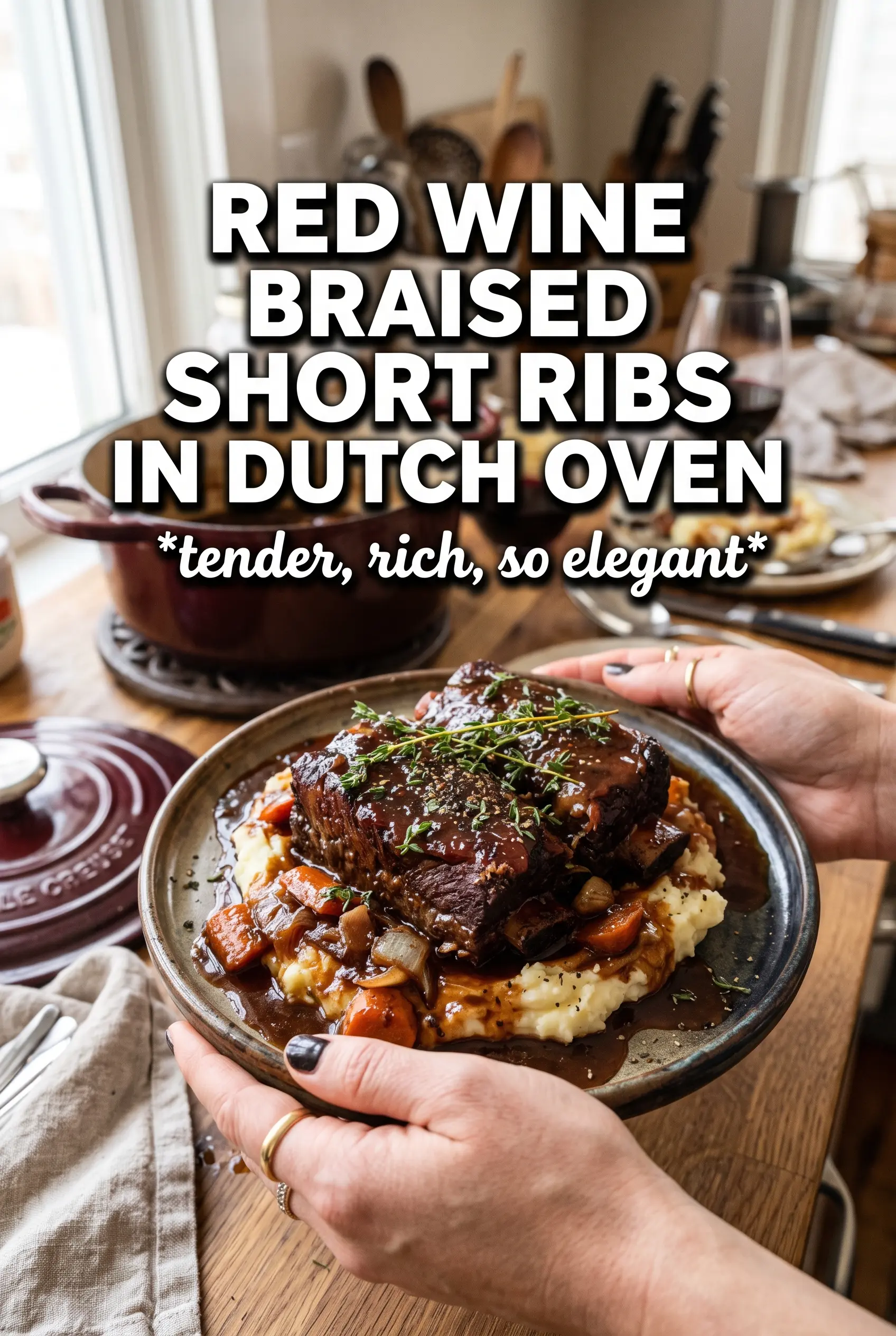
Red Wine Braised Short Ribs in Dutch Oven
Ingredients
Equipment
Method
- Preheat oven to 325°F, then season the ribs generously with salt and pepper. Keep seasoning visible on all sides for best browning.
- Heat olive oil in a Dutch oven over high heat and sear the ribs until deeply browned on all sides. Remove the ribs when well-browned and set aside.
- Sauté onion, carrots, and celery for 5 minutes in the Dutch oven. Cook until they start to soften and pick up fond from the bottom.
- Add garlic and tomato paste, then cook for 2 minutes. Stir constantly so the tomato paste darkens slightly without burning.
- Deglaze with the red wine, scraping up the browned bits from the bottom. Simmer briefly just until the liquid is cohesive.
- Add beef broth, diced tomatoes, bay leaves, thyme, and rosemary. Stir to combine and distribute herbs evenly.
- Return the ribs to the Dutch oven, arranging them so the liquid comes halfway up the ribs. Add a little more broth only if needed to reach that level.
- Cover and braise in the oven for 3 to 3-1/2 hours at 325°F until fall-off-the-bone tender. Look for meat that pulls easily from the bone when nudged.
- Remove the ribs and strain the braising liquid. Discard solids so the sauce stays smooth.
- Reduce the strained braising liquid until glossy. Continue until it coats the back of a spoon and looks like a mahogany sauce.
- Serve the ribs over mashed potatoes and spoon the reduced braising sauce on top. Add extra sauce so potatoes soak up the flavor.


