Golden potatoes, caramelized carrots, and tender zucchini come out of the oven with the kind of edges that keep people picking at the pan before dinner. The vegetables each roast at their own pace, so you get crisp, browned spots on the potatoes, sweet little charred edges on the carrots, and zucchini that stays soft without collapsing into mush.
The trick is starting the potatoes and carrots first. Zucchini has a lot more moisture, and if it goes in too early it steams the whole pan instead of letting everything roast. A hot oven, enough oil to coat the vegetables, and a little space on the pan are what give you that deep, savory finish instead of pale, soft vegetables.
Below, I’ll walk through the timing that keeps the zucchini from going soggy, plus a few smart swaps if you need to work with what’s already in the kitchen. The Parmesan at the end adds a salty finish that clings to the hot vegetables instead of disappearing into the pan.
I’ve made roasted vegetables for years, and this was the first time the zucchini stayed intact instead of turning watery. The potatoes got crisp on the edges, and the Parmesan at the end made the whole pan taste finished.
Save these roasted potatoes, carrots, and zucchini for the night you want one sheet pan of crispy, caramelized vegetables with almost no cleanup.
The Reason Most Sheet Pans Turn Soft Instead of Crisp
The biggest mistake with roasted vegetables is crowding the pan, then wondering why everything comes out pale and wet. Vegetables release moisture as they cook, and if that steam has nowhere to go, you get soft edges instead of browning. A hot oven helps, but the real difference is giving the potatoes and carrots a head start so they can develop color before the zucchini joins in.
Potatoes need that first stretch of heat most of all. Their surfaces have to dry out and catch before they can turn crisp. Carrots benefit from the same treatment because their natural sugars caramelize beautifully once they hit the oven long enough on their own. Zucchini goes in later because it softens quickly and carries a lot of water; adding it at the start almost guarantees a soggy pan.
What Each Vegetable Is Doing in This Pan
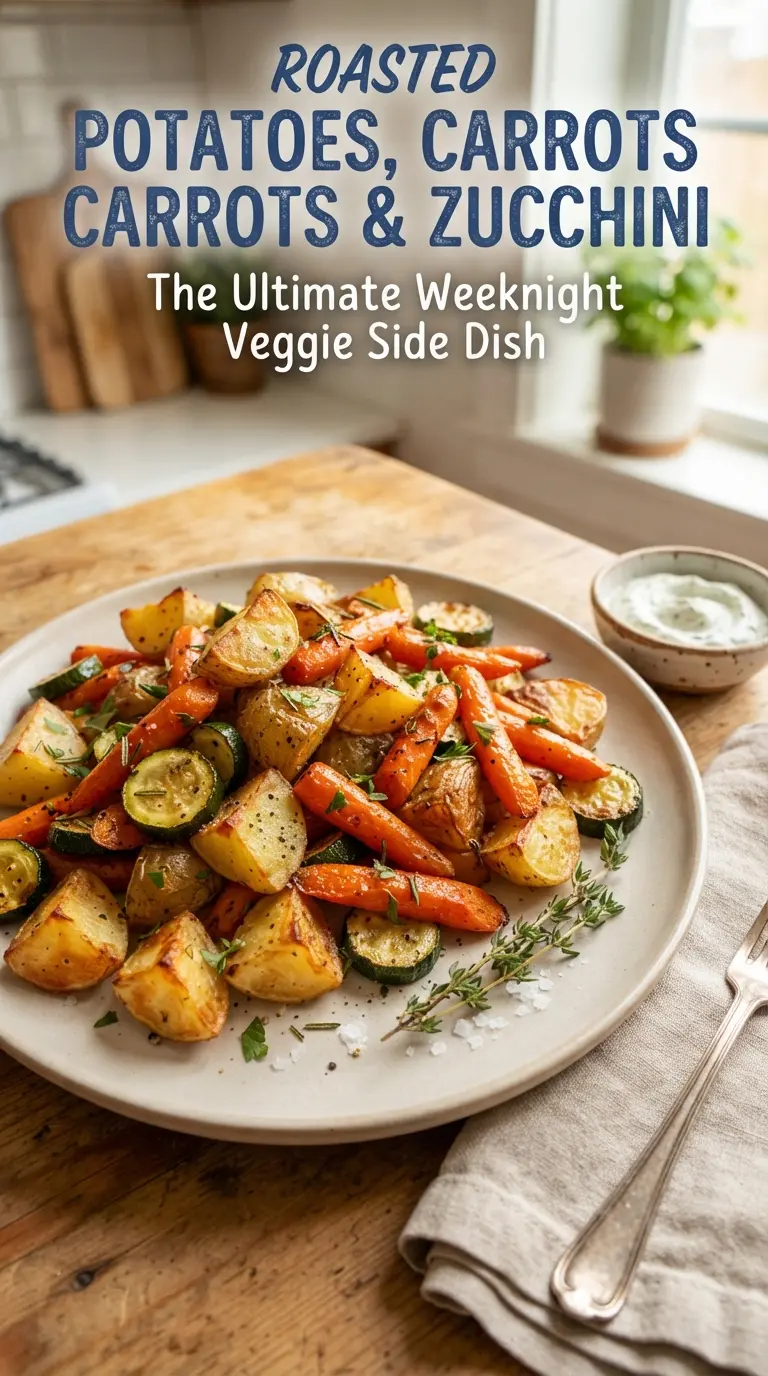
- Baby potatoes — These are the backbone of the dish because they hold their shape and give you the crispiest edges. Quartering them creates more cut surface, which means more browning. If you only have larger potatoes, cut them into small, even chunks so they cook at the same rate.
- Carrots — Carrots bring sweetness and color, and they roast best when sliced into even coins or half-moons. Thicker pieces stay firm and need the full roast time, which is what you want here. Thin shavings soften too fast and won’t give you the same caramelized bite.
- Zucchini — This is the ingredient that needs the most timing discipline. It adds tenderness and balances the denser vegetables, but it should go in late so it roasts instead of steams. If your zucchini is especially large, cut the chunks a little bigger so they don’t disappear by the time the potatoes are done.
- Parmesan — The cheese is a finish, not a cooking ingredient. Add it while the vegetables are still hot so it clings and melts lightly. Pre-grated Parmesan works, but freshly grated gives you a better salty edge and a cleaner melt.
Building the Roast in Two Acts
Season the Hard Vegetables First
Toss the potatoes and carrots with most of the oil, garlic, Italian seasoning, salt, and pepper directly on the sheet pan so every surface gets coated. Spread them out in a single layer with a little breathing room between pieces. If the vegetables are piled up, they’ll steam before they brown, and the potatoes will stay dull instead of crisping.
Let the Oven Do the First Round
Roast the potatoes and carrots for 20 minutes before touching the pan. At that point, you should see some browning on the undersides and the carrots should start to look a little wrinkled at the edges. If the pan looks dry before that, your oven may run hot, but don’t rush the timing; the vegetables need that uninterrupted first roast to start caramelizing.
Add the Zucchini at the End
Toss the zucchini with the remaining oil before adding it to the pan. That thin coating protects it a little from drying out while still letting it brown. Stir everything together and roast for about 15 minutes more, until the potatoes are crisp at the edges and the zucchini is tender with some golden spots. If the zucchini starts to collapse before the potatoes are done, your pieces are too small or the pan is too crowded.
Finish While It’s Still Hot
Sprinkle the Parmesan and parsley over the vegetables right after they come out of the oven. The residual heat softens the cheese just enough to stick without turning it greasy. Serve it right away if you want the best texture; roasted vegetables lose some of their crisp edge as they sit.
Three Smart Ways to Change the Pan Without Losing the Texture
Dairy-Free Finish
Skip the Parmesan and finish with extra parsley plus a pinch of flaky salt. You lose the savory, cheesy edge, but the vegetables still taste complete because the roasting builds plenty of flavor on its own. A little lemon zest at the end also works well if you want brightness without dairy.
Gluten-Free and Naturally Simple
This dish is already gluten-free as written, so the main job is keeping the seasoning clean and checking any store-bought cheese or seasoning blends if you use them. The texture stays the same, which is one reason this is such an easy side to put on the table for mixed diets.
Swap the Vegetables Based on What’s in the Crisper
Cauliflower, broccoli, or bell peppers can take the zucchini’s place, but watch the timing. Broccoli and cauliflower need about the same second-stage roast as zucchini, while peppers soften faster and may need even less time. Keep the pieces similar in size so nothing burns before the rest is done.
Make It Heartier for Dinner
Toss in chickpeas during the last 15 minutes or serve the vegetables over rice, quinoa, or pasta. Chickpeas add a little protein and crispness around the edges, while grains turn this from a side dish into a full meal. Just keep the pan from getting crowded, or you’ll lose the browning that makes the vegetables worth roasting.
Storage and Reheating
- Refrigerator: Store leftovers in an airtight container for up to 4 days. The potatoes soften a little, and the zucchini will release more moisture as it sits.
- Freezer: I don’t recommend freezing this one. Zucchini turns mushy after thawing, and the potatoes lose their crisp edges.
- Reheating: Spread the vegetables on a sheet pan and warm them in a 400F oven until hot and the edges start to firm back up, usually 10 to 15 minutes. The microwave works in a pinch, but it makes the vegetables soft instead of bringing back any roast texture.
Questions I Get Asked About This Recipe
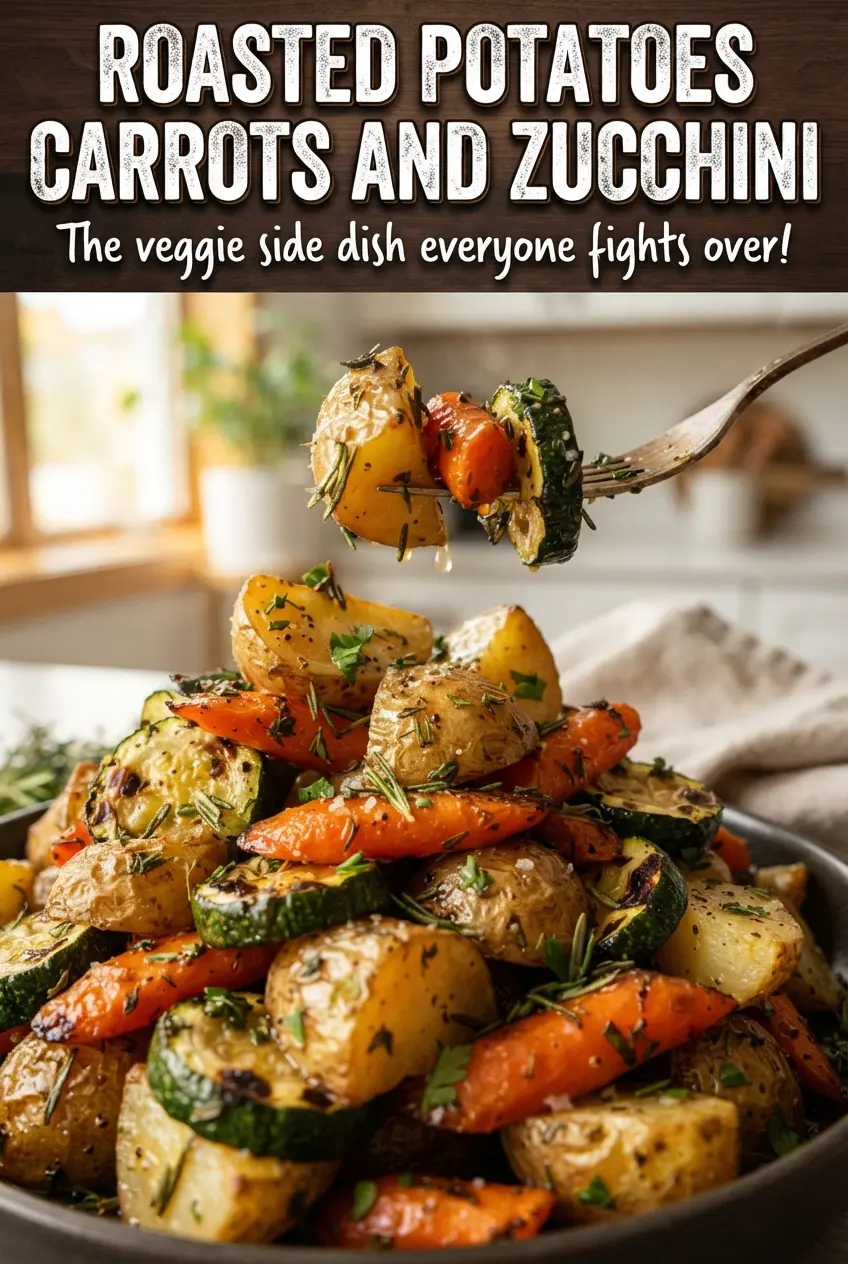
Roasted Potatoes Carrots and Zucchini
Ingredients
Equipment
Method
- Preheat oven to 425F and place a sheet pan in the oven to preheat as well.
- Toss potatoes and carrots on the sheet pan with 3 tablespoons olive oil, garlic, Italian seasoning, salt, and black pepper until evenly coated.
- Roast for 20 minutes at 425F, until potatoes start to brown at the edges (look for light golden spots).
- Toss zucchini with the remaining olive oil, then add it to the pan and stir so everything sits in a single layer.
- Roast for 15 minutes more at 425F until potatoes are crispy and zucchini is tender (watch for browned zucchini edges).
- Sprinkle the roasted vegetables with grated Parmesan and chopped fresh parsley right on the hot sheet pan so the cheese melts slightly.
- Serve immediately while the potatoes are crisp and the herbs look fresh.