Roasting the tomatoes first gives this soup the kind of depth you just don’t get from simmering everything raw in a pot. The tomatoes turn jammy and concentrated, the onion softens into sweetness, and the garlic loses its bite, so when everything gets blended together you end up with a soup that tastes slow-cooked even though most of the work happens in the oven. The cream rounds it out, but it doesn’t hide the tomato. That balance is what keeps you going back for another spoonful.
The trick here is letting the vegetables get some actual color. Pale roasted tomatoes make a thin, one-note soup; tomatoes with browned edges and a few charred spots bring the acidity and sweetness you want. The balsamic vinegar sharpens the finish without making the soup taste sugary, and the basil goes in near the end so it stays fresh instead of muddy. If you like tomato soup with a deep red color, a silky body, and grilled cheese croutons that soak up just enough broth, you’re in the right place.
The tomatoes got those caramelized edges I was hoping for, and the soup blended up velvety without tasting heavy. I added the basil at the end like you said, and it stayed bright instead of turning dull.
Save this roasted tomato basil soup for the nights when you want a silky blended soup with charred tomatoes, fresh basil, and grilled cheese croutons.
The Reason Roasted Tomatoes Make This Soup Taste Like It Simmered All Day
Tomato soup can go flat fast when the tomatoes are undercooked or the base is too watery. Roasting fixes both problems at once. The heat concentrates the tomato juices, softens the onion into sweetness, and turns the garlic mellow enough to blend smoothly instead of punching through the whole bowl.
The other thing that matters here is the order. The vegetables roast first, then the broth loosens everything just enough to blend, and the cream goes in after the soup is already smooth. If you add dairy too early or boil the finished soup too hard, you lose that silky texture and can end up with a grainy or separated pot.
What Each Ingredient Is Actually Doing In This Bowl
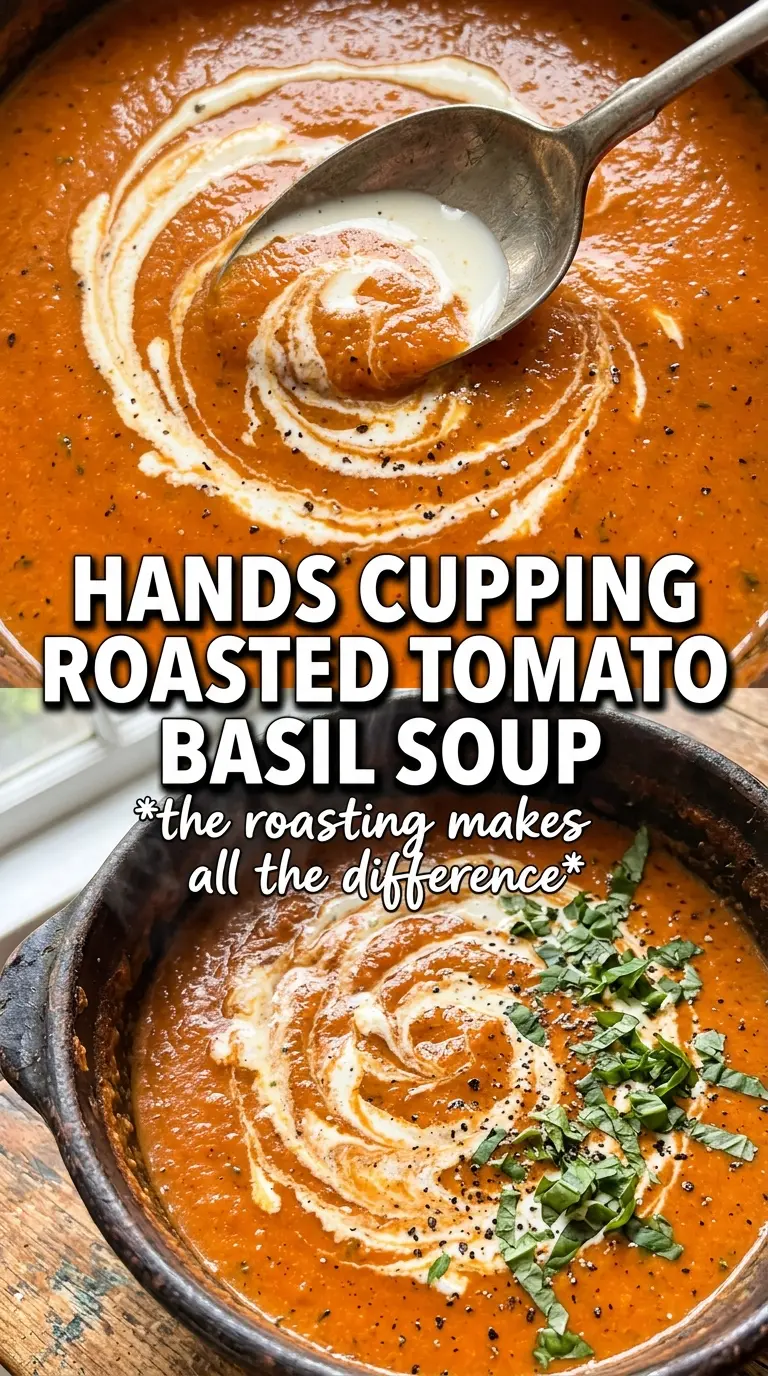
- Roma or vine tomatoes — Roma tomatoes give you a thicker, less watery soup, while vine tomatoes bring a little extra juiciness and a rounder flavor. Use the best-looking tomatoes you can find; pale, underripe fruit will leave the soup sharp instead of deep and sweet.
- Garlic — Roasting the head whole turns the cloves soft and buttery. Fresh garlic is worth it here because the mellow roasted flavor is one of the main reasons this soup tastes rich without needing a long simmer.
- Onion — Onion adds body and sweetness. Quartering it keeps enough surface area exposed to brown at the edges, which gives the soup a more savory backbone.
- Olive oil — Use a decent olive oil for roasting because it helps the vegetables caramelize and carries the herbs. The soup doesn’t need your most expensive bottle, but bland oil will make the whole dish taste flatter.
- Heavy cream — This is what gives the soup its velvety finish. Half-and-half will work in a pinch, but the result will be lighter and less lush.
- Fresh basil — Add it at the end so it stays bright and aromatic. Dried basil won’t give you the same fresh finish, so I wouldn’t swap it unless you have to.
- Balsamic vinegar — A small amount sharpens the tomato flavor and keeps the soup from tasting heavy. It shouldn’t read as sweet; it should just wake everything up.
Building the Roast, Blending the Base, and Finishing Without Breaking It
Getting Color in the Oven
Spread the tomatoes, onion, and garlic cut-side up on the baking sheet so the juices pool a little and the surfaces can caramelize. Roast them at 425F until the tomatoes collapse and the edges pick up some dark color, about 35 to 40 minutes. If everything looks soft but still pale, give it a few more minutes; pale roasted vegetables make a dull soup. You want browned edges, sweet onion, and garlic that squeezes out easily from the skins.
Blending the Soup Smooth
Transfer the roasted vegetables and all the pan juices to a pot, then add the broth and balsamic vinegar before blending. That liquid helps the immersion blender move freely and prevents the soup from turning paste-thick before you add the cream. Blend until completely smooth, scraping the sides if needed. If you still see bits of tomato skin, keep blending; those little pieces show up fast in a finished bowl.
Adding the Cream and Basil the Right Way
Stir in the cream and fresh basil once the soup is smooth, then keep the heat low and let it simmer gently for about 10 minutes. High heat is where cream gets temperamental, so don’t boil it hard after it goes in. The basil should taste fresh and fragrant, not cooked down into something dull. Finish with sugar only if the tomatoes need a little rounding out, then season with salt and pepper until the soup tastes full and balanced.
How to Adapt This for a Bigger Pot, a Lighter Bowl, or a Dairy-Free Version
Make it dairy-free
Swap the heavy cream for full-fat coconut milk or an unsweetened cashew cream. Coconut milk brings a faint sweetness and a softer finish, while cashew cream stays closer to the neutral richness of dairy. Keep the heat low after the swap so the texture stays smooth.
Make it lighter
Use half-and-half instead of heavy cream and reduce the amount slightly if you want a thinner bowl. The soup will still feel creamy, but it won’t coat the spoon as heavily. This version is best if you’re serving it with grilled cheese croutons and want the soup itself to stay a little brighter.
Make it vegetarian
Use vegetable broth instead of chicken broth. That’s the only change you need, and it won’t cost you much flavor because the roasted vegetables are doing most of the heavy lifting anyway.
Storage and Reheating
- Refrigerator: Store for up to 4 days. It thickens a bit as it chills, which is normal.
- Freezer: Freeze without the cream if you can, then stir the cream in after reheating for the smoothest texture. Full dairy versions can freeze, but the texture is a little more likely to separate.
- Reheating: Warm it gently over low heat, stirring often. Don’t let it boil hard, or the cream can split and the basil flavor will fade.
Questions I Get Asked About This Recipe
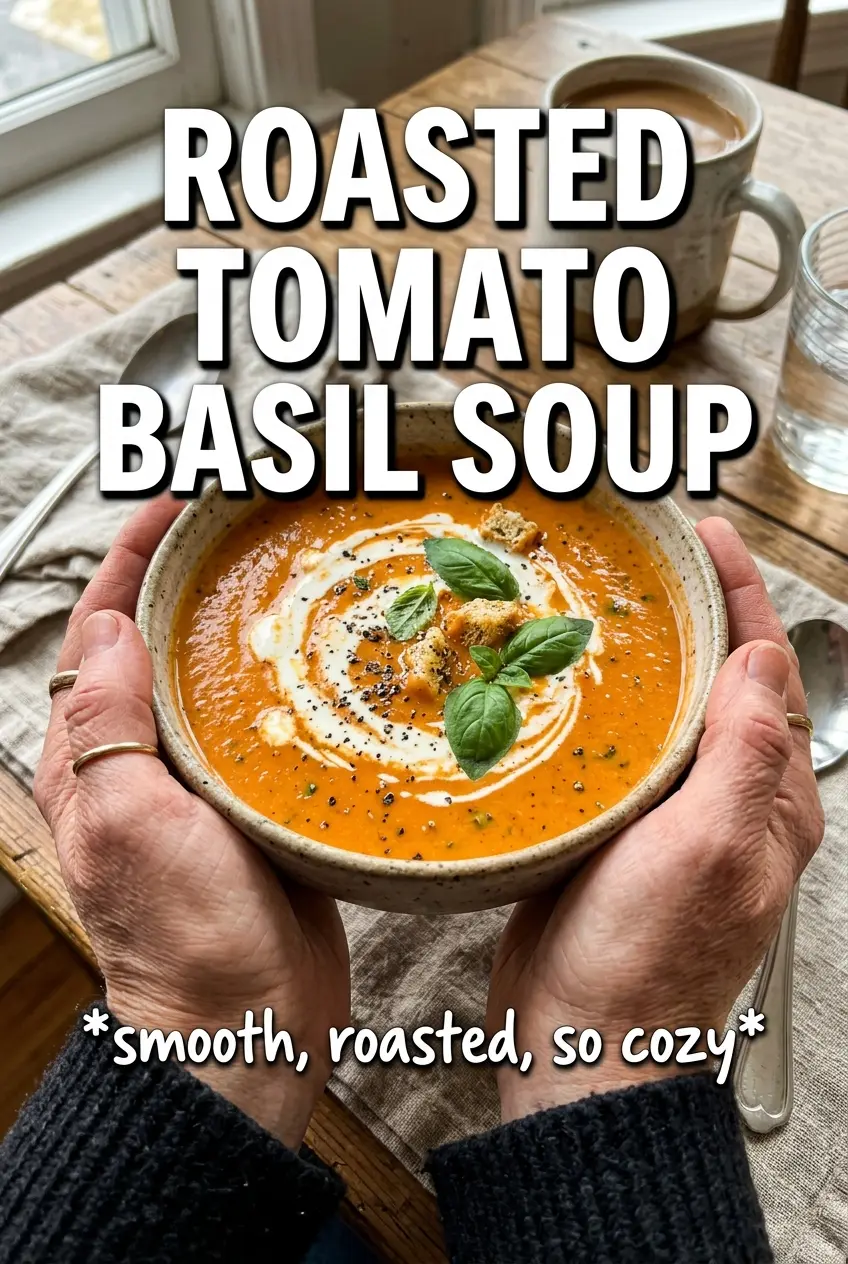
Roasted Tomato Basil Soup
Ingredients
Equipment
Method
- Preheat the oven to 425F, then arrange the tomatoes, garlic, and onion on a rimmed baking sheet with the cut sides facing up (visual cue: tomatoes are laid out in a single layer).
- Drizzle with 1/4 cup olive oil, then season with salt and pepper and the dried oregano (visual cue: everything looks glossy and evenly speckled).
- Roast for 35-40 minutes until caramelized and slightly charred at the edges (visual cue: darkened edges on tomatoes and browned garlic).
- Squeeze the roasted garlic from its skins, then transfer all roasted vegetables to a large pot (visual cue: the garlic squeezes out like soft paste).
- Add the broth and balsamic vinegar, then blend smooth with an immersion blender (visual cue: the soup turns into a uniform red, silky texture).
- Stir in the heavy cream and fresh basil, then simmer for 10 minutes (visual cue: gentle bubbles and slight thickening).
- Add the sugar and season with salt and pepper to taste (visual cue: flavor becomes balanced and not overly acidic).
- Serve the soup with grilled cheese croutons or crusty bread (visual cue: bread/croutons sit on the side of each bowl).


