Rotini clings to this sauce in the best way, catching every bit of the creamy, cheesy Rotel mixture in its spirals. You get tender pasta, seasoned ground beef, sweet corn, black beans, and just enough green chile heat to keep each bite interesting without overpowering the bowl. It’s the kind of skillet dinner that disappears fast because it eats like comfort food but still has enough Tex-Mex punch to keep you coming back for one more forkful.
The trick is building the sauce in layers instead of dumping everything together at once. Browning the beef with the onion gives you a savory base, then the Rotel, broth, and cream simmer long enough to mellow the tomatoes before the cheddar goes in. That order keeps the sauce smooth and helps the cheese melt into the pan instead of turning grainy. The pasta water at the end isn’t just there for rescue — it helps the sauce loosen and coat the rotini instead of sitting thick and heavy in the skillet.
Below, you’ll find the small details that matter most, from keeping the cheese silky to adjusting the heat level without losing that Rotel signature.
The sauce coated the rotini perfectly and the cheddar stayed smooth instead of getting stringy. I liked that the corn and black beans held their shape, and the whole skillet was ready right on time for dinner.
Save this Rotel Pasta Fiesta for a cheesy skillet dinner with creamy Rotel sauce, beef, and rotini that catches every bit of flavor.
The Trick to Keeping the Cheese Sauce Smooth, Not Grainy
The biggest mistake with a pasta like this is rushing the cheese into a boiling sauce. Once dairy gets hit with too much heat, it can turn slick, clumpy, or grainy instead of melting into that silky orange-red coating you want. The cream needs a gentle simmer, not a hard boil, and the cheddar should go in after the heat has backed off just enough that the pan is calm.
Rotel brings acid, which is part of what makes this dish taste bright instead of flat, but acid also makes cheese a little more temperamental. That’s why the broth simmers with the tomatoes first, giving everything a chance to reduce and blend before the cream and cheese finish the sauce. If the pan is still roaring when the cheddar goes in, pull it off the burner for a minute before stirring. That one pause makes the difference between a glossy sauce and a broken one.
What Each Ingredient Is Actually Doing in This Skillet

- Rotel tomatoes with green chiles — This is the flavor anchor. You need the tomatoes, the chile heat, and the little bit of tang all in one can, and no plain diced tomato substitute will taste the same.
- Ground beef — It gives the dish its hearty base and carries the taco seasoning well. An 85/15 or 90/10 blend both work; if you use a fattier blend, drain the grease after browning so the sauce doesn’t feel heavy.
- Taco seasoning — This is where the Tex-Mex flavor lands fast. A packet is the easy route, but if yours is salty, hold back on adding extra salt until the end.
- Heavy cream — This is what turns the skillet from saucy to creamy. Half-and-half can work in a pinch, but the sauce will be thinner and a little more likely to separate if you let it boil.
- Cheddar cheese — Sharp cheddar gives the strongest flavor and melts into the sauce best when you shred it yourself. Pre-shredded cheese can work, but it melts less smoothly because of the anti-caking coating.
- Rotini — The spirals matter here because they trap the sauce inside every curve. Penne or shells work too, but rotini gives you the best cling.
- Black beans and corn — These add body, sweetness, and a little extra contrast against the creamy sauce. Drain the beans well so the sauce stays rich instead of watery.
Building the Skillet So Every Bite Gets Coated
Boil the Pasta Until It Still Has a Little Bite
Cook the rotini until al dente, then scoop out some pasta water before draining. That water is starchy and useful later if the sauce tightens up after the cheese goes in. If the pasta gets too soft here, it will keep cooking in the sauce and turn mushy by the time you serve it.
Brown the Beef with the Onion First
Cook the ground beef and diced onion over medium-high heat until the meat loses its pink color and the onion turns soft and translucent. You want some browning on the bottom of the pan because that builds the savory backbone of the dish. If the pan fills with a lot of grease, drain it off before adding the garlic and seasoning so the final sauce doesn’t feel slick.
Let the Rotel and Broth Reduce Together
Stir in the garlic, taco seasoning, Rotel, black beans, corn, and beef broth, then let everything simmer for about five minutes. The broth loosens the tomatoes at first, then reduces enough to concentrate the flavor. If it still looks thin at this point, don’t worry; the cream and cheese will finish the texture later.
Finish with Cream and Cheese Off the Heat
Lower the heat before stirring in the heavy cream, then add the cheddar a handful at a time until it melts. The sauce should look glossy and coat the back of a spoon without turning oily. Toss in the pasta, then use a splash of reserved pasta water only if the sauce needs loosening to reach every spiral.
How to Adapt This When You Want It Milder, Lighter, or Meat-Free
Make It Milder for Sensitive Heat Levels
Use mild Rotel if you can find it, and choose a taco seasoning that leans more savory than spicy. You’ll keep the tangy tomato flavor and the cheesy finish, but the chile heat will stay in the background instead of building with every bite.
Make It Gluten-Free Without Losing the Texture
Use your favorite gluten-free rotini and check that the taco seasoning and broth are gluten-free too. Gluten-free pasta can soften fast, so cook it just until tender and toss it with the sauce right away before it starts to split or get gummy.
Swap the Beef for Turkey or Plant-Based Crumbles
Ground turkey works well if you want a lighter skillet, but it benefits from a little extra seasoning and maybe a touch more oil in the pan. For a vegetarian version, use plant-based crumbles and replace the beef broth with vegetable broth; the sauce stays creamy, but the savory depth will be a little softer.
Storage and Reheating
- Refrigerator: Store in an airtight container for up to 4 days. The sauce will thicken as it chills, and the pasta will absorb some of the liquid.
- Freezer: It freezes, but the cream and cheese may separate a little when thawed. Freeze in portions for up to 2 months, then stir well after reheating.
- Reheating: Warm it gently on the stove or in the microwave with a splash of broth or milk. Don’t blast it on high heat or the sauce can turn oily before the pasta heats through.
Answers to the Questions Worth Asking
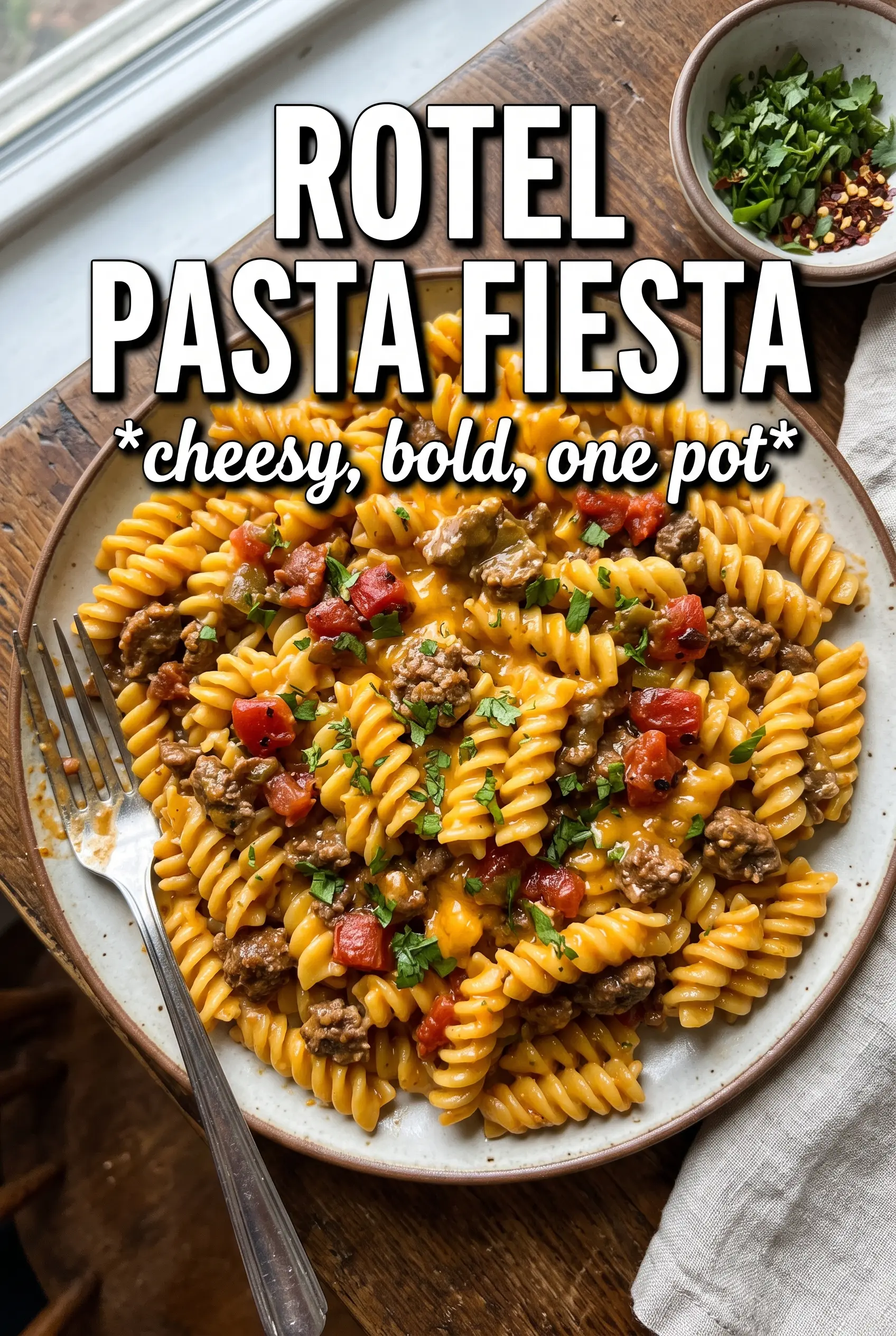
Rotel Pasta Fiesta
Ingredients
Equipment
Method
- Cook rotini until al dente, reserving 1/2 cup pasta water before draining and setting the pasta aside.
- Brown ground beef with onion over medium-high heat, then drain excess fat.
- Add garlic and taco seasoning and cook for 1 minute, until fragrant.
- Add Rotel, black beans, corn, and beef broth, then simmer for 5 minutes.
- Stir in heavy cream and bring the mixture to a simmer.
- Stir in shredded cheddar until melted and smooth.
- Toss the drained pasta with the sauce, adding reserved pasta water as needed to thin and evenly coat.
- Serve topped with fresh cilantro and extra cheddar.