Salisbury steak earns its place at the table when the patties stay tender and the gravy turns glossy, dark, and loaded with onion and mushroom flavor. The best versions don’t taste like plain hamburger patties with sauce on top; they eat like a proper pan dinner, with a browned crust on the beef and a gravy that clings to every bite.
This version works because the patties get seared first, then finished gently in the gravy instead of being boiled from the start. That keeps the beef juicy and gives the sauce a chance to pick up the browned bits left in the pan. A little Dijon sharpens the gravy, Worcestershire deepens it, and the mushrooms bring the kind of savory backbone that makes the whole dish taste slow-cooked even though it’s on the table in about 45 minutes.
Below, I’ll walk through the part that matters most: keeping the gravy smooth and the patties tender. I’ve also included a few swaps and storage notes, because this is one of those dinners that gets even easier the second time around.
The gravy thickened up perfectly and the patties stayed tender even after simmering. I served it over mashed potatoes and my husband went back for seconds before I’d even sat down.
Save this Salisbury steak with mushroom gravy for a cozy beef dinner with a deep brown pan sauce and tender oval patties.
The Browning Step That Keeps the Patties Tender
The mistake that ruins a lot of Salisbury steak is treating the patties like meatballs and crowding them in the pan until they steam. You want a hard sear on the outside first. That crust gives the gravy its depth later, and it protects the beef from drying out while it finishes in the sauce.
The other thing that matters is how long the patties simmer. They should be cooked through, but not boiled hard. A gentle simmer keeps the meat soft and lets the gravy stay smooth instead of tightening up and turning greasy around the edges.
- Ground beef — An 80/20 blend gives you the best balance of flavor and juiciness. Leaner beef works, but the patties will taste less rich and can dry out faster in the gravy.
- Breadcrumbs and egg — These are what hold the patties together without making them dense. If you swap in crushed crackers, use the same amount; if you skip the binder entirely, the patties will shrink and crack in the skillet.
- Worcestershire sauce — This is doing more than seasoning the beef. It adds salt, tang, and that savory backbone that makes Salisbury steak taste like Salisbury steak instead of plain hamburger patties.
- Mushrooms and onion — Use fresh mushrooms here. They cook down into the gravy and add body that dried seasoning can’t fake. Slice the onion thin so it softens at the same pace as the mushrooms and disappears into the sauce.
- Beef broth — A good broth matters because it’s the body of the gravy. If yours is low-sodium, you’ll have more control; if it’s weak-tasting, the sauce will taste thin no matter how long you simmer it.
What Each Ingredient Is Actually Doing in This Recipe

- Primary ingredient (the star) — Quality matters most. Choose the best you can find.
- Cooking medium (oil, butter, or broth) — This carries flavors and prevents dryness.
- Seasonings (salt, pepper, spices, herbs) — Layer flavors so nothing overpowers. Build depth gradually.
- Aromatics (garlic, onion, herbs) — Cook with fat to bloom flavors. Become the foundation.
- Supporting ingredients — Complement the main ingredient without overpowering it.
- Sauce or liquid (if applicable) — Brings flavors together. Balance richness with acid.
- Acid (lemon, vinegar, wine, or other) — Brightens and prevents flat-tasting results.
- Final finish (garnish, glaze, or sauce) — Prevents one-dimensional taste and adds visual appeal.
Building the Gravy in the Same Pan
Searing the Patties
Mix the beef gently just until the ingredients come together, then shape it into oval patties about three-quarters of an inch thick. Overworking the meat makes the texture tight. Sear them in a hot skillet until the bottoms release with a deep brown crust and the edges look set, then flip once and brown the other side. If they stick badly, give them another minute; forcing them early tears off the crust you need for the gravy.
Softening the Onion and Mushrooms
After the patties come out, cook the onions and mushrooms in the same pan with the butter. Stir occasionally and let them pick up the browned bits left behind. They should turn golden and shrink down, not stay pale and watery. If the pan looks dry before they finish, add a small knob of butter; that little bit of fat helps the mushrooms brown instead of scorching.
Thickening Without Lumps
Sprinkle the flour over the vegetables and cook it for a full minute before adding liquid. That cooks off the raw flour taste and keeps the gravy from tasting pasty. Whisk in the broth slowly, then add the Worcestershire and Dijon. If the sauce looks lumpy, keep whisking and let it come up to a simmer; most small lumps smooth out as the flour hydrates.
Finishing the Simmer
Slide the patties back into the pan and spoon gravy over the top. Cover the skillet and let everything simmer gently until the steaks are cooked through and the gravy has thickened enough to coat a spoon. Don’t blast the heat at this stage. High heat makes the gravy reduce too fast and can leave the beef dry before the center is done.
How to Adapt This When You Need a Different Dinner
Gluten-Free Salisbury Steak
Swap the breadcrumbs for gluten-free breadcrumbs and use a 1:1 gluten-free flour blend for the gravy. The texture stays close to the original, and the sauce still thickens properly as long as you cook the flour for a minute before adding broth.
Dairy-Free Version
This recipe is already naturally dairy-free if you use butter-free oil for the pan. The flavor stays rich because the beef, mushrooms, and Worcestershire carry the sauce; you don’t need cream to make it taste full.
Make It Ahead for Faster Dinner
Shape the patties up to a day ahead and keep them covered in the fridge. You can also make the full dish, chill it, and reheat it gently on the stove with a splash of broth. The gravy will tighten in the fridge, so loosen it slowly rather than blasting it with high heat.
Use Ground Turkey
Ground turkey works, but it needs the extra moisture from the egg and breadcrumbs to stay tender. The flavor will be lighter and less beefy, so don’t skip the Worcestershire or Dijon if you want the sauce to carry the dish.
Storage and Reheating
- Refrigerator: Store leftovers in an airtight container for up to 4 days. The gravy will thicken as it sits, and the patties will stay tender.
- Freezer: This freezes well for up to 2 months. Freeze the patties and gravy together, then thaw overnight in the fridge before reheating so the sauce doesn’t break.
- Reheating: Warm gently on the stove over low heat with a splash of broth or water. The common mistake is boiling it hard, which can make the gravy separate and the beef toughen up.
Questions I Get Asked About This Recipe
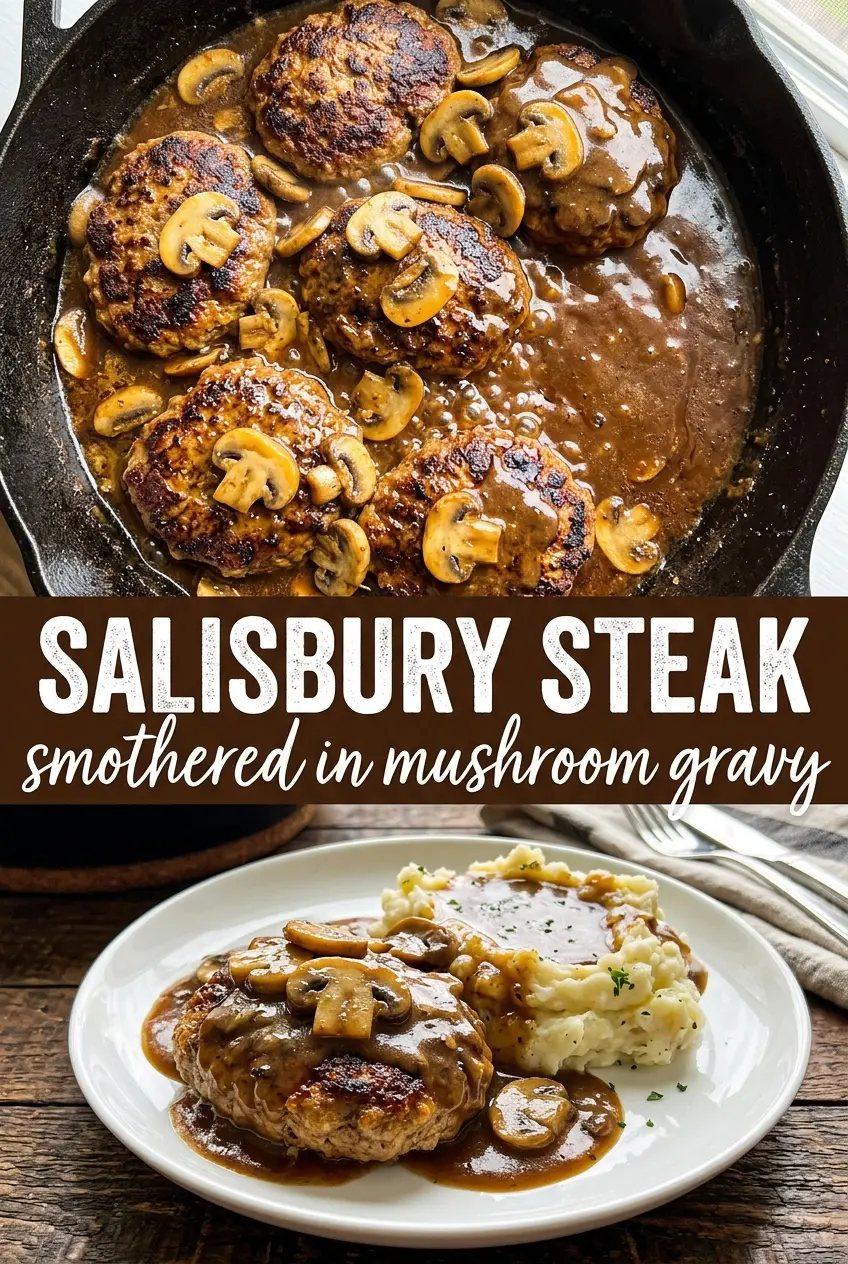
Salisbury Steak
Ingredients
Equipment
Method
- Mix ground beef, breadcrumbs, egg, Worcestershire sauce, garlic powder, onion powder, salt, and pepper until evenly combined. Shape into 4 oval patties about 3/4 inch thick.
- Sear patties in a skillet over medium-high heat for 3–4 minutes per side until browned. Remove and set aside.
- Melt butter in the same pan, then cook onion and mushrooms over medium heat for 6–7 minutes until golden. Stir occasionally for even browning.
- Sprinkle flour over the onion-mushroom mixture and cook for 1 minute. Whisk in beef broth, Worcestershire sauce, and Dijon mustard until smooth.
- Simmer the gravy for 3–4 minutes until thickened. Return patties to the pan, cover, and cook for 10–12 minutes until cooked through.
- Garnish with fresh thyme and serve hot over mashed potatoes. Make sure each patty is coated with the dark mushroom gravy.