Golden chicken thighs, green salsa verde rice, and a blanket of melted Monterey jack make this skillet dinner taste like it took a lot more effort than it did. The rice cooks right in the sauce, which means every grain picks up tomatillo tang, chicken drippings, and just enough heat to keep each bite interesting. It lands on the table as a full meal in one pan, with crisp-edged chicken on top and tender, savory rice underneath.
The trick is building flavor in stages instead of dumping everything in at once. Searing the chicken first gives you the browned bits that season the rice, and toasting the rice for a couple of minutes keeps it from turning soft or gummy. Salsa verde brings acidity and enough liquid to cook the rice without making the skillet feel heavy, while beans and corn round it out so the dish eats like dinner, not a side.
Below you’ll find the small details that matter here: how to keep the rice from sticking, when to cover the pan, and what to do if your salsa verde is thicker or thinner than mine. There are also a few easy ways to adapt it when you’re working with what you have in the pantry.
The rice came out fluffy, not mushy, and the salsa verde soaked into every bite. I loved that the chicken stayed juicy while the cheese melted into the top without getting greasy.
Save this salsa verde chicken and rice skillet for the nights when you want one pan, juicy chicken, and cheesy green rice without a pile of dishes.
The Reason the Rice Cooks Right in the Sauce Instead of Going Mushy
The biggest mistake with skillet rice is too much stirring and not enough restraint. Once the broth and salsa verde go in, the rice needs to simmer gently under a lid so it can absorb the liquid evenly. If you keep lifting the lid or stirring halfway through, you release steam and end up with uneven grains and a wet bottom.
Searing the chicken first does more than brown the meat. It leaves behind seasoned fond that dissolves into the rice as it cooks, which gives the whole pan a deeper, rounder taste. The other key move is to toast the rice before adding liquid; that tiny step helps the grains stay distinct instead of collapsing into softness.
What Each Ingredient Is Actually Doing in This Skillet

- Boneless chicken thighs — Thighs stay juicy through the simmer and hold up better than chicken breast. If you swap in breast, cut the simmering time a little and pull it as soon as it reaches temperature or it can dry out.
- Salsa verde — This is the main flavor base, so use one you actually like the taste of. A brighter, tangier jar will make the rice taste fresher, while a thicker salsa verde may need a splash more broth to keep the skillet from drying out.
- Long-grain white rice — Long-grain rice keeps its shape and cooks up fluffy in the sauce. Short-grain rice turns stickier here, and brown rice needs a different liquid ratio and a much longer cook time.
- White beans or pinto beans — Beans add body and make the skillet feel like a complete meal. Canned beans are fine; just drain them well so they don’t water down the rice.
- Monterey jack cheese — Monterey jack melts smoothly over the top without turning oily. If you want more sharpness, blend in a little pepper jack or cheddar, but keep some jack in the mix for the best melt.
The 20 Minutes That Decide Whether the Rice Stays Fluffy
Seasoning and Searing the Chicken
Coat the chicken thighs with cumin, chili powder, salt, and pepper, then sear them in hot olive oil until the surface is deeply golden. You want real color here, not pale cooked chicken, because that browning becomes part of the sauce later. If the pan is crowded, the chicken will steam instead of sear, so work in batches if needed.
Toasting the Rice
After the chicken comes out, add the garlic for just 30 seconds, then stir in the rice and let it cook until the edges look slightly translucent and the grains smell nutty. That quick toast helps the rice absorb liquid more evenly. If the garlic starts browning hard, the pan is too hot and the flavor will turn bitter.
Simmering Under Cover
Pour in the salsa verde and broth, add the beans and corn, then nestle the chicken back into the rice and bring everything to a steady simmer. Once it is covered, turn the heat low and leave it alone for about 20 minutes. If the heat is too high, the bottom can scorch before the rice is tender, so aim for the gentlest simmer that still creates steam.
Melting the Cheese and Finishing Bright
When the rice is cooked and the chicken is done, scatter the Monterey jack over the top and cover the skillet just long enough for it to melt. The cheese should look glossy and soft, not browned. Finish with cilantro and lime wedges, because the acid wakes up the salsa verde and keeps the skillet from tasting heavy.
Three Ways to Adjust the Skillet Without Losing What Makes It Work
Make It Dairy-Free
Skip the cheese at the end and finish with extra cilantro, lime, and a spoonful of diced avocado. You lose the melty top, but the skillet stays bright and satisfying, and the salsa verde still carries the dish.
Use Chicken Breast Instead of Thighs
Chicken breast works, but it dries out faster than thighs, so keep the simmer gentle and check it a few minutes early. Pull it as soon as the center is cooked through, then let it rest in the covered skillet so the juices stay in the meat.
Make It Vegetarian
Swap the chicken for extra beans and use vegetable broth instead of chicken broth. The skillet will be a little lighter, but the rice still gets plenty of flavor from the salsa verde, cumin, garlic, and cheese.
Storage and Reheating
- Refrigerator: Store leftovers in an airtight container for up to 4 days. The rice will firm up a bit as it sits, but the flavor gets even better.
- Freezer: This freezes well if you skip the fresh cilantro until serving. Cool it completely, portion it into freezer containers, and freeze for up to 2 months.
- Reheating: Reheat covered in the microwave or in a skillet with a splash of broth over low heat. The common mistake is blasting it on high, which dries out the chicken and makes the rice tough before the center is warm.
Answers to the Questions Worth Asking
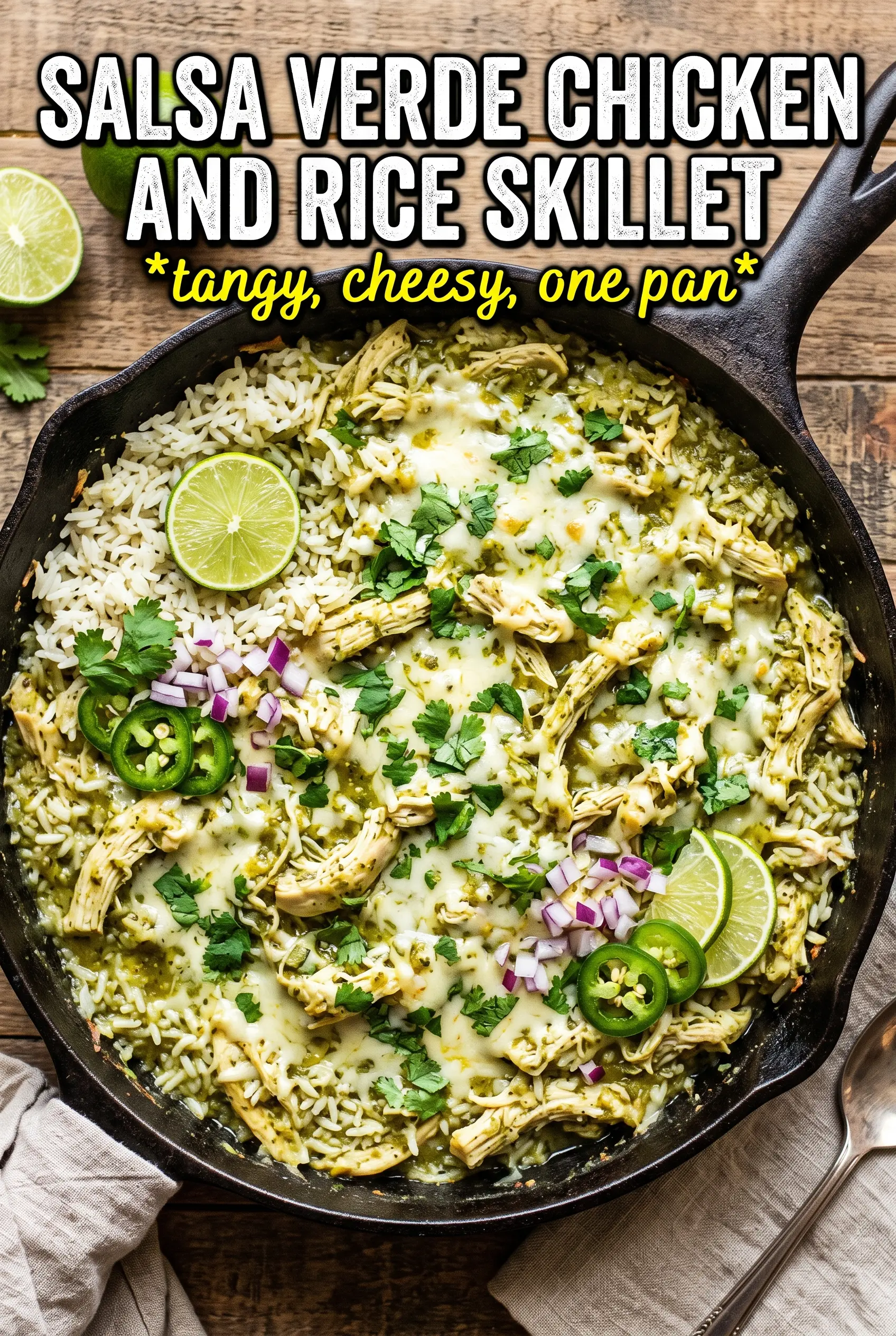
Salsa Verde Chicken and Rice Skillet
Ingredients
Equipment
Method
- Season boneless chicken thighs with cumin, chili powder, salt, and pepper. Make sure each piece is evenly coated so it browns well.
- Heat olive oil in a large oven-safe cast iron skillet over high heat, then sear the chicken thighs for 4–5 minutes per side until golden. Remove and set aside.
- Add minced garlic to the pan and cook for 30 seconds until fragrant. Scrape up any browned bits for extra flavor.
- Add long-grain white rice and toast for 2 minutes. Stir to coat so the grains stay separate.
- Pour in salsa verde and chicken broth, then stir to combine. Add white beans or pinto beans and frozen corn.
- Nestle the chicken thighs back into the rice and bring everything to a simmer. Cover and cook over low heat for 20 minutes until the rice is cooked and the chicken is done.
- Top with shredded Monterey jack cheese and cover for 2 minutes to melt. Let it rest briefly so the cheese stays gooey.
- Garnish with fresh cilantro and lime wedges for serving. Serve warm with extra lime if you like.