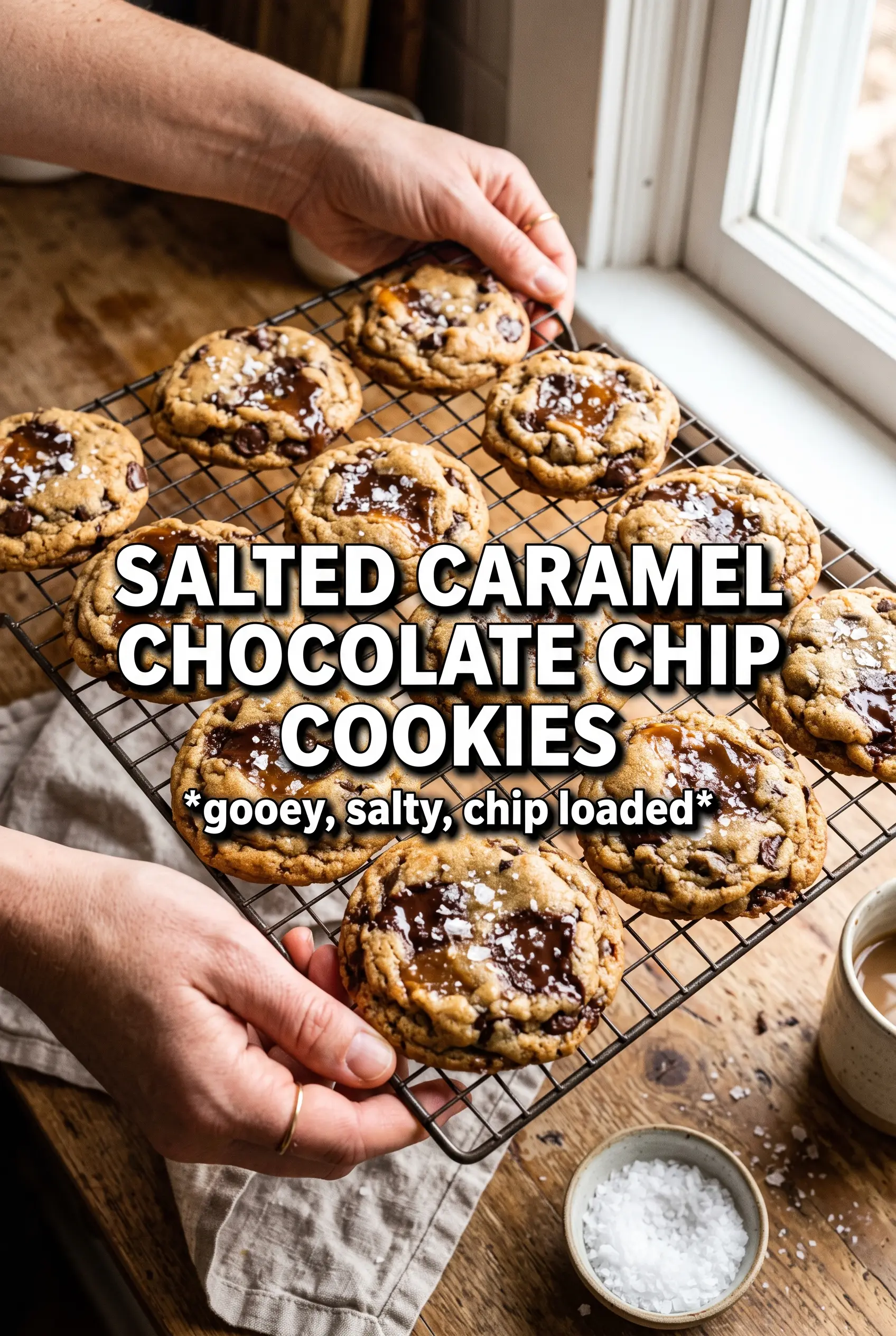
These salted caramel chocolate chip cookies bake up thick at the edges, soft in the middle, and packed with little pockets of melted caramel that turn chewy instead of hard. The flaky sea salt on top keeps the sweetness in check and makes each bite taste fuller, not heavier. They’re the kind of cookie people reach for before they’ve finished chewing the first one.
What makes this version work is the balance of structure and softness. Cornstarch keeps the centers tender, brown sugar brings moisture and that deep caramel note, and the butter-sugar base needs to be beaten until it looks pale and airy so the cookies bake up with lift instead of spreading into flat puddles. The caramel bits matter too: soft caramel melts into little gooey streaks, while firm candies can turn into hard little rocks once the cookies cool.
Below, I’ll walk through the one baking cue that matters most here — the part where the centers should still look a little underdone when they come out — plus the best way to keep the caramel from disappearing into the dough.
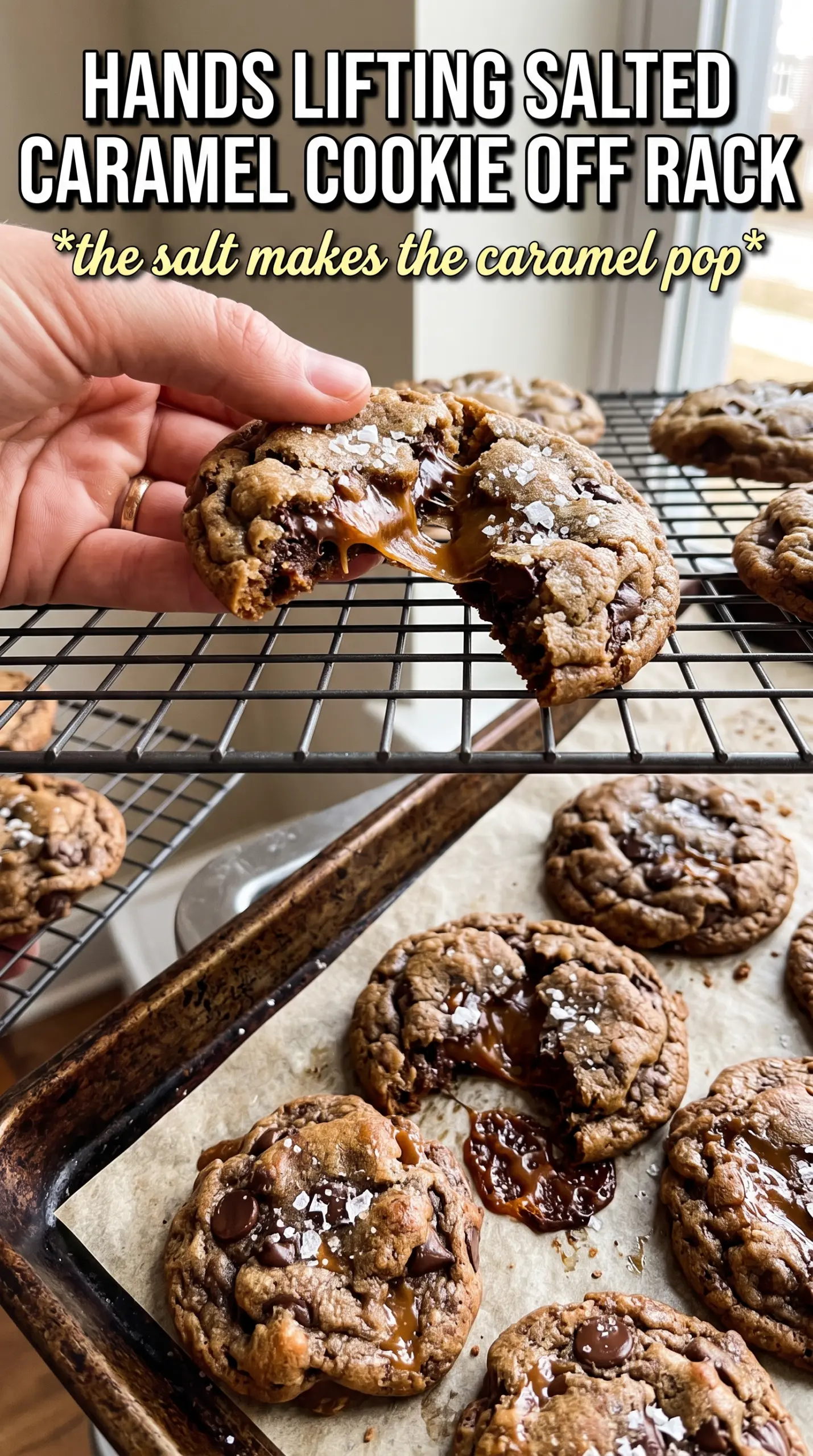
The centers stayed soft and the caramel made those perfect chewy pockets instead of disappearing into the dough. I pulled them at 11 minutes and the salt on top made the chocolate taste even richer.
Save these salted caramel chocolate chip cookies for when you want soft centers, gooey caramel pockets, and a salty finish that keeps every bite balanced.
The Trick to Keeping the Caramel Chewy, Not Hard
The biggest mistake with caramel cookies is using candy that sets up too firmly in the oven. Once that happens, the caramel turns into stiff little shards instead of soft pockets, and the whole cookie loses its pull. Soft caramel bits or chopped soft caramels melt into the dough at the edges and stay pleasantly chewy after cooling.
The second piece that matters is pulling the cookies when the centers still look slightly underbaked. They finish on the hot pan, which keeps the middle tender while the edges set enough to hold their shape. If you wait for the centers to look fully done in the oven, they’ll bake past the soft stage by the time they cool.
- Soft caramel bits — These melt cleanly and give you those gooey pockets. If you only have wrapped soft caramels, chop them into small pieces so they distribute evenly.
- Cornstarch — This is what keeps the cookie from turning dense after all that sugar and caramel. It gives the center a softer bite without making the dough cakey.
- Brown sugar — This brings moisture and a deeper caramel note that supports the mix-ins. Granulated sugar alone would bake up drier and flatter.
- Flaky sea salt — Add it after baking, not before. In the oven, fine salt disappears; flaky salt stays bright and gives each bite a clean finish.
What Each Ingredient Is Actually Doing in This Dough
- All-purpose flour — This gives the cookies their structure. Measure it correctly so the dough doesn’t turn dry and puffy.
- Baking soda — It helps the cookies spread and brown. Without it, they stay pale and taste flat.
- Butter — Use softened butter, not melted butter. Softened butter traps air when beaten with the sugars, which is what gives the cookies that thick, tender texture.
- Brown sugar and granulated sugar — Brown sugar keeps them chewy, while granulated sugar helps the edges crisp a little. The combination gives the best texture here.
- Eggs — These bind the dough and add richness. Add them one at a time so the mixture stays smooth instead of looking curdled.
- Vanilla extract — It rounds out the chocolate and caramel. This isn’t the place for imitation vanilla if you want the flavor to stay deep and warm.
- Semi-sweet chocolate chips — Semi-sweet balances the sweetness from the caramel. Darker chips work too if you want a less sweet cookie, but milk chocolate makes the final cookie sweeter and softer.
- Flaky sea salt — This is the finishing touch that makes the caramel pop. Don’t skip it if you want the full salted caramel effect.
Building the Dough So the Cookies Stay Thick
Whipping Air into the Butter
Beat the butter, brown sugar, and granulated sugar until the mixture turns noticeably lighter in color and looks fluffy around the edges of the bowl. That step matters because it builds the structure that keeps these cookies thick. If the mixture still looks greasy and heavy, keep going. Under-creamed butter gives you denser cookies that spread too fast.
Keeping the Mix-Ins Evenly Distributed
Fold in the flour mixture first, then add the chocolate chips and caramel bits at the end. That keeps the dough from overworking once the flour goes in, which helps the cookies stay tender. If you dump the caramel in too early, it smears through the dough and disappears instead of baking into distinct pockets.
Baking Until the Centers Still Look Soft
Scoop the dough into 2-tablespoon rounds and bake just until the edges are golden. The centers should look a little pale and underdone when you pull the pan out. Let them sit on the baking sheet for five minutes; that’s when the residual heat finishes the middle without drying it out. Press extra chips or caramel on top right away if you want the bakery-style look.
Make Them Extra Salty and Bold
Use a generous pinch of flaky sea salt on top of each warm cookie. That sharp finish cuts the sweetness and makes the caramel taste deeper. If you under-salt them, the cookies still work, but the salted caramel part gets lost.
Gluten-Free Version
Swap in a good 1:1 gluten-free baking flour that includes xanthan gum. The texture will be a little more delicate, but the cornstarch and caramel still keep the centers soft. Chill the dough for 20 minutes if it feels loose.
Dairy-Free Version
Use plant-based butter sticks and dairy-free chocolate chips. The cookies will still spread and brown properly as long as the butter alternative is formulated for baking, not a soft tub spread. Check that your caramel bits are dairy-free too, since many are not.
Storage and Reheating
- Refrigerator: Store in an airtight container for up to 5 days. The caramel will firm up a bit, but the cookies stay soft at room temperature.
- Freezer: Freeze baked cookies for up to 2 months, or freeze portioned dough balls and bake from frozen with 1 to 2 extra minutes.
- Reheating: Warm a baked cookie for 8 to 10 seconds in the microwave just until the chocolate softens. Longer than that and the caramel can get sticky and the cookie can turn tough.