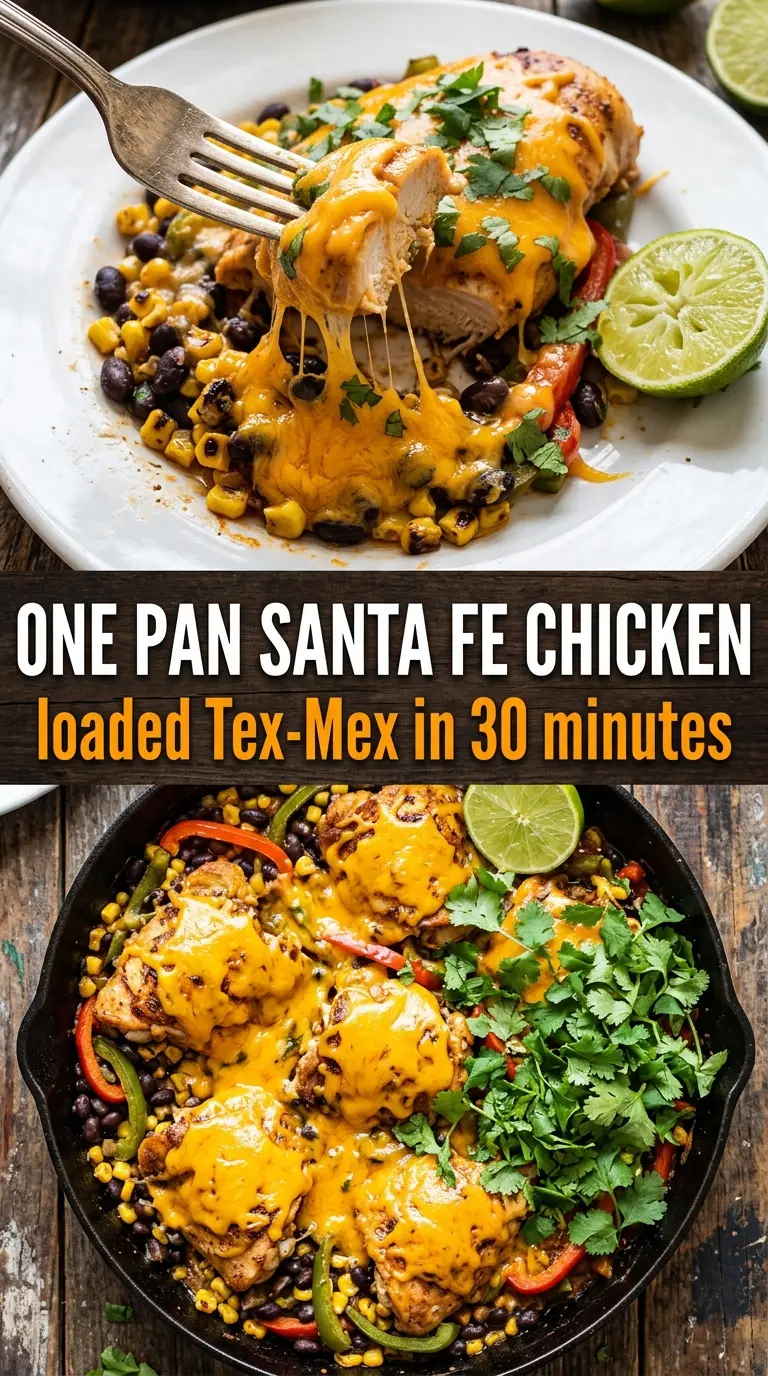
Golden seared chicken breasts tucked into a smoky skillet of black beans, sweet corn, and tomatoes make this Santa Fe Chicken Skillet one of those dinners that earns repeat status fast. The chicken stays juicy, the sauce turns savory and a little brothy before the cheese melts over the top, and every bite gets a mix of creamy, bright, and lightly spicy.
What makes this version work is the order. Searing the chicken first builds flavor in the pan, then the beans, corn, and tomatoes pick up all those browned bits before the chicken finishes cooking in the simmering liquid. That keeps the skillet from tasting flat, and it also gives the cheese something warm and saucy to settle into instead of just sitting on top.
Below you’ll find the timing that keeps the chicken from drying out, the ingredient swaps that still preserve the Tex-Mex feel, and a few practical variations for nights when you want to stretch it, lighten it up, or work with what’s already in the pantry.
The chicken stayed juicy and the sauce had just enough broth left to spoon over rice. I loved how the cheese melted into the beans and corn instead of turning greasy.
Save this Santa Fe Chicken Skillet for a one-pan Tex-Mex dinner with seared chicken, smoky beans, and melted cheddar.
The Sear Is Doing More Than Browning the Chicken
A proper sear gives this skillet its backbone. The spice-coated chicken needs that hot oil and uninterrupted contact with the pan so it develops a deep golden crust before it finishes under the lid. If you move it too early, it won’t brown; if the pan is crowded, it steams and you lose the flavor that should carry the whole dish.
The other place people run into trouble is the simmer. This isn’t a stew, so the tomato mixture should stay lively and brothy, not reduced into paste before the chicken goes back in. You want enough liquid to steam the chicken through gently while still leaving a spoonable sauce at the end.
- Cast iron skillet — It holds heat well enough to brown the chicken fast and keep the vegetables from collapsing into a watery mess. A heavy stainless skillet also works, but a thin pan won’t give you the same crust.
- Taco seasoning — This does the heavy lifting on flavor. If yours is salty, skip extra salt until the end, because the canned tomatoes and broth already bring some seasoning.
- Rotel — The diced tomatoes with green chiles give you acidity, heat, and texture in one can. Plain diced tomatoes will work, but add a little extra green chile or a pinch of chili powder so the skillet still tastes Tex-Mex instead of just tomatoey.
- Chicken breasts — They cook quickly and slice cleanly for serving, but they dry out if they’re thick in the center. Pounding them to an even thickness helps them finish at the same time, which matters more here than in a slower braise.
What Each Ingredient Is Actually Doing in This Recipe
- Primary ingredient (the star) — Quality matters most. Choose the best you can find.
- Cooking medium (oil, butter, or broth) — This carries flavors and prevents dryness.
- Seasonings (salt, pepper, spices, herbs) — Layer flavors so nothing overpowers. Build depth gradually.
- Aromatics (garlic, onion, herbs) — Cook with fat to bloom flavors. Become the foundation.
- Supporting ingredients — Complement the main ingredient without overpowering it.
- Sauce or liquid (if applicable) — Brings flavors together. Balance richness with acid.
- Acid (lemon, vinegar, wine, or other) — Brightens and prevents flat-tasting results.
- Final finish (garnish, glaze, or sauce) — Prevents one-dimensional taste and adds visual appeal.
How to Build the Skillet So the Chicken Stays Juicy
Season and Sear the Chicken First
Rub the chicken breasts with taco seasoning on both sides, then lay them in the hot olive oil and leave them alone until the first side releases easily. You want a dark golden crust, not pale steamed chicken, so give each side a full 4 to 5 minutes if the pieces are average thickness. If the seasoning looks like it’s burning, the heat is too high; drop it just enough to keep the oil shimmering, not smoking hard.
Let the Beans, Corn, and Tomatoes Pick Up the Pan Flavor
Once the chicken comes out, pour in the black beans, corn, Rotel, and chicken broth right into the same skillet. Stir and scrape up every browned bit from the bottom, because that’s where the savory flavor lives. The mixture should simmer with small, active bubbles; if it boils hard, the broth reduces too fast and leaves you with a salty, overly thick skillet.
Finish the Chicken Gently Under the Lid
Set the chicken back into the skillet and spoon a little of the sauce over the top. Cover and cook just until the center hits 165°F, which usually takes 8 to 10 minutes depending on thickness. Pulling it at the right temperature matters here; if you wait for the chicken to look completely firm and dry in the pan, it’s already gone past juicy.
Melt the Cheese Without Greasing Up the Top
Scatter the cheddar over the hot chicken, cover again, and stop as soon as it melts. You’re looking for glossy, soft cheese that settles into the skillet, not oil pooling on the surface. Freshly shredded cheddar melts more cleanly than pre-shredded cheese, which often has anti-caking starch that can make the top feel a little grainy.
What to Change When You Want a Different Kind of Tex-Mex Dinner
Make It Dairy-Free
Skip the cheddar and finish with avocado, cilantro, and extra lime instead. You lose the melty top layer, but the skillet still tastes complete because the beans, corn, tomatoes, and spices carry the dish on their own.
Use Chicken Thighs for a Richer Result
Boneless skinless thighs stay a little juicier and forgive a longer simmer, which is helpful if your stove runs hot. They take a few extra minutes to cook through, so use the thermometer instead of the clock and let the sauce stay at a gentle simmer.
Make It Vegetarian
Swap the chicken for extra black beans plus chunks of zucchini or bell pepper and use vegetable broth instead of chicken broth. You’ll get a softer, more vegetable-forward skillet, but the same smoky, cheesy Tex-Mex feel still comes through.
Stretch It for More People
Add an extra can of black beans and serve the skillet over rice or warm tortillas. The sauce gets a little looser when you scale it up this way, which is a plus if you want it to spoon easily over a starch.
Storage and Reheating
- Refrigerator: Store leftovers in an airtight container for up to 4 days. The sauce thickens as it sits, and the chicken absorbs even more of the seasoning.
- Freezer: It freezes well without the avocado and sour cream. Cool completely, portion into freezer containers, and thaw overnight in the fridge before reheating.
- Reheating: Reheat gently on the stove over low heat with a splash of broth or water to loosen the sauce. The most common mistake is blasting it in the microwave until the chicken turns dry and the cheese separates.
Answers to the Questions Worth Asking
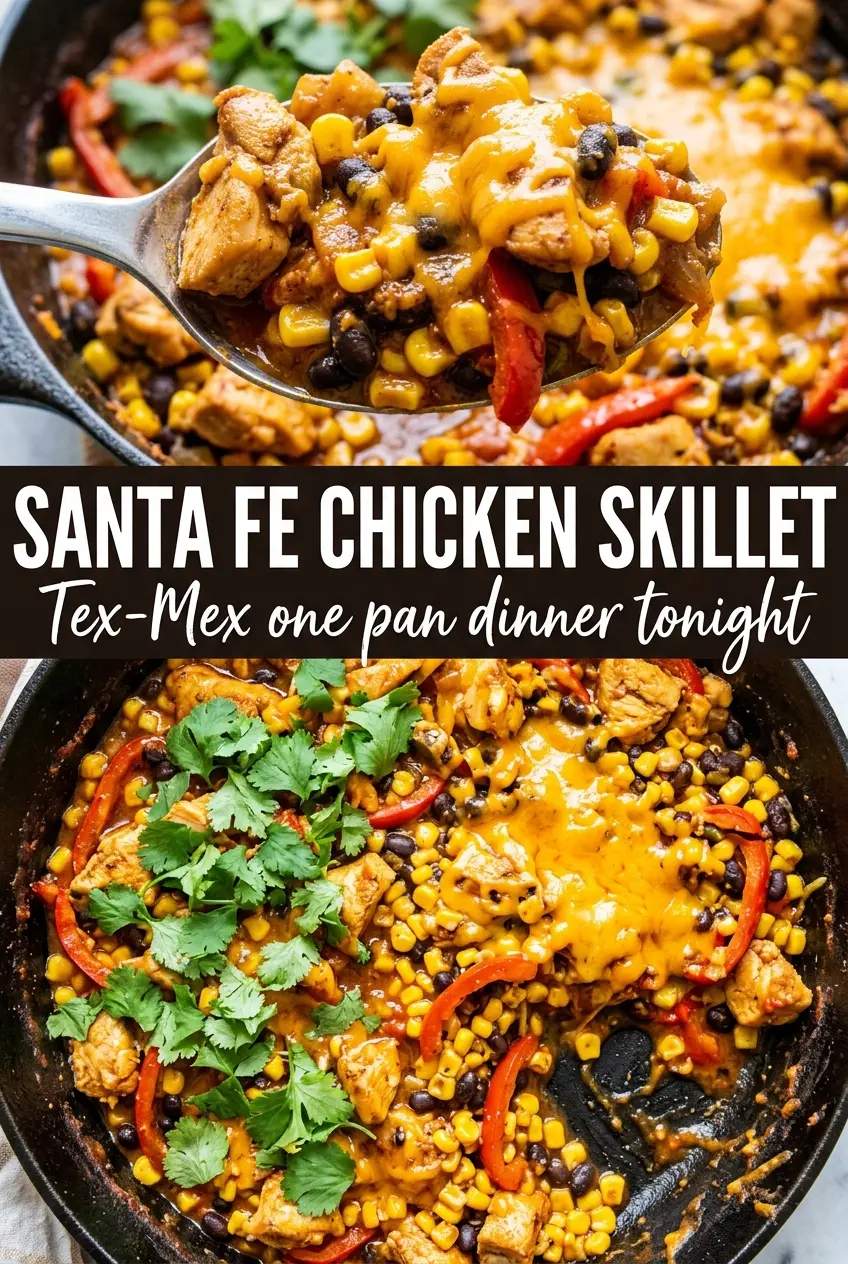
Santa Fe Chicken Skillet
Ingredients
Equipment
Method
- Rub boneless skinless chicken breasts with taco seasoning on both sides so the spice coats evenly. You should see a dry, golden-brown seasoning layer on the surface.
- Heat olive oil in a large cast iron skillet over medium-high heat until shimmering, then sear the chicken for 4-5 minutes per side. Look for deep golden browning and a crust before removing the chicken.
- Add black beans, frozen corn, diced tomatoes with green chiles (Rotel), and chicken broth to the skillet and stir to combine. Keep stirring until the mixture looks evenly speckled with beans and corn.
- Bring the mixture to a simmer, then nestle the chicken breasts back into the bean and corn mixture. The liquid should be gently bubbling around the chicken.
- Cover and cook over medium heat for 8-10 minutes until the chicken reaches 165°F. The center should no longer look pink when you check with a thermometer.
- Sprinkle shredded cheddar cheese over the top of the skillet in an even layer. The cheese should sit on top and start to soften immediately.
- Cover for 2 minutes until the cheddar is fully melted and slightly bubbly. You should see a smooth, glossy cheese layer across the surface.
- Garnish with fresh cilantro, sour cream, avocado, and lime wedges. Finish with bright lime over the top just before serving.