Char-edged chicken, sweet peppers, and onions on one pan make fajitas feel a lot bigger than the effort they take. The vegetables soften and caramelize at the edges while the chicken picks up those smoky spices, and everything lands on the table with the kind of sizzle that makes people reach for tortillas fast. You get the flavor of a hot skillet without standing over the stove in batches.
This version works because the pan stays crowded enough for the seasonings to cling, but not so crowded that the vegetables steam. A little smoked paprika deepens the color and gives the chicken that cooked-all-day look even though dinner is on the table in under 45 minutes. Cutting the chicken and vegetables into similar-sized strips also keeps the texture balanced, so nothing turns dry before the peppers are tender.
Below, I’ve included the small things that matter most: how to keep the peppers from going limp, why the pan should stay in a single layer, and a few easy swaps if you want to change up the heat or make the whole thing dairy-free.
The chicken stayed juicy, the peppers had just enough bite, and the seasoning clung to everything without making the pan watery. I stirred halfway through like you said and still got those little charred edges on the onions.
Love the caramelized edges on these sheet pan chicken fajitas? Save them to Pinterest for a fast Tex-Mex dinner with almost no cleanup.
The Key to Getting Color Instead of Steam on the Pan
The biggest mistake with sheet pan fajitas is overloading the pan. When the chicken and vegetables touch too much, they release moisture and start braising instead of roasting, which leaves you with soft peppers and pale chicken. A hot oven helps, but the real difference comes from giving everything room to breathe so the edges can blister and brown.
Stirring once halfway through matters here. It exposes the wetter pieces to the hotter outer edges of the pan and gives the onions a chance to pick up a little char without burning. If your pan starts looking crowded after the toss, use a second sheet pan. That small change keeps the texture right.
What the Seasonings Are Doing Beyond Basic Fajita Flavor
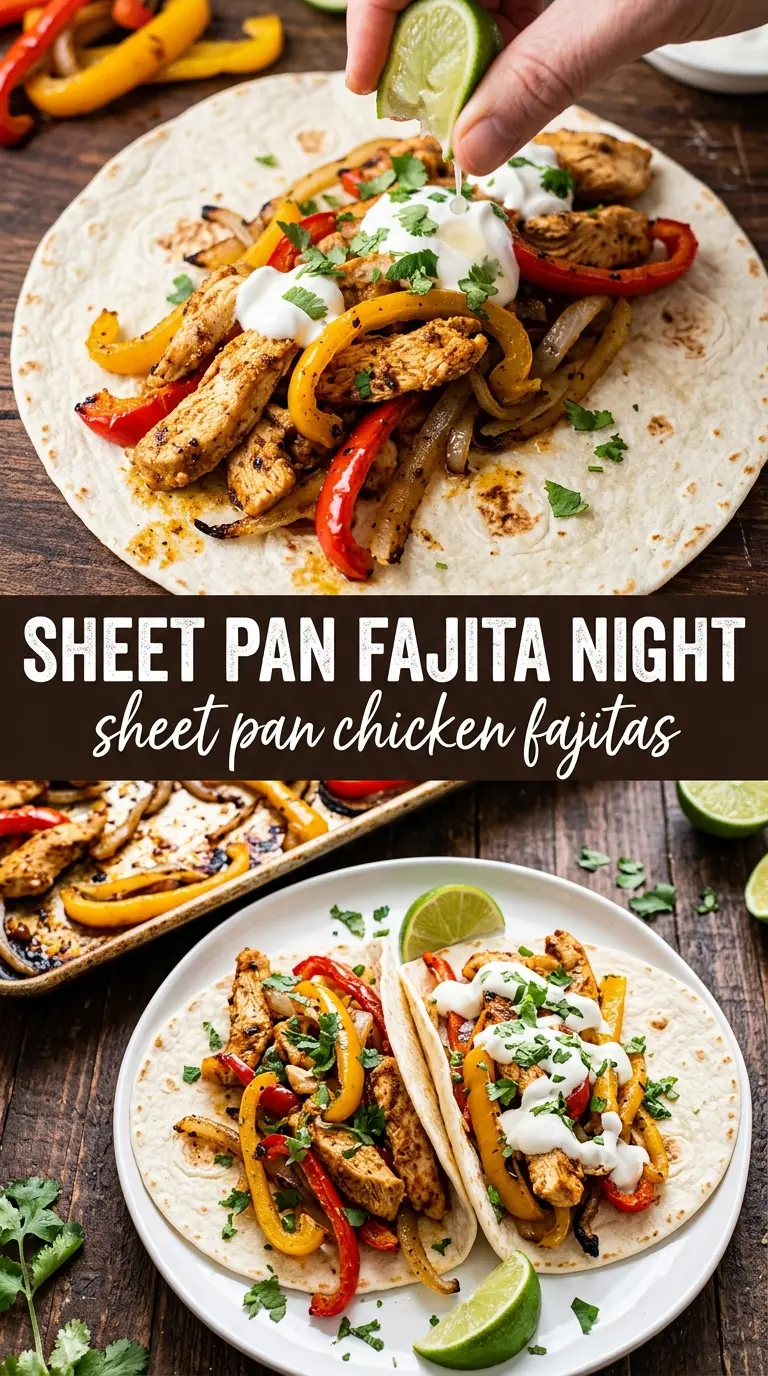
- Chicken breast — Breast works well here because it cooks fast and takes on the seasoning cleanly. Slice it into even strips so it finishes at the same time as the peppers; thicker pieces on one end will dry out before the rest are done.
- Bell peppers — Use a mix of colors for sweetness and visual contrast. They soften into silky strips in the oven, but they still need enough thickness to hold their shape after roasting.
- Onion — Onion gives the pan its best caramelized edges and brings a little natural sweetness that balances the spice. Slice it into sturdy wedges or thick strips so it doesn’t disappear into the pan.
- Olive oil — This helps the seasonings stick and keeps the vegetables from drying out in the oven. Don’t skimp here; too little oil means patchy browning and spices that roast dusty instead of toasting onto the chicken.
- Fajita or taco seasoning — This is the backbone of the dish, so use one you actually like the taste of. If yours is salt-heavy, hold back on extra salt until after roasting and taste the finished fajitas first.
- Smoked paprika — This adds the deep, slightly smoky note that makes oven fajitas taste like more than just spiced chicken and vegetables. Regular paprika works in a pinch, but you lose that fire-roasted edge.
- Lime wedges and cilantro — Add these at the end, not before roasting. The lime wakes up the whole pan with acidity, and the cilantro keeps the finished fajitas tasting fresh instead of flat.
Roasting Them So the Chicken Stays Juicy
Coating Everything Evenly
Start by tossing the chicken, peppers, and onion with the oil and spices until every strip looks lightly coated. Dry patches on the chicken roast up bland, and clumps of seasoning can burn before the rest of the pan finishes. The coating should look glossy, not heavy or paste-like.
Spreading the Pan Right
Once everything is mixed, spread it out in a single layer on the foil-lined sheet pan. Overlapping pieces trap steam, and that’s the fastest way to lose the charred edges fajitas are supposed to have. If the pan looks packed, split it between two pans instead of forcing it.
Roasting and Stirring at the Right Moment
Roast at 425°F for 22 to 25 minutes, and stir once about halfway through. You’re looking for chicken that’s cooked through and peppers with browned spots at the edges, not collapsed and soft all over. If the vegetables are done before the chicken, the strips were cut too thick; if the chicken dries out, the pieces were too small or the pan was overcrowded.
Serving While the Edges Are Still Hot
Serve the fajitas right away with warm tortillas, sour cream, guacamole, salsa, lime, and cilantro. The chicken and vegetables taste best when they’re still hot enough to slightly soften the tortillas on contact. Letting them sit on the pan too long steals that fresh roasted texture.
How to Change the Pan Without Losing the Fajita Feel
Dairy-Free and Naturally Light
Skip the sour cream and build the plate with salsa, guacamole, and extra lime instead. The fajitas themselves are already dairy-free, so this swap keeps the meal bright and clean without changing the roasted flavor of the chicken and peppers.
Lower-Carb Serving Style
Serve the chicken and vegetables in lettuce cups or over cauliflower rice instead of tortillas. You’ll keep the fajita seasoning and charred edges, but the meal feels lighter and a little less saucy because there’s no tortilla to soak up the juices.
Add More Heat Without Changing the Method
Stir in a pinch of cayenne or a few sliced jalapeños before roasting. That gives you a sharper, hotter finish without changing the cook time, but go easy if your seasoning blend already has chili powder in it.
Storage and Reheating
- Refrigerator: Store leftovers in an airtight container for up to 4 days. The peppers soften a little more as they sit, but the flavor holds up well.
- Freezer: The cooked chicken freezes better than the vegetables, which can turn watery after thawing. If you do freeze it, cool it completely first and use it within 2 months.
- Reheating: Warm the fajitas in a skillet over medium heat or in a 350°F oven until hot. The biggest mistake is microwaving them too long, which turns the peppers mushy and the chicken dry at the edges.
Questions I Get Asked About This Recipe
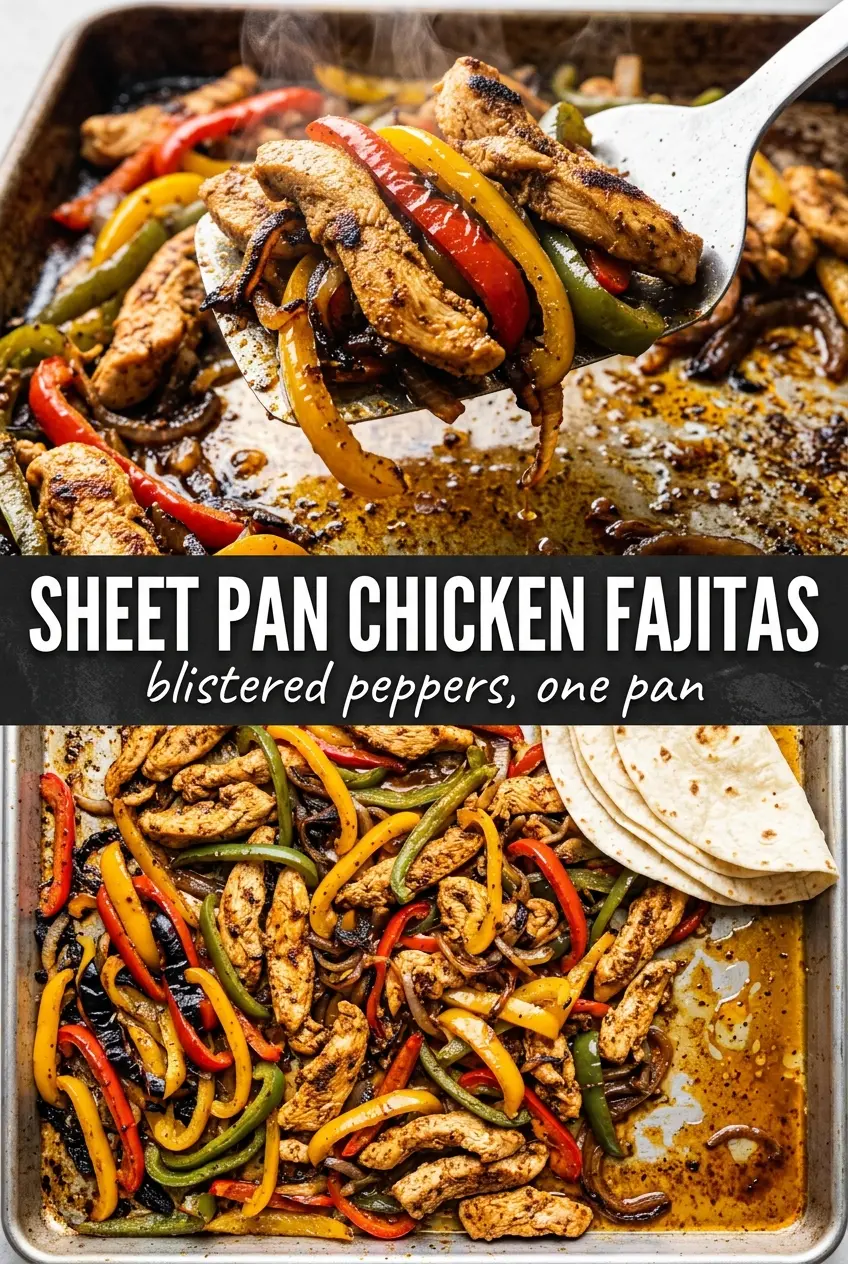
Sheet Pan Chicken Fajitas
Ingredients
Equipment
Method
- Preheat oven to 425°F and line a large sheet pan with foil for easy cleanup.
- Add sliced chicken, bell peppers, and onion to a large bowl.
- Drizzle with olive oil and sprinkle with fajita seasoning, garlic powder, smoked paprika, salt, and black pepper; toss until everything is evenly coated.
- Spread the mixture in a single layer on the sheet pan without overlapping so the edges can brown.
- Roast for 22–25 minutes, stirring once halfway through, until the chicken is cooked and the edges are slightly charred with caramelized spots.
- Serve the fajita mixture immediately in warm tortillas and top with sour cream, guacamole, and salsa.
- Finish with lime wedges and cilantro for bright garnish before eating.