Sheet pan meatloaf comes out with a better crust than the usual loaf pan version, and that’s the whole reason I keep making it. The flat shape gives you more caramelized edges, the glaze sets up in a sticky layer, and the vegetables roast in the same pan until their edges pick up just enough color. It cooks faster, slices cleaner, and leaves you with dinner that feels complete without a pile of extra pans.
The trick is spreading the meat mixture into an even rectangle about 1 inch thick instead of packing it into a tight loaf. That smaller mass cooks through in less time and lets the heat hit more surface area, which is where the flavor lives. Grated onion does a lot of quiet work here too: it keeps the meatloaf moist without leaving big chunks that can make the texture uneven.
Below, I’m walking through the details that matter most, from keeping the meatloaf tender to getting the vegetables browned instead of steamed. There’s also a storage note if you like to cook once and eat well for a couple of nights.
The meatloaf stayed juicy even with the thinner shape, and the ketchup glaze got that sticky edge my kids kept picking off the pan. The potatoes on the same tray were golden underneath and soft in the middle.
Keep this sheet pan meatloaf recipe handy for nights when you want a faster bake, sticky glaze, and roasted vegetables on one pan.
The Reason Sheet Pan Meatloaf Cooks Faster and Browns Better
A traditional meatloaf traps its own steam in a loaf pan. That’s why the outside can go soft before the center is done. Spreading the mixture across a sheet pan changes the whole game: the heat reaches more of the surface, the glaze thickens instead of sliding off, and the edges get a little crusty in the best possible way.
The other win is timing. A flatter shape means the meatloaf reaches 160°F faster, so you’re not overcooking the edges just to get the middle safe. The vegetables benefit from that same open-air heat, especially if you cut them to a size that matches the bake time. If your potatoes are left too large, they’ll lag behind the meatloaf; if the carrots are sliced too thin, they’ll dry out before dinner is ready.
- Grated onion — This keeps the meatloaf moist and seasons it from the inside. Onion powder can help, but it won’t replace the juiciness you get from fresh grated onion.
- Breadcrumbs and milk — This is the binder that keeps the meat tender instead of dense. The crumbs need time to soak up the milk before baking, so the texture stays soft, not bready.
- Worcestershire sauce — It adds the savory depth that makes the meatloaf taste rounded instead of flat. There’s no true stand-in for its mix of tang, salt, and funk, so use it if you can.
- 2 pounds ground beef — An 80/20 blend gives you the best balance of flavor and moisture. Leaner beef works, but the finished meatloaf will be firmer and a little drier.
What Each Part Is Doing on the Pan
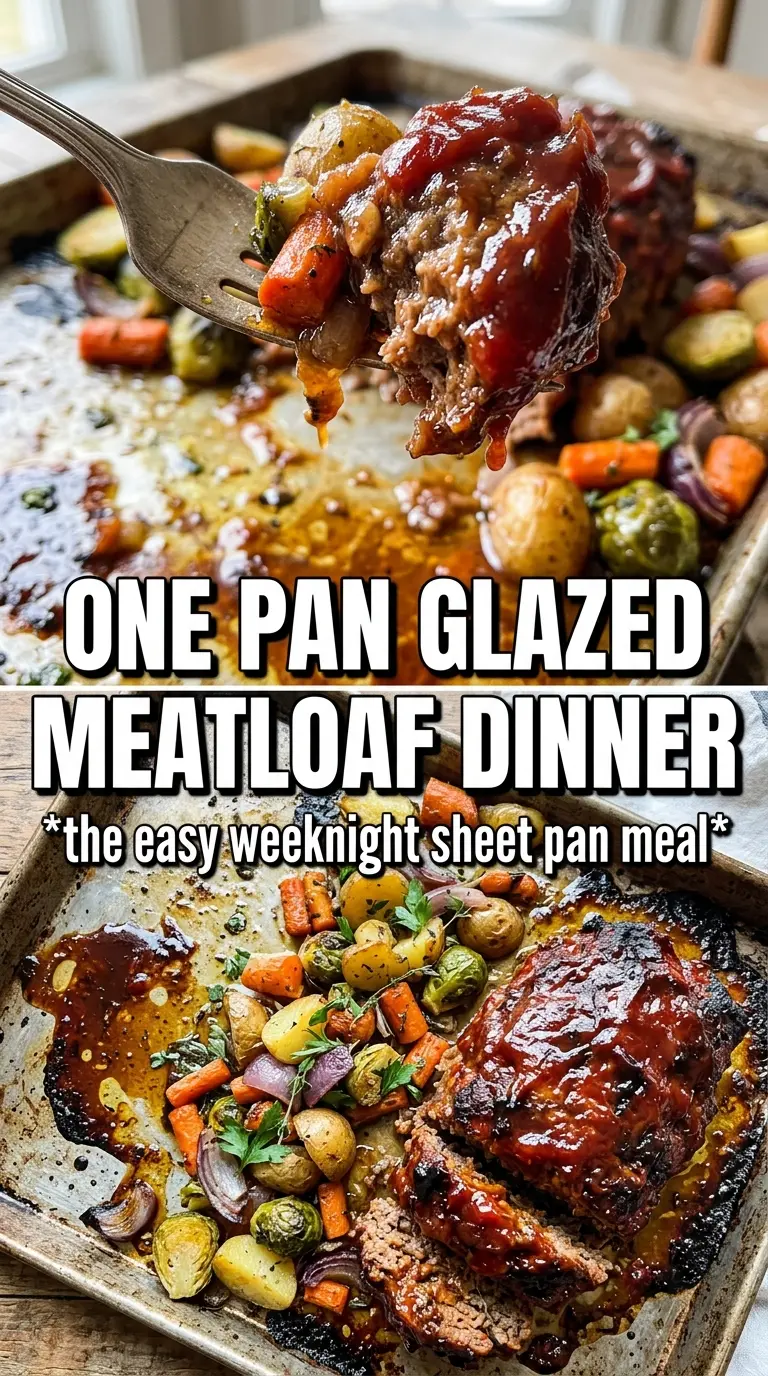
- Ground beef — This is the backbone of the dish, and it needs enough fat to stay juicy at a faster bake. If you use very lean beef, add a little extra milk or expect a firmer slice.
- Breadcrumbs, eggs, and milk — Together they hold the meatloaf together without making it heavy. If you skip the milk, the crumbs stay dry and the texture turns tighter.
- Grated onion and garlic — These season the meat all the way through. Grating the onion matters because it melts into the mixture instead of leaving sharp pieces behind.
- Glaze — Ketchup and brown sugar give you a sticky, lightly caramelized top. Brush it on before baking so it has time to set; adding it after baking won’t give you the same lacquered finish.
- Vegetables — Potatoes, carrots, and green beans all work because they can roast in the same window. The potatoes need to be halved, not left whole, or they’ll stay hard while the meatloaf finishes.
Building the Flat Meatloaf So It Stays Tender
Mix the meat just until it holds together
Combine the beef, breadcrumbs, eggs, milk, onion, garlic, Worcestershire, garlic powder, salt, and pepper with a light hand. Stop as soon as everything looks evenly mixed. If you work the mixture like bread dough, the proteins tighten and the finished meatloaf turns dense and springy instead of tender.
Shape it into a wide rectangle
Press the mixture onto one side of the sheet pan in an even layer about 1 inch thick. Keep the corners tidy and the thickness as even as you can, because thin edges cook faster than the center. If the rectangle is too thick, you lose the speed advantage and the middle takes much longer to come up to temperature.
Roast the vegetables where the heat can reach them
Toss the potatoes, green beans, and carrots with olive oil, salt, and pepper, then spread them on the other side of the pan in a single layer. Crowding is the enemy here; when the vegetables pile up, they steam instead of brown. If your pan looks packed, use a second sheet pan rather than forcing everything onto one.
Finish with the glaze and rest before slicing
Spread the ketchup mixture over the meatloaf before it goes into the oven. Bake until the meatloaf hits 160°F and the vegetables are tender with browned edges, then let it rest for 10 minutes before slicing. If you cut too soon, the juices run out and the slices won’t hold their shape.
How to Adapt This Sheet Pan Meatloaf for Different Nights
Gluten-Free Version
Swap the breadcrumbs for certified gluten-free breadcrumbs or crushed gluten-free crackers. Keep the amount the same, then let the mixture sit for a couple of minutes so the binder hydrates. The texture stays close to the original, but extremely dry substitutes can make the loaf crumbly.
Dairy-Free Adjustment
Use unsweetened plain non-dairy milk in place of the milk. Oat milk works best because it has enough body to moisten the breadcrumbs without changing the flavor much. Skip anything strongly flavored, like sweetened vanilla almond milk, or the glaze and seasoning will taste off.
Turkey Instead of Beef
Ground turkey works, but it needs more help with moisture and seasoning. Choose dark meat turkey if you can, and don’t overbake it; turkey dries out faster than beef and the flat shape makes the cooking time move quickly. The finished texture is lighter and a little less rich.
Storage and Reheating
- Refrigerator: Store leftovers in an airtight container for up to 4 days. The glaze settles and the vegetables soften a bit, but the flavor holds up well.
- Freezer: Freeze sliced meatloaf separately from the vegetables for the best texture. Wrap tightly and freeze for up to 2 months; the vegetables will soften more than the meat when thawed.
- Reheating: Warm slices covered in a 300°F oven with a splash of water or broth until heated through. The common mistake is blasting it in the microwave until the edges turn rubbery before the center is warm.
Questions I Get Asked About This Recipe
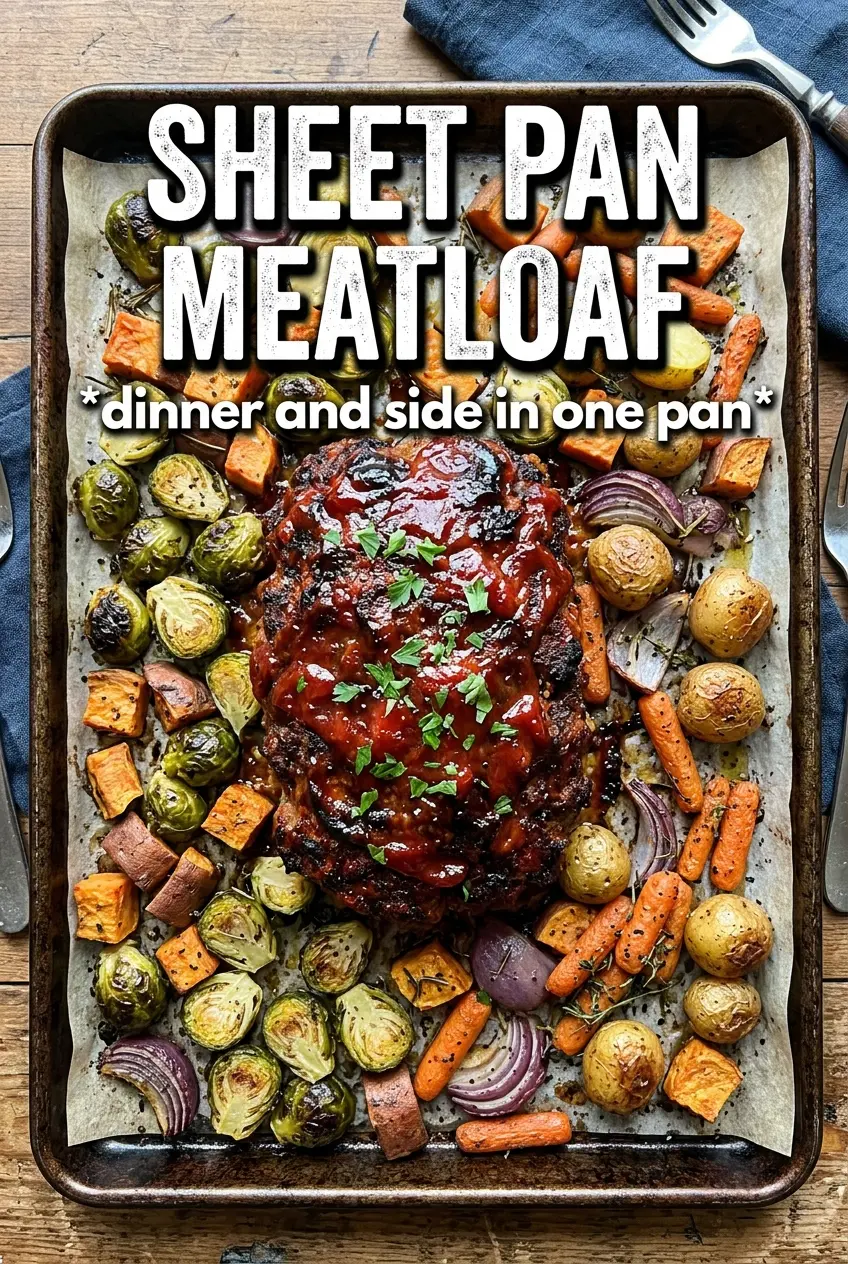
Sheet Pan Meatloaf
Ingredients
Equipment
Method
- Preheat the oven to 400°F and line a large sheet pan with foil for easy cleanup.
- In a mixing bowl, combine ground beef, breadcrumbs, eggs, milk, grated onion, minced garlic, Worcestershire sauce, garlic powder, and salt and pepper to taste until evenly mixed.
- Press the meat mixture into a flat rectangle (about 1 inch thick) on one side of the sheet pan to maximize caramelized surface area.
- Toss baby potatoes, green beans, and sliced carrots with olive oil, salt, and pepper, then spread them on the other side of the sheet pan.
- Stir together ketchup and brown sugar, then spread the ketchup glaze over the meatloaf.
- Bake at 400°F for 35–40 minutes, until the meatloaf reaches 160°F and the vegetables are golden and tender.
- Rest the sheet pan meatloaf for 10 minutes before slicing to help juices settle and keep the flat shape from crumbling.