Bright, bracing shrimp aguachile tacos are all about contrast: cool, juicy shrimp; a punchy green sauce; creamy avocado; and crisp radish on a warm tortilla. When the shrimp are cured just enough to turn opaque and the sauce is strained smooth, every bite lands clean instead of muddy or harsh. It’s the kind of taco that wakes up the table fast and disappears just as quickly.
The trick is in the balance. The lime needs enough time to lightly cure the shrimp, but not so long that they turn tough and chalky. Straining the blended sauce matters too, because serranos, herbs, and onion should give you sharp flavor without a gritty texture. A little olive oil rounds out the acidity and helps the sauce cling to the shrimp instead of running off the tortilla.
Below, I’ll walk through the one resting window that matters, the ingredient choices that make the sauce taste fresh instead of harsh, and the small details that keep these tacos vivid and clean on the plate.
The shrimp turned perfectly pink in 15 minutes, and the strained sauce was so clean and bright that I didn’t even need extra salsa. The avocado cooled down the heat just enough.
Save these shrimp aguachile tacos for the nights when you want something bright, fast, and packed with fresh lime and serrano heat.
The Curing Window Is Short, and That’s What Keeps the Shrimp Tender
With aguachile, the biggest mistake is treating the lime like a marinade for tough meat. Shrimp don’t need long acid exposure. They need just enough time to turn opaque and slightly firm, then they’re done. Push past that window and the texture gets rubbery fast, even if the flavor still tastes good.
That’s why the 15-minute rest matters here. The lime juice starts the cure, but the shrimp should still look plump and juicy, not curled into tight little rings. If your shrimp are very large, keep an eye on the color change instead of the clock alone. Pink edges and a translucent center are your cue to check; fully opaque shrimp are ready to eat.
What the Herbs, Onion, and Oil Are Really Doing in the Sauce

- Serrano peppers — These bring the heat and the sharp green bite that defines aguachile. If you want less fire, use 2 to 3 peppers and leave the seeds out. Jalapeños will work in a pinch, but they make the sauce milder and less clean-tasting.
- Cilantro and parsley — Cilantro gives the classic herbaceous flavor, while parsley keeps the sauce bright without turning it muddy. Don’t skip the parsley unless you have to; it stretches the green flavor and smooths out the cilantro’s edge.
- Lime juice — Fresh lime is non-negotiable here. Bottled juice tastes flat and can throw the whole sauce off. You need enough acidity to cure the shrimp and carry the herbs, so juice the limes right before blending.
- White onion — A little onion sharpens the sauce and gives it backbone. Roughly chop it before blending so it breaks down evenly, then strain the sauce so it doesn’t leave a raw onion grit behind.
- Olive oil — This doesn’t make the sauce creamy; it gives it body and helps it cling to the shrimp. Whisk it in after straining so the sauce stays glossy instead of separating.
- Corn tortillas — Corn tortillas suit the citrus and seafood better than flour tortillas here. Warm them until they’re pliable and lightly toasted, or they’ll tear under the shrimp and sauce.
Blending, Straining, and the 15 Minutes That Matter
Building the Aguachile Base
Blend the serranos, herbs, onion, salt, and lime until the mixture looks smooth and fully loosened. You want a vivid green liquid with no big herb flecks or onion chunks left behind. If the blender stalls, add the limes first and let the blades catch before pushing anything down. The sauce should smell sharp and fresh, not grassy or bitter.
Straining for a Clean Finish
Pour the blended sauce through a fine mesh sieve and press it gently with a spoon. This is what gives aguachile its polished texture instead of a pulpy one. Don’t rush this part; the bits left behind are exactly what would make the tacos feel heavy. When it’s strained properly, the liquid should look bright and almost silky.
Curing the Shrimp Without Overdoing It
Place the shrimp in a glass bowl and coat them fully with the sauce. Stir once or twice so every piece gets exposed to the lime. After 15 minutes, the shrimp should be pink, opaque, and still juicy in the center. If they sit much longer, the outside tightens while the inside loses that clean, tender bite.
Assembling While Everything Is Fresh
Warm the tortillas last so they’re soft and flexible when the shrimp are ready. Fill each one with several pieces of shrimp, then add avocado and radish for contrast. Spoon over a little extra sauce right before serving. These tacos don’t wait well; the tortillas soften fast once the acid hits them, so build and eat immediately.
How to Adjust Shrimp Aguachile Tacos Without Losing the Point
Milder Heat, Same Brightness
Use 2 serranos instead of 4 and remove the seeds before blending. You’ll still get the fresh green heat, but the sauce will read cleaner and less aggressive. Jalapeños soften the spice even more, though they also flatten the sharp bite that makes aguachile stand out.
Dairy-Free and Naturally Gluten-Free
This recipe already fits both without any changes, as long as you stick with corn tortillas. The main thing to watch is the tortilla package if you’re cooking for someone highly sensitive, since some brands process them with additives or on shared equipment. The flavor and texture stay true with no substitutions needed.
No Tortilla Version for a Lighter Plate
Serve the cured shrimp over avocado slices, cucumber rounds, or crisp lettuce instead of tortillas. You’ll lose the warm corn flavor, but the aguachile stays vivid and makes a great starter or salad-style meal. Keep the extra sauce light so the plate doesn’t turn watery.
Storage and Reheating
- Refrigerator: Store the cured shrimp and sauce only for up to 1 day, but the texture is best the day it’s made. After that, the shrimp keep tightening and the herbs dull.
- Freezer: Don’t freeze aguachile tacos. Freezing ruins the shrimp texture and the fresh herb sauce separates when thawed.
- Reheating: Don’t reheat the shrimp. Warm only the tortillas in a dry skillet until flexible and lightly toasted, then assemble just before serving.
Answers to the Questions Worth Asking
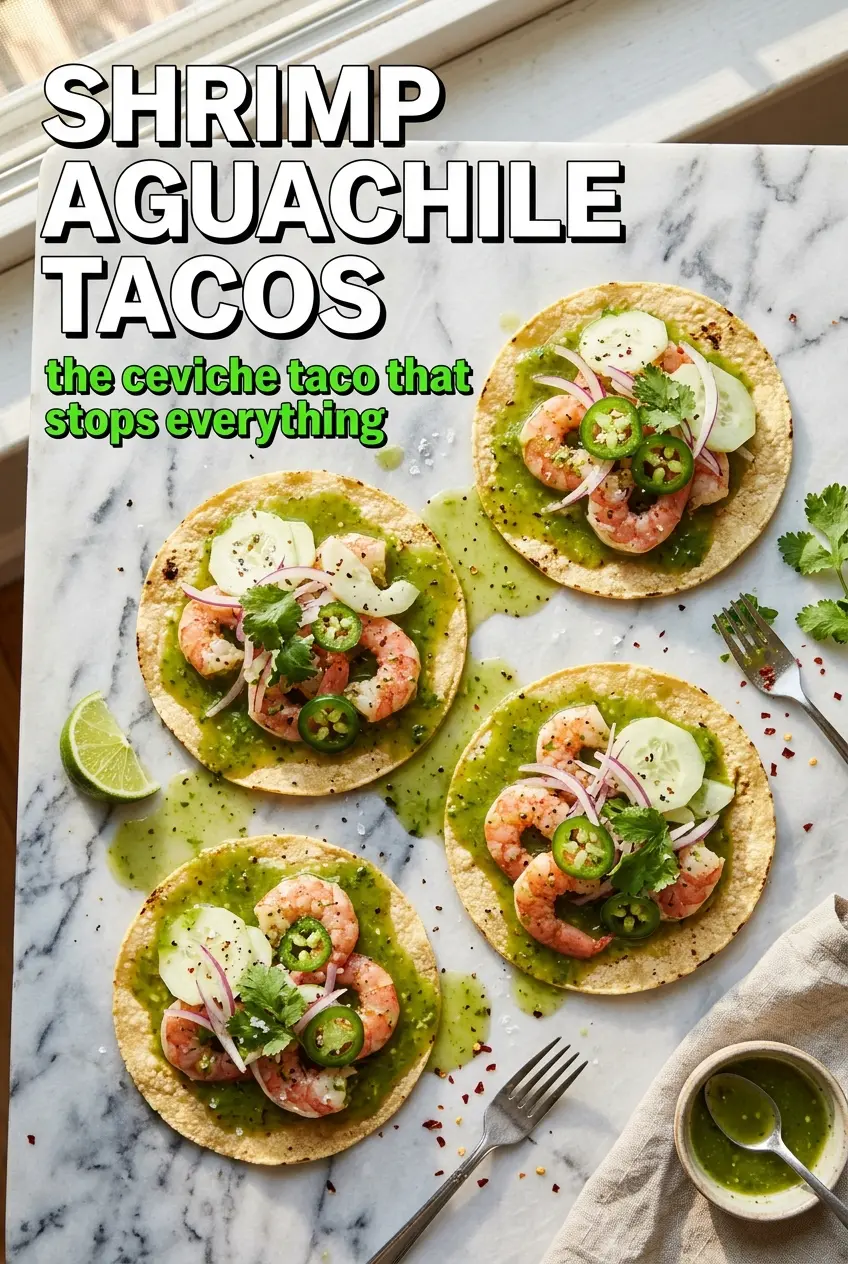
Shrimp Aguachile Tacos
Ingredients
Equipment
Method
- Combine serrano peppers, cilantro, parsley, white onion, salt, and lime juice in a blender. Blend until smooth, then strain through a fine mesh sieve for a pristine texture.
- Whisk in olive oil to finish the aguachile sauce. Keep the sauce chilled until you’re ready to cure the shrimp.
- Place shrimp in a glass bowl and pour the aguachile mixture over them. Make sure shrimp are submerged for even curing.
- Let sit for 15 minutes at room temperature so the acid begins to cure the shrimp. The shrimp should turn pink and opaque as they cure.
- Warm corn tortillas on the stovetop until pliable. Keep them from browning too much so they stay flexible.
- Fill each tortilla with cured shrimp, avocado slices, and radish slices. Drizzle with extra aguachile sauce and serve immediately.