Sicilian meatloaf slices cleanly into one of those dinners that looks far more complicated than it is, with a tight spiral of beef, salami, spinach, and whole eggs running through the center. The payoff is in every cut: the outside stays savory and browned while the middle stays juicy and structured, so each slice feels like a meal on its own instead of just a wedge of ground meat.
What makes this version work is the way the filling is stacked before the loaf is rolled. The meat mixture needs enough bind from the eggs and breadcrumbs to hold its shape, but not so much that it turns dense. Keeping the spinach wilted and pressed dry matters too, because extra moisture is the fastest way to end up with a loose loaf that spreads in the pan.
Below, I’ll walk through the part that matters most: how to roll it tightly without tearing the meat, how to keep the filling centered, and how to slice it so that beautiful cross-section stays intact on the plate.
The spiral looked just like the photos, and the hard-boiled eggs stayed neat in the middle instead of disappearing into the loaf. I loved that the marinara on top kept the slices from feeling dry the next day.
Save this Sicilian meatloaf for the night you want that dramatic egg-and-salami spiral with no fuss at the table.
The Layering Trick That Keeps the Center from Falling Apart
The biggest mistake with a rolled meatloaf is rushing the assembly. If the meat layer is too thick at the edges or the filling is piled without a border, the loaf tears open in the oven and the cheese leaks out before the center sets. Pressing the meat into an even rectangle and leaving a clear margin around the edges gives you enough surface to seal without squeezing the filling out.
The other thing that matters here is temperature control. The filling should go into the loaf cold or at least cool, and the spinach needs to be wilted and dry, not wet and steaming. Moisture trapped inside the roll turns into steam, and steam is what makes slices slump instead of holding that tidy spiral.
- Ground beef — Use 80/20 if you can. Leaner beef can work, but the loaf loses some of the richness that keeps the slices tender.
- Breadcrumbs and eggs — These are the structure. Breadcrumbs soak up juices, while the eggs help bind everything so the roll stays intact when sliced.
- Parmesan — Grated parmesan adds salt and a nutty edge. Pre-grated is fine here, though freshly grated melts more smoothly into the meat.
- Salami or prosciutto — Salami gives a deeper, spicier bite; prosciutto is milder and more delicate. Either one works, but don’t skip the cured meat entirely or the filling loses that savory backbone.
- Spinach — Wilt it first, then squeeze out excess liquid. Raw spinach will collapse too much and water the loaf down.
- Provolone — This brings the gooey center. Mozzarella can stand in, but it’s milder and a little less assertive against the beef and salami.
- Hard-boiled eggs — These are the signature cut. Use eggs that are fully cooled and peeled cleanly so the center stays neat while rolling.
What Each Ingredient Is Actually Doing in This Meatloaf or Meatballs
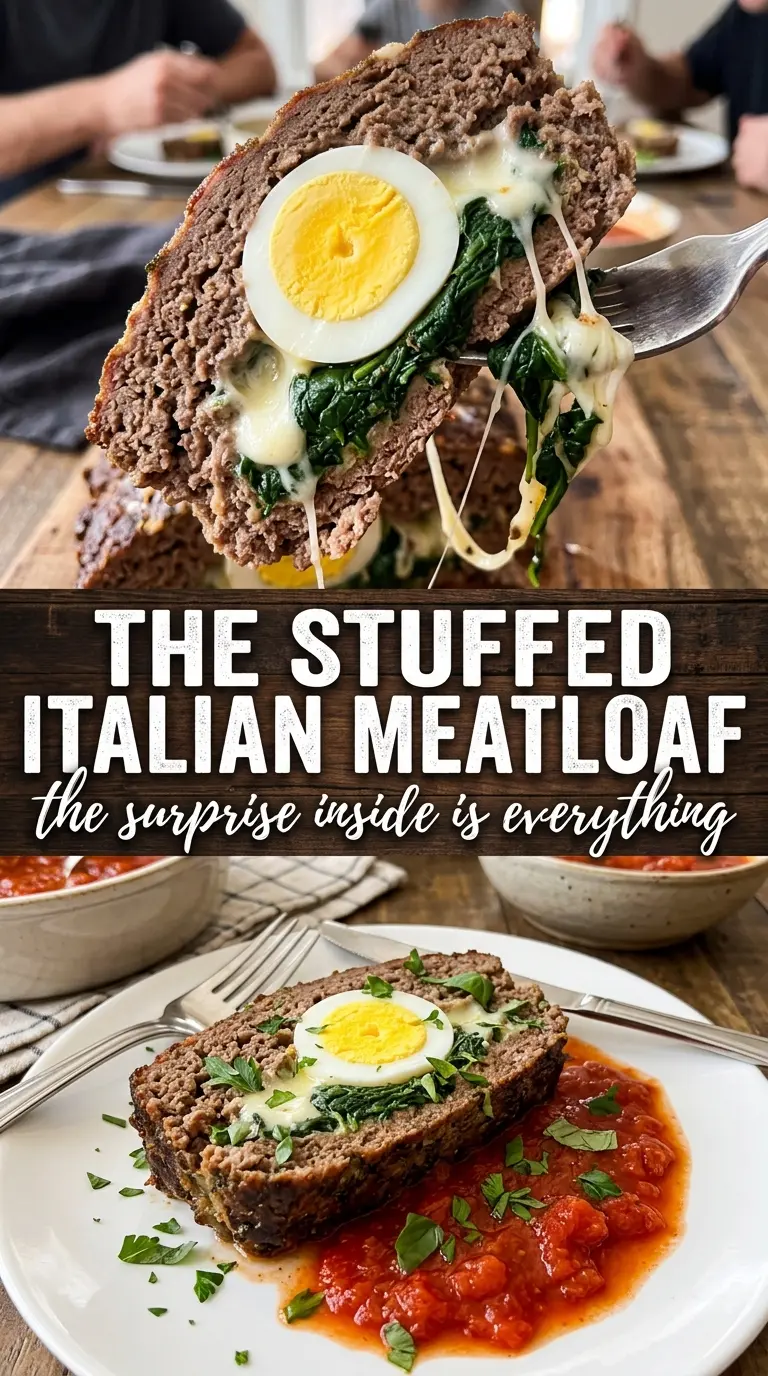
- Ground meat (the protein foundation) — Use 80/20 so it stays moist. Handle gently to keep texture tender instead of dense.
- Breadcrumbs or fillers (the binder) — These hold the meat together without making it dense. Soak in milk first so they add moisture.
- Egg (the structural binding agent) — This holds everything together during cooking. One egg per pound of meat is the right ratio.
- Onion and aromatics (the base flavor) — Mince finely so they distribute evenly. Raw onion softens as it cooks and becomes part of the texture.
- Seasonings (salt, pepper, Worcestershire, spices) — Build flavor boldly. The meat mixture carries the entire flavor profile.
- Milk or liquid (the moisture keeper) — This keeps the meatloaf tender instead of dense and dry. Don’t skip this step.
- Glaze or sauce (ketchup-based or other) — This adds sweetness, moisture, and flavor to the exterior. Apply strategically so it caramelizes.
- Resting time (the final step) — Let the meatloaf rest 10 minutes so it sets and slices cleanly. Cutting too soon makes it fall apart.
Rolling, Sealing, and Baking It Without Losing the Shape
Mixing the Meat Just Enough
Combine the beef, breadcrumbs, parmesan, eggs, garlic, parsley, oregano, salt, and pepper until everything is evenly distributed and stop there. If you keep working the mixture, the texture turns tight and bouncy instead of sliceable. The best sign you’ve gone far enough is that the mixture holds together when pressed, but still looks soft and a little loose in the bowl.
Building the Filling in the Right Order
Spread the meat into a rough 10×12-inch rectangle on plastic wrap, and keep the thickness even from edge to edge. Lay the salami first, then the spinach, then the provolone, and finish with the row of hard-boiled eggs down the center. That order gives you a flatter base around the eggs, which makes rolling easier and keeps the center from shifting as the loaf bakes.
Using the Wrap to Roll a Tight Loaf
Lift the near edge of the plastic wrap and start rolling the meat over the filling as if you’re making a tight jelly roll. Pull the wrap back as you go so the loaf stays snug, then pinch the ends closed and set it seam-side down in the baking dish. If the seam looks open, the roll wasn’t tight enough; press it gently back together before baking, because the oven will only widen a weak seam.
Knowing When It’s Done
Bake until the center reaches 160°F, which usually takes 60 to 70 minutes. The top should be browned and the loaf should feel firm but not hard when nudged in the pan. Let it rest for 10 minutes before slicing; that pause keeps the juices where they belong instead of flooding the cutting board.
How to Adapt This Sicilian Meatloaf for Different Tables
Make It Gluten-Free
Swap the breadcrumbs for certified gluten-free breadcrumbs in the same amount. You still get the same binding and sliceable texture, but avoid very coarse crumbs or the loaf can feel crumbly at the cut edge.
Use Turkey Instead of Beef
Ground turkey works, but it’s leaner and can dry out faster, so the marinara on serving becomes even more important. If you go this route, don’t overbake it, and consider adding an extra tablespoon of parmesan for a little more richness.
Skip the Pork and Keep It Italian-Inspired
If you don’t want salami or prosciutto, add roasted red peppers or sautéed mushrooms in a thin layer instead. You’ll lose some cured-meat saltiness, but the loaf still tastes layered and special, especially with the provolone and marinara.
Storage and Reheating
- Refrigerator: Store slices in an airtight container for up to 4 days. The texture holds up well, and the flavor deepens overnight.
- Freezer: Freeze wrapped slices or a whole cooked loaf for up to 2 months. Thaw in the refrigerator before reheating so the center warms evenly.
- Reheating: Cover with foil and warm in a 325°F oven until heated through. The common mistake is blasting it uncovered in the microwave, which dries out the edges before the middle is hot.
Answers to the Questions Worth Asking
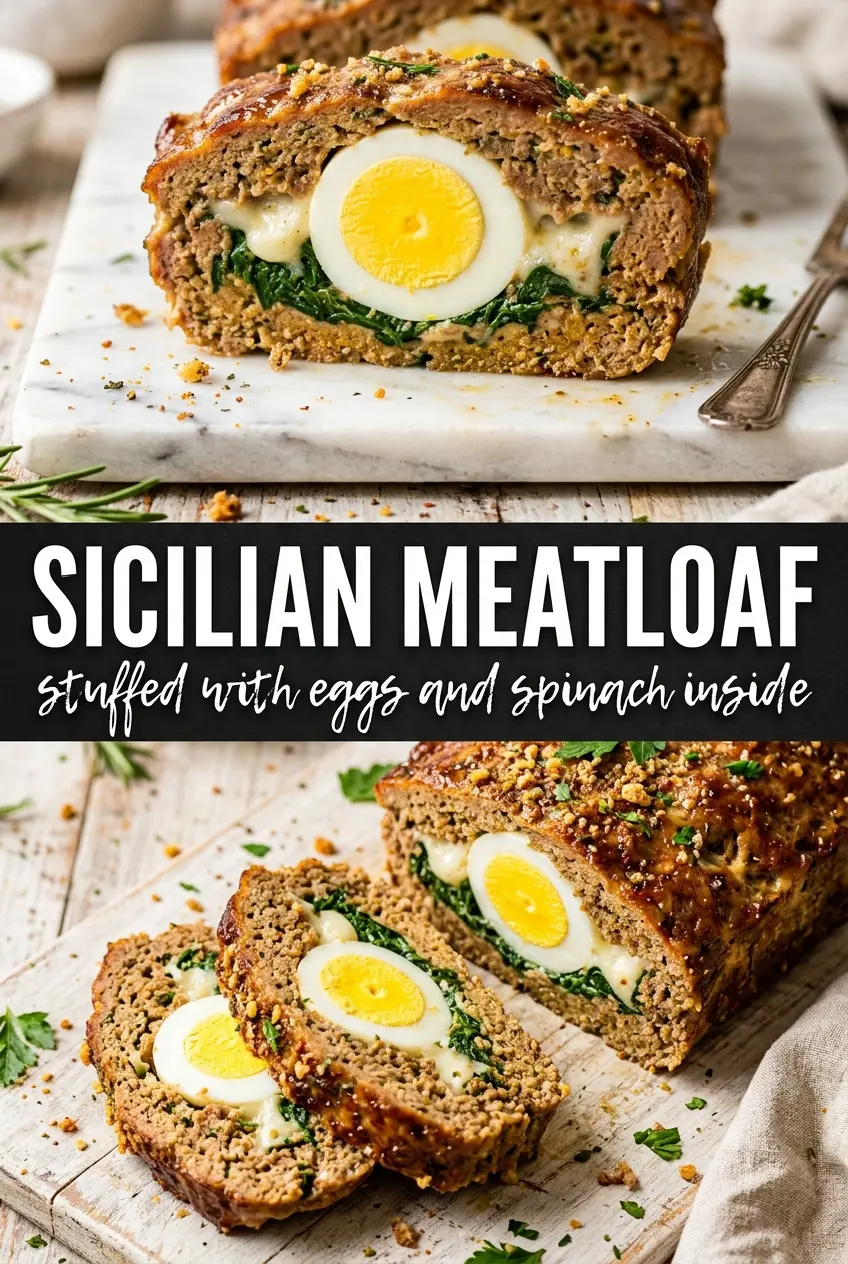
Sicilian Meatloaf
Ingredients
Equipment
Method
- Preheat the oven to 350°F so it’s ready for baking the rolled meatloaf.
- In a mixing bowl, combine ground beef, breadcrumbs, parmesan, eggs (for meatloaf), garlic, parsley, oregano, salt, and pepper until evenly mixed.
- Lay a sheet of plastic wrap on a work surface and press the meat mixture into a 10x12 inch rectangle.
- Layer the salami, wilted spinach, and shredded provolone over the meat, leaving a 1-inch border.
- Place the whole hard-boiled eggs in a row down the center.
- Using the plastic wrap, roll the meatloaf tightly around the filling and seal the ends, then place it seam-side down in a baking dish.
- Bake at 350°F for 60–70 minutes, until the center reaches 160°F internally.
- Rest the meatloaf for 10 minutes before slicing carefully.
- Serve with warmed marinara sauce drizzled over each slice.