Golden seared chicken breasts tucked into a glossy mushroom and wine sauce have a way of making a normal dinner feel planned. The chicken stays juicy, the mushrooms soak up the pan drippings, and the sauce turns rich and silky without needing a long simmer or a pile of ingredients. It’s the kind of skillet meal that looks elegant when it hits the table but still lands on a weeknight with no drama.
What makes this version work is the order. The chicken gets a hard sear first so you build flavor before anything else goes into the pan, then the mushrooms cook in the same skillet until they take on real color instead of just softening. The wine deglazes all those browned bits, and a little Dijon helps the cream stay balanced instead of flat.
Below, I’m walking through the part that matters most: how to keep the sauce glossy, not broken, and how to tell when the chicken is done without drying it out. There’s also a simple swap if you want to use white wine instead of red, plus the reheating method that keeps the sauce from separating.
The sauce turned out dark, silky, and full of mushroom flavor, and the chicken stayed juicy even after I spooned it back into the pan. My husband said it tasted like something from a restaurant.
Save this skillet chicken and mushroom wine sauce for nights when you want a glossy pan sauce and tender chicken without a lot of cleanup.
The One Move That Keeps the Sauce Glossy Instead of Broken
The biggest mistake with chicken in wine sauce is rushing the dairy. If the skillet is too hot when the cream goes in, the sauce can look oily or grainy instead of smooth. The fix is simple: let the wine reduce, add the broth and cream, then keep the sauce at a gentle simmer, not a boil. You want small bubbles at the edges and a sauce that lightly coats the back of a spoon.
Another thing that matters here is keeping the browned bits in the pan. They’re not stuck-on mess; they’re the base of the sauce. If the chicken or mushrooms leave a deep brown layer, the wine pulls it loose and turns it into flavor. That’s what gives this skillet its darker color and that restaurant-style depth.
- Chicken breasts — Pounding them to an even thickness helps them cook at the same rate, which keeps the ends from drying out before the center reaches 165°F.
- Dry red wine — Use something you’d actually drink. It doesn’t need to be expensive, but a harsh wine will taste harsh after it reduces. A dry white wine works too, but the sauce will be lighter and a little brighter.
- Dijon mustard — This doesn’t make the sauce taste mustardy. It sharpens the cream and helps the sauce taste finished instead of flat.
What Each Ingredient Is Doing in This Skillet
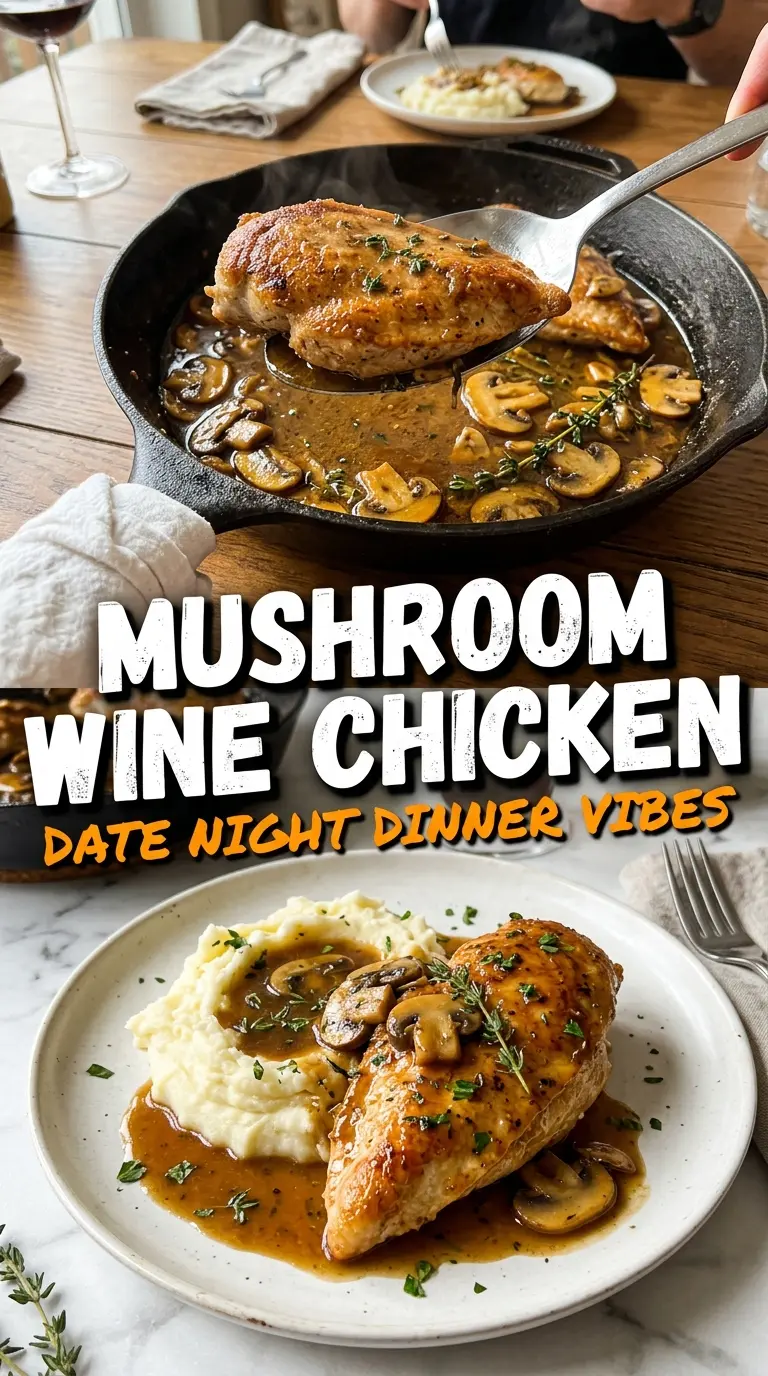
- Cremini mushrooms — These hold their shape and brown well, which gives you a meatier texture and deeper flavor than white button mushrooms. Slice them evenly so they release moisture at the same pace.
- Butter and olive oil — Oil helps the chicken sear without burning, and butter gives the mushrooms a richer finish. Using both keeps the pan flavor balanced.
- Fresh thyme leaves — Fresh thyme tastes cleaner and more fragrant than dried here. Add it toward the end so it stays bright instead of fading in the simmer.
- Heavy cream — This is what gives the sauce body. Half-and-half can work in a pinch, but it won’t thicken as smoothly and it’s easier to break if you let it boil hard.
Building the Chicken and Mushroom Sauce in the Right Order
Searing the Chicken First
Season the chicken generously, then lay it into the hot skillet and leave it alone long enough to form color. If you move it too early, it sticks and tears instead of releasing cleanly. The surface should be deeply golden and the chicken should register 165°F in the thickest part before you pull it out. It will finish warming later in the sauce, so don’t chase extra color at the expense of dry meat.
Letting the Mushrooms Brown, Not Steam
Once the chicken is out, the mushrooms need enough heat and space to shed their moisture and then brown. If the pan looks crowded, they’ll steam and turn soggy. Cook them until they shrink, darken, and pick up caramelized edges. That’s the stage where they start tasting like the sauce instead of just sitting in it.
Deglazing and Reducing the Wine
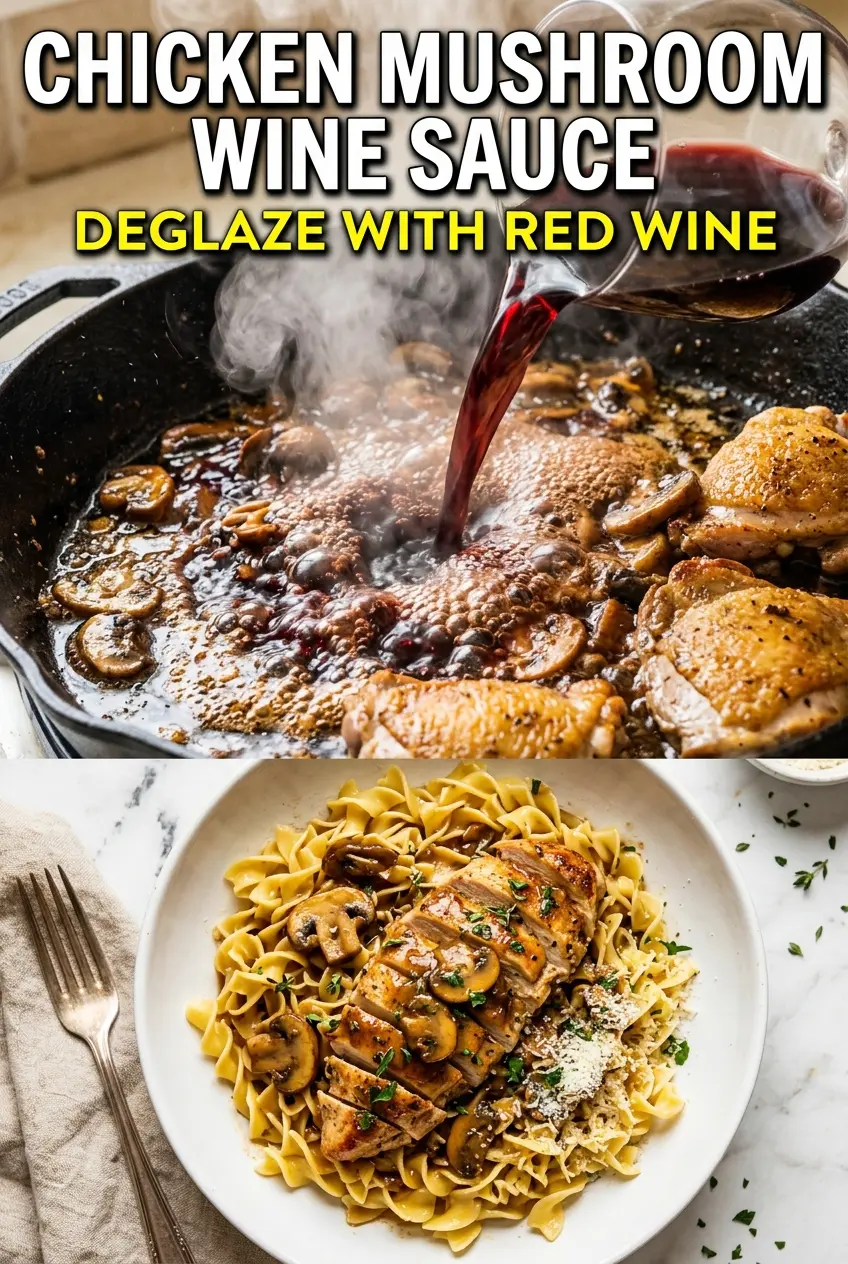
When the wine hits the pan, it should hiss and immediately loosen the browned bits from the bottom. Scrape those up with a wooden spoon and let the wine simmer until the sharp alcohol smell fades and the liquid looks slightly syrupy. If you move on too soon, the sauce can taste thin and boozy. This short reduction is where the depth comes from.
Finishing with Cream and Dijon
Stir in the broth, cream, Dijon, and thyme, then keep the simmer gentle. The sauce should thicken enough to coat a spoon after a few minutes, not turn into paste. Return the chicken to the skillet and spoon the sauce over the top so it can warm through without overcooking. A final minute in the pan is enough for everything to come together.
How to Adapt This When You Want a Different Finish
Use White Wine for a Lighter Sauce
Swap the red wine for a dry white wine if you want a brighter, less robust sauce. The flavor will still be rich from the mushrooms and cream, but the color will be lighter and the finish a little sharper. This works especially well if you’re serving the chicken with mashed potatoes or rice.
Make It Dairy-Free Without Losing the Pan Sauce
Use a plant-based cooking cream that’s meant for simmering, not a thin milk substitute. You’ll still get a silky sauce, though it won’t have the same richness or slight sweetness that heavy cream brings. Skip any dairy-free option that splits when heated, because this sauce needs to stay stable after the wine goes in.
Turn It Into a Gluten-Free Dinner
This recipe is naturally close to gluten-free as written, but check the broth and Dijon label to be sure they’re certified gluten-free. The sauce doesn’t rely on flour, so you won’t lose thickness by keeping it gluten-free. Let it reduce a minute longer if you want a slightly fuller texture.
Serve It Over Something That Soaks Up Sauce
Mashed potatoes, egg noodles, rice, or crusty bread all work because the sauce is the best part of the plate. If you want a lower-carb version, spoon it over cauliflower mash or sautéed spinach. The chicken stays the same; only the landing spot changes.
Storage and Reheating
- Refrigerator: Store leftovers in an airtight container for up to 3 days. The sauce will thicken as it chills.
- Freezer: It freezes, but the cream sauce can separate a little after thawing. If you do freeze it, cool it completely and reheat gently.
- Reheating: Warm it low and slow in a covered skillet with a splash of broth or water. High heat is the fastest way to split the sauce and dry out the chicken.
Questions I Get Asked About This Recipe
Skillet Chicken and Mushroom Wine Sauce
Ingredients
Equipment
Method
- Season the chicken breasts generously with salt, pepper, garlic powder, and dried thyme. Sear in olive oil in a large skillet over medium-high heat for 5-6 minutes per side until golden and cooked through to 165°F, then remove.
- Melt the butter in the same pan, then cook the sliced cremini mushrooms over medium-high heat for 5-6 minutes until deeply golden. Add the minced garlic and cook for 1 minute, stirring until fragrant.
- Pour in the dry red wine and deglaze, scraping up all browned bits from the skillet. Simmer for 3 minutes so the liquid reduces.
- Add the chicken broth, heavy cream, Dijon mustard, and fresh thyme leaves to the skillet. Simmer for 5-6 minutes, stirring, until the sauce thickens into a dark, glossy reduction with visible herb flecks.
- Return the chicken breasts to the pan and spoon the mushroom wine sauce over each breast. Garnish with fresh thyme sprigs and serve.