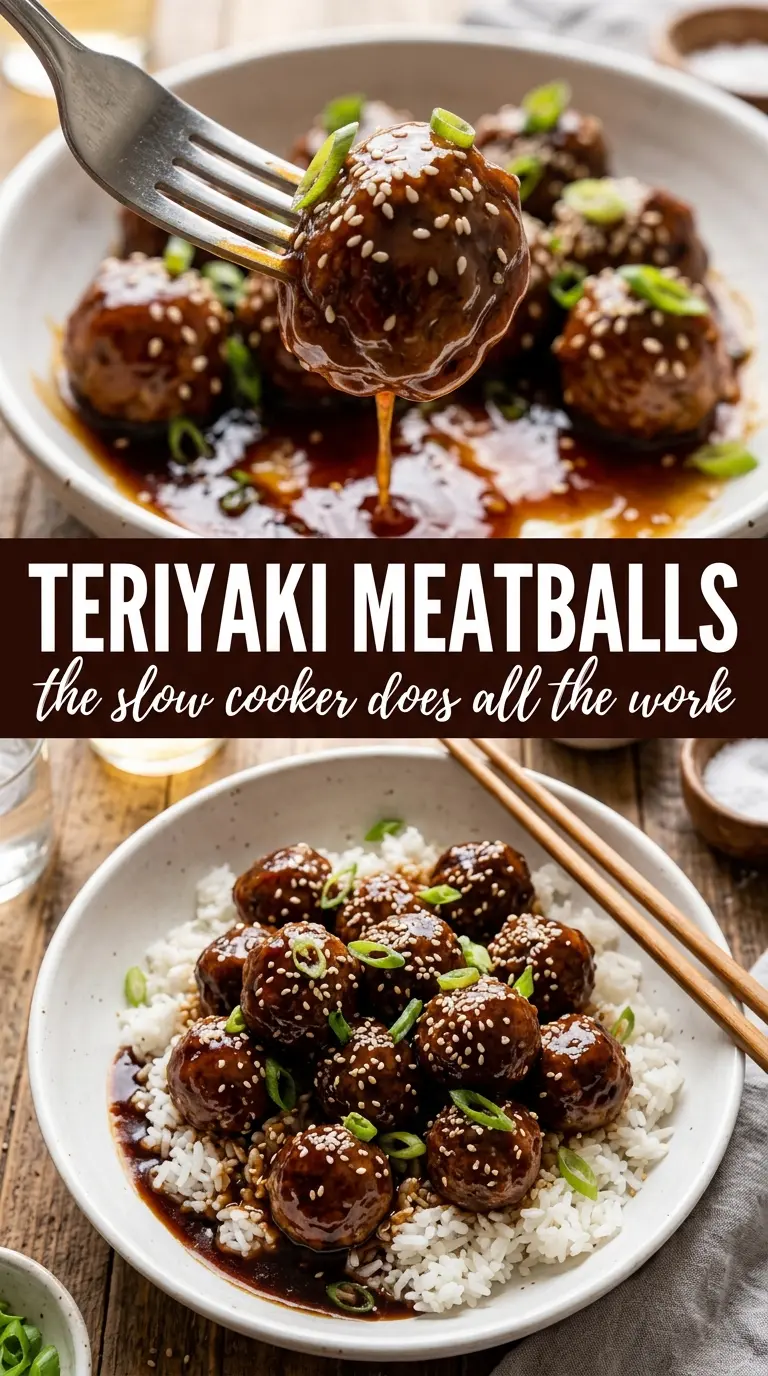
Sticky, glossy teriyaki meatballs are the kind of slow cooker dinner that disappears fast, and this version holds onto its texture instead of turning soft and bland in the sauce. The meatballs get browned first, which gives them a little crust so they can finish cooking in the slow cooker without falling apart. Then the sauce simmers low and slow until it turns dark, glossy, and thick enough to coat every bite.
The little details matter here. Soy sauce goes into both the meatballs and the glaze, so the seasoning tastes built in rather than dumped on top at the end. Honey and brown sugar give the teriyaki that sticky finish, while rice vinegar keeps it from tasting flat. The cornstarch slurry goes in at the end, not at the beginning, because it thickens cleanly only after the sauce has had time to heat through.
Below, I’ll show you how to keep the meatballs tender, how to get the sauce to thicken without clumping, and a few smart ways to adapt this if you want to make it ahead or serve it a different way.
The meatballs stayed tender all the way through, and the sauce thickened up into that glossy teriyaki coating I was hoping for. I served them over rice and my husband went back for seconds before I even sat down.
Slow Cooker Teriyaki Meatballs with that dark, sticky glaze are perfect for rice bowls, sliders, or party platters.
The Step Most Teriyaki Meatballs Need Before the Slow Cooker
Slow cookers are great at tenderness, but they are not great at creating structure. If you drop raw meatballs straight into the sauce, they can soften before they ever set, and the finished dish tastes more stewed than glazed. Browning the meatballs first gives them a firmer exterior, better flavor, and a shape that holds up while the sauce cooks around them.
The other thing that matters is balance. Teriyaki can go from bright and glossy to cloying if it leans too hard on sugar. The vinegar and soy sauce keep the glaze sharp enough to taste like teriyaki instead of candy, and the final cornstarch step turns the sauce from thin and salty into something that clings.
- Breadcrumbs — They keep the meatballs tender and help the beef hold moisture. Plain breadcrumbs work fine here; panko gives a slightly lighter texture, but any dry breadcrumb will do.
- Eggs — They bind the mixture so the meatballs stay intact after browning and slow cooking. Without them, the meatballs are more likely to crumble when you stir in the sauce.
- Soy sauce — This does double duty in the meatballs and the glaze. Use regular soy sauce for the best balance; low-sodium works too if that’s what you keep on hand, but the sauce may need a little extra reduction for depth.
- Honey and brown sugar — Together they give the teriyaki its sticky, lacquered finish. Honey brings shine, while brown sugar adds a deeper, caramel note that keeps the sauce from tasting one-dimensional.
- Rice vinegar — This is the small ingredient that keeps the sauce lively. If you swap in plain white vinegar, use a little less because it’s sharper and can take over quickly.
- Cornstarch slurry — This is what turns the liquid in the crockpot into a glaze. Mix it with cold water first so it disperses smoothly; if you dump dry cornstarch into hot sauce, you’ll get clumps.
What Each Ingredient Is Actually Doing in This Meatloaf or Meatballs
- Ground meat (the protein foundation) — Use 80/20 so it stays moist. Handle gently to keep texture tender instead of dense.
- Breadcrumbs or fillers (the binder) — These hold the meat together without making it dense. Soak in milk first so they add moisture.
- Egg (the structural binding agent) — This holds everything together during cooking. One egg per pound of meat is the right ratio.
- Onion and aromatics (the base flavor) — Mince finely so they distribute evenly. Raw onion softens as it cooks and becomes part of the texture.
- Seasonings (salt, pepper, Worcestershire, spices) — Build flavor boldly. The meat mixture carries the entire flavor profile.
- Milk or liquid (the moisture keeper) — This keeps the meatloaf tender instead of dense and dry. Don’t skip this step.
- Glaze or sauce (ketchup-based or other) — This adds sweetness, moisture, and flavor to the exterior. Apply strategically so it caramelizes.
- Resting time (the final step) — Let the meatloaf rest 10 minutes so it sets and slices cleanly. Cutting too soon makes it fall apart.
Building the Glaze Without Breaking It
Mixing the Meatballs
Combine the beef, breadcrumbs, eggs, garlic, soy sauce, ginger, salt, and pepper just until the mixture comes together. Overmixing makes the meatballs dense, and dense meatballs are exactly what you don’t want here. Roll them into even 1.5-inch balls so they cook at the same rate; if they’re much larger, the centers stay too soft for too long.
Browning for Shape and Flavor
Bake the meatballs on a lined sheet pan at 400°F until they’re browned on the outside, or sear them in batches in a skillet. You’re not cooking them through at this point; you’re creating a surface that can stand up to the slow cooker. If they look pale and wet when they go in, they’ll shed moisture into the sauce and the glaze won’t coat as cleanly.
Letting the Sauce Reduce at the End
Whisk the teriyaki sauce ingredients together in the slow cooker, add the browned meatballs, and cook until they’re tender and fully heated through. The sauce will still look loose at that stage, and that’s fine. Stir in the cornstarch slurry only after the meatballs are cooked, then keep the lid on and let the heat finish the job. If the sauce still seems thin, it usually just needs the full 20 minutes on High to activate the thickener.
How to Adapt These Teriyaki Meatballs for Different Tables
Gluten-Free Version
Swap the breadcrumbs for certified gluten-free breadcrumbs and use a gluten-free soy sauce or tamari. The texture stays close to the original, and the glaze still tastes savory and deep. Just watch the salt level, since some gluten-free soy sauces run a little stronger than standard versions.
Turkey Meatballs
Ground turkey works well if you want a lighter version, but it needs the full breadcrumb-and-egg binding to stay tender. The flavor is a little cleaner and less rich than beef, so don’t skip the ginger and garlic. Browning matters even more with turkey because it gives the meatballs more flavor before they go into the sauce.
Lower-Sugar Sauce
Cut the brown sugar by half and use the full amount of honey, or reduce both a little if you prefer a less sticky glaze. The sauce will still thicken, but it won’t be quite as glossy or clingy. If you reduce the sugar too aggressively, add a splash more rice vinegar so the sauce doesn’t taste flat.
Storage and Reheating
- Refrigerator: Store in an airtight container for up to 4 days. The sauce thickens as it chills, so it may look heavier the next day.
- Freezer: Freeze the cooked meatballs and sauce together for up to 2 months. Thaw overnight in the refrigerator before reheating so the sauce doesn’t separate.
- Reheating: Warm gently on the stove over low heat or in the microwave in short bursts, stirring between each one. If the sauce looks too tight, add a splash of water to loosen it; high heat can make the glaze cling to the pan instead of the meatballs.
Answers to the Questions Worth Asking

Slow Cooker Teriyaki Meatballs
Ingredients
Equipment
Method
- In a bowl, mix ground beef with breadcrumbs, eggs, minced garlic, soy sauce, grated ginger, salt, and pepper until evenly combined. Roll into 1.5-inch balls.
- Bake the meatballs on a lined sheet pan at 400°F for 15 minutes until browned. For a skillet method instead, brown in batches in a skillet until nicely colored.
- Whisk the teriyaki sauce ingredients (soy sauce, honey, brown sugar, rice vinegar, sesame oil, minced garlic, and grated ginger) in the slow cooker. Pour in the mixture and ensure it’s well combined.
- Add the browned meatballs to the slow cooker and toss to coat in the teriyaki sauce so the glaze clings to all sides.
- Cook on Low for 3–4 hours or on High for 1.5–2 hours, until the meatballs are fully tender. Stir once if needed to keep the sauce coating evenly.
- Stir in the cornstarch slurry, then cook on High for 20 minutes until the sauce thickens to a dark, glossy glaze. Garnish with sesame seeds and green onions before serving.