Ultra-creamy smoked mac and cheese earns its place at the table because it gives you two things at once: a silky, sharp cheese sauce and a gently smoky crust that keeps every bite interesting. The pasta stays tender without turning mushy, and the top sets into a golden layer that cracks just a little when you spoon through it.
The key here is balance. A smoker running at low heat gives the cheese sauce enough time to absorb smoke without breaking, and the combination of sharp cheddar with smoked Gouda gives the dish depth instead of one-note richness. The panko topping matters too. It adds a toasted crunch that keeps the top from feeling heavy.
Below, I’ve added the fixes that matter most: how to keep the sauce smooth, when to pull the pan before the cheese starts getting greasy, and which swaps still keep that creamy center intact.
The cheese sauce stayed smooth all the way through the smoker, and the panko top turned out crisp instead of soggy. I served it with ribs and there wasn’t a spoonful left.
Save this smoked mac and cheese for the next barbecue when you want a creamy center, smoky flavor, and a crisp panko crust.
The Reason Smoked Mac Stays Creamy Instead of Turning Grainy
The thing that ruins smoked mac and cheese most often is heat, not smoke. If the cheese sauce gets too hot before it goes into the smoker, the fats can separate and the texture turns oily or gritty. The sauce in this version is built on a classic roux, which gives the milk and cream enough structure to hold the cheese without collapsing.
The other key move is using low smoker heat and giving the dish time to set up gradually. At 225°F, the sauce thickens without boiling, and the top browns slowly instead of scorching before the center is hot. That slower pace also keeps the pasta from overcooking in the pan.
- Roux — This is what keeps the sauce thick and stable. Cook the butter and flour long enough to lose the raw flour smell, but don’t let it darken much or the sauce gets heavier than you want.
- Sharp cheddar — Sharp cheddar brings the bite you need so the dish doesn’t taste flat. Pre-shredded works in a pinch, but block cheese melts smoother because it doesn’t carry the anti-caking starch.
- Smoked Gouda — This gives the dish its smoky backbone before it ever hits the smoker. If you can’t find it, regular Gouda with a small pinch of smoked paprika will get you close, though the flavor won’t be as rounded.
- Panko topping — Panko stays lighter and crispier than regular breadcrumbs. Toss it with melted butter before it goes on top so it browns instead of just drying out.
What Each Cheese Is Doing in the Pan

- Elbow macaroni — The curves and ridges catch sauce in every bite. Slightly undercooking it before it goes into the smoker keeps it from going soft after another hour in the pan.
- Heavy cream and milk — The milk keeps the sauce fluid; the cream gives it body and that plush finish. If you use all milk, the sauce will still work, but it won’t have the same rich mouthfeel.
- Garlic powder — This adds quiet savory depth without overpowering the cheese. Fresh garlic can work, but it changes the flavor and can taste sharper than you want in a smoked dish.
- Butter on the topping — The butter helps the panko toast evenly and gives the top that deep golden finish. If the topping looks pale at the end, it usually needed more butter or a little more time uncovered.
Building the Pan So the Top Crisps and the Center Stays Silky
Starting the Sauce Base
Melt the butter and whisk in the flour until it looks smooth and a little sandy. Cook it for a minute or two so the sauce won’t taste pasty. When you add the milk and cream, whisk constantly and keep the heat moderate; if the mixture starts boiling hard at this stage, it can thicken unevenly and turn lumpy.
Melting the Cheese Without Breaking It
Take the pan off the heat before the cheese goes in. Add the cheddar and Gouda in handfuls, stirring after each addition until the sauce turns glossy and smooth. If it looks grainy, the heat was too high or the cheese went in too fast; pulling the pan off the burner usually fixes the problem before it gets worse.
Assembling for the Smoker
Fold the cooked macaroni into the sauce and transfer everything to an aluminum pan. Spread it evenly so the middle cooks at the same rate as the edges. Mix the panko with melted butter and scatter it over the top in an even layer; bare spots on the surface can dry out before the rest of the topping browns.
Smoking to the Right Finish
Smoke the pan until the edges bubble and the top turns golden, usually 60 to 90 minutes. You want the center hot and creamy, not stiff. Let it rest for 10 minutes after it comes off the smoker so the sauce settles and the first serving doesn’t run all over the pan.
How to Adapt This Smoked Mac for a Bigger Crowd or a Different Pantry
Gluten-Free Version
Use gluten-free pasta and swap the flour for a gluten-free all-purpose blend that’s meant for thickening. The sauce will still be creamy, but GF pasta softens faster, so keep a close eye on the smoker time and pull it once the center is hot and the top is set.
Bacon or Sausage Add-In
Fold in cooked, well-drained bacon or crumbled sausage when you combine the pasta and sauce. You’ll get a saltier, smokier dish with more texture, but it can crowd the pan, so don’t overload it or the sauce won’t coat the pasta evenly.
Extra-Strong Cheese Flavor
Replace a small portion of the cheddar with Monterey Jack or Gruyère if you want a smoother melt and a slightly different finish. Keep at least half the cheese as sharp cheddar so the dish still tastes like mac and cheese instead of just creamy pasta.
Make-Ahead Shortcut
You can make the sauce and pasta a few hours ahead, then assemble and smoke right before serving. If the mixture sits, it thickens as it cools, so loosen it with a splash of milk before it goes into the pan.
Storage and Reheating
- Refrigerator: Store leftovers covered for up to 4 days. The sauce will tighten as it chills.
- Freezer: It freezes, but the texture softens after thawing. Freeze in portions, then thaw overnight in the fridge before reheating.
- Reheating: Reheat covered in a 325°F oven with a splash of milk until hot. Don’t blast it in the microwave uncovered or the edges will dry out before the center warms through.
Answers to the Questions Worth Asking
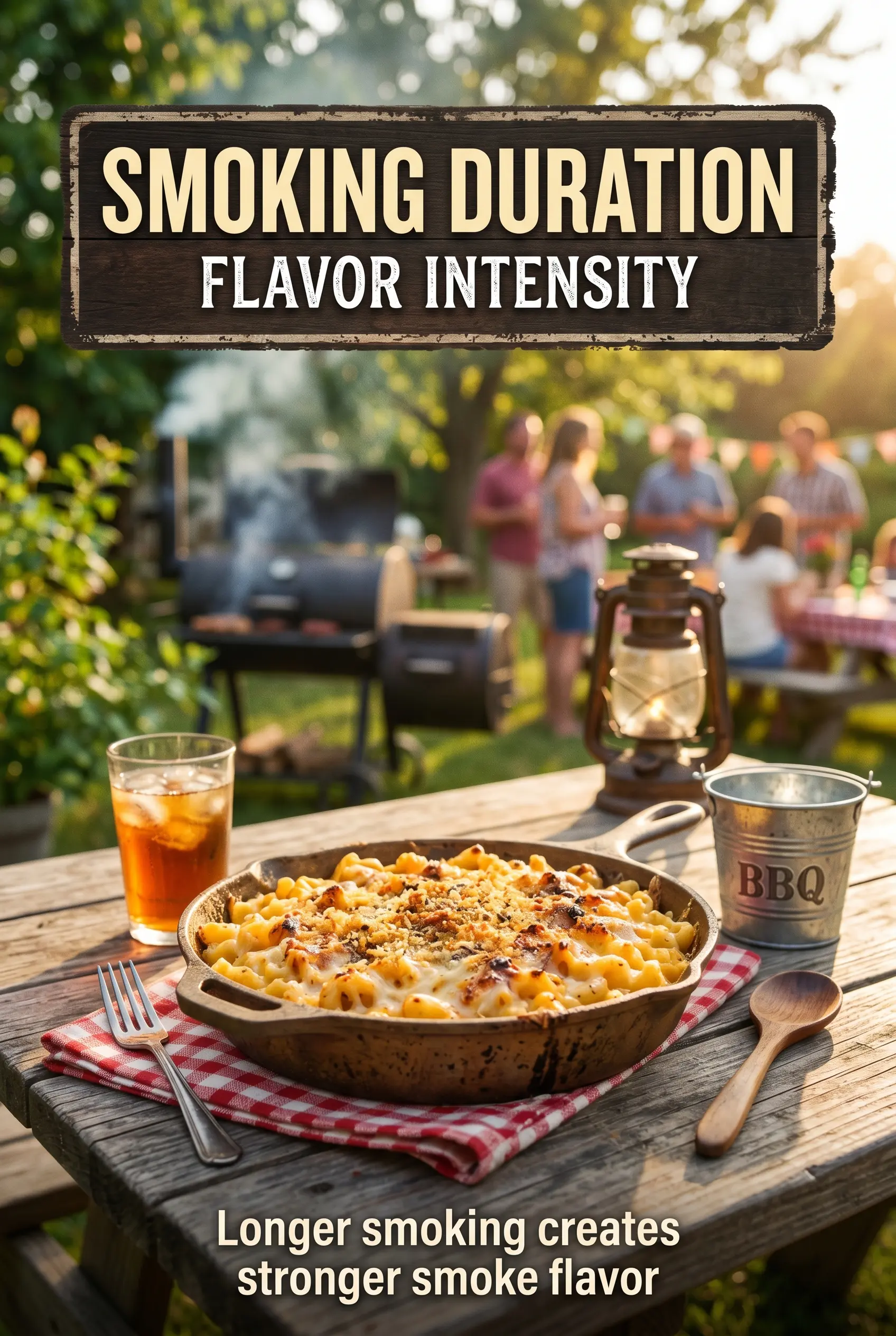
Smoked Mac And Cheese
Ingredients
Equipment
Method
- Prepare your smoker to 225°F and stabilize the temperature before loading any food.
- Using an aluminum pan, get it ready for assembly so the pasta and sauce can be combined without cooling too much.
- Melt the butter over medium heat until it looks glossy, then whisk in the flour and cook for about 1 minute to remove the raw flour taste.
- Whisk in the milk and heavy cream gradually until smooth, then continue cooking until the mixture thickens enough to lightly coat a spoon, about 5–7 minutes.
- Add the sharp cheddar and smoked Gouda, stirring until fully melted and the sauce is smooth, then mix in the garlic powder and season with salt and pepper to taste.
- Toss the cooked elbow macaroni with the cheese sauce in an aluminum pan until the pasta is evenly coated.
- Combine the panko breadcrumbs with the melted butter, then spread evenly over the top for a golden crust.
- Smoke at 225°F for 60–90 minutes, until the mac and cheese is visibly bubbly around the edges and the top is golden.
- Let the smoked mac and cheese rest for 10 minutes before serving so the sauce sets and slices cleanly.