Smoked meatloaf earns its place on the table because it keeps everything people love about the classic version and adds a deep, wood-fired crust that you just can’t fake in the oven. The outside turns mahogany and sticky with glaze, while the center stays tender and juicy enough to slice cleanly without crumbling. Every slice picks up a little smoke, a little sweetness, and that savory richness that makes seconds feel inevitable.
The key is treating the meat mixture gently and letting the smoker do the heavy lifting. Ground beef with enough fat, a little pork for softness, grated onion for moisture, and just enough breadcrumbs to hold the loaf together all matter here. Mix until the ingredients are combined, not packed tight, or you’ll end up with a dense loaf instead of one that stays plush after three hours of smoke.
Below you’ll find the timing that keeps the glaze from burning, the temp to pull for a clean slice, and a few ways to adapt this if you’re cooking for different diets or using a different smoker setup.
The smoke ring came out gorgeous and the glaze set up glossy instead of burning. I used cherry wood and the loaf sliced perfectly after the rest.
Like this smoked meatloaf? Save it for the nights when you want a smoky bark, a juicy center, and a sticky BBQ glaze.
The Trick to Smoked Meatloaf That Stays Tender Instead of Dense
Most smoked meatloaf goes wrong before it ever reaches the smoker. If the mixture gets overworked, the proteins tighten and you end up with a firm, bouncy loaf that slices like a brick. The other common problem is shaping it too compactly; a free-form loaf on a rack lets smoke move around all sides and keeps the bottom from steaming in its own juices.
The internal temperature matters more than the clock. Start glazing only after the loaf is nearly cooked through, because BBQ sauce and honey will darken fast over live smoke. If you brush it on too early, the sugars can scorch before the center reaches 160°F.
What Each Ingredient Is Doing in This Smoked Meatloaf
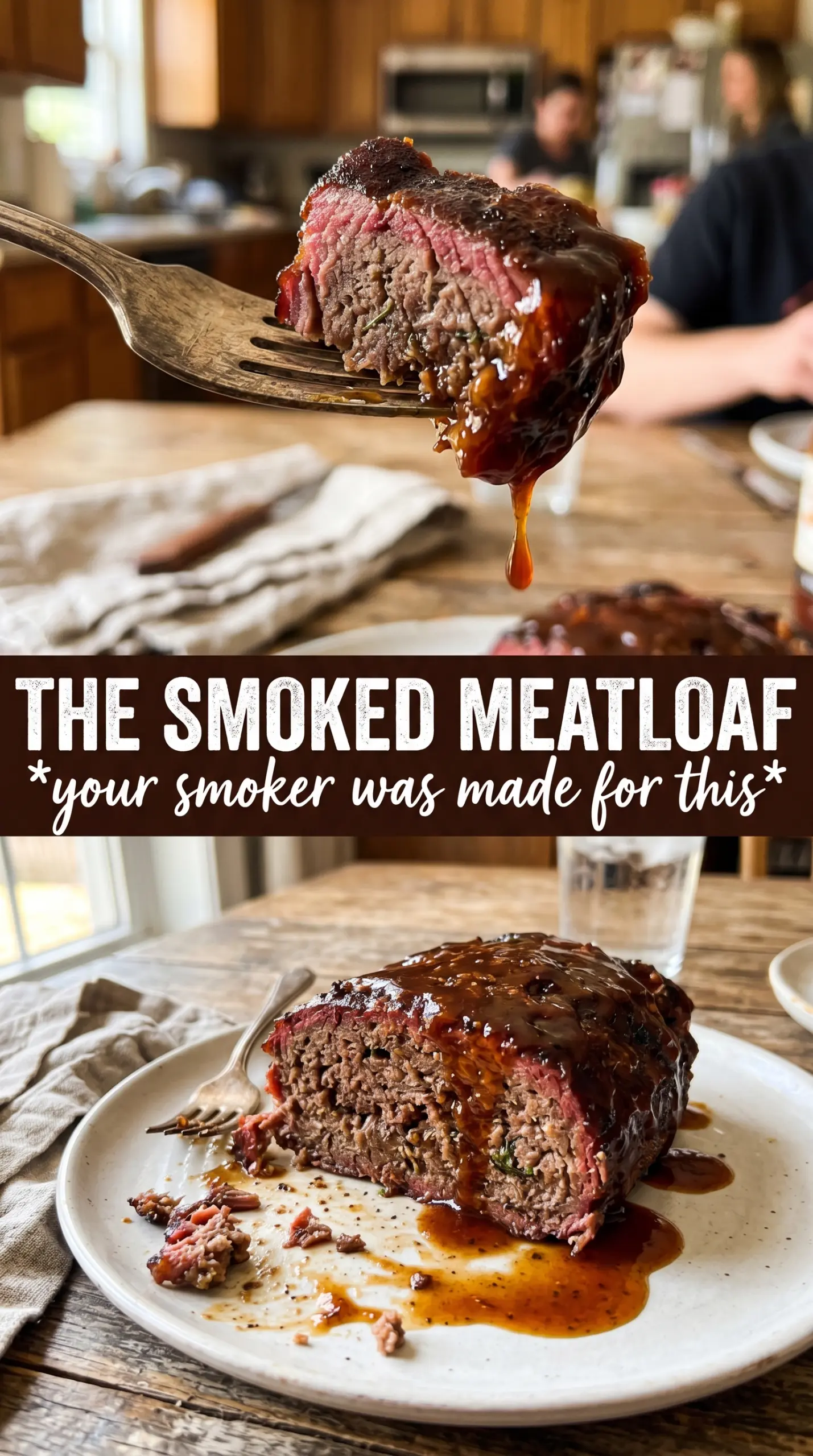
- Ground beef 80/20 — This is the backbone of the loaf. The fat keeps the texture juicy through a long smoke, and a leaner blend tends to dry out before the glaze finishes caramelizing.
- Ground pork — Pork softens the texture and adds a little sweetness that works especially well with hickory or cherry. If you skip it, the meatloaf will still work, but it won’t have the same tender bite.
- Breadcrumbs, eggs, and milk — These are the binder and the cushion. The breadcrumbs soak up the milk and the egg helps everything set without becoming crumbly; panko or plain dried breadcrumbs both work fine here.
- Grated onion and garlic — Grating the onion matters because it melts into the loaf instead of leaving sharp chunks behind. Minced garlic gives a cleaner savory edge, but don’t overdo it or it can turn bitter during the long cook.
- Worcestershire, mustard, and smoked paprika — These ingredients build the background flavor that keeps the loaf from tasting flat. The mustard sharpens the richness, and smoked paprika reinforces the wood smoke instead of competing with it.
- BBQ glaze — The glaze finishes the dish with shine and a tacky crust. Honey gives it body, vinegar keeps it from tasting cloying, and the BBQ sauce ties everything together once it starts to set on the surface.
- Hickory or cherry wood — Hickory gives a bolder smoke; cherry is milder and a little sweeter. Either works, but fruitwood is the safer choice if you want the meatloaf to taste smoked without overpowering the beef.
How to Smoke It So the Glaze Sets and the Center Finishes Together
Building the Loaf
Mix the meat with the breadcrumbs, eggs, milk, onion, garlic, Worcestershire, mustard, paprika, salt, and pepper until everything is just evenly distributed. Stop as soon as the mixture looks cohesive. If you keep working it, the loaf gets tight and the final slices lose their tender texture.
Shape it into a free-form loaf rather than pressing it into a pan. A wire rack over a grill-safe pan is ideal because the heat and smoke can circulate underneath, which gives you a better bark and prevents the bottom from turning soggy.
Smoking Low and Slow
Set the smoker between 225°F and 250°F and let the loaf cook until it reaches about 145°F internally. That first stage usually takes 2 to 2.5 hours, depending on the size and the steadiness of your smoker. Don’t chase color alone; if the surface looks ready but the center is still cool, keep going.
If your smoker runs hot in spots, rotate the loaf once during the cook. That evens out the browning without disturbing the structure.
Glazing at the Right Moment
Mix the BBQ sauce, honey, and apple cider vinegar, then brush it over the loaf when the meat is nearly done. The surface should look set and a little dry before the glaze goes on, or the sauce will slide off instead of clinging. Keep the lid closed as much as possible after glazing so the sugar can caramelize without cooling the cooker down.
Once the glaze has thickened and the internal temperature hits 160°F, pull the meatloaf off the smoker. If the glaze darkens too quickly, the smoker is running too hot; lower the heat slightly rather than adding more sauce, which only makes the problem worse.
The Rest Before Slicing
Let the meatloaf rest for 15 minutes before you cut into it. That short rest keeps the juices in the loaf instead of running all over the board. Slice too soon and you’ll see steam and juices escape in a rush; wait, and the slices hold together cleanly with that smoked ring visible at the edge.
Three Ways to Make This Smoked Meatloaf Fit Your Table
Use turkey or chicken for a lighter loaf
Ground turkey or chicken works, but you need the extra moisture from the milk, onion, and glaze because lean meat dries faster in the smoker. The flavor will be milder and the texture a little softer, so keep the loaf free-form and don’t overcook it past 160°F.
Make it gluten-free without changing the method
Swap the breadcrumbs for certified gluten-free breadcrumbs or crushed gluten-free crackers. The loaf still binds well, but very coarse crumbs can make the texture a little looser, so use the same amount and let the mixture sit for a few minutes before shaping so the binder hydrates.
Go without pork if that’s what you have
You can replace the pork with more 80/20 beef, but expect a firmer bite and a slightly richer, beefier flavor. If you go this route, handle the mixture gently and watch the internal temperature closely so the extra beef fat doesn’t turn the loaf greasy.
Switch the wood for a milder smoke
Cherry gives a sweeter, gentler smoke and a beautiful color on the outside, while hickory brings a more pronounced barbecue flavor. If you’re cooking for people who don’t love heavy smoke, cherry is the safer choice and still gives you that unmistakable smoked finish.
Storage and Reheating
- Refrigerator: Store sliced or whole for up to 4 days. The glaze firms up a bit in the fridge, but the flavor gets deeper by the next day.
- Freezer: It freezes well. Wrap slices tightly and freeze for up to 2 months, then thaw overnight in the refrigerator before reheating.
- Reheating: Reheat covered in a 300°F oven with a splash of water or a little extra BBQ sauce until warm. The common mistake is blasting it in the microwave, which dries the edges before the center is hot.
Questions I Get Asked About This Recipe
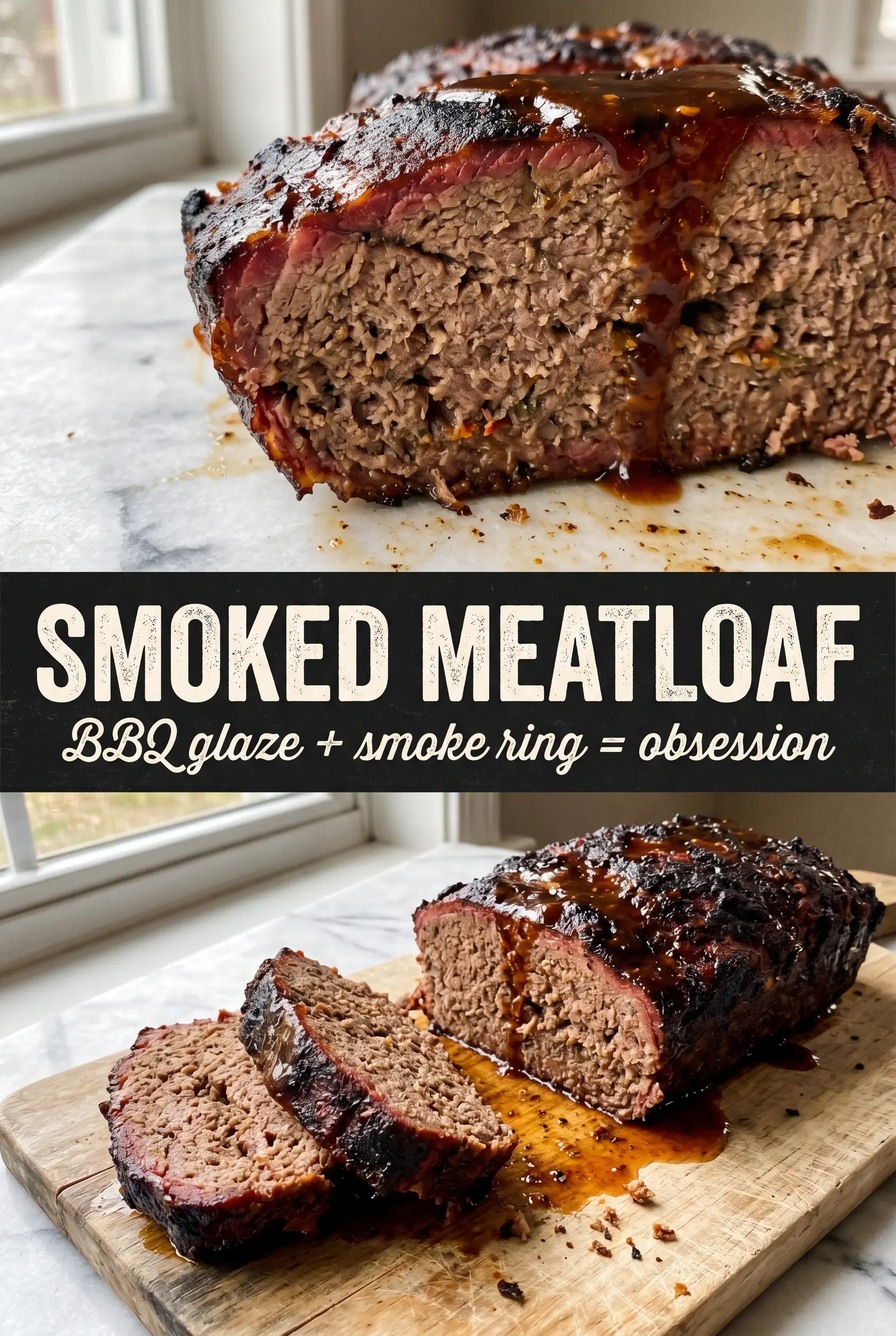
Smoked Meatloaf
Ingredients
Equipment
Method
- Preheat the smoker to 225–250°F with hickory or cherry wood, keeping the chamber steady before loading the loaf. You should see light, consistent smoke coming from the intake/exhaust as it stabilizes.
- Mix the ground beef, ground pork, breadcrumbs, eggs, milk, grated onion, minced garlic, Worcestershire sauce, yellow mustard, smoked paprika, salt, and black pepper until just combined. Stop when no dry pockets remain and the mixture holds together without overworking for a tender slice.
- Shape the mixture into a free-form loaf on a wire rack or grill-safe pan, leaving some airflow around the sides. Aim for an even thickness so the smoke and heat hit uniformly.
- Place the loaf in the smoker and smoke for 2–2.5 hours at 225–250°F until the internal temperature reaches 145°F. Look for a deep mahogany color starting to form and a faint smoke ring near the outer edge.
- Mix the BBQ glaze ingredients (BBQ sauce, honey, and apple cider vinegar) until smooth. The glaze should look glossy and pourable for even coverage.
- Brush the glaze generously over the meatloaf, coating the top and sides without thinning the surface. You should see a wet, caramel-color layer that will tighten as it heats.
- Continue smoking 30–45 minutes, until the glaze caramelizes and the internal temperature reaches 160°F. The top should look sticky and lacquered, with darker, set edges and a stronger bark-like crust.
- Remove the meatloaf and rest for 15 minutes before slicing. The center should firm up slightly and juices should redistribute, making cleaner slices and less runoff on the plate.