Snickerdoodle cake brings the same warm cinnamon-sugar comfort as the cookie, but in a soft layer cake with a tender crumb and a thick blanket of cinnamon cream cheese frosting. The coating on the pans gives the edges a subtle crust, so every slice has a little sparkle of crunch against the plush cake layers. It’s the kind of dessert that disappears fast because it tastes familiar in the best possible way, but still feels special enough for a birthday or Sunday dinner.
The texture here depends on balance. Sour cream keeps the cake moist without making it heavy, and cream of tartar helps push the batter toward that classic snickerdoodle flavor instead of just “cinnamon cake.” I also like using both cinnamon in the batter and cinnamon in the frosting, because the spice lands in every bite instead of sitting only on the outside.
Below, you’ll find the small details that matter most: how to keep the cake layers even, why the frosting needs a good whip, and the one pan-prep step that gives the edges their signature snickerdoodle finish.
The cinnamon sugar on the pans gave the cake a little crust on the outside, and the frosting stayed fluffy instead of sliding off. My slices came out clean and the layers baked evenly at 35 minutes.
Save this snickerdoodle cake for the days when you want a soft cinnamon layer cake with tangy cream cheese frosting and that classic cinnamon-sugar edge.
The Cinnamon Sugar Crust Is Doing More Than Decoration
The pan coating changes the whole cake. Buttering the pans first, then dusting them with cinnamon sugar, gives the outside of each layer a thin, sweet crust that tastes like the edge of a snickerdoodle cookie. It also helps the cakes release cleanly, which matters because a soft sour cream batter can cling if the pans are dry or under-greased.
The other thing that keeps this cake from tasting flat is the cream of tartar. You only need a little, but it gives the crumb that familiar snickerdoodle tang and keeps the spice profile from reading like plain cinnamon vanilla cake. If you leave it out, the cake still bakes, but the flavor gets softer and less distinct.
What Each Ingredient Is Actually Doing In This Cake
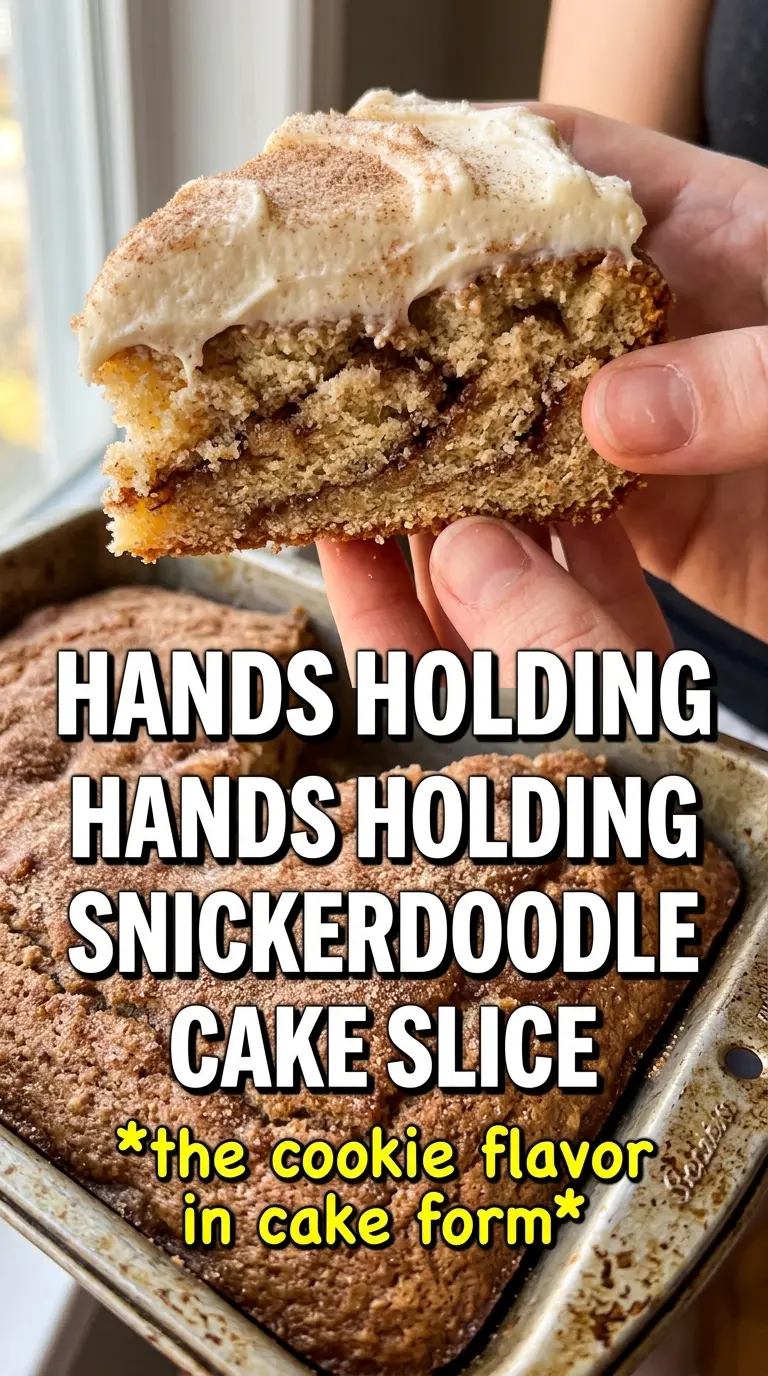
- Flour — All-purpose flour gives the cake enough structure to hold three layers without turning dense. Cake flour will make it a touch softer, but you may need to watch the bake time a little more closely because it can go from tender to fragile.
- Butter — Use real butter here. It creates the rich base for both the cake and the frosting, and it carries the cinnamon flavor better than margarine ever will. Start with properly softened butter so it creams with the sugar instead of sitting in greasy clumps.
- Sour cream — This is the moisture insurance. It keeps the crumb plush and gives the cake a gentle tang that matches the frosting. Plain Greek yogurt works in a pinch, but the texture is a little tighter and the flavor less round.
- Cream of tartar — This is the ingredient that makes the cake taste like snickerdoodle instead of just cinnamon cake. It adds that subtle tang and supports the classic cookie flavor. If you’re missing it, you can still bake the cake, but you’ll lose some of the signature character.
- Cream cheese — Full-fat cream cheese makes the frosting rich and stable enough to spread between layers. Reduced-fat cream cheese can turn looser and softer, which is a problem when you’re frosting a tall cake.
- Cinnamon — Use a cinnamon you actually like the taste of, because it shows up in the batter, pan coating, and frosting. A stale jar can taste dusty instead of warm, and that matters here more than it does in a recipe with only a pinch.
Building the Layers Without Overmixing the Batter
Creaming the Butter and Sugar
Beat the butter and sugar until the mixture turns pale and fluffy, not just combined. That step traps air, which helps the cake rise into soft layers instead of baking up heavy. If the butter is too cold, the mixture will look grainy and never get that light texture, so let it soften at room temperature first.
Adding the Eggs and Vanilla
Add the eggs one at a time and beat until each one disappears before adding the next. The batter should look smooth and glossy, and it may seem a little looser than you expect. That’s normal. If you dump all four eggs in at once, the mixture can separate and you’ll lose some of the volume you just built.
Working in the Flour and Sour Cream
Alternate the dry ingredients with the sour cream, beginning and ending with the flour mixture. That keeps the batter from tightening up and helps it stay silky. Stop mixing as soon as the flour streaks are gone; overmixing at this stage is the fastest way to get a chewy cake instead of a tender one.
Baking and Cooling the Layers
Divide the batter evenly between the three prepared pans and bake until the tops spring back lightly and a toothpick comes out with just a few moist crumbs. The layers should look set at the edges and slightly domed in the middle. Let them cool completely before frosting, or the cream cheese frosting will slide and soften into a mess.
Make It a Little More Spiced
Add another 1/2 teaspoon cinnamon to the cake batter if you want the spice to come through more strongly under the frosting. That pushes the cake closer to a true snickerdoodle cookie flavor, but it also makes the crumb taste a little bolder and less subtle.
Dairy-Free Version
Swap in a plant-based butter and dairy-free cream cheese, then use an unsweetened thick coconut or oat yogurt in place of the sour cream. The cake will still bake up soft, but the frosting will be a little less tangy and a bit softer, so chill it before spreading.
Two-Layer Cake Instead of Three
Bake the batter in two 9-inch pans if you want fewer layers and a taller slice per piece. The bake time may run a little longer because the layers are thicker, so start checking a few minutes after the original bake window and look for the same springy top and clean toothpick test.
Storage and Reheating
- Refrigerator: Store covered for up to 4 days. The frosting firms up in the fridge, so the cake slices cleaner after a short chill.
- Freezer: Freeze individual slices or unfrosted layers wrapped tightly in plastic and foil for up to 2 months. Frosted cake can be frozen, but the texture of the cream cheese frosting softens a bit after thawing.
- Reheating: Let slices sit at room temperature for 20 to 30 minutes before serving. Microwaving too long melts the frosting and makes the crumb gummy, so use only a few seconds if you want to take the chill off.
Questions I Get Asked About This Recipe
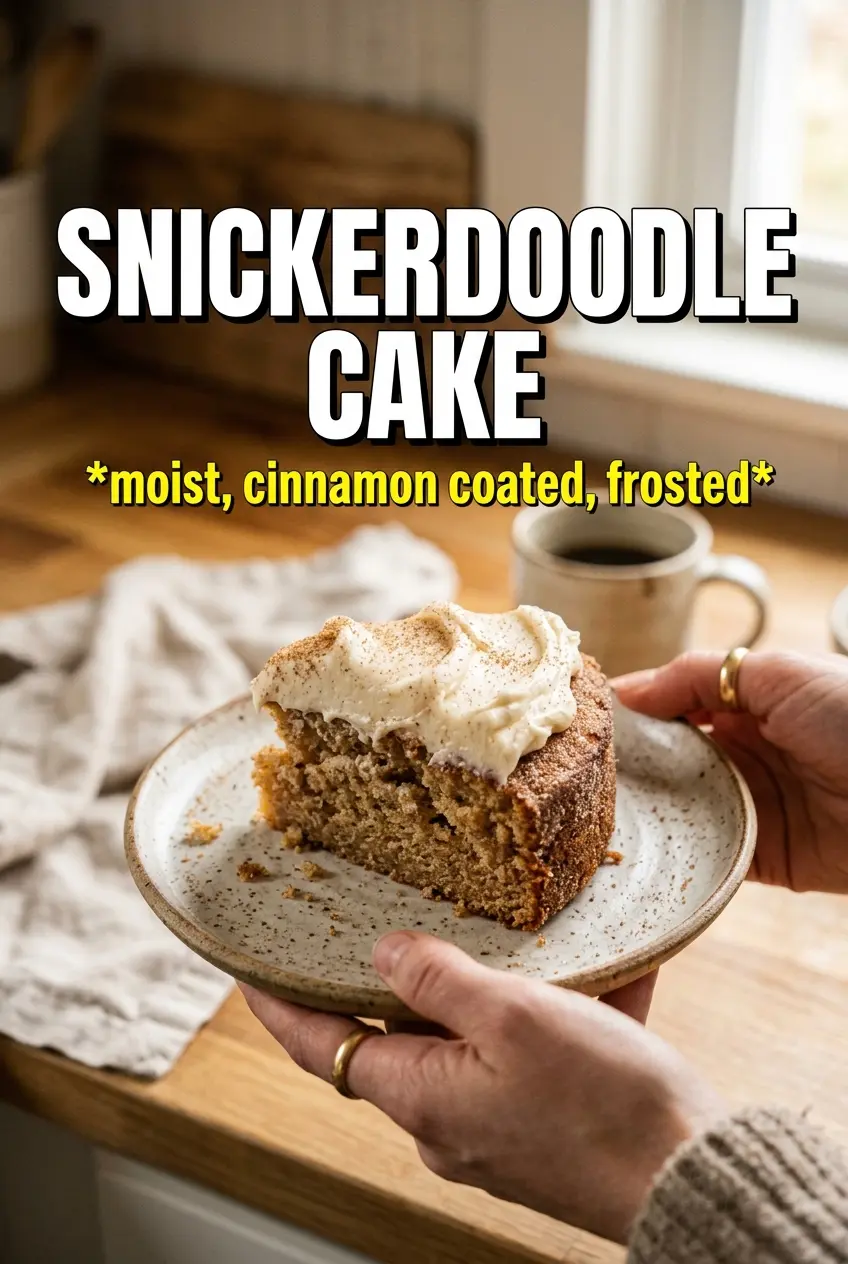
Snickerdoodle Cake
Ingredients
Equipment
Method
- Preheat oven to 350F. Butter three 8-inch pans and coat with cinnamon sugar so the sides release cleanly.
- Beat butter and granulated sugar until fluffy. Continue beating until the mixture looks lighter in color and holds a soft ribbon.
- Add eggs one at a time, then beat in the vanilla. Mix just until smooth and evenly combined.
- Whisk together flour, baking powder, baking soda, cinnamon, cream of tartar, and salt. Make sure the dry spices look evenly speckled.
- Alternate adding the dry flour mixture and sour cream to the batter, mixing after each addition. Divide the batter between the three pans.
- Bake for 30-35 minutes at 350F. The layers are done when the tops spring back and a toothpick comes out mostly clean.
- Cool completely in the pans before frosting. Lift out only once the layers are cool to the touch.
- Beat cream cheese and butter until smooth. Beat until the texture is creamy with no lumps.
- Add powdered sugar, cinnamon, and vanilla, then beat until very fluffy. Stop when the frosting looks airy and spreads thickly.
- Frost between the layers and over the top. Smooth the sides while the frosting is thick enough to hold its shape.