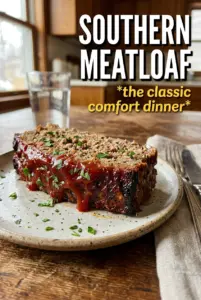
Southern meatloaf should slice cleanly, stay tender in the center, and hold onto that tangy-sweet glaze instead of turning dry and crumbly. The best versions taste like the kind of supper that settles everybody down at the table: beefy, savory, a little smoky from Worcestershire, with sweet onion and bell pepper running through every bite. When it comes out right, the top is burnished and sticky, and the slices hold together without packing tight like a brick.
The trick is in the balance. Saltine crumbs keep the texture lighter than plain breadcrumbs, and the milk plus eggs give the loaf enough moisture to stay juicy while it bakes. The diced onion and bell pepper don’t just add flavor; they also keep the meatloaf from tasting flat, which is why this style works so well with a simple glaze. Bake it in a loaf pan for shape, but don’t skip the rest at the end — that’s what keeps the juices where they belong.
Below, you’ll find the little choices that make a real difference, from handling the mixture gently to getting the glaze dark and glossy without burning it.
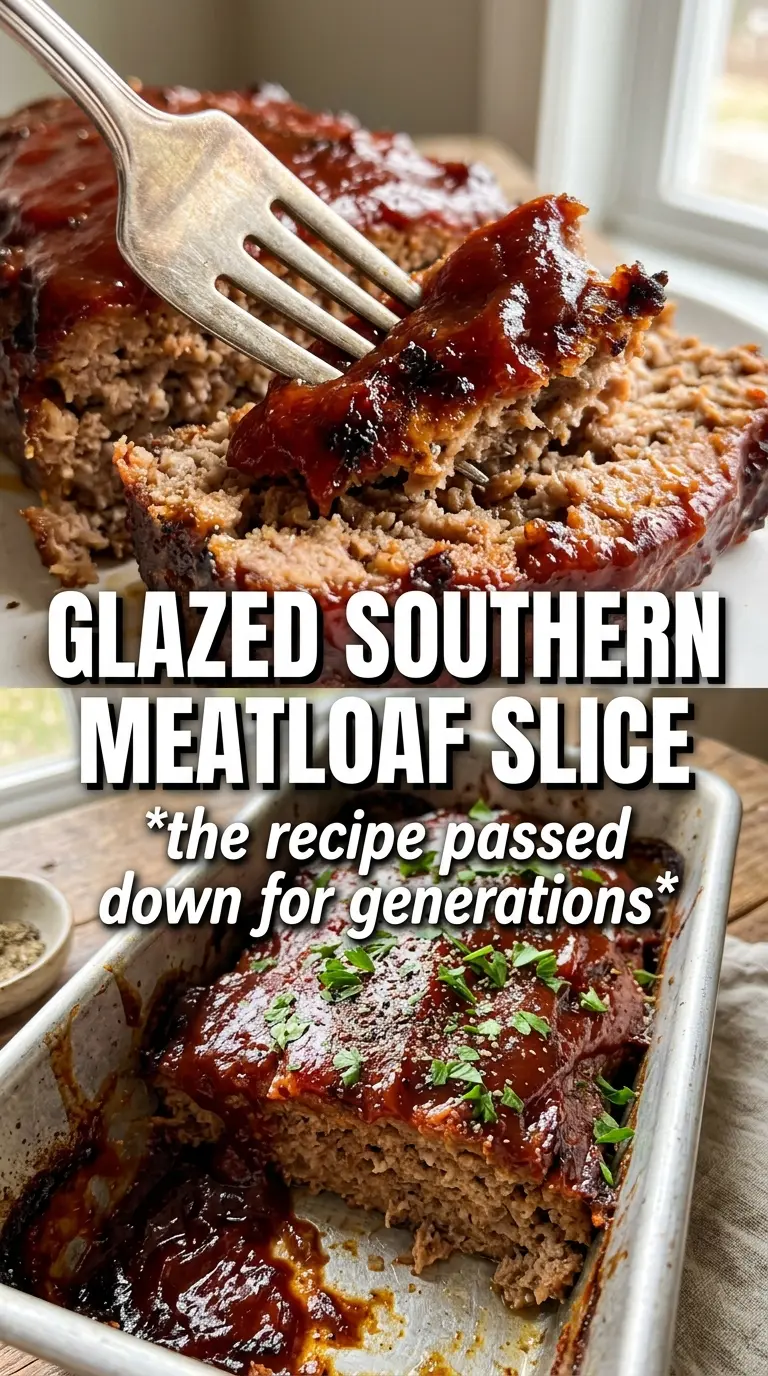
The loaf held together beautifully, and the glaze thickened into that shiny, sticky top I always want. The bell pepper stayed soft but didn’t disappear, and leftovers sliced even better the next day.
Save this Southern meatloaf recipe for that tender cracker-crumb texture and tangy ketchup-mustard glaze.
The Secret to a Meatloaf That Slices Instead of Crumbles
Most meatloaf problems start before the pan ever goes into the oven. If the mixture gets packed too tightly, the finished loaf turns dense and can crack across the top. If it’s mixed too long, the beef tightens up and the texture gets bouncy instead of tender. This version stays balanced because the cracker crumbs and milk give the meat somewhere to go as it cooks, which keeps the loaf cohesive without making it heavy.
The other thing worth paying attention to is the pan. A loaf pan gives you neat edges and a familiar shape, but it also traps some fat and moisture, so the rest time matters. Pull it when the center reaches 160°F, then leave it alone for 10 minutes. That short pause lets the juices settle back into the meat instead of running all over the cutting board.
What the Crackers, Milk, and Glaze Are Each Doing Here
- Ground beef — Use beef with enough fat to stay juicy, not extra-lean meat that bakes up dry. An 80/20 blend is a safe place to land for this style. If your package is leaner, the milk and eggs matter even more.
- Saltine cracker crumbs — These keep the texture soft and old-fashioned in a way breadcrumbs don’t quite match. If you need a swap, plain breadcrumbs work, but the loaf will taste a little less Southern and the crumb will be slightly tighter. Crush them finely so they disappear into the mixture.
- Sweet onion and green bell pepper — Dice them small so they soften fully while the meatloaf bakes. If the pieces are too large, they stay sharp and make slicing messy. A little sautéing first can deepen the flavor, but raw is traditional and works well when the dice is fine.
- Worcestershire sauce — This adds the savory backbone that keeps the loaf from tasting flat. Don’t skip it unless you have to; there isn’t a substitute that gives the same depth in one move.
- The glaze — Ketchup, mustard, and brown sugar create that classic sticky top that caramelizes in the oven. Spread it in an even layer right before baking so it doesn’t dry out. If you want a sharper glaze, bump the mustard slightly; if you want it sweeter, use a touch more brown sugar.
Getting the Loaf Mixed, Glazed, and Baked Without Losing the Texture
Combining the Meat Without Overworking It
Put the beef, cracker crumbs, eggs, milk, onion, bell pepper, Worcestershire, and seasonings in a large bowl and mix with your hands just until everything looks evenly combined. The mixture should feel damp and hold together when squeezed, but it shouldn’t look pasted together. If you keep mixing after that point, the loaf tightens up and bakes up chewy. Press it into the pan firmly enough to remove big air pockets, but don’t compress it hard.
Spreading the Glaze So It Browns Instead of Sliding Off
Stir the ketchup, mustard, and brown sugar until smooth, then spread it evenly over the top of the raw loaf. A thin, even layer works better than a thick mound because it caramelizes faster and stays glossy. If the glaze looks grainy, the brown sugar wasn’t fully broken up before baking, which can leave dry pockets on top. Bake uncovered so the glaze can set and darken instead of steaming.
Knowing When It’s Done
Start checking near the end of the bake time, because oven heat and pan material can change the timeline a little. The meatloaf is ready when the center hits 160°F and the glaze looks browned and sticky, not wet. If the top is browning too quickly before the center is done, lay a loose piece of foil over it for the last stretch. Let it rest before slicing so the juices settle and the slices stay neat.
How to Make This Southern Meatloaf Fit Different Kitchens and Different Dinners
Gluten-Free Version with the Same Tender Slice
Swap the saltine crumbs for certified gluten-free crackers or fine gluten-free breadcrumbs. The texture stays close to the original as long as the crumbs are fine and evenly mixed in. Don’t use coarse crumbs here; they can leave the loaf a little loose and less sliceable.
Dairy-Free Without a Dry Result
Use an unsweetened plain non-dairy milk in place of whole milk. The loaf will still stay moist because the eggs and beef do most of the structural work, but avoid strongly flavored milks like coconut. The goal is moisture, not extra taste.
Making It a Little More Old-Fashioned and Smoky
A spoonful of finely minced cooked bacon or a pinch of smoked paprika can push the flavor toward a deeper, smokier meatloaf. Keep the addition small so the beef and glaze still read as the main event. Too much smoke can bulldoze the classic Southern taste.
Storage and Reheating
- Refrigerator: Store sliced or whole, covered, for up to 4 days. The flavor gets even better on day two, and the slices hold together well.
- Freezer: This freezes well. Wrap cooled slices tightly and freeze for up to 2 months, or freeze the whole loaf in portions for easier reheating later.
- Reheating: Reheat covered in a 300°F oven with a spoonful of water or extra glaze to keep the edges from drying out. The most common mistake is blasting it in the microwave until the beef turns tough and the glaze turns sticky in the wrong way.
Answers to the Questions Worth Asking
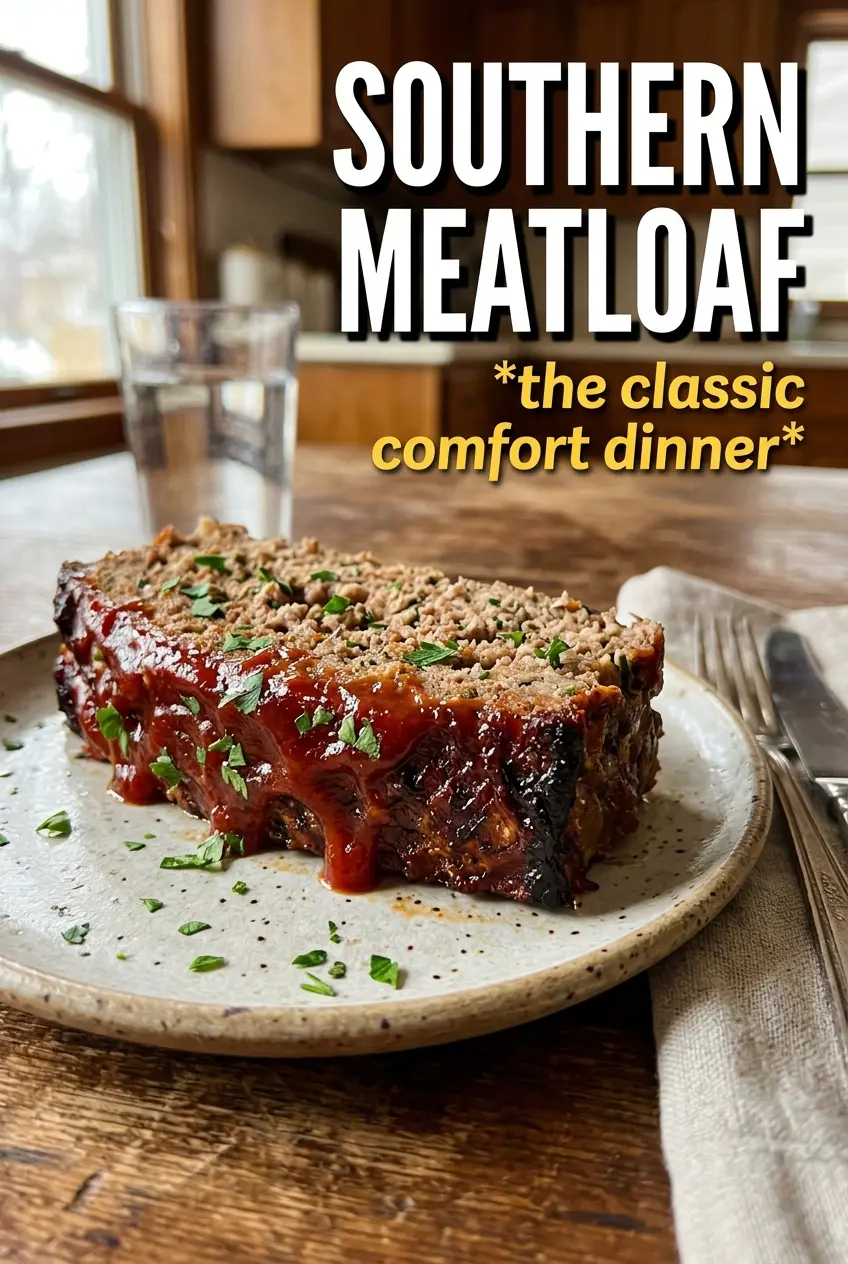
Southern Meatloaf
Ingredients
Equipment
Method
- Preheat the oven to 350°F and grease a 9x5 loaf pan, creating a nonstick surface for easy slicing (visible cue: pan looks lightly coated, not pooling).
- Combine ground beef, saltine cracker crumbs, eggs, whole milk, sweet onion, green bell pepper, Worcestershire sauce, garlic powder, onion powder, salt, and black pepper in one mixture until evenly combined (visual cue: no dry crumb pockets remain).
- Press the meat mixture firmly into the loaf pan so the top is smooth and compact (visual cue: a flat, tightly packed loaf surface).
- Mix ketchup, yellow mustard, and brown sugar, then spread evenly over the top of the loaf (visual cue: glaze forms a complete, glossy layer).
- Bake at 350°F for 60–70 minutes, until the internal temperature reaches 160°F and the glaze is caramelized (visual cue: top turns deep amber with slight bubbling edges).
- Rest the meatloaf for 10 minutes before slicing to help juices set (visual cue: the loaf holds its shape when you lift a slice).
- Slice and serve with classic Southern sides (visual cue: thick slices show the baked-in onion and bell pepper throughout).