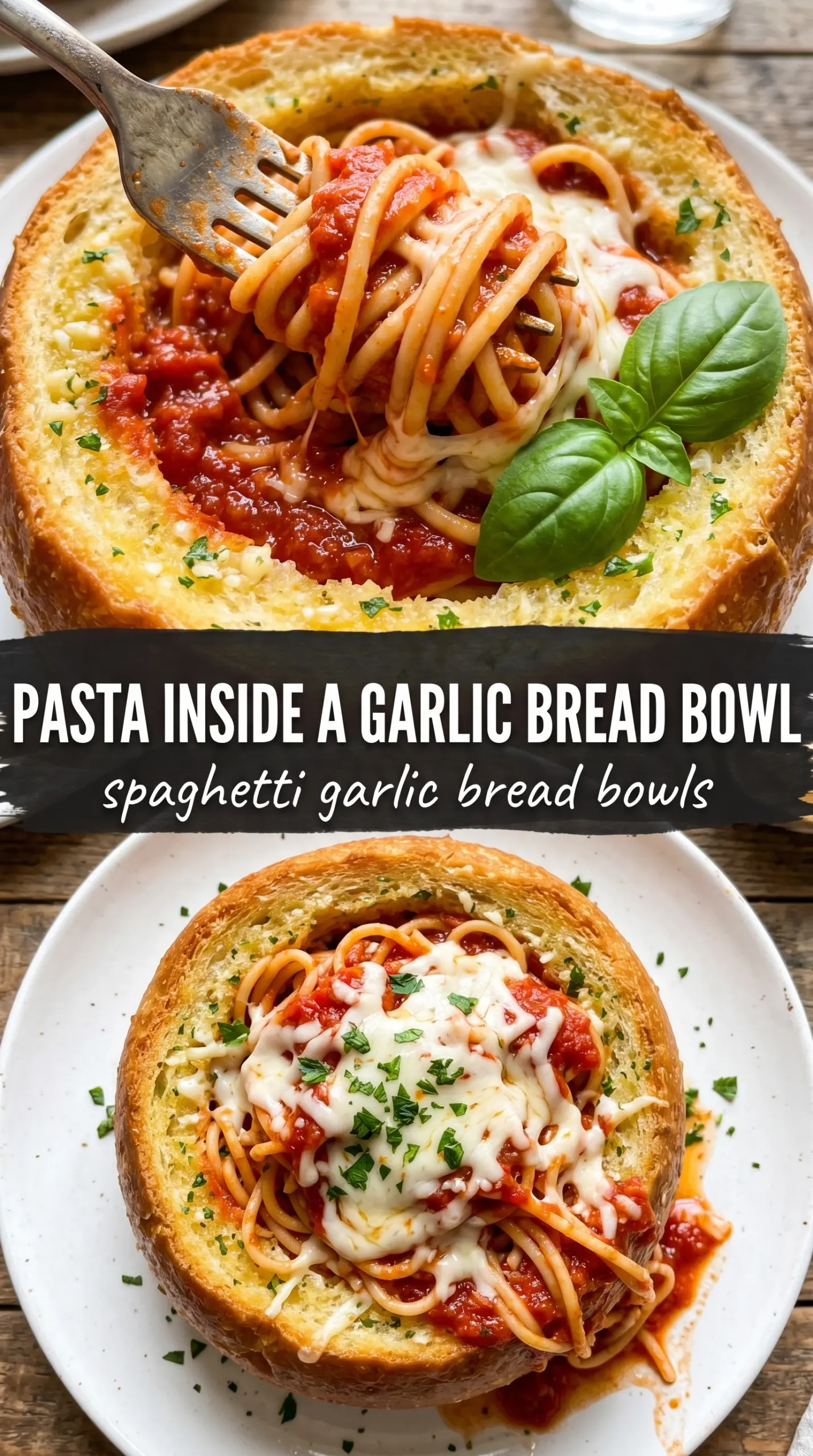
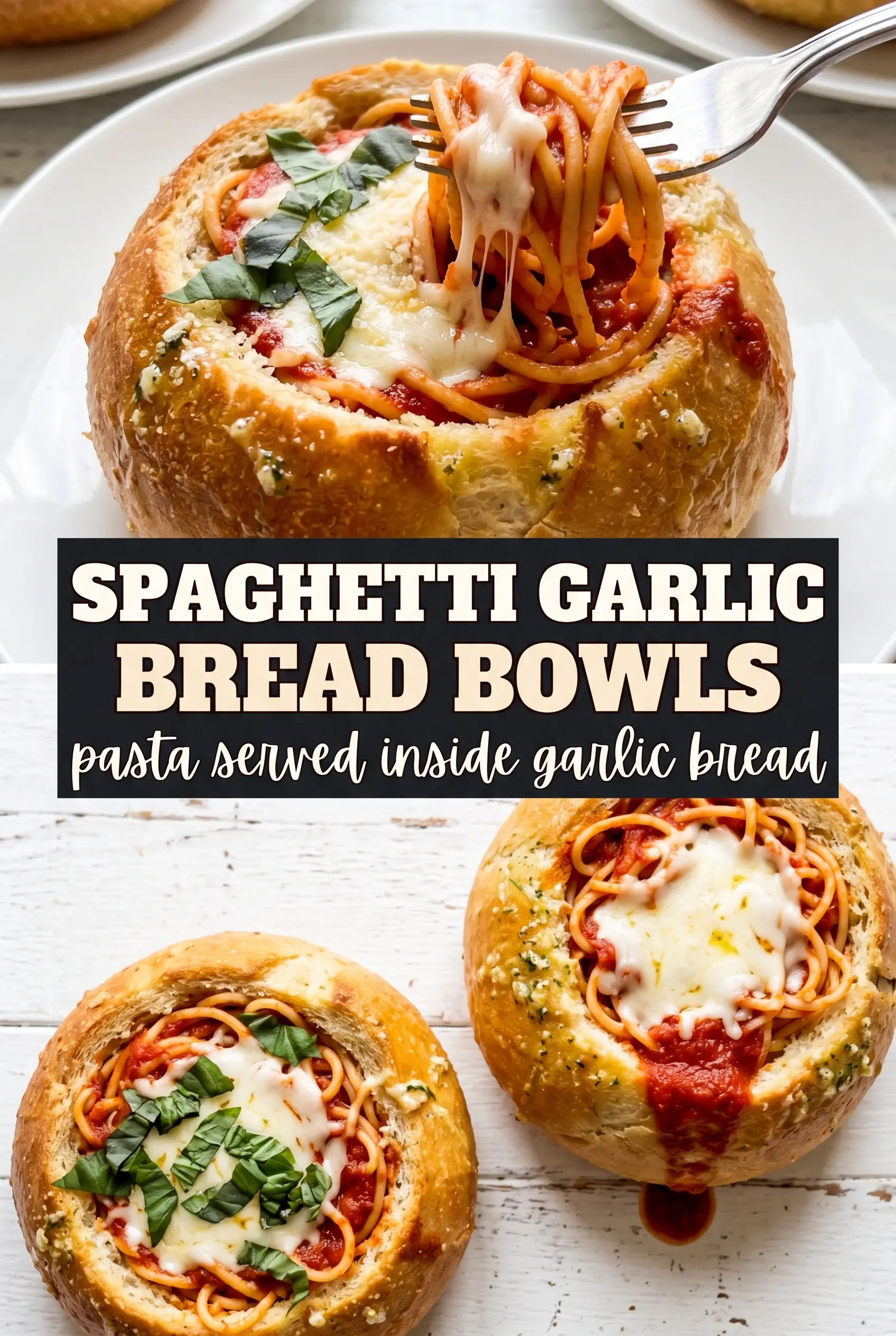
Spaghetti tucked into a crisp garlic bread bowl turns dinner into something people notice the second it hits the table. The edges stay sturdy enough to hold the pasta, the inside soaks up just enough sauce, and the top gets a layer of melted mozzarella that pulls everything together. It eats like a proper main dish, but it has the kind of playful presentation that makes a normal pasta night feel a little special.
The trick is treating the bread bowl like part of the recipe, not just the container. Brushing it with garlic butter before baking helps it toast instead of turning soft once the sauce goes in, and leaving a thick border keeps the bowl from collapsing under the weight of the spaghetti. I also like to simmer the meat sauce long enough that it clings to the pasta instead of sliding to the bottom of the bowl.
Below you’ll find the timing that keeps the bread crisp, the swap that makes this work with different meats or a vegetarian filling, and the few details that keep the bowls from getting soggy before dinner is served.
The garlic butter made the bread bowls crisp up perfectly, and they held the spaghetti all the way to the last bite without going soggy.
Save these spaghetti garlic bread bowls for the night you want pasta, crispy bread, and melted mozzarella in one baked dinner.
The Bread Bowl Needs a Head Start, Not a Last-Minute Fill
The most common mistake with a dish like this is stuffing the bread before it has a chance to toast. Once the spaghetti and sauce go in, the filling starts working against the crust. A good bread bowl needs to be dry, sturdy, and lightly crisped first so it can hold the sauce without turning heavy and soft within minutes.
That 10-minute bake on the empty bowl does the real work. It drives off some moisture, sets the interior, and helps the garlic butter soak in without making the crumb collapse. If the bread feels pale and spongy after the first bake, it won’t survive the second one; you want the shell to feel firm when you tap it.
- Round sourdough bread bowls — Sourdough has enough structure and a tight enough crumb to hold the filling. Soft sandwich rolls fall apart too fast, and thinner bread tends to leak sauce at the bottom.
- Garlic butter — This is what gives the bowl its flavor and its protective layer. Brush it on both the inside and the outside so the crust toasts evenly and picks up color instead of drying out.
- Ground beef — Beef gives the sauce a hearty, savory base that stands up to the bread. If you use something leaner, like ground turkey, keep an eye on the skillet so the meat sauce doesn’t taste flat; a little extra salt or parmesan at the end helps.
- Mozzarella — Low-moisture shredded mozzarella melts into a stretchy top without flooding the bread. Fresh mozzarella releases too much liquid for this recipe unless you blot it very dry and use less of it.
What Each Ingredient Is Actually Doing in This Recipe
- Primary ingredient (the star) — Quality matters most. Choose the best you can find.
- Cooking medium (oil, butter, or broth) — This carries flavors and prevents dryness.
- Seasonings (salt, pepper, spices, herbs) — Layer flavors so nothing overpowers. Build depth gradually.
- Aromatics (garlic, onion, herbs) — Cook with fat to bloom flavors. Become the foundation.
- Supporting ingredients — Complement the main ingredient without overpowering it.
- Sauce or liquid (if applicable) — Brings flavors together. Balance richness with acid.
- Acid (lemon, vinegar, wine, or other) — Brightens and prevents flat-tasting results.
- Final finish (garnish, glaze, or sauce) — Prevents one-dimensional taste and adds visual appeal.
How to Keep the Filling Thick Enough for the Bowl
Toasting the Shells First
Cut the tops off each bread bowl and hollow them out, leaving a thick 1-inch border all the way around. Brush the inside and outside with the garlic-parsley butter, then bake until the surface feels crisp and the color turns lightly golden. If the centers are scooped too aggressively, the bowl gets fragile and can split once you add the spaghetti.
Building a Sauce That Stays Put
Brown the beef until the pink is gone and the bits at the bottom of the pan turn deep brown, then drain the excess fat. Stir in the marinara, Italian seasoning, and red pepper flakes, and let the sauce simmer until it looks slightly tighter and coats the meat instead of looking watery. Thin sauce is the enemy here; if it runs in the pan, it will soak the bread before dinner is served.
Filling and Finishing Under the Broiler
Toss the cooked spaghetti with the meat sauce before filling the bread bowls so every strand gets coated. Pile it in generously, then top with mozzarella and bake just long enough for the cheese to melt and bubble at the edges. If you leave them in too long, the bread keeps cooking and loses its crispness, so pull them as soon as the cheese is glossy and stretchy.
Three Ways to Make These Bread Bowls Fit the Table
Swap in Italian sausage for a bolder filling
Use sweet or hot Italian sausage in place of the ground beef for a richer, more seasoned sauce. Because sausage already brings more fat and spice, drain only the excess grease and go lighter on the red pepper flakes unless you want real heat.
Make it vegetarian with lentils or plant-based crumbles
Cook lentils or plant-based crumbles into the marinara until the sauce thickens and the texture feels hearty enough to replace the meat. Lentils give you a softer, earthier bite, while crumbles stay closer to the chew of ground beef.
Use gluten-free pasta with a gluten-free roll
This works with gluten-free spaghetti and sturdy gluten-free bread bowls, but both need careful handling. Cook the pasta just to al dente and toast the bread a little longer if the crust is soft, since gluten-free bread usually needs that extra drying time to hold up.
Storage and Reheating
- Refrigerator: Store leftovers up to 3 days. The bread softens as it sits, but the flavor stays good.
- Freezer: The filled bowls don’t freeze well because the bread turns spongy after thawing. Freeze the meat sauce separately if you want to make part of it ahead.
- Reheating: Reheat in a 350°F oven until the center is hot and the cheese is melted again. The microwave makes the bread rubbery, so use it only for the filling if you’re not worried about the crust.
Questions I Get Asked About This Recipe
Spaghetti Garlic Bread Bowls
Ingredients
Equipment
Method
- Preheat the oven to 375°F. Place a sheet pan inside so the bowls start baking as soon as they go in.
- Cut the tops off each bread bowl and hollow out the centers, leaving a 1-inch border. Keep the tops nearby in case you want to cover the bowls while baking.
- Mix the melted butter with the minced garlic and chopped parsley, then brush generously inside and outside each bread bowl. Make sure the exterior gets a good coating for crisp, golden edges.
- Bake the bread bowls for 10 minutes at 375°F until they look crispy. The bread should feel firmer and hold its shape.
- Brown the ground beef in a skillet, then drain excess fat. Cook until the meat is no longer pink.
- Add the marinara sauce, Italian seasoning, and red pepper flakes to the skillet. Stir to combine.
- Simmer the sauce for 10 minutes. Let it thicken slightly so it coats the spaghetti.
- Toss the cooked spaghetti with the meat sauce and fill each bread bowl generously. Pack it in so the bowls are heaped.
- Top each bread bowl with shredded mozzarella. Cover the spaghetti so the cheese melts over the rim.
- Bake for 8–10 minutes at 375°F until the cheese is melted and bubbly. The bread edges should stay golden and crisp.
- Serve with Parmesan on top. Finish immediately while the cheese is still hot.