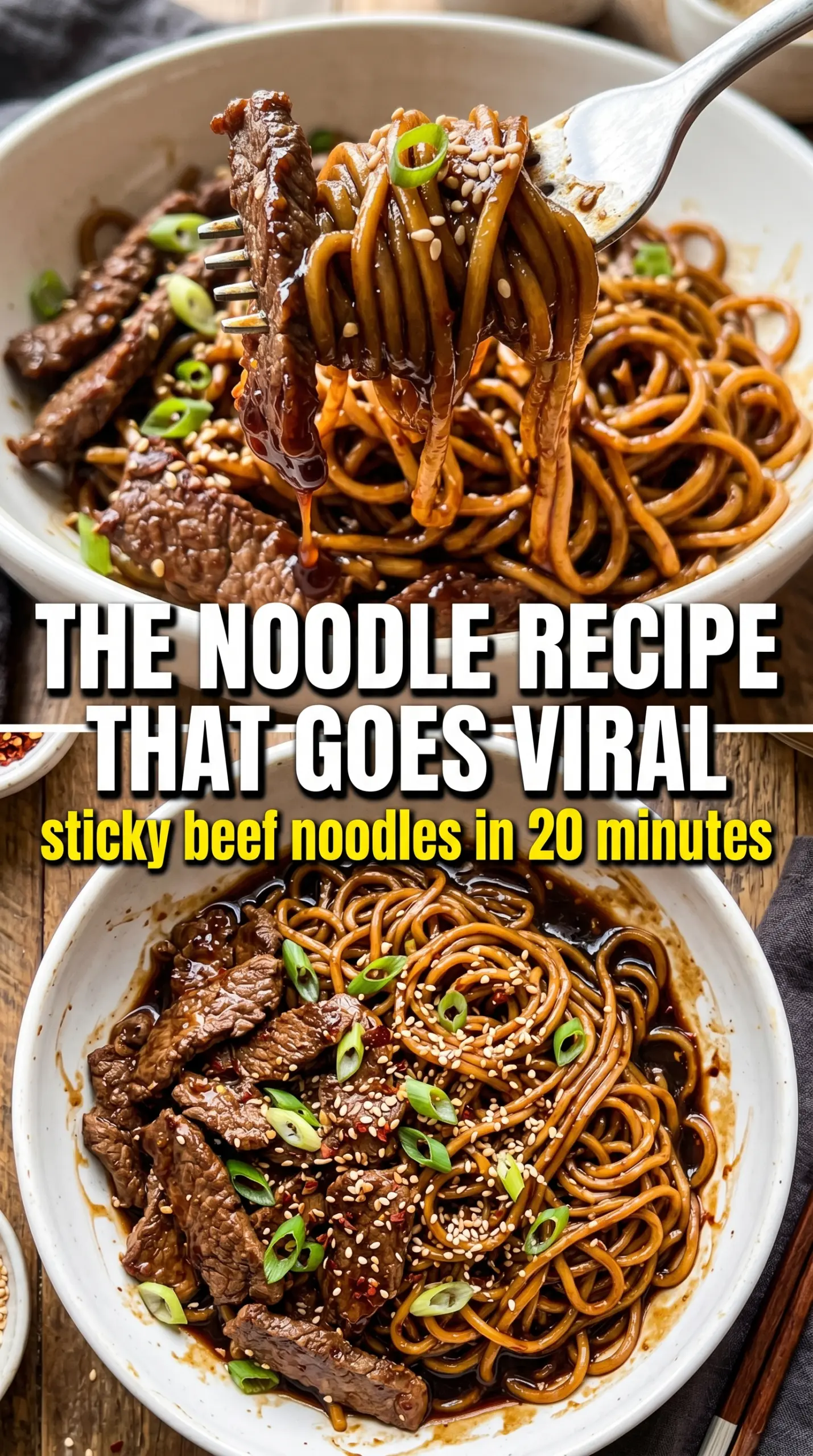
Glossy sticky beef noodles hit the table with the kind of savory-sweet punch that makes a plain weeknight dinner feel instantly sorted out. The noodles soak up the sauce instead of sitting under it, and the beef turns deeply browned at the edges before the soy-ginger glaze clings to every strand. What you get is tangle after tangle of slippery, caramelized noodles with just enough heat to keep each bite lively.
This version works because the sauce is built for absorption, not just coating. Brown sugar gives it that lacquered finish, oyster sauce brings body, and sesame oil adds the nutty depth that makes the whole pan taste finished. The beef gets cooked hard and fast so it browns instead of steaming, which is what keeps the final dish from tasting flat or greasy.
Below, I’ve laid out the parts that matter most: how to keep the noodles from turning mushy, how to judge when the sauce has thickened enough, and the small adjustments that make this recipe work with what’s already in your kitchen.
The sauce clung to the ramen exactly like you described, and the beef got those caramelized bits on the edges instead of going watery. I made it on a Tuesday and my kids ate every last noodle.
Save these sticky beef noodles for the nights when you want glossy ramen, caramelized beef, and a fast soy-ginger sauce in one pan.
The Trick to Keeping the Noodles Glossy Instead of Clumpy
The biggest mistake with a dish like this is letting the noodles sit around after cooking. Ramen softens fast, and if it waits in a colander while the sauce finishes, it tightens up and loses that slippery texture that makes the dish work. Add the noodles straight to the skillet while the sauce is still loose enough to move, then toss over high heat so the starch and sauce marry in the pan instead of turning into a gluey mass.
The other place people go wrong is crowding the beef. If the meat goes in cold, or if the pan is packed, it steams and turns gray before it browns. You want a deep sizzle the moment the beef hits the skillet, and you want enough heat that the excess moisture cooks off quickly. That browning is where the flavor comes from.
What Each Part of the Sauce Is Really Doing
- Ground beef — Use regular ground beef for the best balance of flavor and tenderness. Lean beef works too, but if it’s extremely lean, add a small splash of oil to keep the pan from drying out before the sauce goes in.
- Ramen noodles — These bring the right springy texture and absorb the sauce fast. Discard the seasoning packets; they fight with the soy-garlic base and make the dish taste muddled.
- Soy sauce — This is the backbone of the dish. Use a standard all-purpose soy sauce, not low-sodium if you want the sticky glaze to taste bold after the noodles go in.
- Oyster sauce — This gives the sauce body and a rounded savoriness that soy sauce alone can’t match. There isn’t a perfect swap, but hoisin will work in a pinch; the result will be sweeter and a little less deep.
- Brown sugar — It helps the sauce caramelize and cling. White sugar will sweeten the dish, but it won’t give the same warm, sticky finish.
- Sesame oil — A little goes a long way here. Add it to the sauce, not the hot pan, so the aroma stays nutty instead of fading.
- Rice vinegar and sriracha — The vinegar keeps the sauce from tasting heavy, and the sriracha sharpens the sweetness. If you want less heat, cut the sriracha in half rather than skipping acidity altogether.
Building the Sauce So It Clings to Every Noodle
Boiling the Noodles First
Cook the ramen just until tender, then drain it well. You want the noodles slightly underdone because they’ll finish in the skillet and absorb the sauce as they go. If they sit wet in the strainer, they can water down the pan sauce, so give them a quick shake and keep them close.
Browning the Beef Hard
Use a large skillet and get it hot before the beef goes in. Break the meat up, but don’t stir constantly; let it sit in contact with the pan long enough to form browned bits. If there’s a lot of fat at the end, drain the excess before adding garlic and ginger, or the sauce will slide off instead of coating.
Finishing Over High Heat
Add the garlic and ginger for just a minute, then pour in the sauce and toss in the noodles right away. The sauce should look loose for a moment, then start to tighten and shine as it reduces around the noodles. If it gets dry before everything is coated, splash in a tablespoon of water and keep tossing until the strands look lacquered, not soupy.
How to Adapt These Sticky Beef Noodles Without Losing the Point
Make It Gluten-Free
Use gluten-free ramen or rice noodles, then swap in tamari for the soy sauce. Check the oyster sauce label too, because some brands contain wheat. The texture stays close to the original if you toss the noodles quickly and don’t overcook them.
Make It Leaner Without Making It Dry
Use 90% lean ground beef and drain the skillet well before adding the sauce. You may lose a little richness, but the browned beef and sticky glaze still carry the dish. If the pan looks too dry, a teaspoon of neutral oil before the garlic goes in keeps things moving.
Turn It Into a Veggie Dinner
Swap the beef for finely crumbled tofu or chopped mushrooms, then cook them hard so they brown instead of steaming. Mushrooms bring a meaty texture and absorb the sauce well, while tofu needs a little extra oil and patience to develop flavor. The dish will taste lighter, but the sticky noodle finish still works.
Add Vegetables Without Diluting the Sauce
Thin-sliced bell peppers, shredded carrots, or snap peas can go in right after the garlic and ginger. Keep the pieces small so they cook quickly and don’t release too much liquid. Big chunks need longer cooking and will throw off the sauce-to-noodle ratio.
Storage and Reheating
- Refrigerator: Store in an airtight container for up to 3 days. The noodles will absorb more sauce as they sit, so the dish gets a little tighter and less glossy.
- Freezer: It freezes, but the noodles soften after thawing, so I don’t recommend freezing the finished dish if texture matters to you.
- Reheating: Reheat in a skillet over medium heat with a splash of water to loosen the sauce. The common mistake is blasting it in the microwave until the noodles turn rubbery; gentle heat keeps the sauce silky.
Answers to the Questions Worth Asking
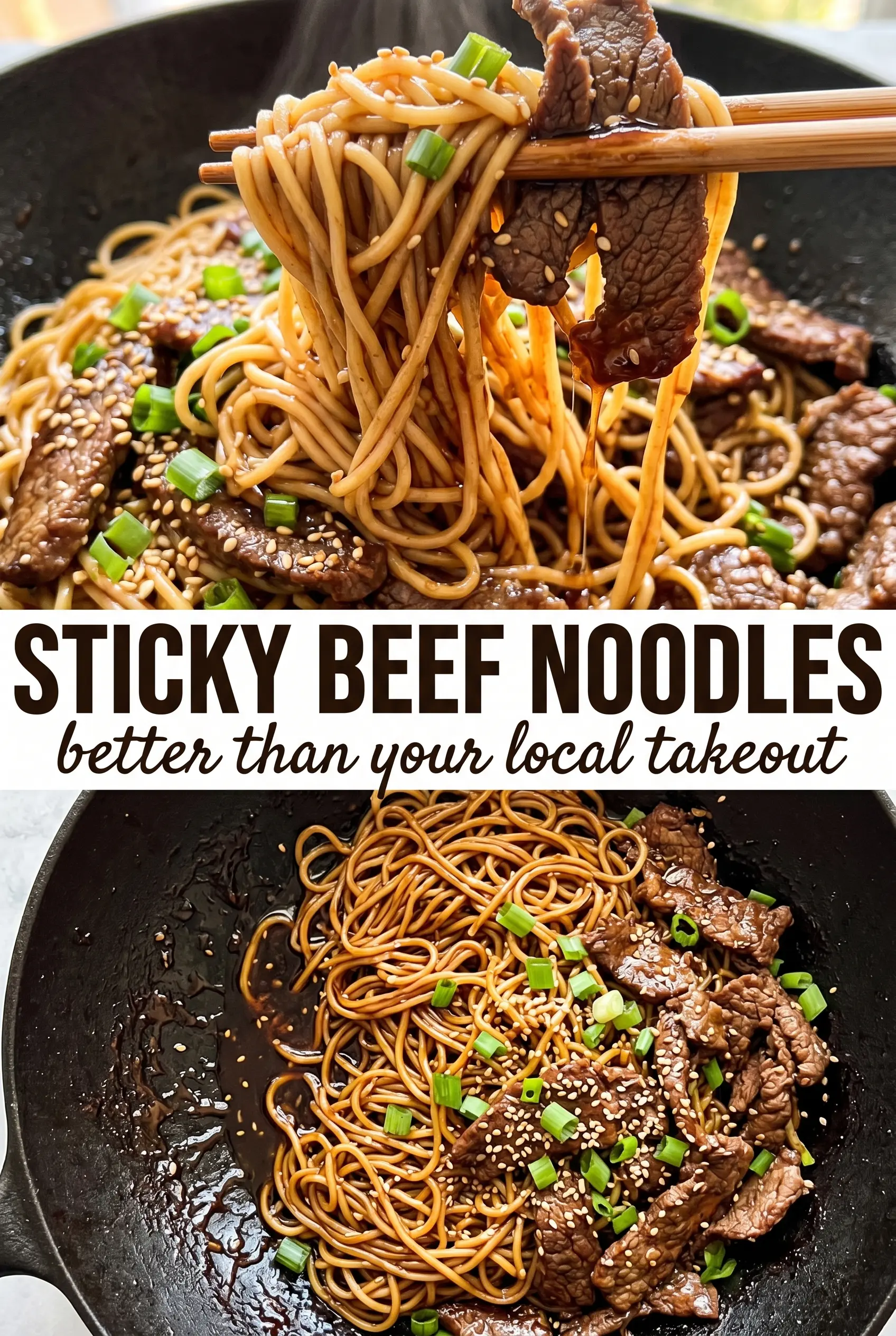
Sticky Beef Noodles
Ingredients
Equipment
Method
- Cook the ramen noodles according to package directions, then discard the seasoning packets, drain, and set the noodles aside.
- Whisk soy sauce, oyster sauce, brown sugar, sesame oil, rice vinegar, and sriracha until smooth and the sugar dissolves.
- Brown the ground beef in a large skillet over high heat, breaking it into crumbles, until cooked through; drain excess fat.
- Add the minced garlic and grated ginger and cook for 1 minute over high heat until fragrant, then pour in the sticky sauce and stir.
- Add the cooked noodles to the skillet and toss over high heat for 2 minutes, until the noodles are coated and the sauce looks absorbed and glossy.
- Serve immediately, topped with sesame seeds and sliced green onions.